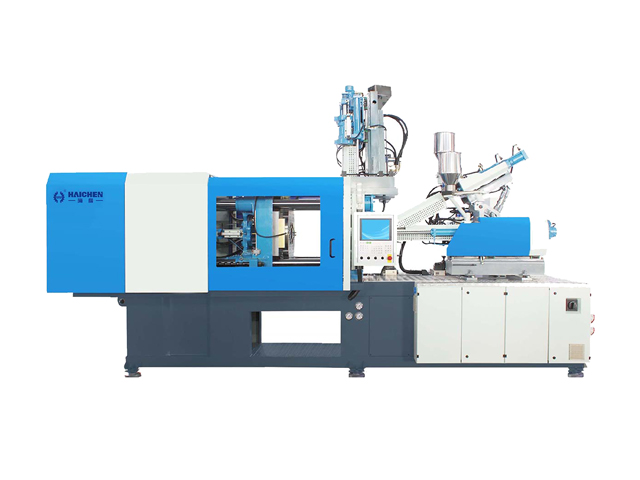
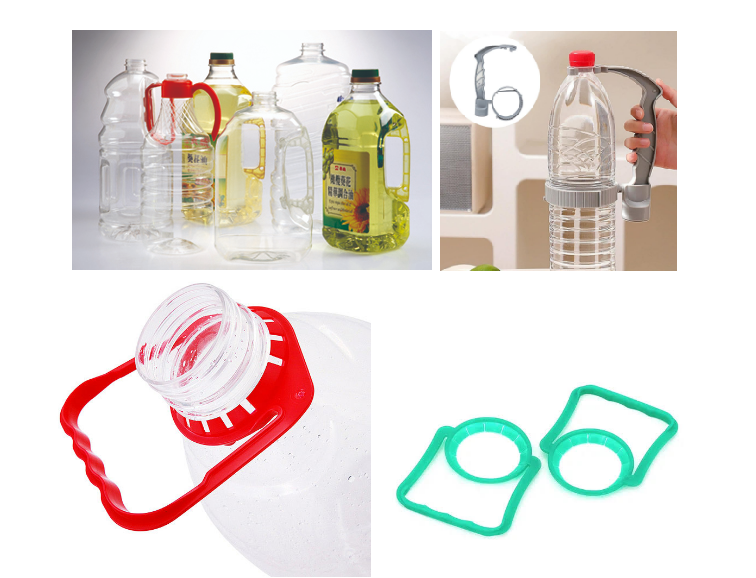
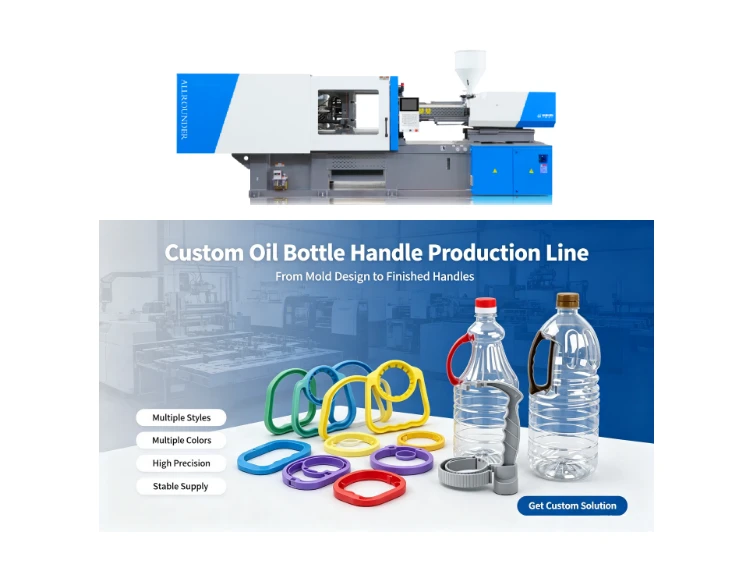
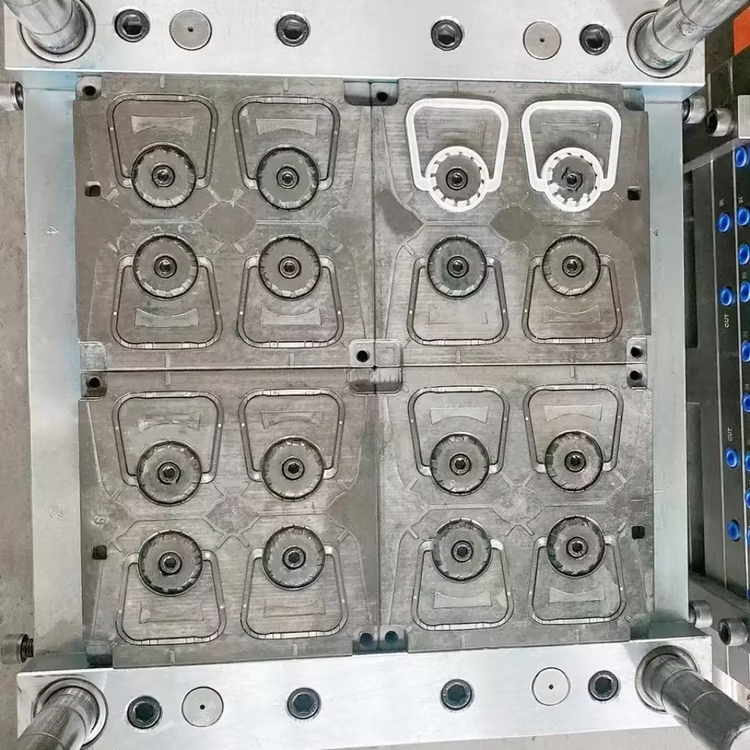
Ring bottle handle injection molding machine is a specialized piece of equipment that produces ring handles, pull rings, and carrying handles for PET bottles, 5-gallon water jugs, and various containers. You see these handles on cooking oil bottles, large water containers, and beverage jugs. They are small parts — typically 1–3 grams for ring handles and 5–15 grams for larger jug handles. But choosing the right machine is not as simple as it looks.
A plastic handle injection molding machine must deliver consistent shot weight, high injection speed for thin sections, and precise temperature control for multi‑cavity molds. Many buyers assume that because handles are small and lightweight, a small machine will do the job. But the real question is not just about part size — it is about cavity count, mold dimensions, and output targets.
The clamping force you need depends on three factors: the projected area of the part (including runners), the material’s cavity pressure (for PP, typically 300–500 kg/cm²), and the number of cavities you plan to run. More cavities mean higher output but also require more clamping force. This guide answers the 6 most common questions procurement buyers ask when selecting a bottle handle injection molding machine — from tonnage and cavity count to automation and supplier evaluation. We also include real production data from actual handle manufacturing lines to help you make an informed decision.
Question 1 – How Many Cavities Do I Need for My Output Target?
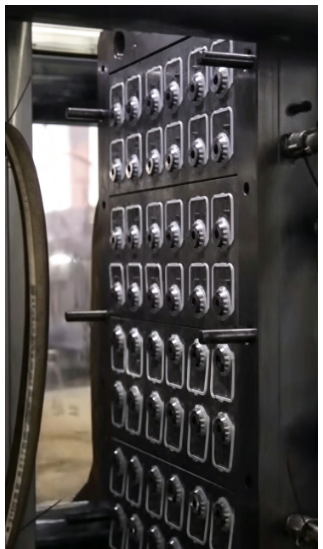
This is where everything starts. Output decides cavities. Cavities decide the machine. A bottle handle injection molding machine with a 16‑cavity mold produces 16 handles per cycle. A 32‑cavity mold produces 32 handles. More cavities mean lower per‑part cost but require more from the machine.
For small ring handles (1–3g each), a 16–24 cavity mold is common for medium output. For high‑volume production, 32–48 cavities are the standard. The exact cavity count depends on your daily output target. A 16‑cavity mold running at a 15‑second cycle produces about 3,800 handles per hour. A 32‑cavity mold at the same cycle produces 7,600 handles per hour.
Cavity count selection guide for your bottle handle injection molding machine:
| Output Target (pieces/day) | Recommended Cavities | Typical Cycle Time | Haichen Model |
|---|---|---|---|
| Under 20,000 pcs | 8–16 cavities | 15–20s | HCK 110 |
| 20,000–50,000 pcs | 16–24 cavities | 12–18s | HCK 150 – HCK 180 |
| 50,000–100,000 pcs | 24–32 cavities | 10–15s | HCK 180 – HCK 230 |
| Over 100,000 pcs | 32–48 cavities | 8–12s | HCK 230 – HCK 280 |
Question 2 – Once Cavities Are Set, What Tonnage Machine Do I Need?
Cavity count decides mold projected area. Projected area decides clamping force (tonnage). Clamping force is the machine’s muscle that keeps the mold closed during injection. Too little muscle — the mold opens slightly and you get flash. Too much — you pay for a bigger machine than you need and waste electricity.
The basic formula for a bottle handle injection molding machine is:
Clamping Force (tons) = Projected Area (cm²) × Cavity Pressure (kg/cm²) ÷ 1000
For PP material, cavity pressure typically ranges from 300–500 kg/cm². Always add a 10–20% safety margin.
Example for a 32‑cavity ring handle mold:
-
Each handle projected area: ~8–12 cm²
-
Total projected area (32 cavities): ~350–400 cm²
-
Cavity pressure: 400 kg/cm²
-
Theoretical force: 400 × 400 ÷ 1000 = 160 tons
-
With 15% safety margin: 160 × 1.15 = about 185 tons
So a 32‑cavity ring handle mold typically needs a 160–200 ton bottle handle injection molding machine. A 16‑cavity mold may only need 110–150 tons. A 48‑cavity mold may need 230–280 tons or more.
Question 3 – Will the Mold Actually Fit the Machine?
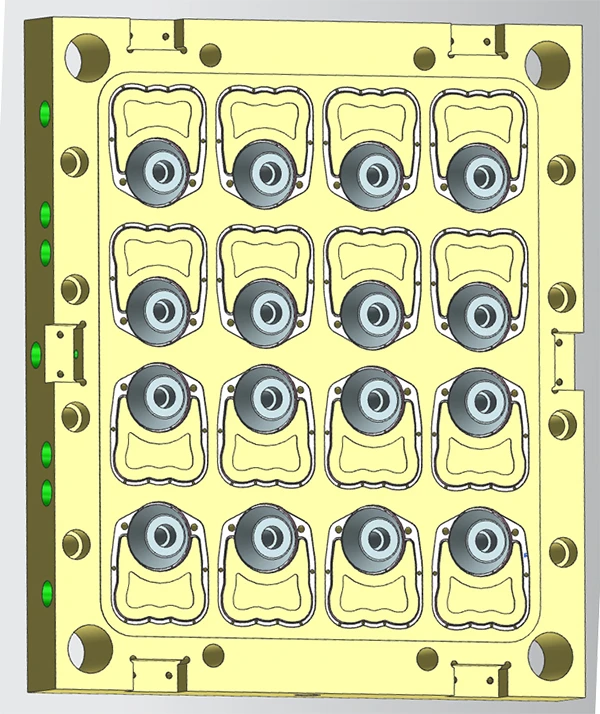
This one trips up a lot of buyers. Tonnage right, but the mold won’t fit between the tie‑bars. Three dimensions to check on your bottle handle injection molding machine:
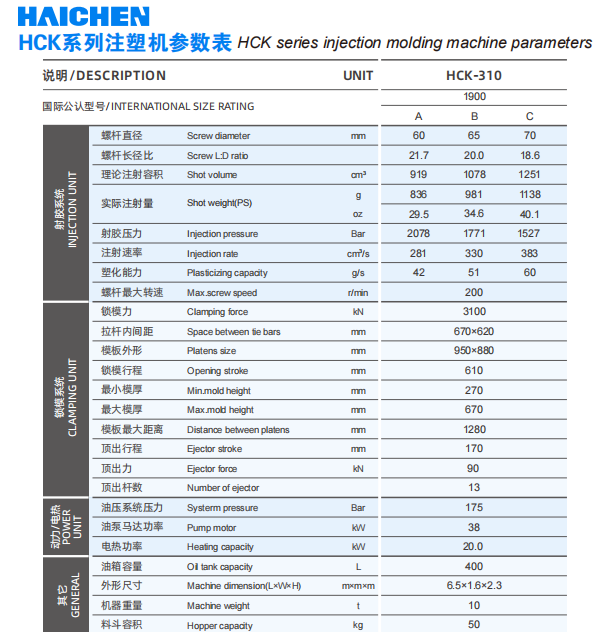
Tie‑bar spacing – The horizontal and vertical distance between the machine’s four tie‑bars. Your mold must be smaller than this. For a 32‑cavity ring handle mold, the mold is roughly 500–600mm wide. HCK 180 offers 570×520mm tie‑bar spacing, which comfortably fits most 32‑cavity handle molds.
Mold thickness – Must fall between the machine’s min and max mold height. Handle molds typically range from 200–400mm in thickness depending on cavity count and design complexity.
Opening stroke – Must be greater than “mold height + part height + removal space.” Ring handles are thin, but molds with sliders or complex mechanisms need more stroke.
Haichen HCK series tie‑bar spacing for your bottle handle injection molding machine:
| Haichen Model | Tie‑Bar Spacing | Max Mold Height | Opening Stroke |
|---|---|---|---|
| HCK 110 | 460×410 mm | 510 mm | 400 mm |
| HCK 150 | 520×470 mm | 550 mm | 460 mm |
| HCK 180 | 570×520 mm | 570 mm | 520 mm |
| HCK 230 | 620×570 mm | 620 mm | 560 mm |
| HCK 280 | 720×670 mm | 720 mm | 680 mm |
Haichen’s approach: When you provide your mold drawing, we check the tie‑bar spacing, mold thickness range, and opening stroke against the machine’s dimensions before we recommend a model. This ensures your bottle handle injection molding machine fits your mold perfectly.
Question 4 – How Do I Avoid Quality Problems?
Ring handles have two common defects: weld lines and sink marks. Most can be fixed with machine settings on your bottle handle injection molding machine.
Weld lines – A visible “line” on the ring. It looks bad and it’s the weakest point on the handle. It happens because melt splits into two flows inside the ring shape, and when they meet again, they’re not hot enough to fuse properly.
How to fix: raise melt temperature, increase injection speed, or optimize gate location through mold flow analysis.
Sink marks – Surface depressions on the handle. They happen because thicker sections cool slower and shrink more.
How to fix: increase holding pressure and time, design for uniform wall thickness, or add extra cooling channels in thick areas.
Haichen HCK series standard features for your bottle handle injection molding machine:
-
Multi‑stage injection speed control: Set different speeds for different sections of the ring handle
-
Multi‑stage holding pressure: 2‑stage holding pressure and melt control gradually eliminates sink marks
-
PID temperature control: Accurate barrel temperature control
-
High‑precision electronic ruler: Linear position control for injection ensures consistent shot size every cycle
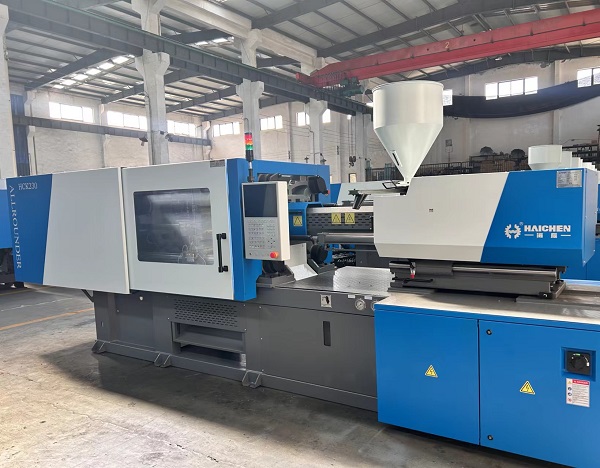
Question 5 – Should I Add Automation?
Ring handles are high‑volume, low‑margin products. Labor is your biggest hidden cost. The labor and efficiency gains from automation often pay back more than the machine itself. A fully automated bottle handle injection molding machine line can transform your cost structure.
Three automation levels for your bottle handle injection molding machine:
| Automation Level | Equipment | Labor Required | Investment | Best For |
|---|---|---|---|---|
| Semi‑auto | Machine + mold, manual removal | 4–5 operators/shift | Lowest | Trial runs, small batches |
| Robot‑assisted | Machine + robot removal | 2–3 operators/shift | Moderate | Medium output |
| Fully automatic | Robot + conveyor + vision + stacker | 1 operator/shift | Highest | High‑volume production |
Haichen HCK series automation features: HCK series comes standard with CE12 robot interface — plug‑and‑play with most robot brands. Optional hydraulic multi‑core pull system for complex molds. Many customers recover the automation investment within 12–18 months through labor savings and higher output.
Must‑check when buying: Even if you can’t afford full automation now, make sure your bottle handle injection molding machine has automation interfaces built in — CE12 robot interface and Euromap interface. Without these, you’ll either be stuck later or pay much more to retrofit.
Question 6 – How Do You Know if a Supplier Is Reliable?
Buying a bottle handle injection molding machine isn’t like buying off the shelf. You’re choosing a partner who’ll support your production for years. Different levels of machine builders vary a lot in these six areas.
Six dimensions to evaluate your bottle handle injection molding machine supplier:
| Evaluation Area | What to Look For | What to Ask |
|---|---|---|
| Manufacturing | Core parts made in‑house | “Do you make platens, tie‑bars, and screws yourself?” |
| Product track record | Has case studies for handle production | “What handle customers have you had? How long running?” |
| Quality certs | ISO+CE certifications | “Is your CE for the whole machine or just components?” |
| After‑sales | Overseas offices, fast parts delivery | “Do you have service people locally? How fast are spare parts?” |
| Value for money | Higher upfront, lower long‑term cost | “What’s included in the price? How does your spec compare?” |
| Customer references | Has global brands, repurchase >40% | “What’s your repeat order rate? Can we visit a running site?” |
Haichen’s approach: We welcome customers to visit our Ningbo factory and see machines running real parts. We have supplied bottle handle injection molding machines to customers across Southeast Asia, the Middle East, South America, and Africa. Our HCK series machines are built for 24/7 operation with minimal maintenance.
Haichen HCK Series for Handle Production
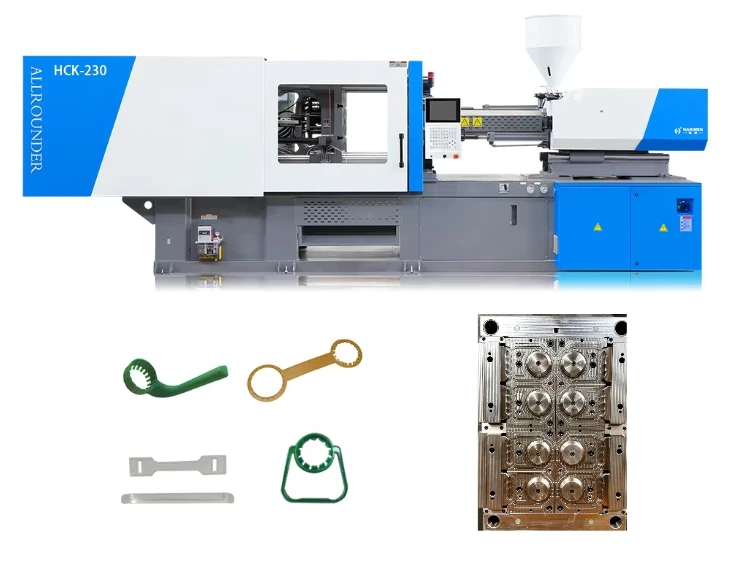
Haichen’s HCK series bottle handle injection molding machines cover the full range of handle production needs. Our machines are designed specifically for high‑volume, multi‑cavity handle production.
Recommended Haichen HCK models for bottle handle injection molding machine applications:
| HCK Model | Clamping Force | Recommended Cavities | Best for | Key Features |
|---|---|---|---|---|
| HCK 110 | 110 tons | 8–16 cavities | Small ring handles | Compact, energy efficient |
| HCK 150 | 150 tons | 16–24 cavities | Standard ring handles | Balanced performance |
| HCK 180 | 180 tons | 24–32 cavities | High‑volume ring handles | Fast injection speed |
| HCK 230 | 230 tons | 32–40 cavities | Large jug handles, bedding clips | Heavy‑duty clamping |
| HCK 280 | 280 tons | 40–48 cavities | Ultra‑high volume handle production | Maximum output |
All HCK series bottle handle injection molding machines come with:
-
Servo energy saving – reduces electricity costs by 30–50%
-
CE12 robot interface – supports automation integration
-
Multi-stage injection and holding pressure control – for consistent part quality
-
Multi-language control system – supports 21 languages
-
Hydraulic core-pull interfaces – standard on all models for complex handle molds
From Output to Machine – The Selection Roadmap
Ring handle product Output → Cavities
-
Under 20,000 pcs/day → 8–16 cavities → HCK 110 – HCK 150
-
20,000–50,000 pcs/day → 16–24 cavities → HCK 150 – HCK 180
-
50,000–100,000 pcs/day → 24–32 cavities → HCK 180 – HCK 230
-
Over 100,000 pcs/day → 32–48 cavities → HCK 230 – HCK 280
Mould Cavities → Tonnage
-
8–16 cavities → 110–150 tons (HCK 110 – HCK 150)
-
16–24 cavities → 150–180 tons (HCK 150 – HCK 180)
-
24–32 cavities → 180–230 tons (HCK 180 – HCK 230)
-
32–48 cavities → 230–280 tons (HCK 230 – HCK 280)
Injection molding machine Tonnage → Check Dimensions
-
Tie‑bar spacing ≥ mold size
-
Mold height range ≥ mold thickness
-
Opening stroke ≥ mold height + part height + removal space
-
Multi‑stage injection speed + multi‑stage holding pressure (standard on HCK)
-
Robot control interface (standard on HCK)
-
Servo energy saving (saves 20–40% electricity)
Questions you may have
What is a bottle handle injection molding machine?
A bottle handle injection molding machine melts plastic pellets and injects them into a mold to form ring handles, pull rings, and carrying handles for bottles and containers. The machine heats the plastic, injects it under high pressure, cools it, and ejects the finished handles. These machines are designed for high‑speed, multi‑cavity production of small precision parts.
What is the difference between ring handles and bottle handles?
Ring handles are circular handles that attach around the neck of a PET bottle. Bottle handles is a broader term that includes ring handles and larger carrying handles for jugs and containers. Both are produced on a bottle handle injection molding machine with similar machine configurations.
How many cavities should my handle mold have?
It depends on your output target. For medium‑volume production, 16–24 cavities is common. For high‑volume production, 24–32 cavities gives better per‑part cost. And For ultra‑high production, 32–48 cavities can be cost‑effective. Haichen offers 6 to 72 cavities for handle production.
How much does a bottle handle injection molding machine cost?
Costs vary by configuration and tonnage. An injection molding machine in the 110–280 ton range typically costs between $30,000 and $120,000 depending on configuration and auxiliary equipment (mold, chiller, dryer, robot). Contact Haichen for current pricing based on your specific requirements.
Can one bottle handle injection molding machine produce both ring handles and jug handles?
Yes, by changing molds. However, if ring handles are your main product, we recommend dedicating a machine to them. Frequent changeovers waste time and affect consistency. Haichen HCK series bottle handle injection molding machines support quick mold changes for flexibility.
Why is a bottle handle injection molding machine better than a general‑purpose machine?
A general‑purpose injection molding machine lacks the specific features needed for handle production. A dedicated bottle handle injection molding machine offers higher injection speed for thin sections, better multi‑cavity consistency, and optimized screw design for PP and PE materials. It also comes with automation interfaces that general‑purpose machines often lack.
Does Haichen provide whole‑line solutions for handle production?
Yes. Haichen provides the bottle handle injection molding machine, mold recommendations, drying system, chilling system, robot, and conveyor. We also provide installation, commissioning, and operator training. Our service covers many countries worldwide.
Haichen Machinery – your bottle handle injection molding machine partner. From HCK 110 to HCK 280, from 8 to 48 cavities, we help you get the right machine for your handle production.
Author: Yang, Senior Engineer, Haichen Machinery