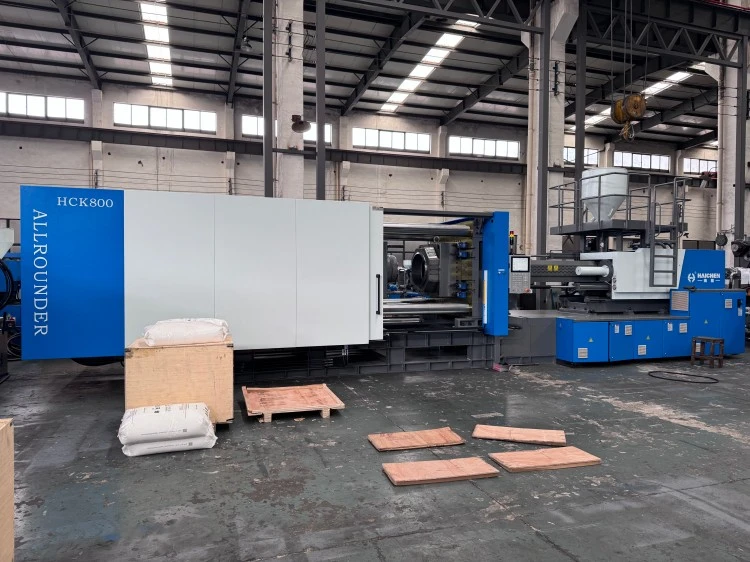
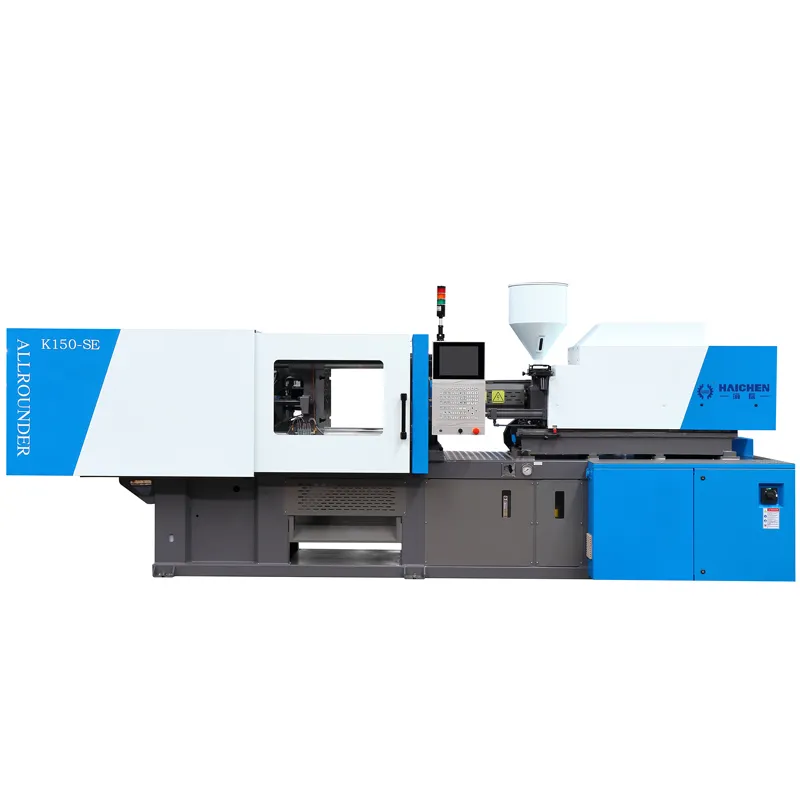
Plastic stool machinery cost is the first question manufacturers ask when planning a new production line. The total equipment cost for a plastic stool production line typically ranges from $80,000 to $250,000, depending on the injection molding machine tonnage, mold configuration, and auxiliary equipment selected.
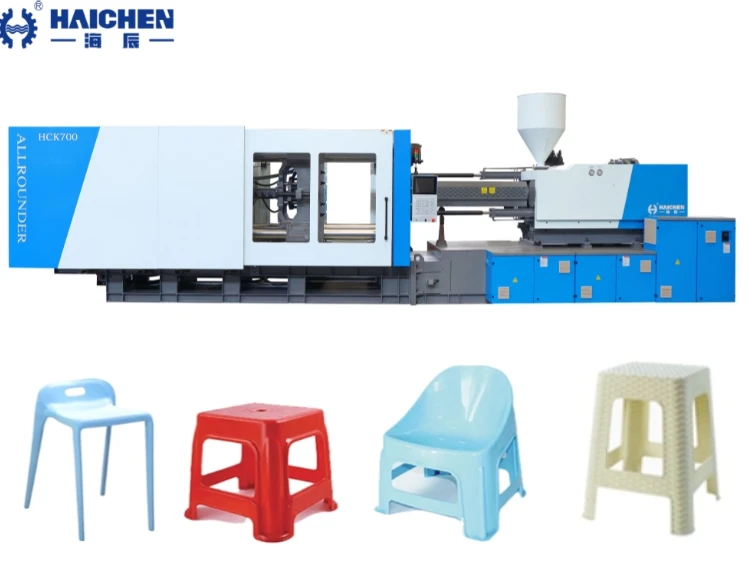
This guide breaks down plastic stool machinery cost components — injection molding machines, molds, and auxiliary equipment — with real case studies and practical selection rules to help you plan your investment. Whether you produce simple folding stools or high-end rattan-style bar stools, this resource will help you make an informed purchase decision.
Plastic Stool Machinery Cost Breakdown by Equipment Type
A plastic stool production line requires several key pieces of equipment working together:
- Injection Molding Machine – The Core Investment
- Stool Mold – The Key to Product Quality
- Auxiliary Equipment – Supporting Efficient Production
Each component plays a critical role in production efficiency, product quality, and total cost of ownership. Let’s examine each one in depth.
Injection Molding Machine – The Core Investment
The plastic stool injection molding machine is the largest plastic stool machinery cost component, typically accounting for 60-70% of the total equipment budget. For stool production, the minimum machine size is generally 530 tons for small stools, but most standard stools require 600-800 tons, and large bar stools may need 1,000 tons or more.
Why tonnage matters: The clamping force must be sufficient to keep the mold closed during injection. For a stool with a projected area of roughly 30,000-50,000 mm², a rule of thumb is 2-3 tons of clamping force per cm² of projected area. This means a 530-ton machine is adequate for small stools (around 450mm height), while larger or thicker stools demand higher tonnage.
Price range: A 530-ton servo machine typically costs $65,000-$90,000, while a 600-800 ton machine may range from $90,000 to $150,000. Servo energy-saving systems add upfront cost but reduce electricity consumption by 30-50% – a crucial factor for long-term ROI.
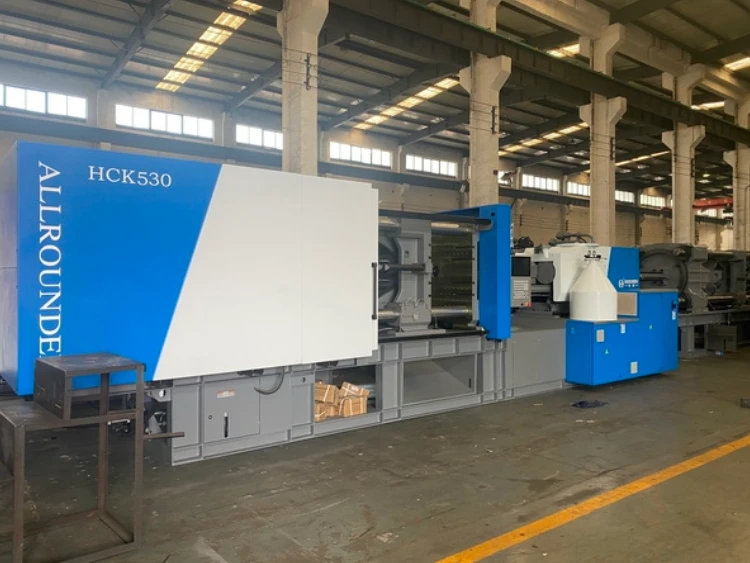
injection molding machine
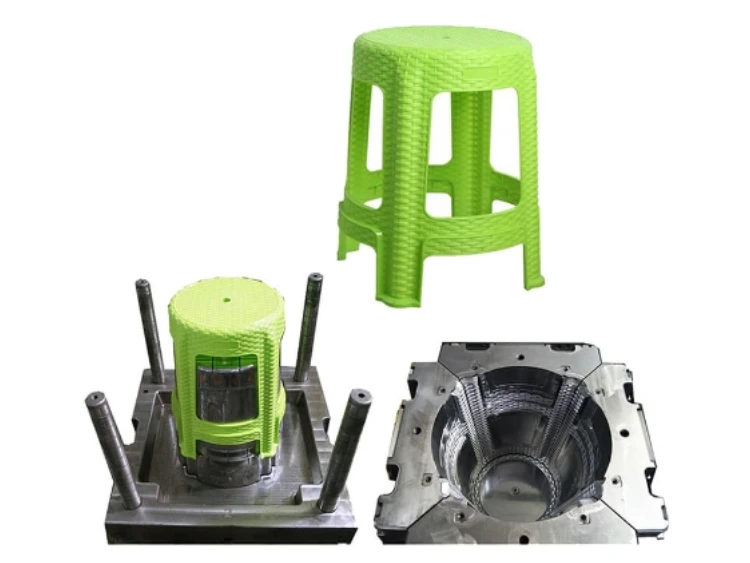
Stool Mold – The Key to Product Quality
The mold determines product precision, surface finish, and production efficiency. Mold costs can range from $1,000 to over $20,000, depending on the following factors:
| Factor | Option | Cost Range |
|---|---|---|
| Mold material | P20 steel | Economical, up to 500,000 shots |
| Mold material | 718 steel | Higher cost, over 1 million shots |
| Runner type | Cold runner | Simpler, more waste |
| Runner type | Hot runner | 30-50% more, no waste |
| Cavity count | Single-cavity | $3,000-$8,000 |
| Cavity count | Multi-cavity (2-4) | $10,000-$20,000+ |
Recommendation: For most small-to-medium stool manufacturers, a single-cavity hot-runner mold with P20 or 718 steel offers the best balance of cost and quality.
Auxiliary Equipment – Supporting Efficient Production
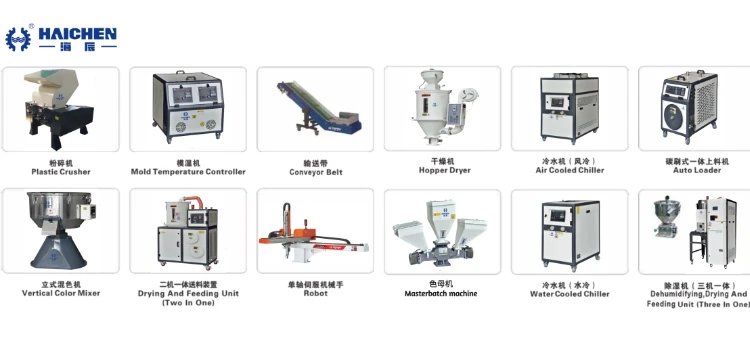
A complete stool production line requires several auxiliary machines:
| Auxiliary Equipment | Function | Estimated Cost |
|---|---|---|
| Autoloader | Automatic material feeding | $500-$3,000 |
| Crusher | Recycling scrap and runners | $1,500-$10,000 |
| Chiller | Mold temperature control | $1,500-$15,000 |
| Robot (optional) | Automatic part removal | $3,000-$15,000 |
The total auxiliary investment typically ranges from $6,500 to $43,000. While optional, a robot can significantly reduce labor costs and improve safety, especially for heavy stools.
How to Calculate the Total Equipment Investment
Entry-Level Configuration
For small‑scale stool production (single shift, manual operation):
- 530‑ton servo injection machine
- One single‑cavity cold‑runner mold (P20 steel)
- Basic auxiliary equipment (autoloader, small crusher, basic chiller)
- Total investment: approximately $80,000‑$120,000
Standard Configuration
For medium‑scale production with higher efficiency:
- 600‑800 ton servo machine
- One or two hot‑runner molds (718 steel, 500,000‑shot lifespan)
- Full auxiliary equipment including robot for automatic ejection
- Total investment: approximately $150,000‑$220,000
Factors Affecting Total Cost
Several variables influence the final equipment cost:
- Machine tonnage: Higher tonnage means higher price
- Mold complexity: Hot runner vs. cold runner, multi-cavity vs. single-cavity
- Automation level: Robot arms increase upfront cost but reduce labor
- Brand and quality: Servo energy-saving systems cost more but reduce long-term electricity expenses
Haichen Case Study – HCK530 for Plastic Stool Production
Haichen HCK530 – The Optimal Choice for Stools
Haichen’s HCK530 injection molding machine features 5,300 kN clamping force and an 850mm mold opening stroke. This stroke is ideal for 450-460mm high stools, following the practical rule: mold opening stroke ≈ stool height × 2 minus a few centimeters. The HCK530’s servo energy-saving system reduces electricity consumption by 30-50% compared to traditional hydraulic machines, making it a cost-effective choice for stool manufacturers.
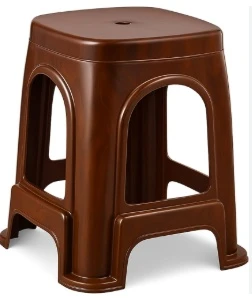
Case 1: Rattan-Style Stool (260×260×460mm)
| Parameter | Specification |
|---|---|
| Product Size | 260×260×460 mm |
| Material | PP |
| Gas-Assist | None |
| Machine Model | Haichen HCK530 |
| Mold Material | 718 Steel |
| Runner Type | Hot Runner |
| Mold Lifespan | 500,000 shots |
Selection logic: Stool height 460mm × 2 = 920mm. HCK530’s 850mm stroke is slightly smaller, perfectly matching the practical rule. PP material flows well, and 530 tons of clamping force is more than sufficient for this 260×260mm projection area.
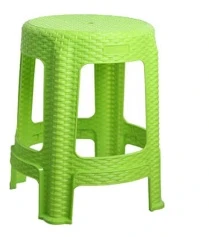
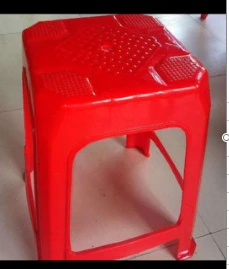
Case 2: Red Stool (450mm Height)
| Parameter | Specification |
|---|---|
| Product Height | 450 mm |
| Material | PP |
| Machine Model | Haichen HCK530 |
| Mold Material | P20 Steel |
| Mold Size | 650×650×720 mm |
| Runner Type | Cold Runner |
| Mold Lifespan | 500,000 shots |
Selection logic: Stool height 450mm × 2 = 900mm. HCK530’s 850mm stroke provides adequate ejection clearance. The 650×650mm mold fits comfortably within the HCK530’s 870×820mm tie-bar spacing, and the 720mm mold height falls within the machine’s 320-870mm allowable range.
Frequently Asked Questions
Q: What is the typical plastic stool machinery cost for a complete production line?
A: The total plastic stool machinery cost typically ranges from $80,000 to $250,000, depending on machine tonnage, mold configuration, and automation level. Entry-level setups start around $80,000, while fully automated lines reach $250,000.
Q: What tonnage injection molding machine do I need for plastic stools?
A: For most stools, a 530-ton machine (like Haichen HCK530) is sufficient for heights up to 450mm. For larger bar stools or higher output, 600-800 tons may be needed. The rule of thumb is 2-3 tons per cm² of projected area.
Q: How much does a plastic stool mold cost?
A: A single-cavity mold ranges from $3,000 to $8,000, while multi-cavity molds cost $10,000-$20,000+. P20 steel is more economical, while 718 steel offers longer lifespan for high-volume production.
Q: What auxiliary equipment do I need for a stool production line?
A: Essential auxiliary equipment includes an autoloader ($500-$3,000), crusher ($1,500-$10,000), and chiller ($1,500-$15,000). Optional robots ($3,000-$15,000) can automate part removal and reduce labor costs.
Q: Can I reduce plastic stool machinery cost by choosing a smaller machine?
A: Yes, but ensure the machine has sufficient clamping force and opening stroke for your product. Haichen’s HCK530 offers an 850mm stroke, which is ideal for 450-460mm tall stools, providing a cost-effective balance.