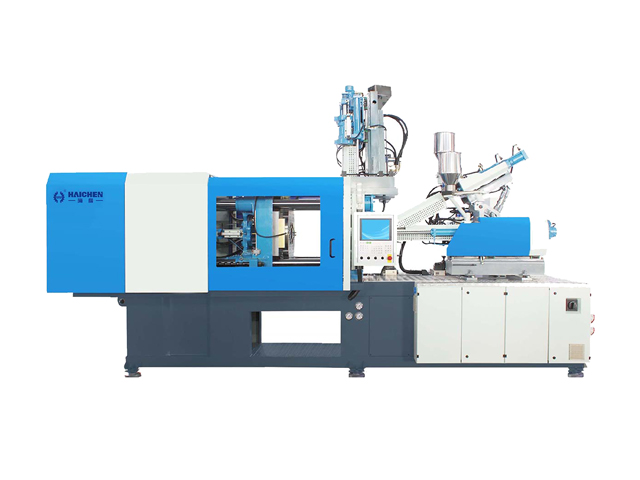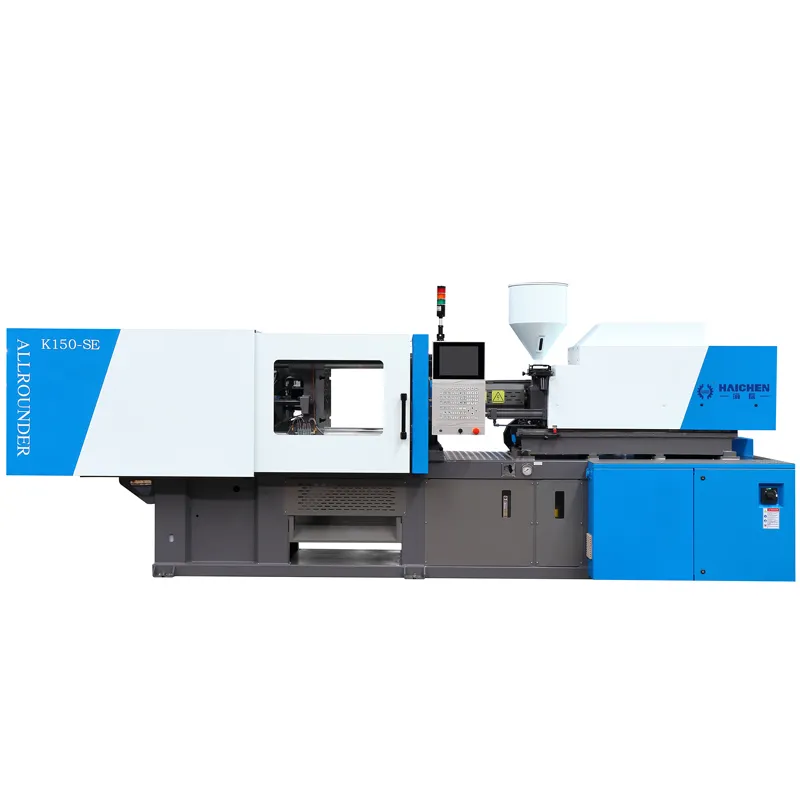
Different plastic crate types need injection molding machine options with clamp force, screw design, and automation for production.
The global supply chain and manufacturing sectors rely heavily on plastic crates for efficient storage, transport, and inventory management. Selecting the right crate design depends on the product being carried, while selecting the right manufacturing machine depends on your production scale, budget, and strength requirements.
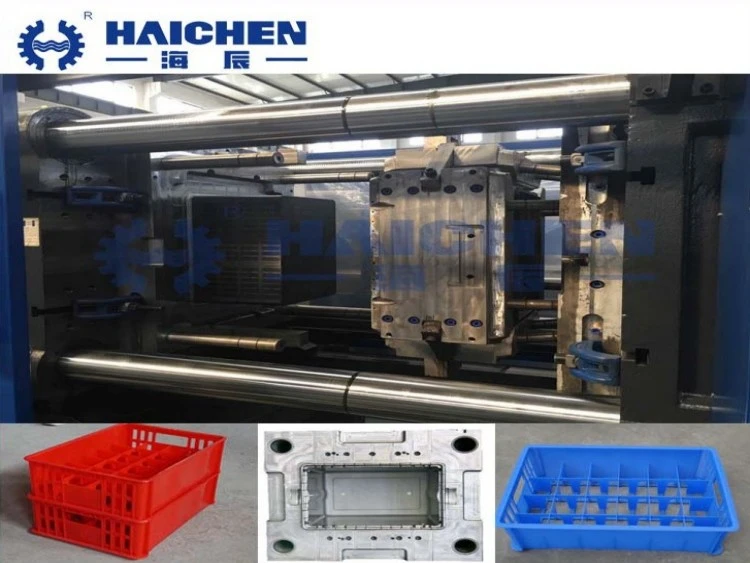
Plastic crates are widely used in agriculture, logistics, and food industries. The table below summarizes common crate types and their typical applications. Different crates require specific clamping force, shot size, mold structure, and automation.
This article will analyze how to scientifically select and match machines to reduce scrap rates and costs from four aspects: production challenges, design optimization, practical cases, and the advantages of Haichen injection molding machines.
| Crate Type | Typical Application | Key Features |
|---|---|---|
| Tote bin | Warehousing, logistics | Large size, uniform wall thickness |
| Folding crate | Returnable transport | Hinge structure, sliding mechanism |
| Core-pulling crate | Fruit crates, beverage crates | Side holes/handles, hydraulic/pneumatic core |
| Seafood crate | Seafood transport | Saltwater corrosion resistant, HDPE |
| Chick crate | Poultry farming | Fine holes, high precision |
| Cola/Beer crate | Beverage packaging | Multi-compartment, hot runner common |
| Storage box | Home storage | Good appearance, thin wall |
| Food crate | Food processing | Non-toxic, special screw |
Main Types of Plastic Crates and Production Challenges
- Common Tote Bins and Folding Crates
- Core-Pulling vs. Non-Core-Pulling Crates
- Special Requirements for Seafood, Chick & Food Crates
Common Tote Bins and Folding Crates
Tote bins usually have large dimensions and uniform wall thickness, requiring high clamping force and large shot size. For example, a 600×400mm tote bin weighing 800g requires a clamping force of at least 250 tons. Folding crates demand smooth sliding mechanisms to prevent jamming. A one-piece folding crate (60×40×12cm) requires a hot runner and multi-point ejection to ensure hinge durability.
Core-Pulling vs. Non-Core-Pulling Crates
Core-pulling crates (e.g., cherry crate, cola crate) have side holes or handles needing hydraulic or pneumatic cores. The mold is complex, and the injection machine must be equipped with multiple core-pulling control valves. Non-core-pulling crates have a simple structure and are suitable for high-speed production, with cycle times reduced by over 20%.
Special Requirements for Seafood, Chick & Food Crates
Seafood crates are exposed to saltwater for long periods, requiring corrosion resistance – HDPE is commonly used. Chick crates need fine ventilation holes (1-2mm diameter, 5mm spacing), requiring precision molds and high-speed injection. Food crates must be non-toxic and odorless; the injection screw needs chrome plating or bimetallic treatment to prevent material degradation.
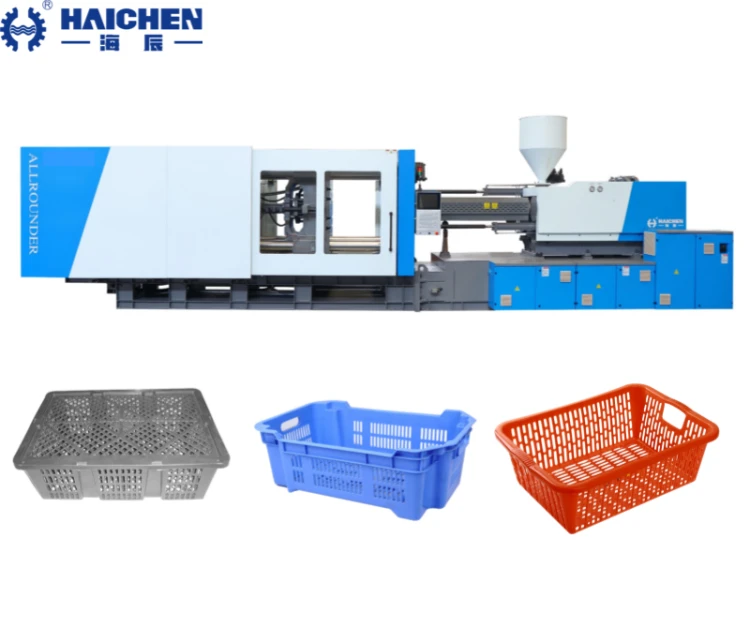
Machine Options for Crate Manufacturing
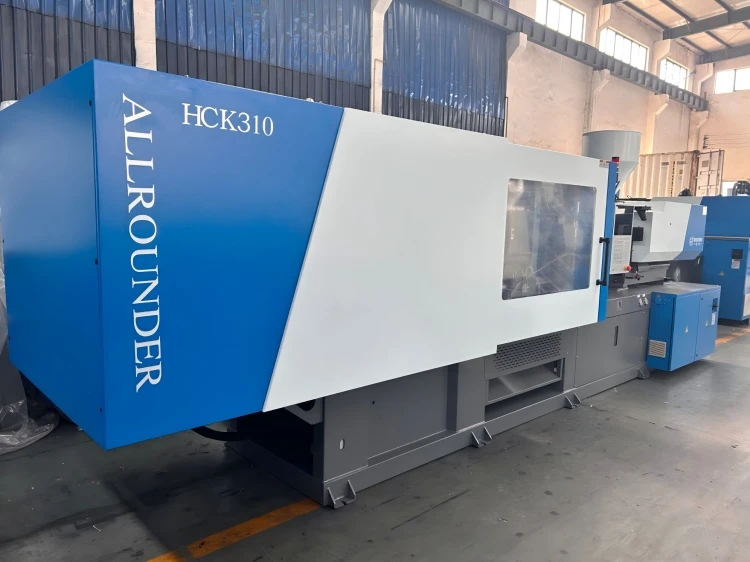
Conventional Plastic Injection Moulding Machine
- How it works: Molten resin (HDPE/PP) is forced under high pressure into a precision steel mould.
- Best for: Mass‑producing uniform, high‑density rigid crates (e.g., standard milk or fruit crates).
- Pros: High cycle speeds, excellent detail accuracy, low per‑unit cost.
- Cons: High upfront capital cost for custom steel tooling and moulds.
Structural Foam Injection Moulding Machine
- How it works: Inert gas or foaming agent is injected into the melted plastic before low‑pressure moulding.
- Best for: Oversized, heavy‑duty industrial bulk pallet boxes and thick logistics containers.
- Pros: Creates a cellular core with a solid skin – outstanding strength‑to‑weight ratio and impact flexibility.
- Cons: Surface finish has a swirling, textured appearance (not smooth and glossy).
Rotational Moulding Machine (Roto‑Moulding)
- How it works: Granular resin is loaded into a hollow clamshell mould that rotates biaxially while heated.
- Best for: Ultra‑durable, thick double‑wall crates or low‑volume custom runs.
- Pros: Uniform, stress‑free wall thickness with reinforced corners.
- Cons: Slower cycle times per unit compared to injection moulding.
Key Challenges and Equipment Selection Considerations in Plastic Crates Manufacturing
Key Manufacturing Difficulties for Plastic Crates
- Warpage and Dimensional Stability
- Wear and Jamming of Core-Pulling Molds
- Material Adaptability for Different Applications
| Difficulty | Cause | Haichen Solution |
|---|---|---|
| Warpage | Uneven cooling, insufficient packing | High-rigidity platen + Servo pump + Multi-stage injection |
| Core wear/jamming | Frequent action, poor lubrication | Multi-group core control + Sequence programming |
| Material adaptation | Different shrinkage of PP/HDPE | Adaptive back pressure + Fast screw change |
Warpage and Dimensional Stability
Large thin-walled plastic crates warp easily, especially the four corners shrinking inward. Multi-stage injection, precise mold temperature control (40-60°C recommended), and a servo pump system to maintain stable holding pressure are required. Haichen’s high-rigidity platen (deflection <0.05mm) significantly reduces warpage.
Wear and Jamming of Core-Pulling Molds
Core-pulling molds (e.g., the 6 hydraulic cylinders on a cola crate) experience frequent action, leading to core wear – typically requiring replacement every 100k shots. High-quality mold steel (e.g., 2738, 718) and independent lubrication control are essential. Haichen machines support core sequence programming to avoid interference between core pulling and ejection, extending mold life.
Material Adaptability for Different Applications
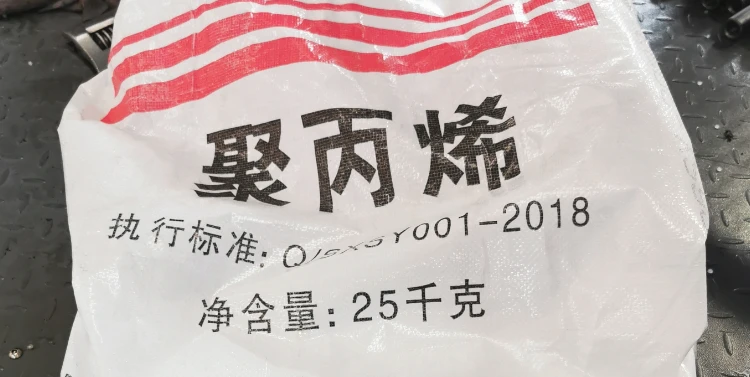
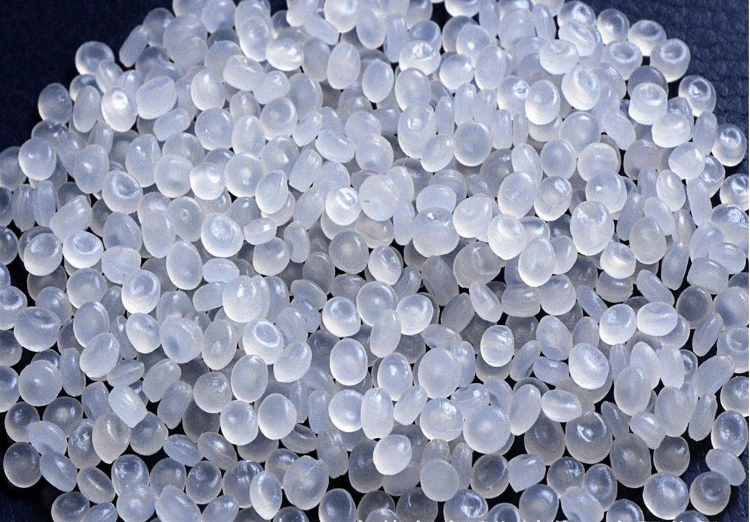
PP suits lightweight crates, with shrinkage of 1.5-2.0%; HDPE suits heavy-duty crates, with shrinkage of 1.0-1.5%. PP has good flowability but poor dimensional stability, while HDPE has low shrinkage but requires 15-20% higher injection pressure. Haichen machines offer multi-stage injection and adaptive back pressure control, enabling fast material change within 10 minutes.
Machine Parameter Selection Guide
Clamping Force Calculation
[NEW] Clamping force is the most critical parameter for crate production. Use the formula: F = (p × A) / 10,000, where F = required clamping force (tons), p = injection pressure (bar), A = projected area (cm²).
| Crate Type | Typical Size | Projected Area (cm²) | Recommended Clamping Force | HAICHEN Model |
|---|---|---|---|---|
| Small fruit crate | 300×200mm | 600 | 120-180 tons | HCK 150 |
| Standard cola crate | 400×300mm | 1,200 | 200-280 tons | HCK 280 |
| Large tote bin | 600×400mm | 2,400 | 310-400 tons | HCK 310 |
| Folding crate (hinge) | 600×400mm | 2,400 | 450-600 tons | HCK 530 |
| Heavy-duty pallet box | 800×600mm | 4,800 | 800-1000 tons | HCK 1000 |
Shot Size and Screw Design
Shot size must match the total part weight including runners. For multi-cavity molds, multiply by cavity count.
Screw design considerations:
- PP (Polypropylene): General-purpose screw, L/D ratio 20-22, compression ratio 2.5-3.0
- HDPE: Barrier screw design for better melting, L/D ratio 22-25
- Seafood crates (HDPE): Corrosion-resistant screw with bimetallic coating
- Food-grade crates: Chrome-plated screw to prevent contamination
HAICHEN machines offer quick screw change capability, reducing downtime from 4 hours to 45 minutes.
Key Parameter Quick Reference
| Parameter | Optimal Range | Why It Matters |
|---|---|---|
| Clamping Force | 150-600 tons | Prevents flash and ensures dimensional stability |
| Shot Size | 500-3000g (per cycle) | Determines maximum crate weight / cavity count |
| Injection Pressure | 180-220 MPa | Ensures complete filling of thin-wall sections |
| Injection Speed | 100-300 mm/s | Affects flow mark and surface quality |
| Mold Temperature | 30-60°C (PP), 20-50°C (HDPE) | Controls cooling rate and warpage |
| Melt Temperature | 200-230°C (PP), 220-280°C (HDPE) | Affects flowability and material degradation |
How Haichen Optimizes Crate Design to Reduce Cost and Rejection Rate
- Hot Runner & Pneumatic Puller Technology
- Automation Integration to Reduce Labor
- Cycle Time Optimization & Energy Recovery
| Optimization | Effect | Technology |
|---|---|---|
| Hot runner + pneumatic puller | Material save 15%+, unmanned | Valve gate hot runner, pneumatic hook |
| Robot + auto weighing | Rejection 5% → 1.5% | Integrated control |
| Servo energy recovery + cooling optimization | Cycle time -20%, electricity -40% | Servo pump + conformal cooling |
Hot Runner & Pneumatic Puller Technology
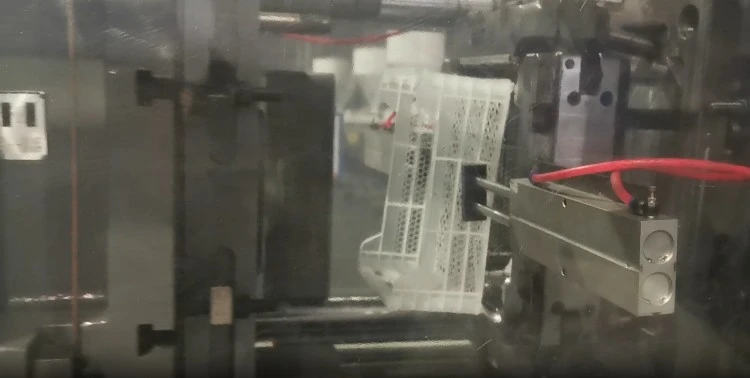
For the cherry crate, Haichen designed a 718 steel mold with hot runner, combined with a pneumatic puller for automatic demolding – no manual part removal for 600k shots. The hot runner eliminates cold sprue, saving over 15% material per shot. At 2000 shots per day, one machine saves about 30,000 RMB in material cost annually.
Automation Integration to Reduce Labor
In fruit crate production, Haichen machines integrate robots, conveyors, and automatic weighing systems. Parts are weighed immediately after ejection, and rejects are automatically removed, reducing the rejection rate from 5% to below 1.5%. At the same time, two operators are saved per machine, cutting labor costs by over 100,000 RMB per year.
Cycle Time Optimization & Energy Recovery
By optimizing cooling channels (conformal cooling) and servo motor response speed, Haichen shortened the cola crate cycle from 35 seconds to 28 seconds – a 20% increase in daily output. The servo pump energy recovery system saves 30-50% on electricity. For the HCK310, power consumption is only 12-15 kWh per hour, 40% less than conventional machines.
Haichen K Series: Real Cases for Plastic Crates
- Cherry Crate (Core-Pulling, Pneumatic Puller Auto Demolding)
- Cola Crate (6 Hydraulic Cylinders + Hot Runner)
- Avocado Crate with Lid (Cold Runner)
- One-Piece Folding Crate (P20 Hot Runner, HCK600)
Cherry Crate (Produced on HCK310)
| Parameter | Value |
|---|---|
| Product size | 400×300×140mm |
| Weight | 300g |
| Material | PP / HDPE |
| Mold steel | 718 |
| Runner | Hot runner |
| Mold life | 600k shots |
| Mold size | 800×700×510mm |
| Mold weight | 2300kg |
| Demolding | Pneumatic puller auto |
| Machine | Haichen HCK310 servo |
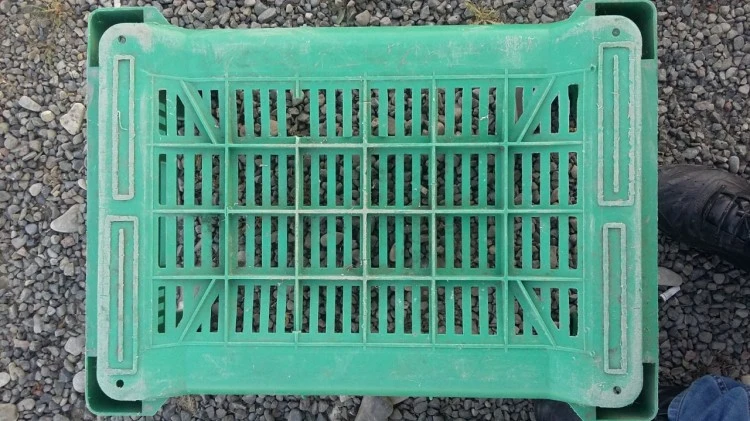
This solution achieves fully automatic unmanned production with a cycle time of 22 seconds, yielding about 3900 pieces per day. The pneumatic puller leaves no ejector pin marks, giving the crate a smooth surface finish.
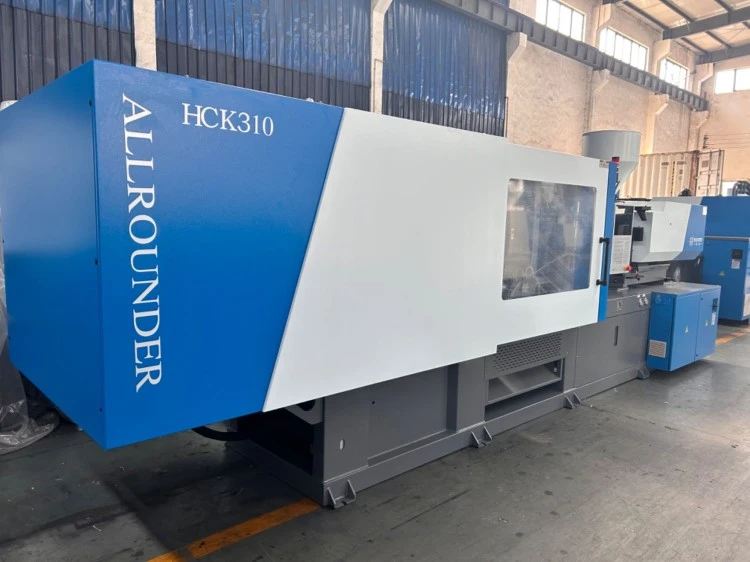
Cola Crate (Produced on HCK310)
| Parameter | Value |
|---|---|
| Mold size | 900×800×793mm |
| Mold steel | 2738 (Germany), HRC33-40 |
| Hot runner | YUDO 4-point valve gate |
| Hydraulic cylinders | 6 pcs |
| Nitriding | Yes |
| Machine | Haichen HCK310 servo |
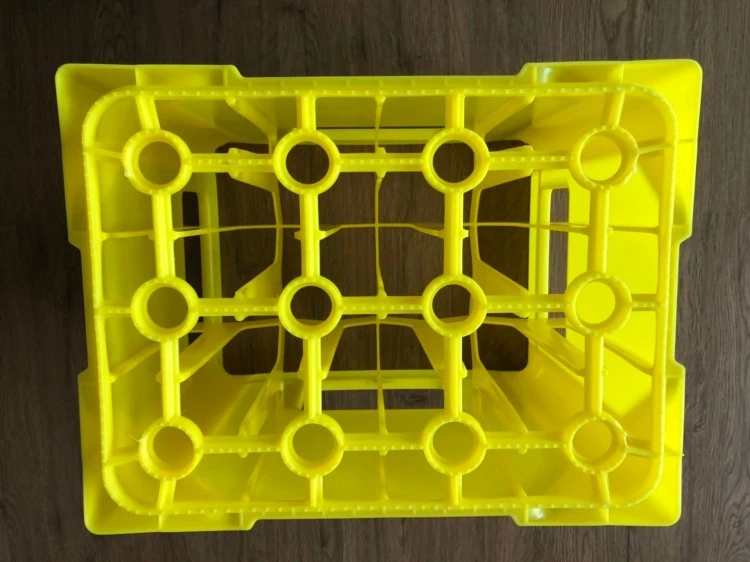
The 6 hydraulic cylinders perform synchronous core pulling, with action sequence independently controlled by the Haichen machine – no interference. In actual production, mold opening and closing are stable, daily output is 2800 pieces, and the rejection rate is only 1.2%.
Avocado Crate with Lid (Produced on HCK310)
| Part | Crate Body | Lid |
|---|---|---|
| Size | 490×300×150mm | 480×280×2mm |
| Weight | 430g | 50g |
| Material | HDPE | HDPE |
| Mold steel | P20 | P20 |
| Runner | Cold runner | Cold runner |
| Mold life | 500k shots | 500k shots |
| Machine | Haichen HCK310 servo | same machine, mold change |
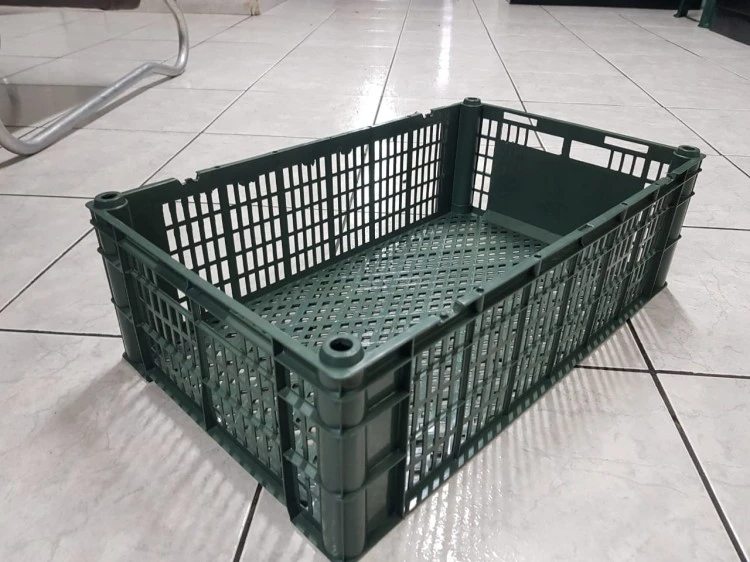
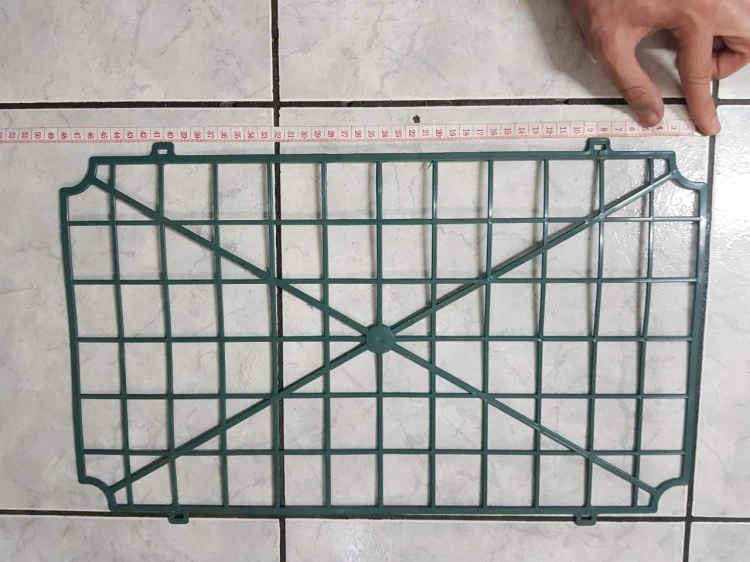
The avocado crate body has a thicker wall (2.5mm), requiring a longer holding pressure time. The HCK310 uses multi-stage holding pressure curves to solve sink marks. The lid is only 2mm thick; high-speed injection causes no flash. One machine handles both molds.
One-Piece Folding Crate (Recommended HCK600)
| Parameter | Value |
|---|---|
| Product size | 60×40×12cm |
| Mold size | 1150×800×600mm |
| Mold steel | P20 |
| Runner | Hot runner |
| Recommended machine | Haichen HCK600 (600T) |
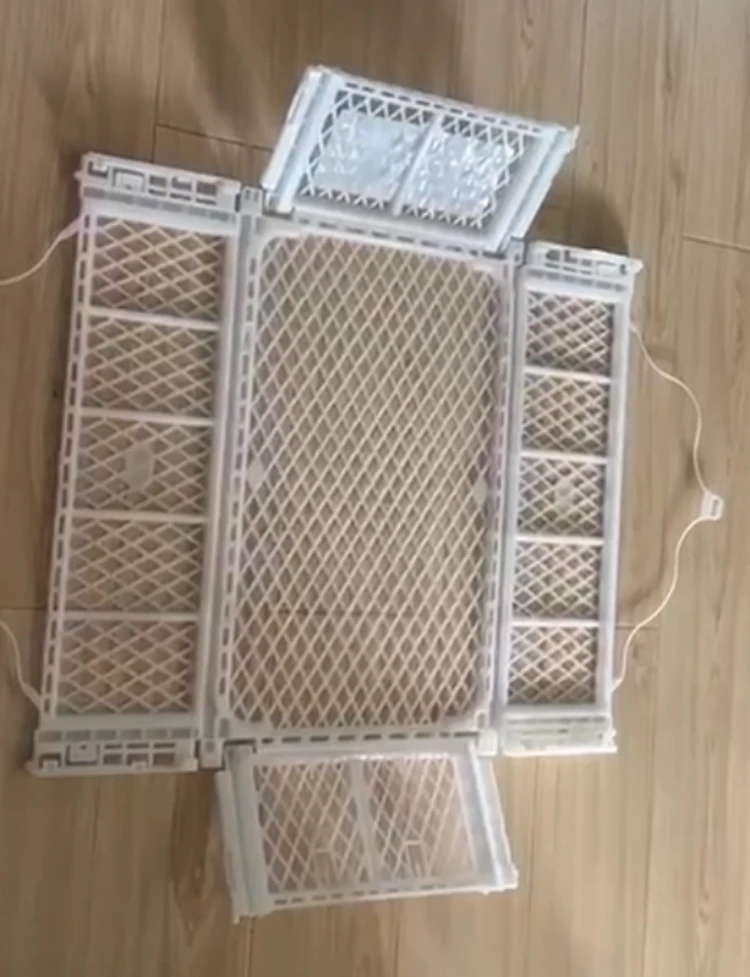
The hinge area of a folding crate requires extremely high precision. The HCK600 has 600T clamping force and a platen size of 1300×1200mm, capable of accommodating this mold. The hot runner ensures no weld lines in the hinge area, with hinge life tested to exceed 50,000 cycles.
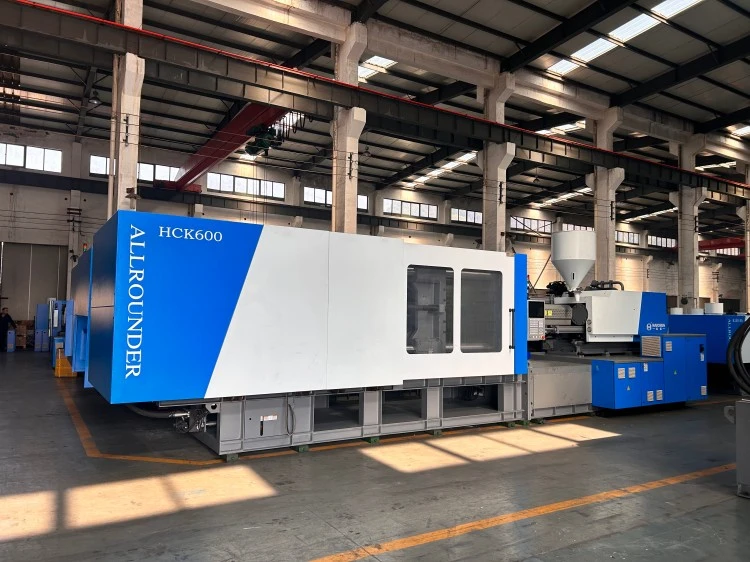
Advantages of Haichen Injection Molding Machines for Crate Production
| Advantage | Description | Value for Crate Production |
|---|---|---|
| High-rigidity platen | FEA-optimized, deflection <0.05mm | Uniform thickness for large crates, no flash |
| Servo energy-saving | Standard, saves 40-70% | Saves ~200 RMB per 10k shots for cola crate |
| Multi-core control | Up to 10 groups, pneumatic/hydraulic mixed | For cherry & cola crate complex cores |
| Automation interfaces | Robot, mold temp, hot runner ready | Plug-and-play integration |
| Clamping accuracy | ±1% | Avoid flash or short shots |
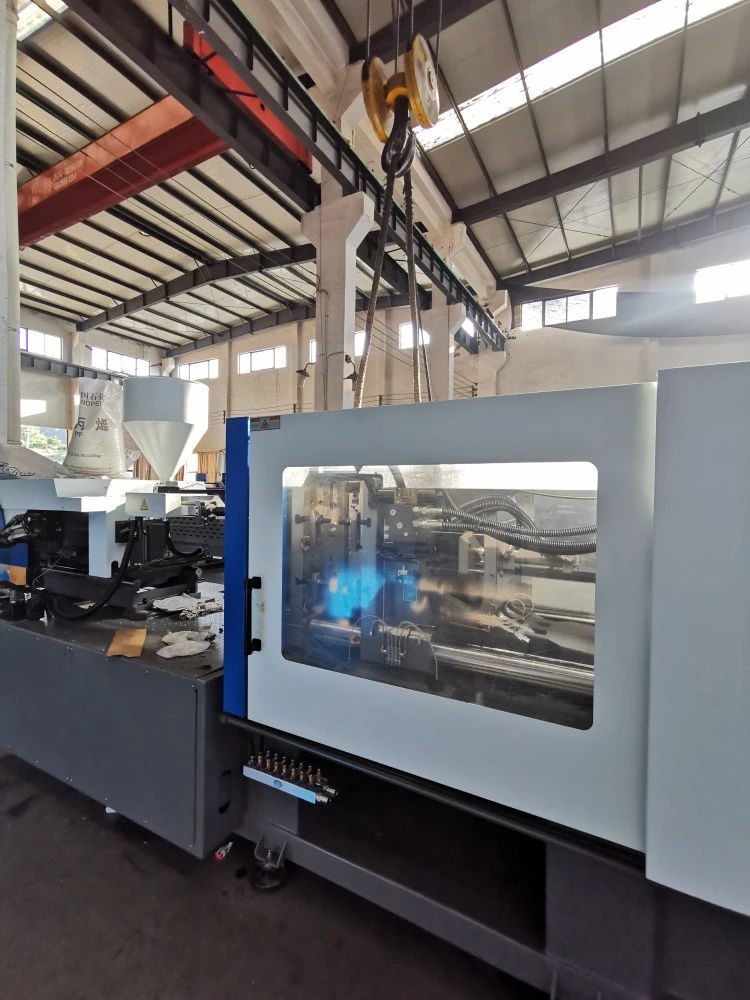
Different plastic crates require specific clamping force, shot size, core functions, and automation levels. Key manufacturing challenges are warpage, core mold wear, and material adaptation. Haichen machines reduce cost and rejection through hot runner/pneumatic demolding, automation integration, and cycle optimization.
Frequently Asked Questions
Q: What is the most important parameter for a plastic crate injection molding machine?
A: Clamping force is the most critical parameter. It must match the projected area of the crate plus a safety factor of 1.2-1.5. For a 600×400mm crate, at least 250 tons is required.
Q: What machine do I need for core-pulling crates?
A: Core-pulling crates (e.g., cola or cherry crates with side holes) need injection machines with multiple core-pulling control valves (pneumatic or hydraulic). HAICHEN machines support up to 10 groups of core control. The HCK310 is a common choice for these applications.
Q: What is the difference between PP and HDPE for crate production?
A: PP has lower density and better flowability but higher shrinkage (1.5-2.0%), making it ideal for lightweight crates. HDPE has higher strength, lower shrinkage (1.0-1.5%), and better corrosion resistance, making it ideal for seafood and heavy-duty crates. HAICHEN machines support quick screw change for both materials.
Q: How many cavities can a crate mold have?
A: Most crate molds use 1-2 cavities due to large part size. For small fruit crates (300×200mm), 2-cavity molds are common. For large totes (600×400mm), single-cavity is standard. The HCK310 handles 1-2 cavity molds efficiently.
Q: Does HAICHEN offer machines for folding crates?
A: Yes. Folding crates require higher clamping force (530-600 tons) and larger platen size. The HCK530 and HCK600 are recommended, with 1300×1200mm platen size to accommodate folding crate molds.
Q: What is the typical cycle time for a plastic crate?
A: Cycle time varies by crate size and material. Small fruit crates: 18-22 seconds. Cola crates: 28-35 seconds. Large totes: 35-45 seconds. HAICHEN servo machines and conformal cooling technology can reduce cycle time by up to 20%.