Electricity costs are a major expense for plastic toy manufacturers. Injection molding machines run continuously during production shifts. The machine motor consumes power throughout each cycle, including idle periods when no movement occurs. Many plastics toy factories still operate older hydraulic machines. These units run the pump motor at constant speed regardless of actual demand. This wastes significant energy during cooling, holding pressure, and idle phases.
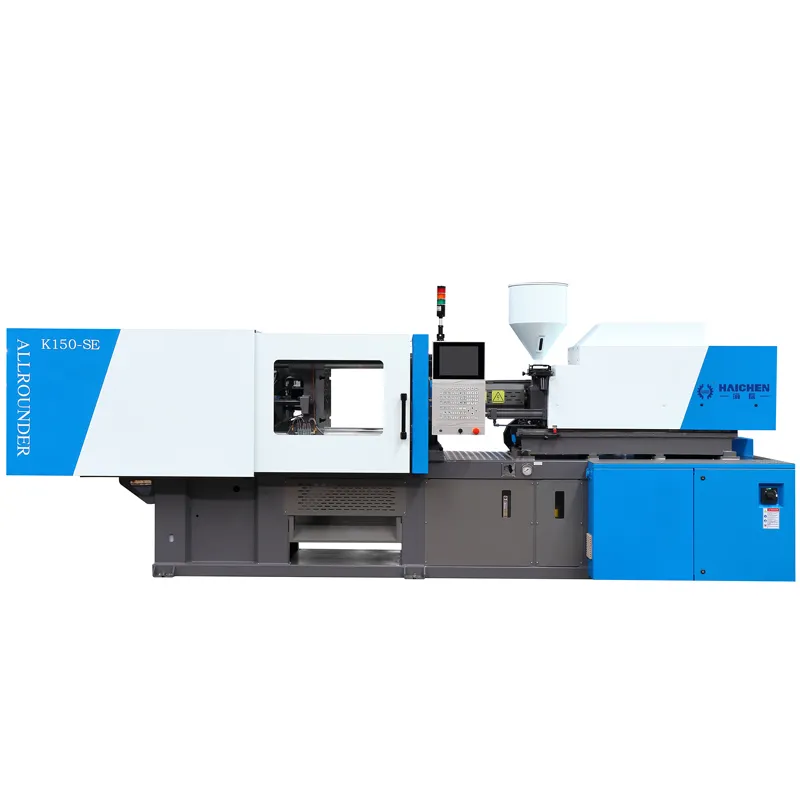
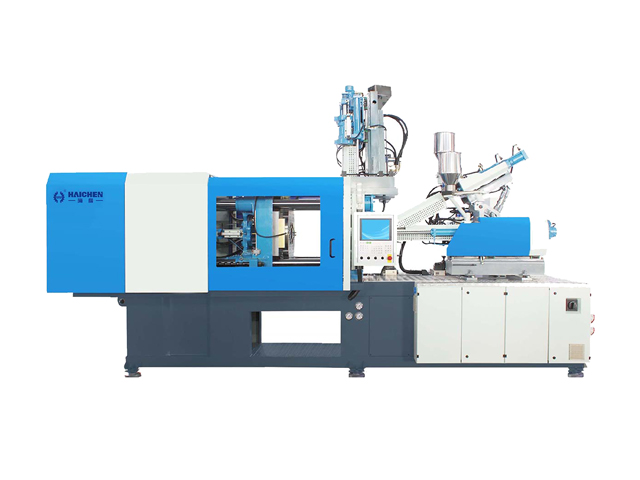
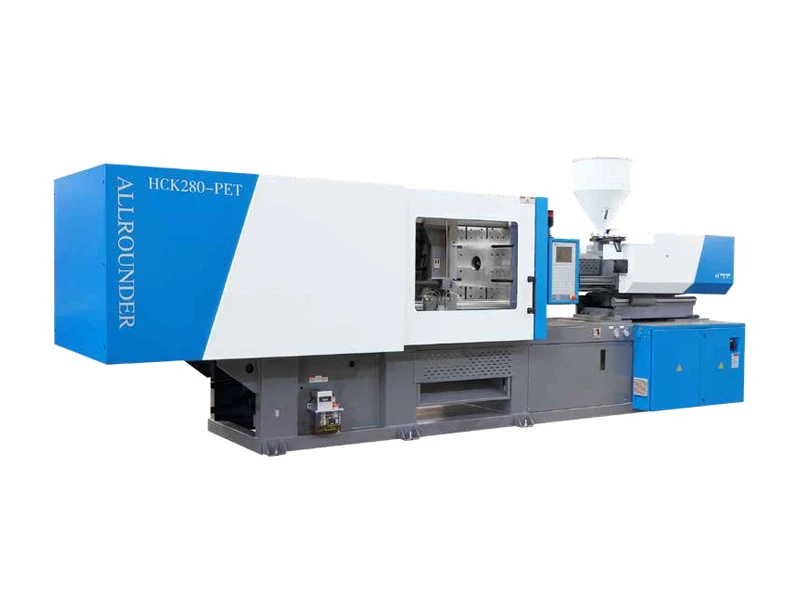
A servo-hydraulic injection molding machine uses a servo motor to drive the hydraulic pump. The motor adjusts its speed based on the machine’s actual needs. During cooling and idle phases, the motor slows down or stops. This eliminates the energy waste from constant-speed pumps that run continuously. Servo-hydraulic systems save 30%-60% energy compared to standard hydraulic machines.
Servo-hydraulic technology offers a solution. This guide explains how an energy-saving plastic toy injection molding making machine reduces power consumption. It provides real cost comparison data to help you make an informed purchasing decision for a servo hydraulic plastic toy molding machine.
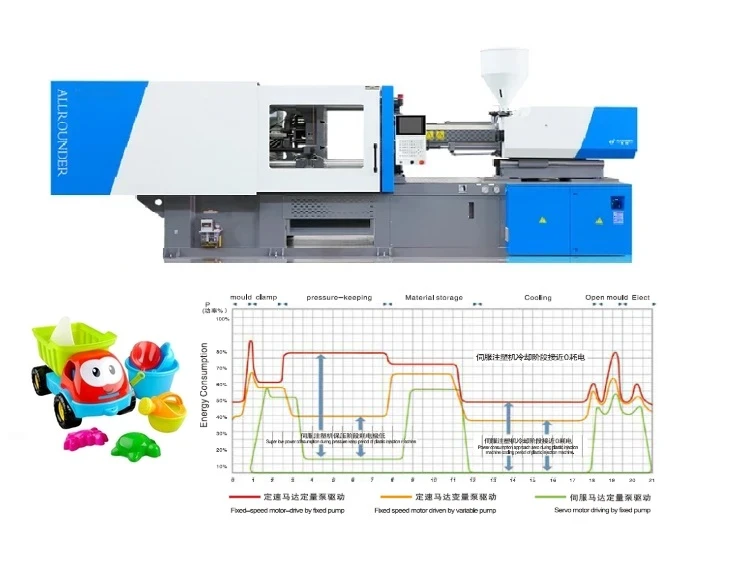
How Servo-Hydraulic Technology Reduces Energy Consumption
The Problem with Standard Hydraulic Systems
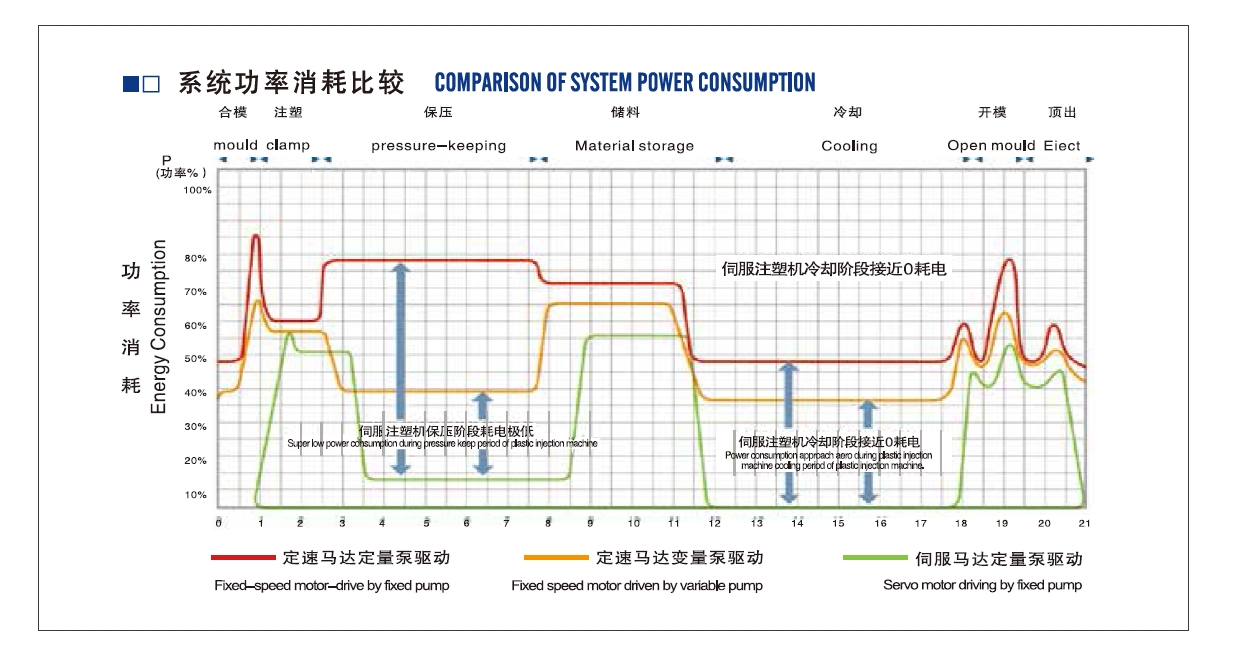
Standard hydraulic injection machines use an induction motor to drive a fixed displacement pump. The motor runs at full speed continuously. It does not adjust speed based on actual machine needs .
During a typical injection cycle, the machine only needs full oil flow during injection and clamping. The rest of the cycle—cooling, holding pressure, mold opening—requires less flow or no flow at all. The pump still moves oil at full capacity during these periods. Excess oil returns to the tank through relief valves. This wastes energy as heat .
A fixed-displacement pump must supply maximum flow and pressure at all times. These two requirements never occur simultaneously. The pump and motor are oversized for most of the cycle. Oversizing leads to reduced efficiency under low load conditions.
How Servo-Hydraulic Systems Work
A servo-hydraulic system replaces the standard induction motor with a servo motor. The servo motor adjusts its speed based on the machine’s actual flow and pressure demands .
When the machine needs oil for injection or clamping, the motor runs at required speed. When the machine enters cooling or idle phases, the motor slows down or stops entirely. The motor only consumes power when the machine performs active movements .
Key technical features include:
-
High-response closed-loop control: The system monitors pressure and flow in real time. It adjusts motor speed within milliseconds to maintain set parameters .
-
Zero energy during idle: During cooling phases, the motor does not work. Energy consumption is zero .
-
Reduced heat generation: Because the pump does not constantly bypass oil, the hydraulic oil stays cooler. This reduces cooling water consumption and extends oil life .
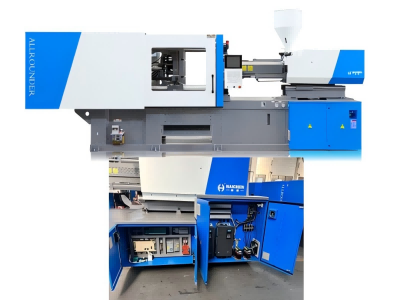
Energy Savings: What the Data Shows
Research confirms significant energy reduction from servo-hydraulic systems. Pumps controlled with servo motors are 40% to 60% more energy-efficient than standard hydraulics .
Real-world production data shows the scale of savings. A BOY 100 E with servo motor drive saves approximately 68,000 kWh per year over 8,400 operating hours compared to conventional systems. This reduces energy costs by over £10,200 .
Another example from a BOY 100 E injection molding machine: a modern machine requires 2.190 kWh of heating and drive power per hour. An older comparable machine consumes 7.684 kWh under exactly the same conditions. This difference adds up to 33,000 kWh per year in three-shift operation. At €0.20 per kWh, this saves €6,600 per year .
What are the benefits of servo-hydraulic technology for plastics toy injection molding production?
Servo-hydraulic technology provides three main benefits for toy production. First, it reduces electricity costs by 30%-60%. Second, it maintains consistent part quality through closed-loop pressure and speed control. Third, it generates less heat, reducing cooling water consumption and extending hydraulic oil life.
HAICHEN servo-hydraulic toy plastic molding machine models deliver 30%-60% energy savings compared to standard hydraulic machines. Our high-response servo system reaches maximum output in 0.05 seconds. This shortens cycle time and improves production efficiency. The closed-loop control system maintains consistent part quality throughout long production runs.
Cost Comparison for Plastic Toy Injection Molding Machine Production
Energy Cost Analysis
The following table compares typical energy consumption for toy injection molding:
| Parameter | Standard Hydraulic | Servo-Hydraulic | Saving |
|---|---|---|---|
| Annual energy consumption | 68,000 kWh | 27,000-40,000 kWh | 28,000-41,000 kWh |
| Annual electricity cost (US$0.13/kWh) | $8,840 | $3,510-$5,200 | $3,640-$5,330 |
| Energy saving percentage | – | 40%-60% | – |
These figures are based on production measurements from machines running continuous shifts . The specific energy consumption of modern servo-hydraulic machines can reach less than 0.32 kWh/kg material throughput, achieving the highest efficiency class 9+ per EUROMAP 60.1 .
Total Cost of Ownership Comparison
Energy cost is only one factor. Servo-hydraulic machines also reduce other operating expenses :
| Cost Category | Standard Hydraulic | Servo-Hydraulic |
|---|---|---|
| Annual energy cost | $8,800 | $3,500-$5,200 |
| Cooling water consumption | High | Reduced by 25%-33% |
| Hydraulic oil change frequency | Annual | Every 2-3 years |
| Noise level | >70 dB | Significantly lower |
Break-Even Analysis
A servo-hydraulic machine typically costs more upfront than a standard hydraulic unit. However, the energy savings create a fast return on investment .
For a toy production line running 24 hours per day, 5 days per week:
-
Annual energy saving: $3,600-$5,300 per machine
-
Additional upfront cost for servo system: $8,000-$12,000
-
Payback period: 18-24 months
After the payback period, the energy savings continue for the machine’s entire service life. Some manufacturers report payback periods as short as six months in high-usage applications .
HAICHEN toy injection machines offer servo-hydraulic technology at competitive pricing. Our machines help toy manufacturers reduce operating costs from day one. The energy savings accumulate year after year.

Why Plastic Toy Production Benefits from Servo-Hydraulic Precision
Dimensional Consistency Requirements
Toy production demands tight dimensional tolerances. Building blocks must fit together precisely. Action figures require consistent part dimensions.
Standard hydraulic machines show performance variations as oil temperature changes during long runs. Injection pressure drops when hydraulic oil heats up. This creates dimension differences between parts produced early and late in a shift .
Servo-hydraulic systems maintain consistent performance regardless of oil temperature. The high-response closed-loop control monitors injection speed and pressure in real time. It adjusts the servo motor to maintain set parameters throughout each cycle .
The injection repeatability of servo-hydraulic machines reaches high precision levels. This ensures consistent part weight and stable dimensions across long production runs .
Surface Quality and Aesthetics
Toy surfaces must look good. Any flow mark, sink mark, or weld line causes product rejection.
Injection speed fluctuations during filling create visible defects on the part surface. Servo-hydraulic systems maintain consistent injection speed from cycle to cycle. The motor responds to speed commands within milliseconds, eliminating speed variations that cause surface defects .
Temperature control also affects surface quality. Servo systems generate less heat in the hydraulic oil. This prevents temperature drift that alters material flow behavior. Stable flow produces consistent surface finish.
Automation Integration
Modern toy factories need automation. Robot take-out systems, conveyor belts, and packaging lines all work with the injection machine.
Servo-hydraulic machines provide stable platform for automation. The precise cycle timing and consistent part quality make automation integration easier. Less heat generation means cooler factory floor. This improves working conditions for operators .
HAICHEN servo-hydraulic plastic toy making machine models provide stable part quality for consistent automation performance. Our machines produce cleaner, more consistent parts. This reduces manual inspection needs and improves production efficiency.
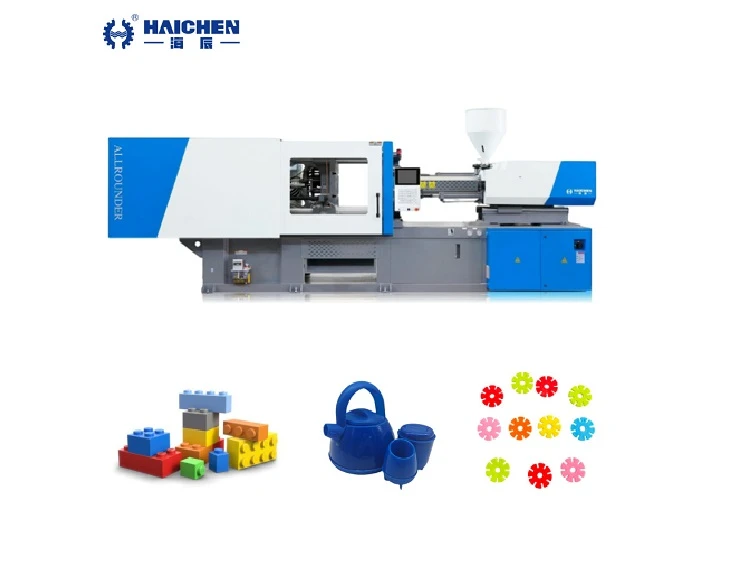
Making the Switch to Servo-Hydraulic Technology
Evaluating Your Current Energy Consumption
Start by measuring your current machine’s energy use. Check the power meter during a typical production shift. Note the consumption during injection, holding pressure, cooling, and idle phases.
Compare this data with servo-hydraulic machine specifications. Calculate the potential savings for your specific production volume and cycle time.
Calculating Your Savings Potential
Use this simple formula to estimate your annual savings:
-
Record your machine’s power consumption in kWh per hour
-
Multiply by operating hours per year
-
Multiply by your electricity rate
-
Calculate 40%-60% of this amount as potential saving
For a machine running 6,000 hours per year at $0.13/kWh:
-
Standard machine consumption: 68,000 kWh/year = $8,840/year
-
Servo-hydraulic consumption (50% savings): 34,000 kWh/year = $4,420/year
-
Annual saving: $4,420 per machine
The Payback Calculation
The payback period depends on your usage hours and electricity rate. Higher usage means faster payback.
| Operating Hours/Year | Electricity Rate | Annual Saving | Payback Period |
|---|---|---|---|
| 4,000 | $0.10/kWh | $2,100 | 4-5 years |
| 6,000 | $0.13/kWh | $4,400 | 2-3 years |
| 8,000 | $0.15/kWh | $7,200 | 1-2 years |
| HCK180 PLASTIC INJECTION MOLDING MACHINE | ||||
| INJECTION UNIT | ||||
| ITEM | UNIT | A | B | C |
| INJECTION UNIT | ||||
| Screw diameter | mm | 40 | 45 | 50 |
| Screw L/D ratio | L/D | 24.7 | 22.0 | 19.8 |
| Shot volume(theoretical) | cm3 | 283 | 358 | 442 |
| Injiection weight(ps) | g | 257 | 326 | 402 |
| oz | 9.1 | 11.5 | 14.2 | |
| Injection pressure | Bar | 2231 | 1763 | 1428 |
| Injection rate | cm3/s | 157 | 199 | 245 |
| Plasticizing capacity | g/s | 16 | 22 | 26 |
| Screw speed (Max.) | r/min | 220 | ||
| CLAMPING UNIT | ||||
| Clamping force | Kn | 1800 | ||
| Space between tie bars(W×H) | mm | 520×470 | ||
| Platens size | mm | 740×690 | ||
| Opening stroke | mm | 460 | ||
| Min.Mold height | mm | 200 | ||
| Max.Mold height | mm | 550 | ||
| Distance between platens(daylight) | mm | 1010 | ||
| Ejector stroke | mm | 130 | ||
| Ejector force | Kn | 50 | ||
| OTHERS | ||||
| Systerm pressure | Bar | 175 | ||
| Pump motor | Kw | 25 | ||
| Heating power | Kw | 14.0 | ||
| Oiltank cubage | L | 160 | ||
| Machine dimension(L×W×H) | m | 5.2×1.3×1.8 | ||
| Machine weight | t | 6.0 | ||
HAICHEN provides specific energy consumption data for each plastic toy injection molding making machine model. Our team helps you calculate the payback period for your specific production conditions. We offer full documentation on energy efficiency and certification compliance.
Real production data shows energy savings of 40%-60% compared to older hydraulic machines. These savings translate to thousands of dollars per machine per year. The additional upfront cost for servo technology pays back within 18-24 months.
Beyond energy savings, servo-hydraulic systems provide better dimensional consistency and surface quality. This reduces scrap rates and improves production efficiency.
What are the benefits of servo-hydraulic technology for toy production?
Haichen Servo-hydraulic technology provides three main benefits for toy production. First, it reduces electricity costs by 30%-60%. Second, it maintains consistent part quality through closed-loop pressure and speed control. Third, it generates less heat, reducing cooling water consumption and extending hydraulic oil life.