
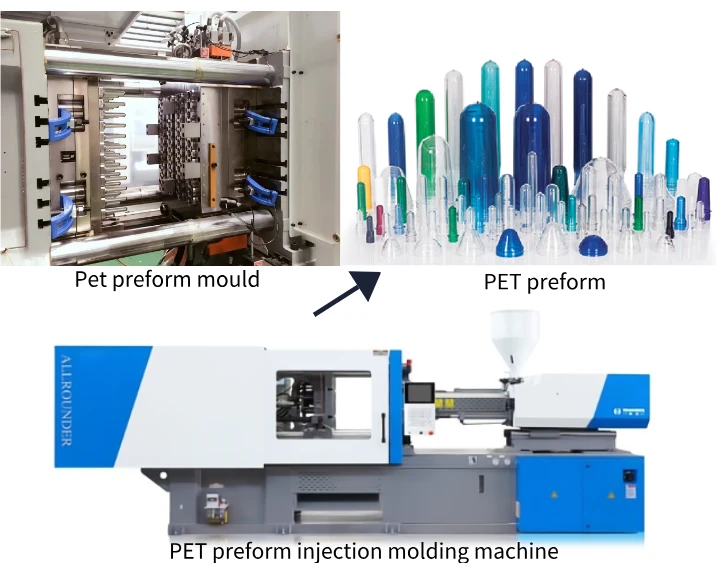
The PET bottle preform Injection molding production line involves PET material, injection molding machine, preform molds and auxiliary equipment.
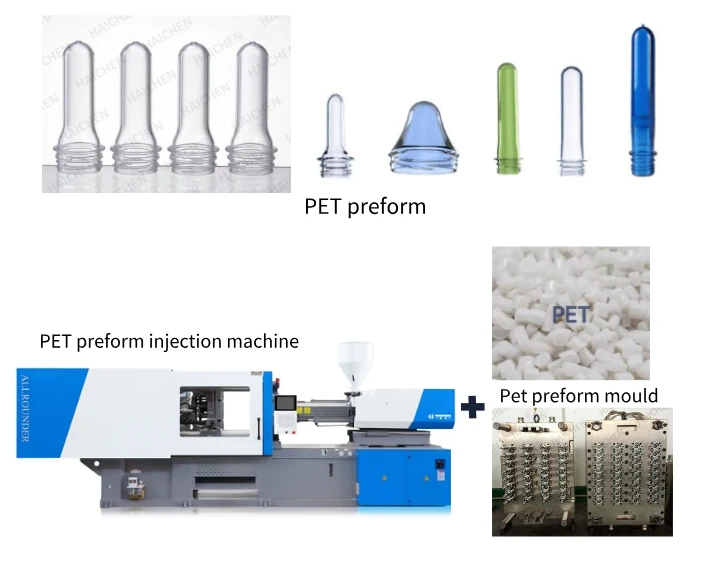
The PET bottle preform production line has four core components. The material preparation system dries and stores the PET pellets. The injection molding machine melts the PET and injects it into the mold. The PET preform mold gives the preform its shape. More mouild cavities mean more preforms per cycle. The auxiliary equipment supports the main machine. This usually includes an auto loader, a chiller, and a take-out robot.
This PET preform manufacturing production line turns PET plastic pellets into small tube-shaped parts called preforms. These preforms later become water bottles, soda bottles, or oil bottles after a blowing process. The line works automatically. It feeds, dries, melts, molds, and cools the plastic. A complete PET injection molding line includes PET material, PET injection molding machine, a mold with multiple cavities, and several auxiliary machines.
PET Bottle preform Raw Material
-
PET material types for preforms
-
Dehumidifying drying process
Material types for PET preforms
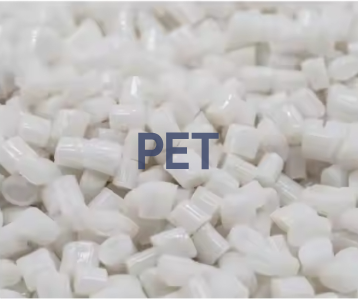
PET material for preforms comes in two main types. Bottle-grade PET is the standard choice for water and beverage bottles. This grade has high intrinsic viscosity, typically 0.72 to 0.84 dl/g. Higher viscosity gives stronger bottles. Some manufacturers use recycled PET or a mix of virgin and recycled material. Recycled PET reduces material cost but needs more careful drying. The material choice affects the final bottle clarity and strength.
Dehumidifying drying process
PET pellets absorb moisture from the air quickly. Wet PET turns cloudy and loses strength during molding. A dehumidifying dryer removes this moisture before the pellets enter the machine. The dryer uses hot air between 150°C and 160°C. It circulates the air through the pellets for 4 to 6 hours. The dryer keeps the moisture level below 0.004%. This is essential for clear, strong preforms. Without proper drying, the preforms will have bubbles and a dull appearance.
PET Bottle Preform Injection Molding Machine
-
PET Machine features
-
Clamping force and injection volume
PET Machine features
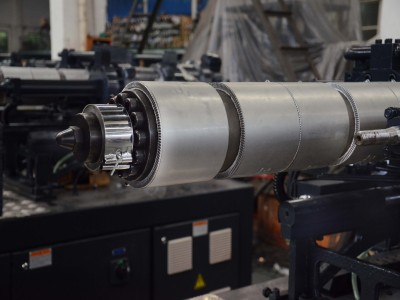
The material PET is different from other plastics. It needs higher barrel temperatures and special screw designs. A standard machine cannot process PET well. PET preform machines use a longer screw with a special mixing section. This improves melting and lowers the acetaldehyde level. Acetaldehyde affects the taste of bottled water. Good machines keep this level low. The screw also needs higher torque to handle the high viscosity of melted PET.
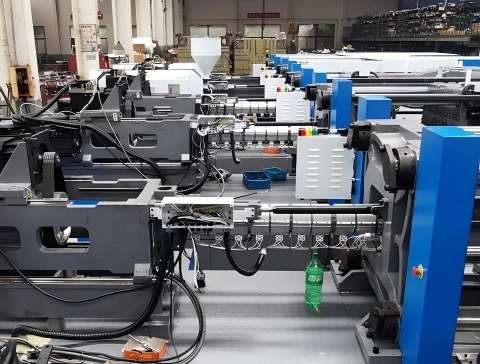
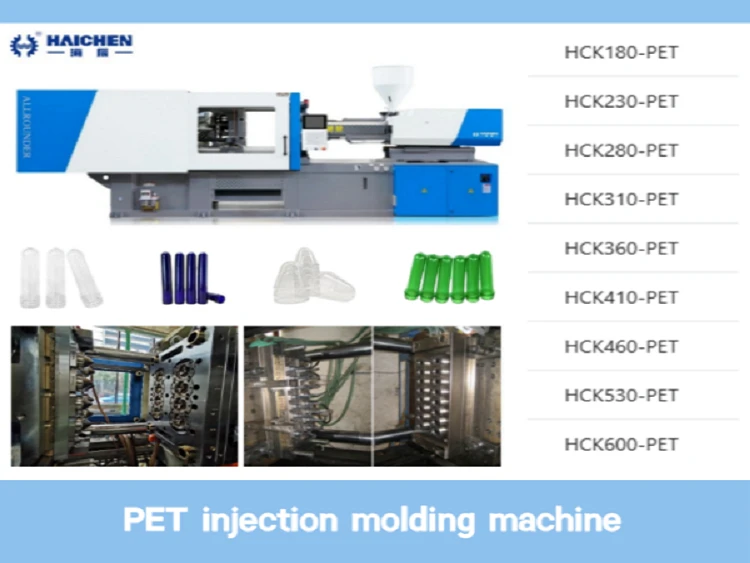
Our HCK series PET injection molding machines built for PET preform production. These machines include a PET-optimized screw and barrel. The screw has a special barrier design for consistent melting. The barrel has multiple temperature zones for precise control. The clamping system uses a five-point toggle design. This provides stable force distribution across the mold. The injection unit uses a closed-loop servo system. This keeps injection speed and pressure steady cycle after cycle.
Clamping force and injection volume
The machine must provide enough clamping force to hold the mold shut. A 48-cavity preform mold typically needs 310 to 450 tons of clamping force. The injection volume must match the total weight of all preforms plus the runner system. For a 48-cavity mold producing 13g preforms, the total shot size is about 650g. The machine also needs a high plasticizing rate. This means it can melt a large amount of PET quickly for each cycle.
| Haichen PET Injection Machine TECHNICAL PARAMETERS | |||
| 国际标准型号 | INTERNATIONAL CLASS NO | HCK280-PET | |
| 注射装置 | INJECTION UNIT | ||
| 螺杆直径 | Screw diameter | mm | 70 |
| 螺杆长径比 | Screw L/D ratio | L/D | 25 |
| 理论注射容量 | Shot volume(theoretical) | cm3 | 1155 |
| 注射重量 | Injection weight(ps) | g | 1340 |
| oz | 47.3 | ||
| 注射压力 | Injection pressure | Bar | 1305 |
| 注射速率 | Injection rate | cm3/s | 448 |
| 塑化能力 | Plasticizing capacity | g/s | 60 |
| 螺杆转速 | Screw speed (Max.) | r/min | 167 |
| 锁模装置 | CLAMPING UNIT | ||
| 锁模力 | Clamping force | kN | 2800 |
| 拉杆间距(宽*高) | Space between tie bars(W×H) | mm | 620*570 |
| 模板外型 | Platens size | mm | 880*830 |
| 移模行程 | Opening stroke | mm | 560 |
| 最小模厚 | Min.Mold height | mm | 270 |
| 最大模厚 | Max.Mold height | mm | 620 |
| 模板最大距离 | Distance between platens(daylight) | mm | 1180 |
| 顶出行程 | Ejector stroke | mm | 150 |
| 顶出力 | Ejector force | kN | 100 |
| 其他 | OTHERS | ||
| 油压系统压力 | Systerm pressure | Bar | 175 |
| 油泵马达功率 | Pump motor | KW | 38 |
| 加热功率 | Heating power | kW | 16 |
| 油箱容积 | Oiltank cubage | L | 300 |
| 外形尺寸(长*宽*高) | Machine dimension(L×W×H) | m | 6.5*1.5*2.3 |
| 机器重量 | Machine weight | t | 9.5 |
Molds Of PET Bottle Preform
-
Multi-cavity mold design
-
Cooling channel layout
Multi-cavity mold design
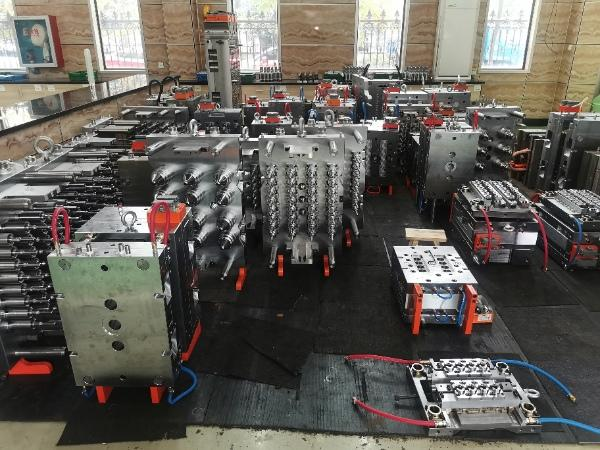
PET preform molds have many cavities. Common cavity counts are 32, 48, 72, and 96. A 48-cavity mold produces 48 preforms in one cycle. Each cavity must be identical. The mold uses high-grade steel like S136. This steel resists wear and corrosion. The mold also needs a hard surface finish. This helps the preforms release cleanly after cooling. The mold design includes gate locations at the bottom of each preform.
Cooling channel layout
Cooling is critical for PET preforms. The mold has water channels built around each cavity. Cool water flows through these channels. It removes heat from the preforms. Good cooling design removes heat evenly from all cavities. Uneven cooling causes warped or cloudy preforms. The channels must be placed close to the cavity surface. The water temperature stays between 7°C and 15°C for best results. Faster cooling means shorter cycle times and more preforms per hour.
Auxiliary Equipment for PET bottle Preform
-
Auto loader for feeding
-
Chiller for cooling
-
Take-out robot for part removal
Auto loader for feeding
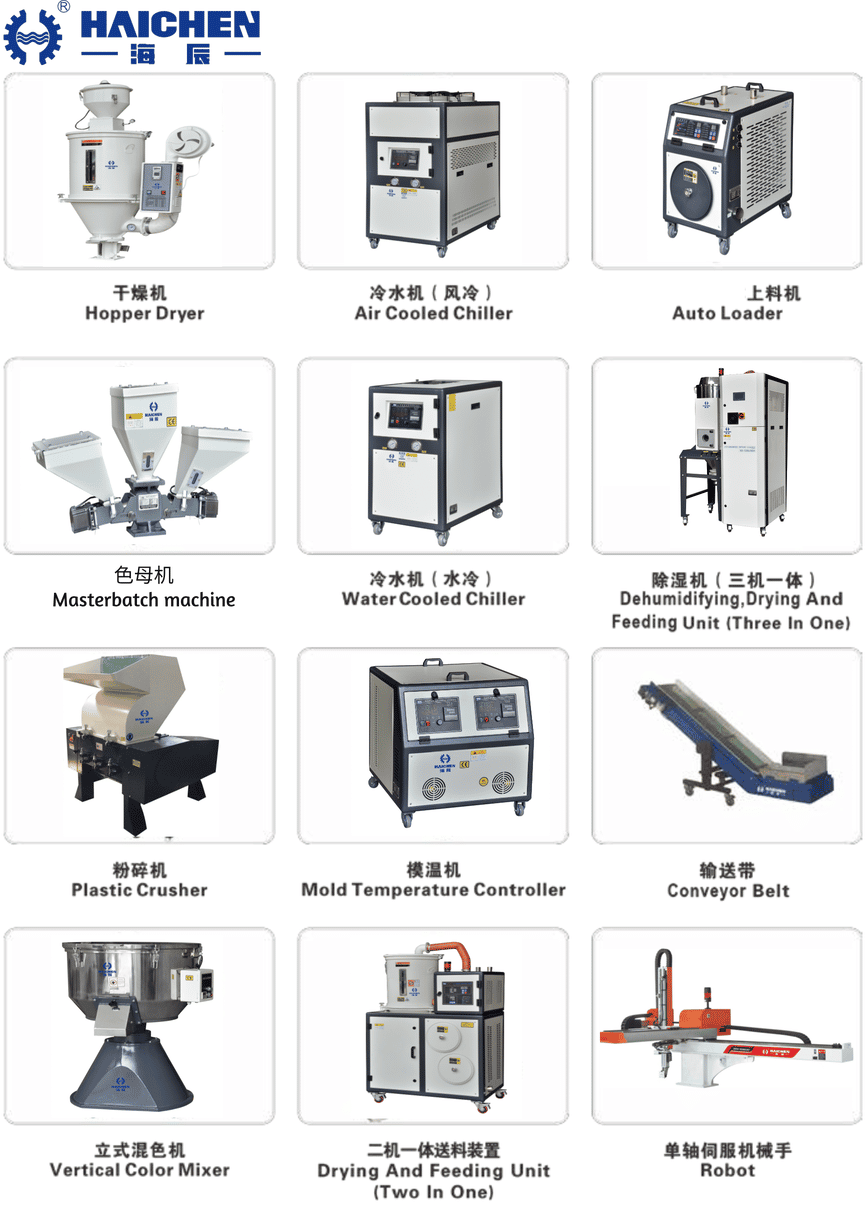
An auto loader transfers dry PET pellets from the dryer to the machine hopper. It uses a vacuum system to pull the pellets through sealed pipes. The pipes must resist high temperatures because the pellets are still warm from drying. Standard pipes may melt over time. The loader runs automatically. It keeps the machine hopper full at all times. This stops the machine from running out of material. The loader also reduces manual labor and keeps the material clean.
Chiller for cooling
A chiller provides cold water to the mold’s cooling channels. The water temperature stays between 7°C and 15°C. Cold water removes heat from the preforms faster than tap water. This shortens the cooling time. A shorter cooling time means a shorter cycle time. The chiller size must match the machine’s cooling needs. A 350-ton PET machine typically needs a chiller with 20 to 30 tons of cooling capacity. The chiller also needs a pump to circulate water through the mold.
Take-out robot for part removal
A take-out robot removes the finished preforms from the mold. The robot moves between the mold halves after the mold opens. It grips the preforms and lifts them out. Some robots place the preforms onto a conveyor belt. Others drop them into a collection bin. The robot speeds up the cycle. It also prevents damage to the preforms. Many robots include a cooling station. The preforms stay on the robot for a few seconds to cool further before release.
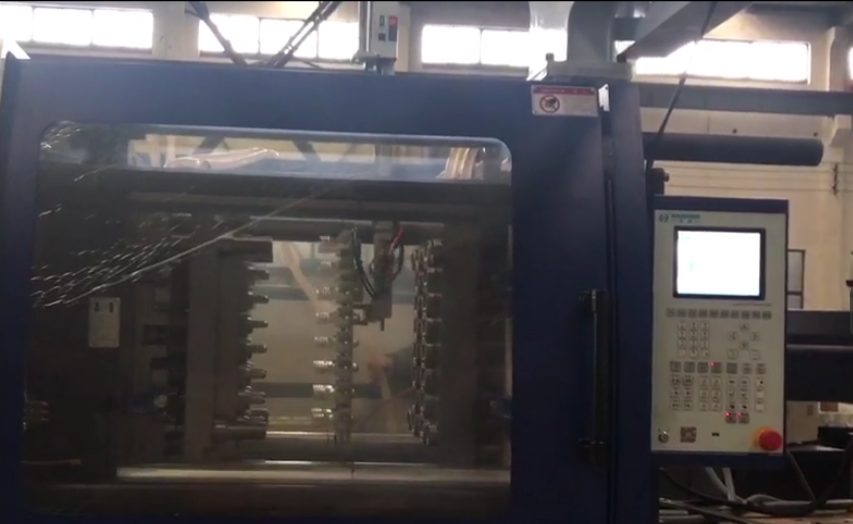
PET Bottle Preform Injection Molding Production Line Price
The price of PET Bottle Preform Injection Molding Production Line usually range between 23,000 to 120,000USD. It depend on specific PET bottle preform production demand.
The basic production line price includes: PET injection molding machine with PET preform mould.
The complete PET Bottle Preform Injection Molding Production Line price includes: PET injection molding machine + PET preform moulds+ Auxiliary equipments like: dryer, chiller, robot and others.
For more specific, please check Price of PET preform injection molding production line for further detailed reference.


