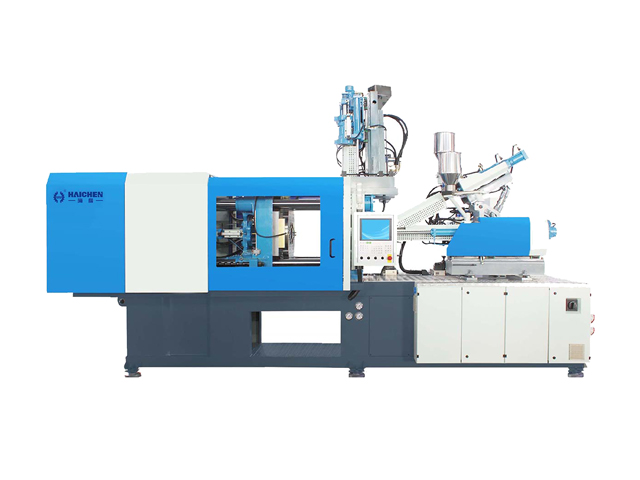
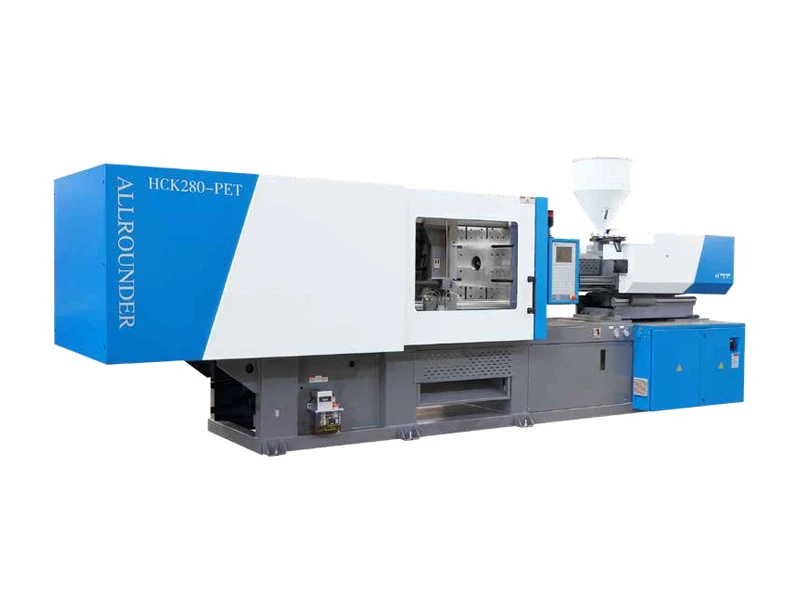
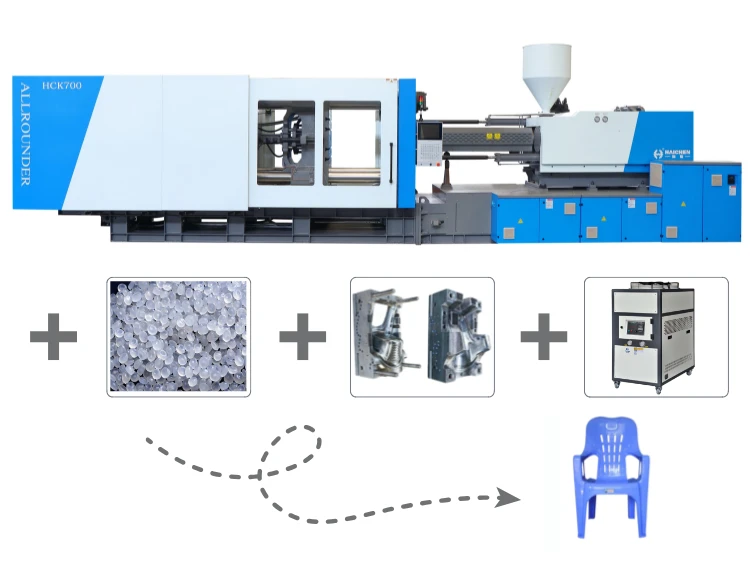
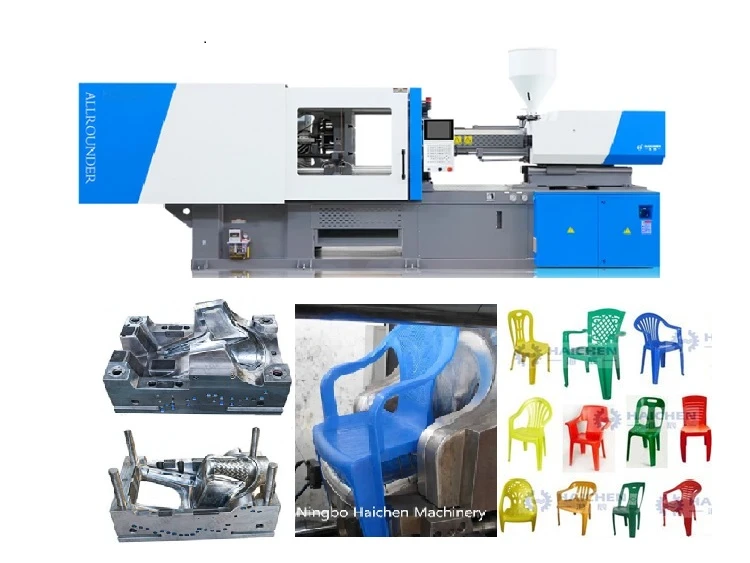
The plastic chair injection molding process is that melts plastic pellets and injects the molten material into a chair-shaped mold through injection molding to form a complete chair.
A plastic chair injection molding process follows a sequence of five steps.
- Step one is material melting. The machine heats plastic pellets until they become liquid.
- Step two is mold clamping. The clamping unit holds the mold shut with 600-1300 tons of force .
- Step three is injection. The machine pushes molten plastic into the mold cavity.
- Step four is cooling. The chair hardens inside the mold.
- Step five is ejection. The mold opens and the finished chair comes out.
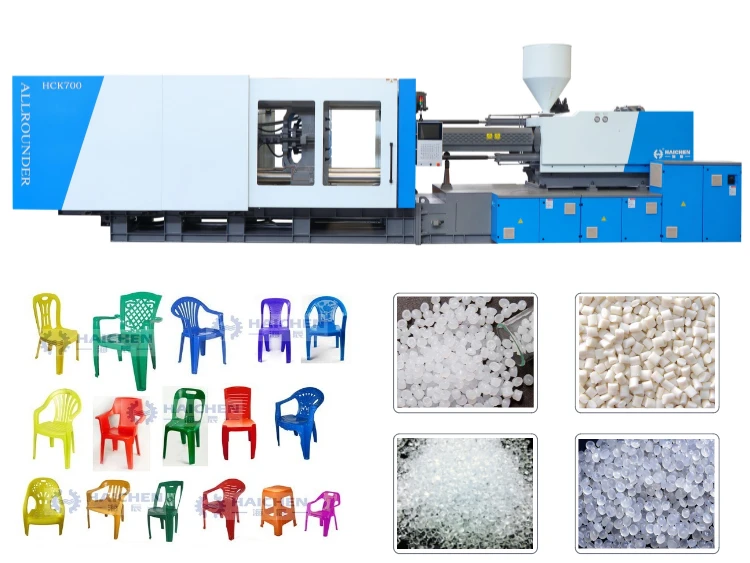
Plastic chairs have complex shapes with curves and reinforcement ribs. Injection molding handles these features well because the molten plastic flows into every part of the mold cavity . The process uses high pressure to fill thin sections like chair backs and thick sections like seat centers. With different chair molds, it can produce thousands of identical chairs like plastic folding chair, 1300, chiavari chair and plastic outdoor chair. This makes injection molding as the most efficient method for mass production.
As a plastic chair injection molding machine manufacturer with over ten years of experience, Haichen understands the specific needs of plastic chair production. Our machines offer high clamping force (up to 3000 tons), customizable injection units, and energy-saving servo systems. According to plastic chair buyer’s specific demand, we will instruct you how to choose plastic outdoor chair injection molding machine with competitive plastic chair injection molding machine price.
Step 1 – Material Melting for plastic chair injection molding process
-
Common chair materials
-
Heating process in the barrel
-
Screw action and melting
Common chair materials
There are many optional materials used in the manufacture of plastic chairs. Most common materials are PP, PC, and recycled plastics.
Polypropylene (PP) is the most popular material for plastic chairs. It offers good impact resistance and fatigue strength, making it suitable for chairs that bend repeatedly.
Polycarbonate (PC) is another common choice . PC chairs have higher strength and a crystal-clear appearance. PC requires higher injection pressure, so larger machines are needed.
Some plastic chair injection molding machine manufacturers use recycled plastic or bio-based materials for eco-friendly products.
Heating process in the barrel
The plastic chair injection molding machine feeds plastic pellets from a hopper into a heated barrel. The barrel has several heating zones that gradually raise the temperature.
For PP material, the barrel temperature ranges from 200-230°C. PC requires higher temperatures at 260-300°C. Each zone has a different temperature setting. The first zone warms the pellets. The middle zones melt them completely. The front zone keeps the plastic at injection temperature.
Screw action and melting
A screw rotates inside the barrel. This rotation pushes the plastic forward. The screw design creates friction, and this friction adds more heat to the plastic. The screw has a special barrier mixing section for consistent melting . This prevents unmelted particles in the finished chair. Once enough melted plastic collects at the front, the machine prepares for injection. The melted plastic is now ready to enter the mold.
Step 2 – Mold Clamping for chair injection molding process
-
Mold closing operation
-
Clamping force requirements
-
Why clamping force matters
Mold closing operation
The clamping unit moves the moving platen toward the fixed platen. This action closes the two mold halves together. For a chair mold, the machine first uses low pressure to close. It then increases speed to complete the closing motion. The mold must seal tightly to prevent plastic leakage. After the mold halves meet, the machine applies full clamping force.
Clamping force requirements
A plastic chair needs high clamping force because the plastic enters the mold under high pressure.
For standard PP chairs, clamping force ranges from 600 to 1300 tons . A 600-ton machine can produce a standard PP chair shell.
PC chairs need higher tonnage up to 1000 tons or more.
The exact force depends on the chair’s projected area and material type. Larger chairs require more clamping force.
The melted plastic enters the mold at high pressure. Without enough clamping force, the plastic pushes the mold open slightly. This creates a defect called flash on the chair edges. Flash is thin plastic that leaks out between the mold halves. It requires trimming after production. Sufficient clamping force also prevents short shots. This ensures proper filling of thin wall sections around the chair back and armrests.
Step 3 – plastic chair injection molding process Injection
-
The injection action
-
Injection pressure and speed
-
Flow through the mold
The injection action
The screw moves forward like a plunger. This action pushes melted plastic through the nozzle into the closed mold. The injection fills the entire chair shape in seconds. For a standard chair, injection takes 2-5 seconds. The screw must move at the right speed to fill all cavities completely. The injection unit also controls the holding pressure after filling. This packs more plastic into the mold to prevent shrinkage.
Injection pressure and speed
Injection pressure typically ranges from 80 to 150 MPa for chairs . Higher pressure helps fill thin sections like the chair back. The injection speed must be fast enough to fill the mold before the plastic starts to cool. But too fast can cause air traps. A three-stage injection profile works best for chairs. Start with slow speed for the first 10% of fill. Use medium speed for the next 60%. Use fast speed for the final 30%. This balanced approach gives the best results.
| HCK800 PLASTIC INJECTION MOLDING MACHINE | |||||
| INJECTION UNIT | |||||
| ITEM | UNIT | A | B | C | D |
| INJECTION UNIT | |||||
| Screw diameter | mm | 95 | 100 | 110 | 120 |
| Screw L/D ratio | L/D | 23.2 | 22.0 | 20.0 | 18.3 |
| Shot volume(theoretical) | cm3 | 3544 | 3927 | 4752 | 5655 |
| Injiection weight(ps) | g | 3225 | 3574 | 4324 | 5146 |
| oz | 114.0 | 126.0 | 153.0 | 182.0 | |
| Injection pressure | Bar | 1846 | 1666 | 1377 | 1157 |
| Injection rate | cm3/s | 790 | 875 | 1059 | 1261 |
| Plasticizing capacity | g/s | 111 | 122 | 145 | 173 |
| Screw speed (Max.) | r/min | 120 | |||
| CLAMPING UNIT | |||||
| Clamping force | Kn | 8000 | |||
| Space between tie bars(W×H) | mm | 1050×1000 | |||
| Platens size | mm | 1525×1475 | |||
| Opening stroke | mm | 1030 | |||
| Min.Mold height | mm | 400 | |||
| Max.Mold height | mm | 1050 | |||
| Distance between platens(daylight) | mm | 2080 | |||
| Ejector stroke | mm | 270 | |||
| Ejector force | Kn | 190 | |||
| OTHERS | |||||
| Systerm pressure | Bar | 175 | |||
| Pump motor | Kw | 60+60 | |||
| Heating power | Kw | 66.4 | |||
| Oiltank cubage | L | 800 | |||
| Machine dimension(L×W×H) | m | 11.2*2.35*2.5 | |||
| Machine weight | t | 39.0 | |||
Flow through the mold
The melted plastic first enters the sprue, which is the main channel. It then flows through runners to reach the cavity. The gate is the small opening where plastic enters the chair shape. For a chair, the gate location is critical. A single large gate at the bottom center of the seat works best. This gate location ensures even flow to all side walls. Good gate design prevents weak spots in the finished chair.
Step 4 – chair injection molding process Cooling and Solidification
-
Cooling channels in the mold
-
Cooling time for chairs
-
Cooling optimization
Cooling channels in the mold
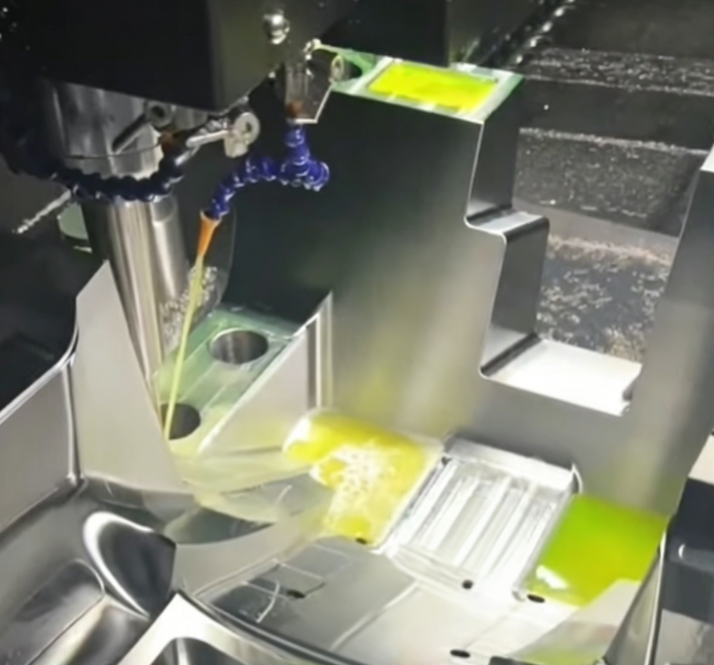
The mold has cooling channels built inside it. Cool water flows through these channels at 7-30°C . This water removes heat from the melted plastic. The chair hardens from the outside inward. Good cooling channel design prevents warping and shrinkage. The channels must be placed close to the cavity surface. Uniform cooling is critical for dimensional accuracy.
Cooling time for chairs
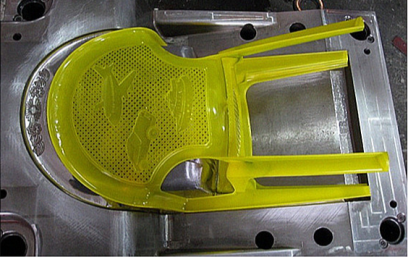
A plastic chair has thick sections like the seat center and thin sections like the back. Cooling takes longer on thick sections. Typical cooling time ranges from 30 to 120 seconds . The cooling time depends on the chair thickness and material type. PP cools faster than PC. Cooling is the longest part of the production cycle. But rushing cooling causes warping and defects. A good balance is important for quality and efficiency.
Cooling optimization
Haichen provides mold cooling analysis for each customer’s chair design. That enable us become one of the popular plastic injection molding machine manufacturer recommendation.We calculate the optimal cooling channel layout and water flow rate. Our HCK series plastic chair injection molding machine features a dedicated cooling circuit control. This allows operators to adjust cooling time in 0.1 second increments. For a standard PP chair, Haichen‘s optimization reduces cooling time by 15-20%. This means more chairs per hour without sacrificing quality.
Step 5 – Ejection and Demoulding of plastic chair injection molding process
-
Mold opening
-
Ejector pin operation
-
Part removal methods
Mold opening
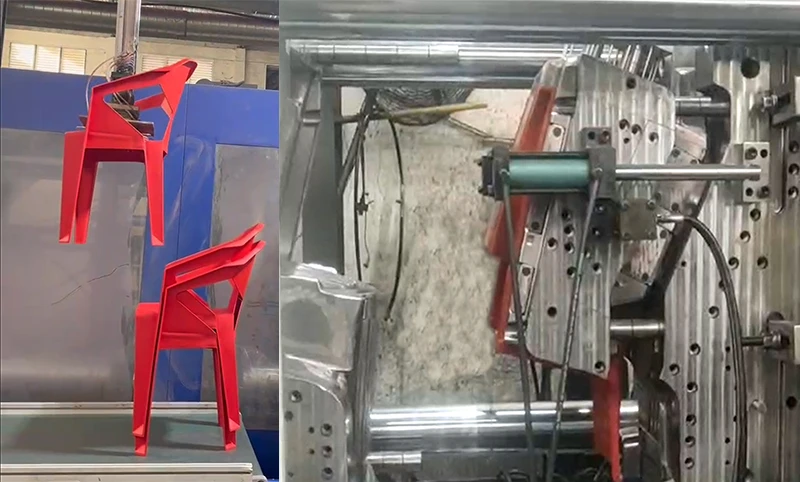
Once the plastic hardens sufficiently, the clamping unit opens the mold. The moving platen pulls away from the fixed platen. The chair stays on the moving half of the mold. The opening stroke must be long enough to clear the chair’s height. For tall chair molds, a larger opening stroke is necessary. Some chair molds use an inverted design. This means the chair falls out by gravity when the mold opens.
Ejector pin operation
After the mold opens, ejector pins push the chair off the mold core. For large chairs, molds use multiple ejector pins for even force distribution. The ejector force must be strong enough to overcome the chair’s grip on the core. But too much force can damage the chair surface. A well-designed ejection system prevents damage to small features like armrests and leg sockets. Haichen plastic chair making machines use a hydraulic ejector system with adjustable force and stroke.
Demoulding methods
The finished chair then falls onto a conveyor or is removed by a robot arm. For automated production, a robot removes the chair. This speeds up the cycle and prevents damage. The robot can also place the chair on a cooling rack for further cooling.
Haichen’s Ejection System
Haichen plastic chair making machines use a hydraulic ejector system with adjustable force and stroke. The HCK800 offers 190 kN ejection force, enough for large chairs or those with complex draft angles. Our machines also provide precise control during mold opening to ensure safe part release. Ejection parameters can be saved and reused for consistent production. Under Haichen’s ejection system, you will reduce downtime and maintain high quality in finished chairs, with competitive plastic chair injection molding machine price.