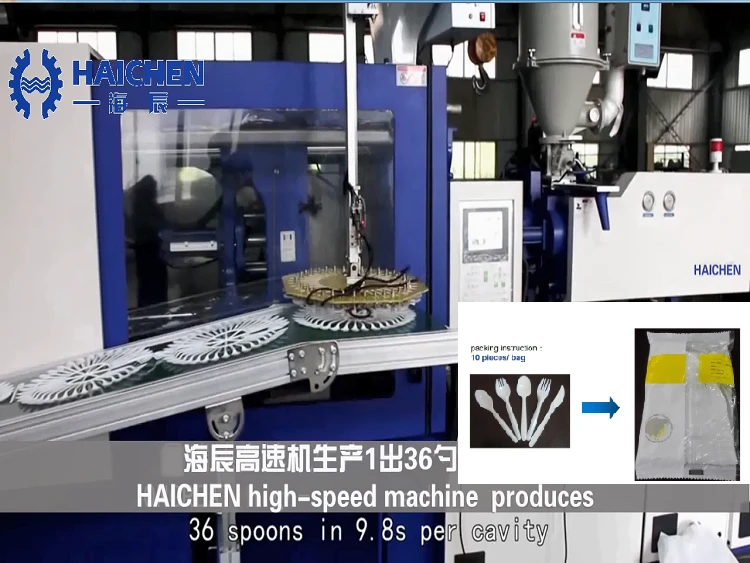
Many countries have banned or restricted single-use plastic products. The European Union’s Single-Use Plastics Directive targets plastic cutlery. Similar regulations exist in North America and Asia. This regulatory pressure pushes manufacturers to switch to biodegradable materials . A Biodegradable plastic cutlery manufacturer must adapt to these changes to remain competitive.
Consumers now prefer environmentally friendly products. Food delivery services and catering companies seek sustainable alternatives. How Is Plastic Cutlery Made? Biodegradable cutlery made from PLA or PBAT materials meets this demand. The global market for biodegradable tableware continues to expand rapidly. Manufacturers who adopt these materials gain a market advantage.
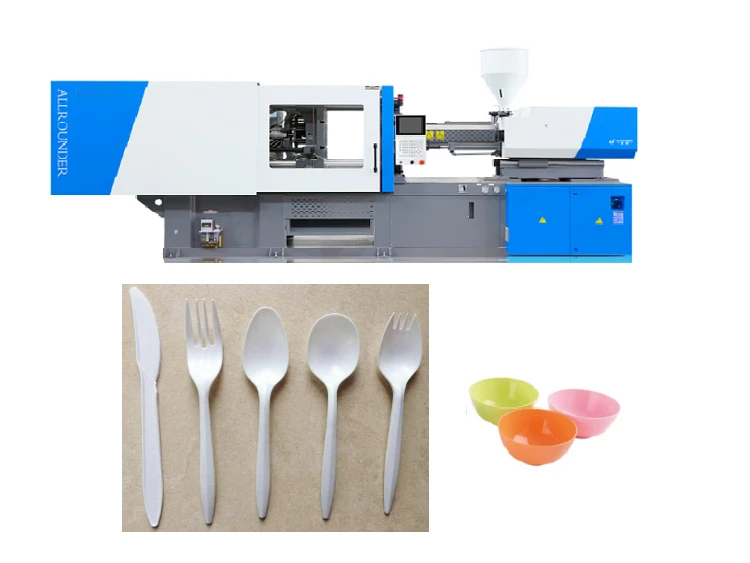
What Is the Difference Between PLA and PBAT for Cutlery Injection Molding? Material Properties Compared: PLA and PBAT
PLA offers high rigidity and a glossy finish but is brittle and heat-sensitive above 60°C. PBAT provides flexibility and impact resistance but lower stiffness. Blends of 70/30 to 50/50 PLA/PBAT balance strength and toughness for disposable cutlery.
PLA Performance Characteristics and Applications
PLA (Polylactic Acid) is made from renewable resources like corn starch. It offers good rigidity and surface finish. PLA cutlery has a smooth, glossy appearance. However, PLA has lower heat resistance. Its glass transition temperature is around 55-60°C . This makes PLA suitable for cold or room-temperature food service. PLA also tends to be brittle without modification.
PBAT Performance Characteristics and Applications
PBAT (Polybutylene Adipate Terephthalate) is a biodegradable polyester. It offers excellent flexibility and toughness. PBAT has better impact resistance than PLA. Products made from PBAT withstand bending and handling better. However, PBAT has lower rigidity. It may feel softer than PLA cutlery. PBAT also has a higher melting temperature range.
PLA-PBAT Blends Offer Balanced Properties
Many manufacturers use blended materials. A PLA-PBAT blend combines the rigidity of PLA with the flexibility of PBAT. Studies show that adding PBAT to PLA improves ductility . Blends can achieve good balance between strength and toughness. The ratio varies depending on the product requirements. Common blends range from 70/30 to 50/50 PLA/PBAT. These blends work well for disposable cutlery production.
The table below show the key differences between PLA and PBAT for cutlery production.
| Property | PLA | PBAT | Impact on Production |
|---|---|---|---|
| Raw Material Source | Corn starch, sugarcane (renewable) | Petroleum-based (biodegradable polyester) | PLA has better sustainability image |
| Density (g/cm³) | 1.24 | 1.26 | Similar, minimal effect on part weight |
| Melting Temperature (°C) | 145-160 | 170-180 | PBAT requires higher processing temperature |
| Glass Transition Temperature (°C) | 55-60 | -30 to -40 | PLA limits use to cold/room temp food |
| Tensile Strength (MPa) | 50-70 | 20-35 | PLA offers higher rigidity |
| Elongation at Break (%) | 2-10 | 500-700 | PBAT is much more flexible |
| Impact Resistance | Low (brittle) | High (tough) | PBAT handles bending better |
| Heat Resistance | Poor (distorts above 60°C) | Moderate | PLA not suitable for hot food |
| Biodegradation Rate | Faster (industrial composting) | Slower | PLA degrades more quickly |
| Processing Difficulty | Moderate (needs drying) | Moderate (needs drying) | Both require careful moisture control |
| Cost (USD/kg) | ~2.5-3.5 | ~3.0-4.0 | PBAT generally more expensive |
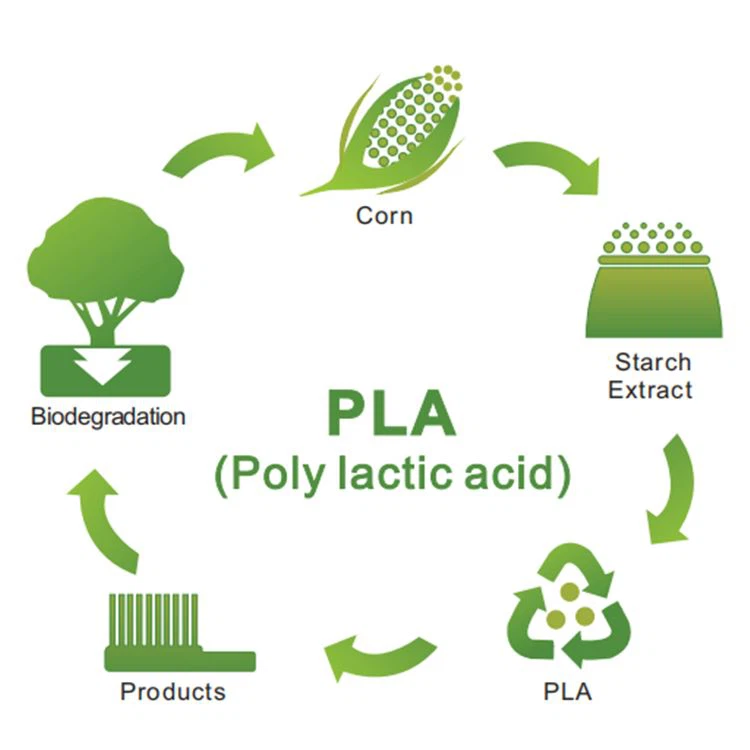
Key Processing Parameters for Biodegradable Materials
How Should PLA and PBAT Be Dried Before Injection Molding?
PLA and PBAT must be dried at 60-75°C for 4-6 hours to reduce moisture below 0.015%. Both materials absorb moisture rapidly; hydrolysis during processing breaks polymer chains and causes brittleness. Dried material should be sealed and insulated, and recycled content limited to 15%.
Biodegradable plastics absorb moisture faster than conventional plastics. Moisture causes hydrolysis during processing. This breaks polymer chains and reduces product toughness. Drying should be done at 60-75°C for 4-6 hours . Moisture content must stay below 0.015%. Dried materials must be sealed and insulated. Recycled material proportion should be limited to 15%.
What Is the Correct Barrel Temperature for PLA/PBAT Injection Molding?
The barrel temperature should be set at 165-195°C, with the nozzle not exceeding 200°C. PLA and PBAT have narrow thermal stability windows; exceeding 200°C causes yellowing and brittleness, while temperatures below 165°C lead to incomplete filling.
PLA and PBAT have poor thermal stability. Processing temperatures must stay below 200°C. Barrel temperature should be controlled at 165-195°C. Nozzle temperature should not exceed 200°C . High temperatures cause yellowing and brittleness. Low temperatures cause poor flow and incomplete filling. Precise temperature control is essential for a Biodegradable plastic cutlery manufacturer.
What Injection Speed and Pressure Settings Work Best for Biodegradable Cutlery?
Use low screw speed (40-70 rpm), low back pressure (0.2-0.6 MPa), and moderate injection pressure (60-95 MPa). High shear destroys the molecular structure of PLA and PBAT. Multi-stage low-speed filling prevents jet flow and material cracking.
What Mold Temperature and Cooling Time Are Required for PLA/PBAT Cutlery?
Mold temperature should be controlled at 25-50°C using water chillers. Cooling time is 2-3 seconds per millimeter of wall thickness. Insufficient cooling causes warpage and dimensional instability; vents should be placed at filling ends to allow gas escape.
Mold temperature should be controlled at 25-50°C. Use water chillers for consistent temperature. Cooling time should be 2-3 seconds per millimeter of wall thickness . Proper cooling prevents warpage and deformation. Exhaust grooves must be set at filling ends. These design features ensure complete shaping before ejection.
What Injection Molding Machine Specifications Are Needed for PLA/PBAT Cutlery Production?
| HCK230 PLASTIC INJECTION MOLDING MACHINE | ||||
| INJECTION UNIT | ||||
| ITEM | UNIT | A | B | C |
| INJECTION UNIT | ||||
| Screw diameter | mm | 45 | 50 | 55 |
| Screw L/D ratio | L/D | 24.4 | 22.0 | 20.0 |
| Shot volume(theoretical) | cm3 | 398 | 491 | 594 |
| Injiection weight(ps) | g | 362 | 447 | 541 |
| oz | 12.8 | 15.8 | 19.1 | |
| Injection pressure | Bar | 2299 | 1862 | 1539 |
| Injection rate | cm3/s | 192 | 237 | 286 |
| Plasticizing capacity | g/s | 23 | 27 | 33 |
| Screw speed (Max.) | r/min | 200 | ||
| CLAMPING UNIT | ||||
| Clamping force | Kn | 2300 | ||
| Space between tie bars(W×H) | mm | 570×520 | ||
| Platens size | mm | 820×770 | ||
| Opening stroke | mm | 520 | ||
| Min.Mold height | mm | 220 | ||
| Max.Mold height | mm | 570 | ||
| Distance between platens(daylight) | mm | 1090 | ||
| Ejector stroke | mm | 150 | ||
| Ejector force | Kn | 80 | ||
| OTHERS | ||||
| Systerm pressure | Bar | 175 | ||
| Pump motor | Kw | 30 | ||
| Heating power | Kw | 16.4 | ||
| Oiltank cubage | L | 200 | ||
| Machine dimension(L×W×H) | m | 5.8×1.4×1.9 | ||
| Machine weight | t | 7.3 | ||
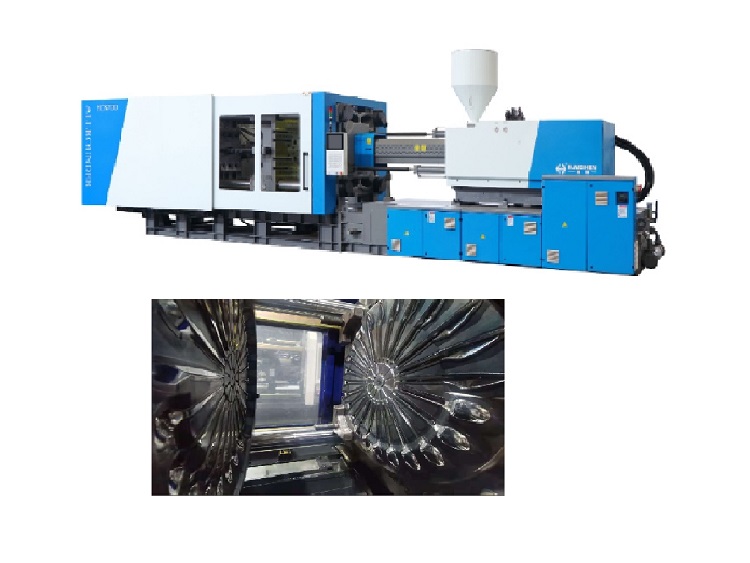
For cutlery production with PLA/PBAT blends, the machine should have a screw L/D ratio of 20-24, a shot volume matched to the mold cavity count, and precise temperature control within ±1°C. Haichen’s HCK230 series offers 45-55mm screw diameters and 2300 kN clamping force, suitable for multi-cavity cutlery molds with 8 to 16 cavities depending on part geometry.
Common Defects in Biodegradable Cutlery and Solutions
Bubbles and Silver Streaks
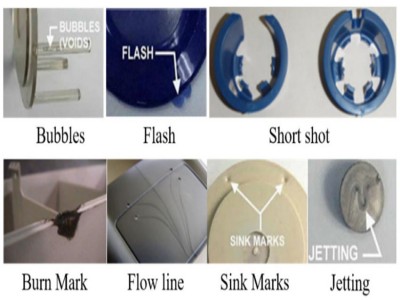
Bubbles and silver streaks are caused by moisture in the material. The solution is proper drying. Use low-temperature dehumidification drying. Ensure moisture content is below 0.015%. Check the drying equipment and storage conditions regularly.
Yellowing and Brittleness
Yellowing and brittleness indicate thermal degradation. Reduce processing temperature. Avoid long residence times in the barrel. If production stops, lower barrel temperature to below 150°C. Use low-temperature PE for machine cleaning .
Shrinkage and Warpage
Shrinkage and warpage result from improper cooling. Balance the mold temperature profile. Adjust packing pressure and time. Reduce packing time for biodegradable materials. Ensure sufficient cooling before ejection. These steps maintain dimensional stability.
Haichen’s Injection Molding Machines for Biodegradable Materials
Precise Temperature Control Systems
Haichen’s plastic cutlery injection molding machines use advanced computer control systems. This provides precise temperature control for PLA/PBAT processing. Accurate heating and cooling maintain the narrow processing window. This prevents material degradation and ensures consistent product quality .
Flexible Screw Configuration and Low-Shear Design
Haichen offers screw configurations optimized for biodegradable materials. Standard gradual screws reduce shear stress. This maintains the material’s original properties. The injection unit uses double-rod structures for stable injection. This design works well for heat-sensitive materials like PLA and PBAT.
Energy-Saving Servo Systems Reduce Production Costs
Haichen’s servo-hydraulic systems save 30-50% energy. Biodegradable materials process at lower temperatures. This reduces energy consumption further. The machines feature large-space servo electric cabinets with efficient cooling. This supports continuous, energy-efficient production of biodegradable cutlery.
Complete Line Support and Technical Services
Haichen provides integrated solutions from machine to mold. The company offers technical support for material trials. Haichen’s engineering team can guide customers through process optimization. This includes parameter settings for PLA, PBAT, and blends. The company’s experience helps plastic spoons manufacturing machine users achieve reliable production.
Choose Haichen — Your Partner for Biodegradable Cutlery Production
Over Ten Years of Industry Experience
Haichen has over ten years of experience in injection molding. The company specializes in cutlery production equipment. Haichen machines range from 30 to 3000 tons. Common models for cutlery run from 230 to 310 tons, depending on mold size and cavity count. This range suits both conventional and biodegradable material processing.
Complete Support from Equipment to Process
Haichen offers more than just knife fork spoon injection molding machines. The company provides mold recommendations and technical support. Haichen’s team has experience with PLA and PBAT processing. Customers receive guidance on drying, temperature settings, and defect prevention. Haichen also provides installation, training, and after-sales service. This comprehensive approach helps manufacturers succeed with biodegradable cutlery production.