Why PLA Cutlery Is Gaining Popularity – A Market Trend You Cannot Ignore
Regulations Are Driving the Change
Governments around the world are speeding up the phase‑out of single‑use plastics. For instance, the EU’s Single‑Use Plastics Directive has already banned plastic cutlery, plates, and straws. At the same time, many US states are moving in the same direction, and China is also rolling out restrictions. For food brands and restaurants, this is not just about following the law — it is also about brand image.
Therefore, more and more restaurants, hotels, and food brands are switching to biodegradable tableware to show they care about the environment. The global biodegradable tableware market is expected to grow at a CAGR of over 7% through 2030. Consequently, demand for PLA cutlery injection molding machines is rising steadily.
The Market Is Growing Quickly
The numbers tell a clear story:
- The global biodegradable tableware market was worth $15.3 billion in 2023 and is projected to hit $24.7 billion by 2030.
- The global biodegradable disposable tableware market was about $11.34 billion in 2025 and is expected to reach $27.12 billion by 2032 — a CAGR of 12.9%.
- PLA cutlery alone brought in about $1.04 billion in revenue in 2025 and is forecast to grow to $1.62 billion by 2032, with a CAGR of 6.6%.
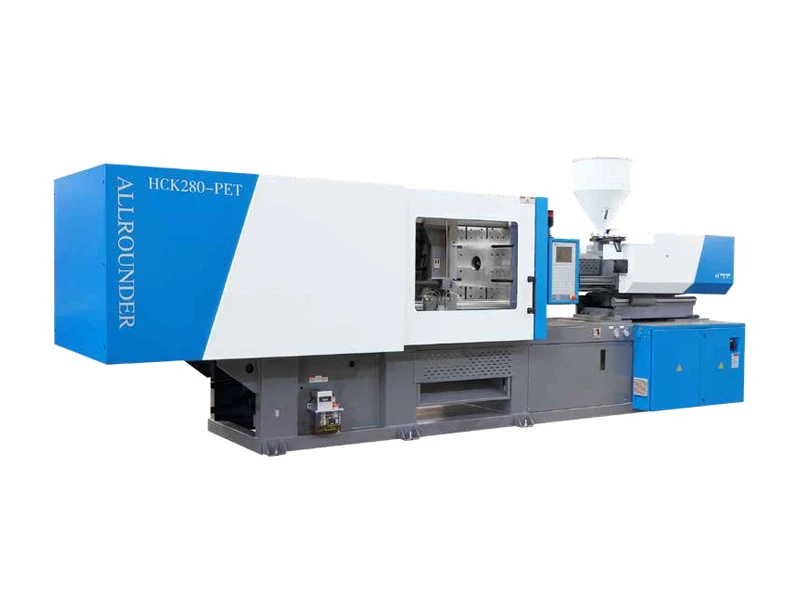
In fact, Haichen started developing disposable cutlery injection molding machine technology for PLA materials back in 2020. Since then, we have helped over 300 factories across Mexico, Brazil, Argentina, and other regions make the transition to PLA cutlery production. These figures show one thing clearly: PLA cutlery is no longer a niche product — it is a fast-growing market.
PLA Offers Real Performance Benefits
Beyond being environmentally friendly, PLA actually performs very well in real-world applications. Its processing temperature is relatively low, usually between 170–230°C, which means lower energy consumption and less thermal stress on the PLA cutlery injection molding machine.
In addition, high-quality PLA grades — such as Luminy® PLA — offer heat resistance up to 100°C, zero flavor migration, high stiffness, good gloss, and excellent grease and oil resistance. For example, with Haichen’s HCK series PLA cutlery injection molding machine, the HCK230 paired with a 20–24 cavity mold can achieve a stable cycle time of 9 seconds for PLA cutlery production. Therefore, PLA is perfectly suitable for most food service applications.
In short: PLA is not just “green” — it is a genuinely capable material for food packaging.
Three Technical Challenges of PLA Injection Molding
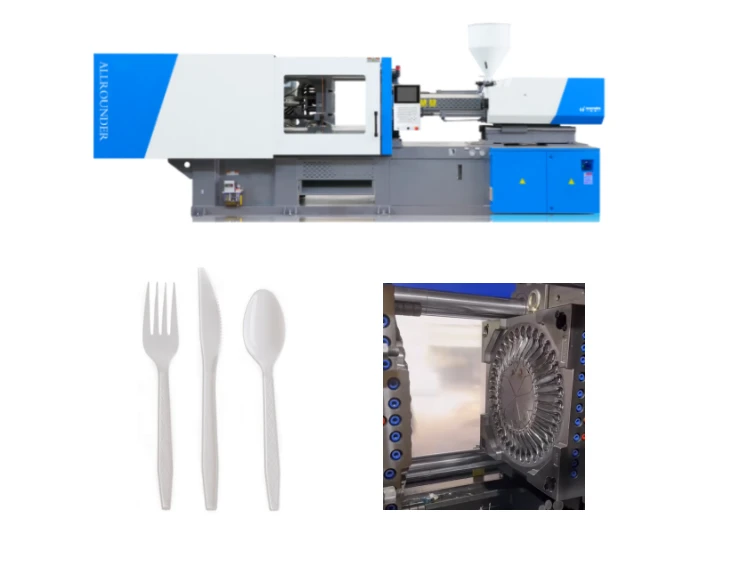
If you think PLA is as easy to process as PP or PS, you would be wrong. In fact, PLA presents three core challenges that make it far more demanding than conventional plastics. A biodegradable cutlery injection molding machine must be designed to overcome all three.
Challenge 1 – Moisture Sensitivity (Hydrolysis)
First of all, PLA is highly sensitive to moisture and readily absorbs water from the air. PLA pellets are hygroscopic, so if the moisture content gets too high, PLA will undergo hydrolysis during injection molding — the polymer chains break down, the material degrades, and the final product becomes brittle and weak.
To make matters worse, even a small amount of moisture can cause this degradation. That is why PLA pellets must be dried to a moisture content below 0.02% (200 ppm) before molding, and drying usually takes 4–6 hours at 50–60°C.
Haichen’s solution: Haichen HCK series PLA cutlery injection molding machines can be equipped with a dehumidifying dryer with a dew point below -40°C and an auto loader to ensure that dried PLA pellets are transferred to the hopper in a sealed system, preventing reabsorption of moisture.
Challenge 2 – Narrow Processing Window and Heat Sensitivity
Secondly, PLA has a relatively low melting point, around 160–180°C. Its processing temperature window is much narrower than PP’s — typically, barrel temperatures should be set to 160–190°C, and must never exceed 200°C, or the material will degrade. At the same time, PLA is also sensitive to shear heat, so excessive screw speed or long residence time can lead to thermal degradation.
Haichen’s solution: Haichen HCK series disposable cutlery injection molding machines feature high-precision PID multi-zone temperature control systems, with independent temperature control for each barrel zone. For PLA materials, Haichen can customize a low-shear screw with a compression ratio of 2.5:1–3:1 and an L/D ratio of 20:1–24:1, while keeping back pressure at 50–100 bar to minimize hydrolysis.
Challenge 3 – Longer Cooling Time and Crystallization Control
Third, PLA holds heat longer than traditional resins, so it needs higher mold temperatures — typically 90–110°C — to achieve the crystallinity required for heat resistance. If you use a cold mold (below 40°C), the parts will be amorphous and have poor heat resistance. In contrast, PP molds only need 20–40°C.
However, higher mold temperatures naturally mean longer cooling times. For thin-wall cutlery (0.4–0.8mm wall thickness), PLA cycle times usually range from 15 to 35 seconds — significantly longer than PP.
Haichen’s solution: Haichen HCK series PLA cutlery injection molding machines can be configured with mold temperature controllers (not standard water chillers) to maintain high mold temperatures of 80–110°C for PLA crystallization. At the same time, an efficient cooling system is needed to bring the temperature down quickly after ejection.
What to Look for in a PLA Cutlery Injection Molding Machine
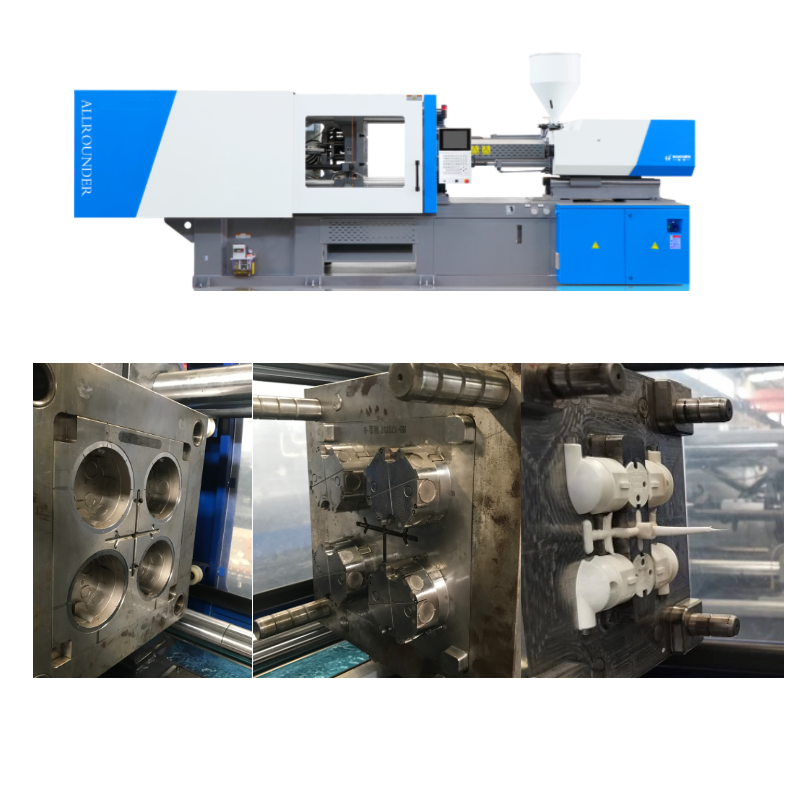
Since PLA is so demanding, what kind of biodegradable cutlery injection molding machine can actually handle it? Below are the key configuration requirements Haichen has identified through years of PLA injection molding experience.
Temperature Control – Precision Is Everything
PLA has a very narrow processing window, so the PLA cutlery injection molding machine must be equipped with a high-precision PID multi-zone temperature control system, with independent control for the barrel, nozzle, and hot runner. Typical barrel temperature settings are: feeding zone 145–155°C, compression zone 155–165°C, metering zone 160–170°C, and nozzle 165–175°C.
However, different PLA grades have slightly different temperature requirements — NatureWorks’ Ingeo series flows better and can run at the lower end, while domestic PLA grades have higher viscosity and need nozzle temperatures closer to the upper end.
Haichen’s configuration: Haichen HCK series PLA cutlery injection molding machines feature high-precision multi-zone PID temperature control to ensure PLA stays within the optimal processing range. The HCK530 offers a clamping force of 5300 kN (530 tons) with tie-bar spacing of 870×820 mm.
Screw Design – Not All Screws Are the Same
PLA needs a dedicated screw design, because standard PP or PS screws generate too much shear heat and will degrade the material. For PLA, we recommend a gradual single-thread screw with a compression ratio of 2.5:1–3:1 and an L/D ratio of 20:1–24:1.
Haichen’s configuration: Haichen can customize dedicated screws for PLA materials. For the HCK280, we offer 55/60/65 mm diameter options with L/D ratios of 21.8/20/18.5. Haichen’s screw designs can be optimized for different PLA grades to ensure uniform melting without degradation.
Cooling System – Hot Mold, Fast Cycle
PLA needs a hot mold (90–110°C) to achieve the crystallinity needed for heat resistance, but after ejection, you also need efficient cooling to shorten the overall cycle time. This means you need a mold temperature controller (not a standard water chiller) to maintain high mold temperatures during filling and holding, plus a cooling conveyor or post-mold cooling system.
Haichen’s configuration: Haichen HCK series plastic spoon and fork injection molding machines can be equipped with mold temperature controllers to meet PLA’s special thermal requirements. For PLA materials, combining mold temperature controllers with cooling conveyors keeps cycle times within a reasonable range.
Automation and Material Handling
Because PLA is moisture-sensitive, you need a dehumidifying dryer with a dew point below -40°C and an auto loader to transfer dried pellets to the machine hopper without exposing them to humid air. In addition, automated part removal and conveying help maintain hygiene standards in food-grade production.
Haichen HCK series PLA cutlery injection molding machines come standard with CE12 robot interfaces and Euromap interfaces for plug-and-play integration with most robot brands. The control system supports 21 languages for easy operation in factories worldwide.
PLA Injection Molding Machine Selection Reference
| Parameter | PLA Requirement | Haichen HCK Configuration |
|---|---|---|
| Barrel temperature | 160–190°C (max 200°C) | Multi-zone PID ±1°C accuracy |
| Mold temperature | 90–110°C (crystallization) | Mold temperature controller |
| Screw design | Low-shear, compression ratio 2.5:1–3:1 | Custom PLA screw with L/D 20:1–24:1 |
| Drying requirement | Dew point below -40°C | Dehumidifying dryer with auto loader |
| Cycle time | 15–35 seconds (thin-wall) | Optimized cooling system |
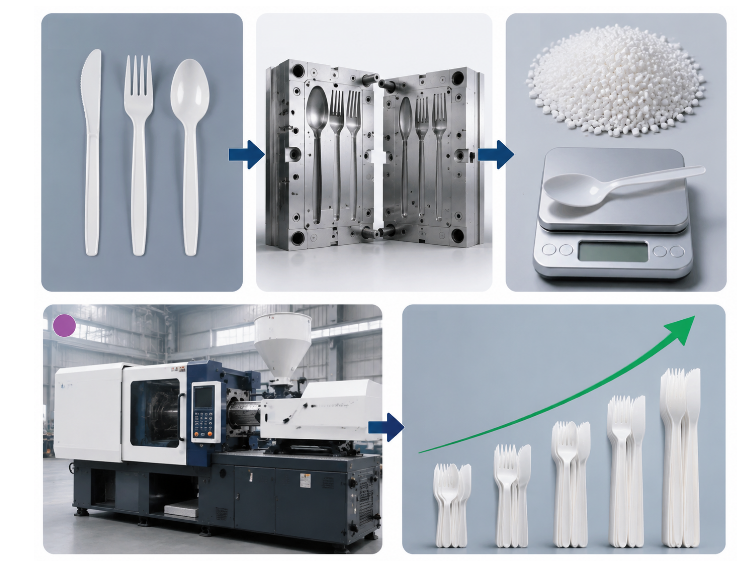
PLA vs. PP – What Does It Really Mean for Your Business?
| Comparison | PP Cutlery | PLA Cutlery |
|---|---|---|
| Material source | Petroleum-based | Renewable (corn starch, sugarcane) |
| Environmental impact | Non-biodegradable | Compostable, biodegradable |
| Heat resistance | Moderate | High-crystallinity grades up to 100°C |
| Per-unit cost | Baseline | About 10–20% higher |
| Molding difficulty | Easy | Harder (needs dedicated equipment) |
| Mold temperature | 20–40°C | 90–110°C |
| Best for | General use | Brands with high environmental standards |
Cost trends: PLA pellet prices have dropped from about $4,400/ton in 2020 to roughly $2,400–2,900/ton in 2025. However, PLA is still about three times more expensive than PP. PLA/PBAT blends can improve heat resistance to 70°C while cutting cost by about 18%.
What this means for your business: PLA cutlery costs more and demands better equipment. However, it gives you access to a fast-growing market of environmentally conscious consumers and helps you stay ahead of regulations. Choosing the right disposable cutlery injection molding machine is the first and most important step.
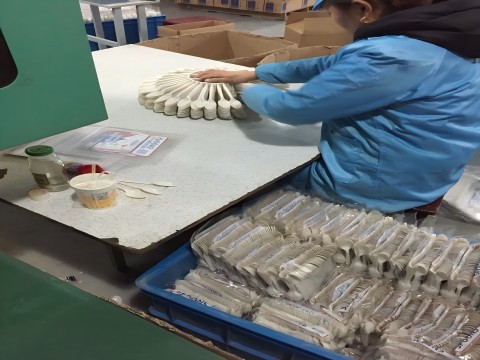
Haichen HCK Series for PLA Cutlery Production
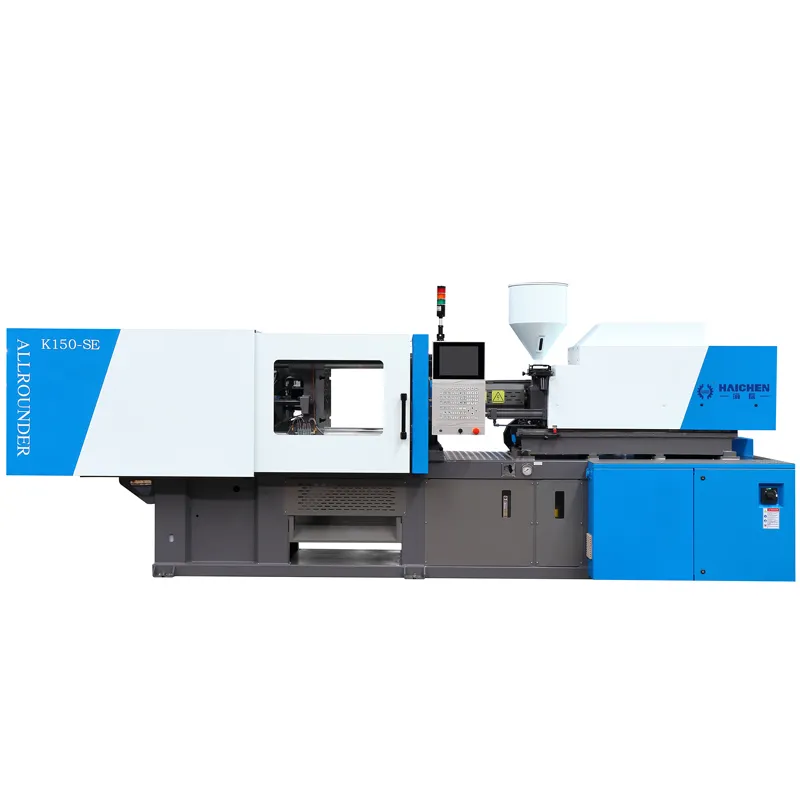
Haichen’s HCK series biodegradable cutlery injection molding machines are designed specifically for PLA and other eco-friendly materials. Our machines feature the key components needed for stable PLA production: multi-zone PID temperature control, low-shear screw designs, mold temperature controller compatibility, and dehumidifying drying systems.
Recommended HCK Models for PLA Cutlery
| HCK Model | Clamping Force | Recommended Cavities | Best for | Cycle Time (PLA) |
|---|---|---|---|---|
| HCK 150 | 150 tons | 12–16 cavities | Spoons, small forks | 18–22s |
| HCK 180 | 180 tons | 16–24 cavities | Standard cutlery sets | 16–20s |
| HCK 230 | 230 tons | 20–24 cavities | High-volume PLA cutlery | 14–18s |
| HCK 280 | 280 tons | 24–32 cavities | Ultra-high volume production | 12–16s |
All Haichen HCK series PLA cutlery injection molding machines come with:
- Servo energy saving – reduces electricity costs by 30–50%
- CE12 robot interface – supports automation integration
- Multi-zone PID temperature control – ±1°C accuracy
- Mold temperature controller compatibility – for PLA crystallization
- Low-shear PLA screw – prevents material degradation
- Multi-language control system – supports 21 languages
Haichen has been building plastic spoon and fork injection molding machines for over 20 years. Our HCK series machines are built for 24/7 operation with minimal maintenance, making them ideal for high-volume PLA cutlery production.
Mostly Questions
What is a PLA cutlery injection molding machine?
A PLA cutlery injection molding machine melts PLA pellets and injects them into a mold to form biodegradable spoons, forks, and knives. The machine heats the plastic, injects it under high pressure, cools it, and ejects the finished parts. These machines are designed for PLA’s specific processing requirements.
Can a standard injection molding machine run PLA?
It might work, but the results will not be good. PLA requires precise temperature control (160–190°C, never above 200°C), a dedicated low-shear screw, a mold temperature controller (90–110°C), and a dehumidifying dryer (dew point below -40°C). A PLA cutlery injection molding machine is specifically designed for these requirements.
What is the typical cycle time for PLA cutlery?
PLA cutlery cycle times typically range from 15 to 35 seconds, depending on part weight, wall thickness, and cooling efficiency. With a mold temperature controller and optimized cooling, Haichen HCK series machines achieve 14–20 second cycles for standard PLA cutlery.
What is the difference between PLA and PP cutlery production?
PLA requires higher mold temperatures (90–110°C vs. 20–40°C for PP), stricter drying (dew point below -40°C), and a specialized low-shear screw. PLA also has longer cycle times. PP is easier to process but non-biodegradable. A biodegradable cutlery injection molding machine is designed for PLA’s unique requirements.
How many cavities should my PLA cutlery mold have?
It depends on your output target. For medium-volume PLA cutlery production, 16–20 cavities is common. For high-volume production, 20–24 cavities gives better per-part cost. And for ultra-high production, 24–32 cavities can be cost-effective. Haichen offers molds from 12 to 48 cavities for PLA cutlery.
Does Haichen provide whole-line solutions for PLA cutlery production?
Yes. Haichen provides the PLA cutlery injection molding machine, mold recommendations, dehumidifying dryer, mold temperature controller, robot, and conveyor. We also provide installation, commissioning, and operator training. Our service covers many countries worldwide.
Haichen Machinery – your PLA cutlery injection molding machine partner. From HCK 150 to HCK 280, from 12 to 32 cavities, we help you get the right machine for your biodegradable cutlery production.
Author: Yang, Senior Engineer, Haichen Machinery