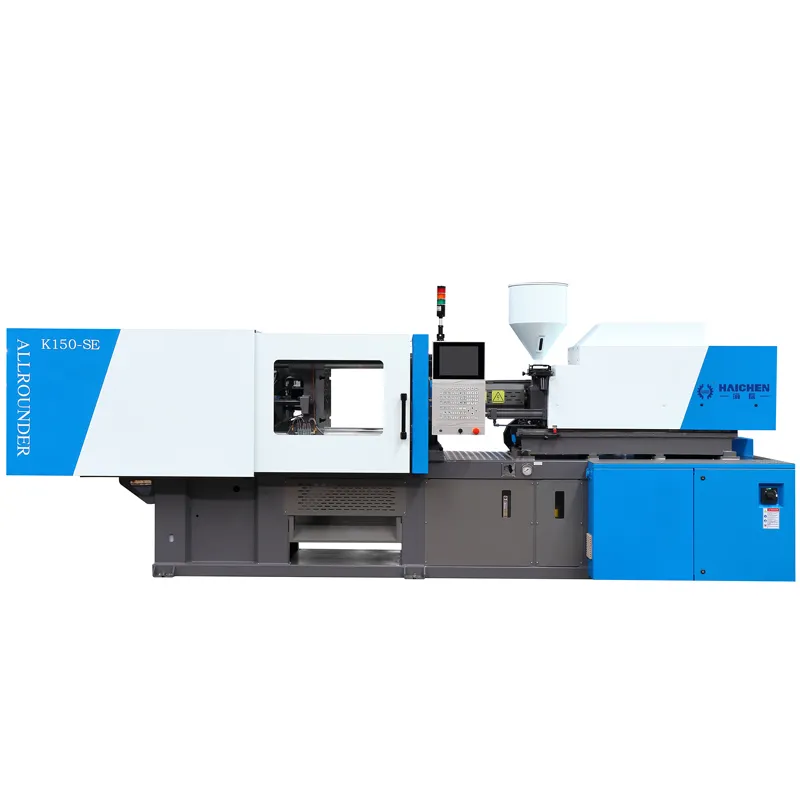
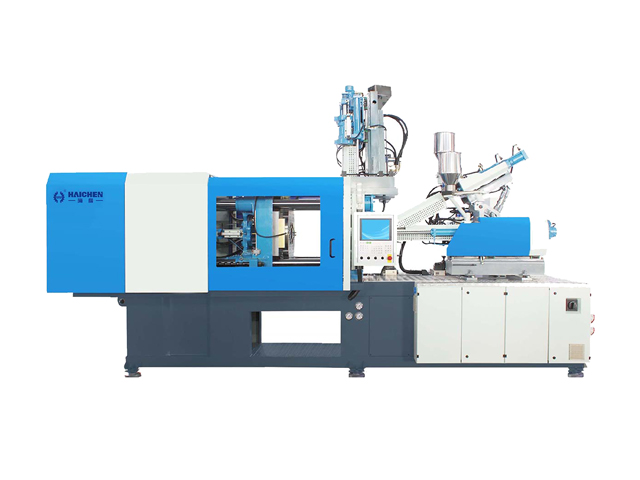
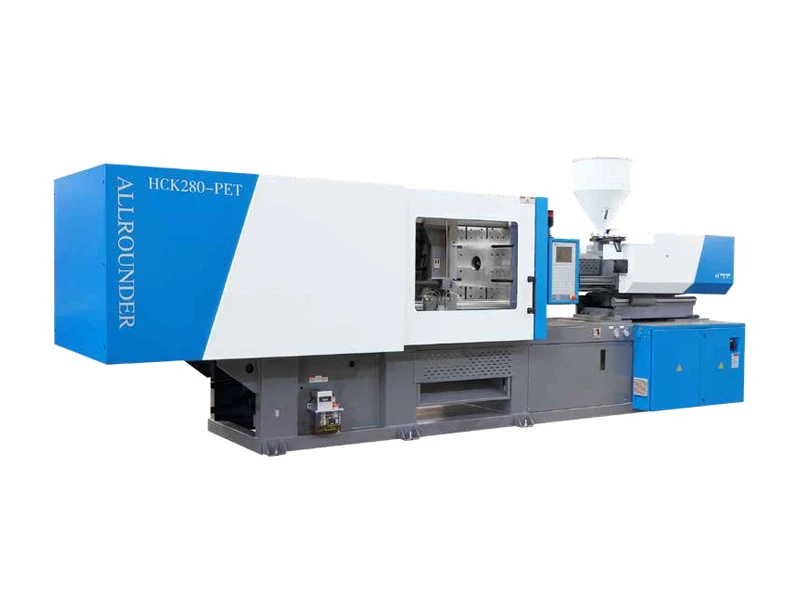
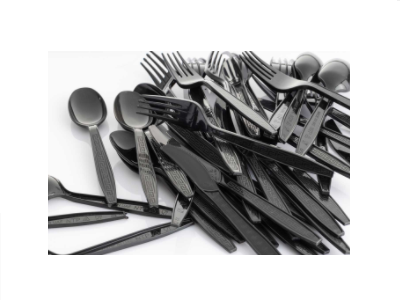
Plastic knives, forks, and spoons look simple, but mass production requires careful control of the mold, injection process, cooling, and cycle time. For high-volume production, the goal is not only to make one good piece. The goal is to make thousands of pieces with consistent shape and quality.
Injection molding works well for this type of production because one mold can contain many cavities. As a result, one injection cycle can produce many knives, forks, or spoons at the same time.
This guide explains the main stages of plastic cutlery production, from material and mold design to injection molding, quality control, and mass production.
What Materials Are Used for Plastic Cutlery?
The material depends on the product design and its intended use.
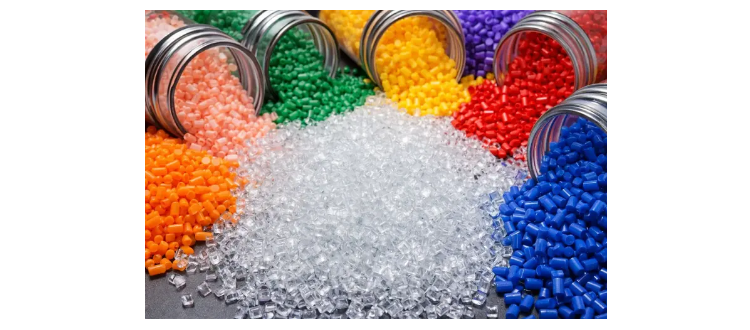
PP is widely used for many plastic cutlery applications because it offers a useful combination of processability, toughness, and cost. Other plastics can also be considered when the product needs different properties.
Before production, the manufacturer should check:
- Product strength
- Flexibility
- Heat resistance
- Surface appearance
- Processing requirements
- Intended use
- Applicable product requirements
For food-contact products, the material and finished product should also meet the requirements that apply in the target market.
Material selection should come before mass production because it affects mold filling, cooling, shrinkage, and the final appearance.
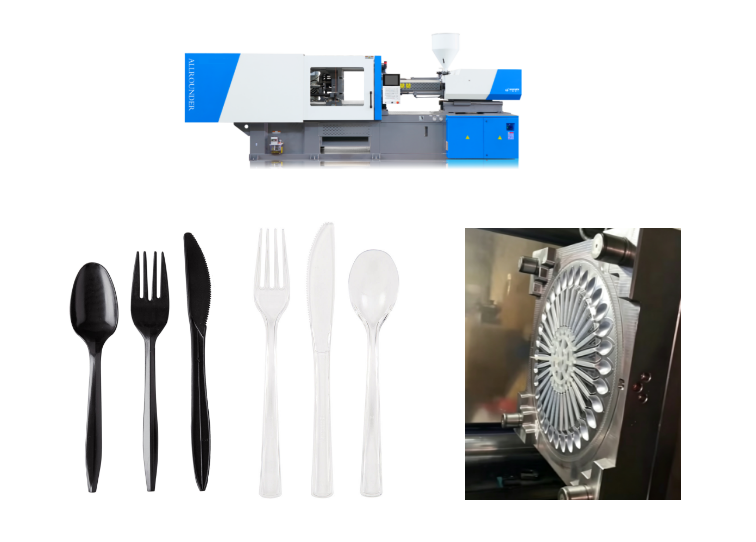
How Is a Plastic Cutlery Mold Designed?
The mold has a major influence on production efficiency.
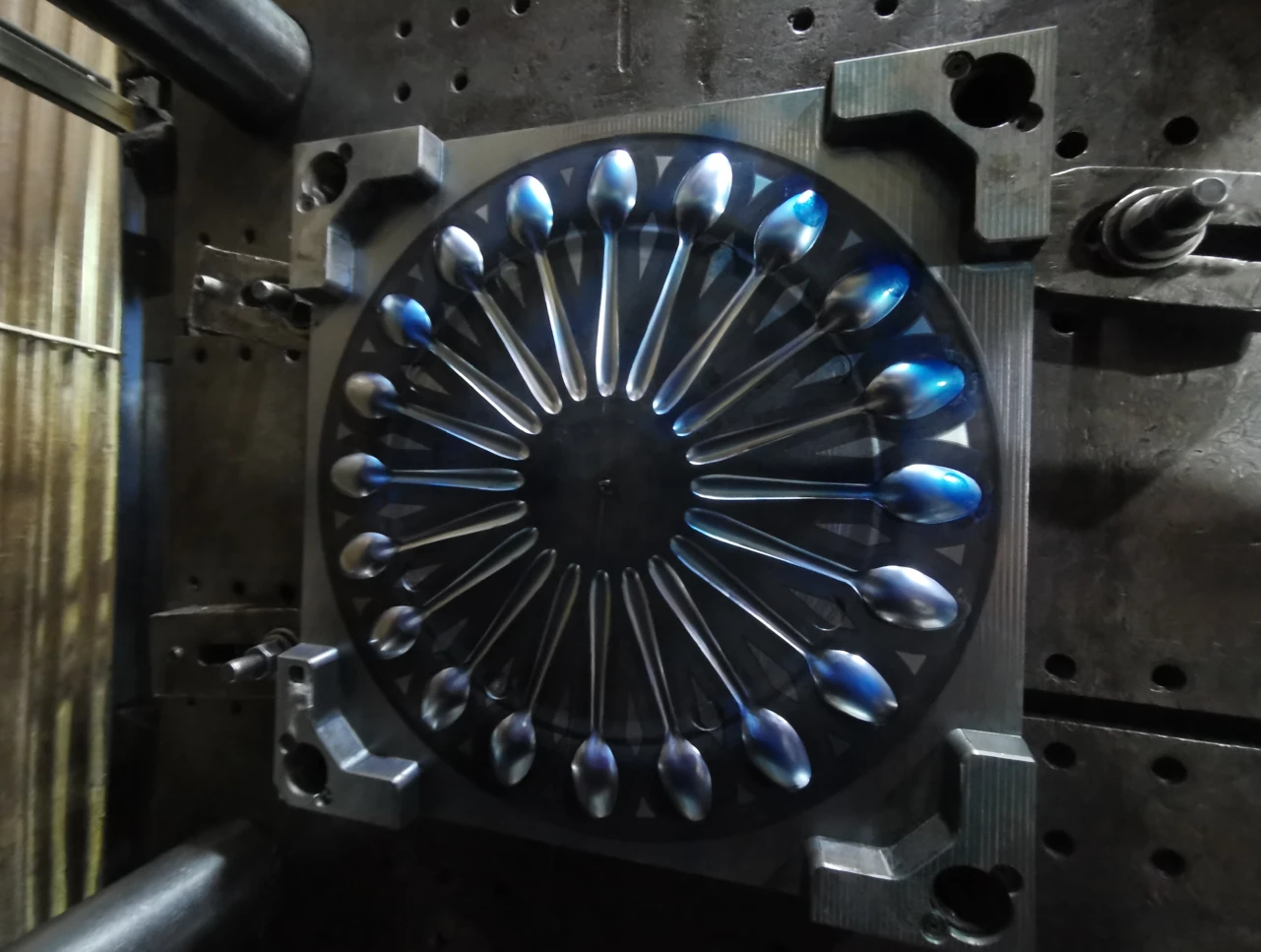
A cutlery mold normally contains multiple cavities. Each cavity forms one knife, fork, or spoon.
The mold design should consider:
- Product shape
- Wall thickness
- Cavity number
- Gate position
- Runner layout
- Cooling channels
- Venting
- Ejection
- Mold opening space
Thin areas need particular attention. For example, the edge of a spoon or the teeth of a fork may have a smaller wall thickness than the main body.
If the plastic cannot reach these areas smoothly, the product may show short shots or incomplete details.
At the same time, the cooling system should remove heat evenly. Uneven cooling can cause different shrinkage between areas and affect the final shape.
Why Does Cavity Number Matter in Cutlery Production?
High cavity numbers are common in high-volume cutlery production.
A 20-cavity mold can produce 20 pieces in one cycle. A 48-cavity mold can produce 48 pieces in one cycle.
Therefore, cavity number directly affects output.
However, adding more cavities also makes the mold more complex. The runner system, cooling system, filling balance, ejection system, and mold manufacturing all need to work together.
The goal is not simply to use the highest possible cavity number.
Instead, the manufacturer should find a cavity layout that provides a suitable balance between:
Output + mold complexity + cycle time + product consistency
This becomes especially important when the product has a thin or long shape.
How Does Plastic Cutlery Injection Molding Work?
The basic production cycle includes several stages.
1. Material Preparation
The selected plastic enters the injection molding machine through the feeding system.
The material must remain suitable for the required molding process.
2. Plasticizing
The screw moves and melts the plastic inside the heated barrel.
At this stage, stable temperature and plasticizing conditions help prepare the material for injection.
3. Injection
The machine pushes the molten plastic into the mold.
The plastic flows through the runner and gate system before entering each cavity.
For multi-cavity cutlery molds, balanced filling is important. If some cavities fill much earlier than others, the finished products may show differences in weight or appearance.
4. Holding and Cooling
After filling, the machine applies holding pressure for a suitable period.
The parts then cool inside the mold.
Cooling often takes an important part of the total cycle because the cutlery needs enough time to become stable before ejection.
5. Ejection
The mold opens and the ejector system removes the finished cutlery.
The next cycle then starts.
What Are 2-in-1 and 3-in-1 Cutlery Molds?
Some cutlery projects use molds that combine different products.
For example, a mold may produce:
- Spoon + fork
- Knife + fork
- Knife + fork + spoon
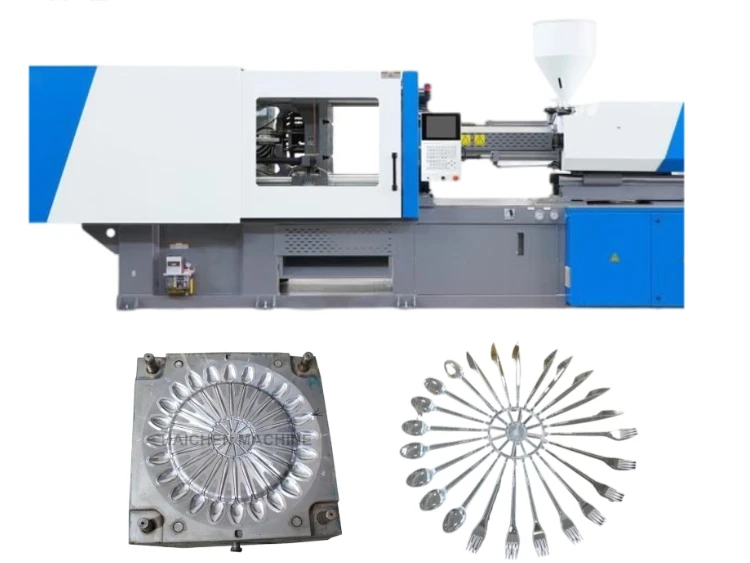
A 3-in-1 mold can produce different types of cutlery within the same production setup.
However, the mold design becomes more complex because each product has a different shape.
The manufacturer needs to consider the filling path, cavity arrangement, cooling, and ejection for each product.
Haichen has experience with multi-product cutlery molds. Its published cutlery cases include a 3-in-1 knife, fork, and spoon mold and a 2-in-1 spoon and fork mold.
How Can Manufacturers Reduce the Production Cycle?
Cycle time affects the output of a cutlery production line.
A shorter cycle can increase output, but the manufacturer should not reduce cooling time without checking the finished parts.
The main areas to review include:
- Injection time
- Holding time
- Cooling time
- Mold opening and closing
- Ejection
- Part removal
Cooling deserves particular attention because the product needs enough stability before ejection.
For this reason, a good production cycle is not simply the shortest possible cycle. It should provide a practical balance between speed and product quality.
How Do You Control Plastic Cutlery Quality?
Plastic cutlery should have consistent dimensions and appearance throughout production.
Manufacturers can check:
- Product weight
- Overall dimensions
- Shape
- Fork tooth shape
- Spoon surface
- Knife edge shape
- Flash
- Short shots
- Warping
- Flow marks
- Ejector marks
For high-cavity molds, cavity-to-cavity consistency is especially important.
If one cavity produces a different weight or appearance from the others, the manufacturer should check the filling balance, mold condition, cooling, and process settings.
Quality control should therefore cover both the individual product and the consistency between cavities.
What Equipment Is Needed for Mass Production?
An injection molding machine is only one part of a complete cutlery production setup.
Depending on the factory and production volume, the line may include:
- Injection molding machine
- Cutlery mold
- Chiller
- Mold temperature controller
- Material loader
- Dryer when required by the material
- Robot or automatic removal system
- Conveyor
- Counting equipment
- Packing equipment
A small production operation may use more manual handling.
For high-volume production, automatic removal, counting, conveying, and packing can reduce manual work and make production more consistent.
The final equipment list should match the actual production target rather than using the same setup for every factory.
Real Plastic Cutlery Production Cases
Haichen’s existing cutlery production references show how different mold designs can lead to different production configurations.
For example, published cases include:
| Product | Cavities | Machine | Cycle |
|---|---|---|---|
| Spoon | 20 | HCK230 | 9s |
| Knife/Fork/Spoon 3-in-1 | 24 | HCK230 | 9s |
| Spoon/Fork 2-in-1 | 48 | HCK310 | 10s |
These figures come from Haichen’s published cutlery application information. They serve as production references rather than universal specifications for every cutlery project.
The cases also show why manufacturers should not select a production setup from product weight alone.
The mold cavity number, product arrangement, cycle time, and mold dimensions all affect the final production configuration.
How Do You Calculate Plastic Cutlery Production Capacity?
The basic theoretical output is:
Output per hour = Cavities × 3600 ÷ Cycle time
For example, a 20-cavity mold with a 10-second cycle gives:
20 × 3600 ÷ 10 = 7,200 pieces per hour
However, this is theoretical output.
Actual production will normally be lower because the factory needs time for:
- Material loading
- Inspection
- Mold cleaning
- Machine setup
- Packing
- Maintenance
- Production changes
Therefore, production planning should use a realistic utilization rate rather than the theoretical maximum.
How Can Manufacturers Plan High-Volume Cutlery Production?
High-volume cutlery production starts with the target output.
For example, if a factory needs millions of pieces per month, it should work backward from the required daily output.
The planning process can include:
- Confirm product type.
- Confirm material.
- Confirm product weight and dimensions.
- Decide the required cavity number.
- Design the mold.
- Estimate the cycle time.
- Calculate theoretical output.
- Allow time for production downtime.
- Select suitable auxiliary equipment.
- Plan packing and storage.
This approach helps the factory build a production line around the actual demand.
What Information Is Needed Before Starting Production?
A cutlery manufacturer should prepare basic product and production information before requesting a machine and mold quotation.
Useful information includes:
- Product drawing or sample
- Product weight
- Product dimensions
- Material
- Knife, fork, or spoon type
- Required cavity number
- Target output
- Existing mold information
- Automation requirements
- Destination market
If the customer already has a mold, the mold drawing and dimensions are also important.
With this information, the machine and mold supplier can check whether the planned production setup is practical.
How Does Haichen Support Plastic Cutlery Production?
Haichen provides injection molding machines, cutlery molds, and related auxiliary equipment for plastic product production.
For cutlery projects, we look at the product, mold, cavity number, material, cycle time, and production target together.
This is especially important for high-cavity cutlery molds. A machine may have enough nominal capacity but still need to match the actual mold dimensions and injection requirements.
Haichen’s published cutlery cases include HCK230 and HCK310 configurations for different cavity arrangements.
The production setup can then be developed around the customer’s actual product and output requirements.
FAQ
What plastic is commonly used for plastic cutlery?
PP is widely used for many plastic cutlery applications. Other materials may also be suitable depending on the product’s required properties and intended use.
How many cavities does a plastic cutlery mold have?
The cavity number depends on the required output, product design, mold size, and production plan. High-volume cutlery molds can use many cavities.
Can one mold produce knives, forks, and spoons?
Yes, a specially designed multi-product mold can combine different cutlery types. However, the mold design becomes more complex than a single-product mold.
How long does plastic cutlery injection molding take?
The cycle depends on the product, mold, material, cooling system, and machine settings. Haichen’s published cutlery cases include cycles around 9–10 seconds, but actual production conditions vary by project.
Is injection molding suitable for high-volume cutlery production?
Yes. Multi-cavity molds allow many pieces to be produced in one cycle, which makes injection molding suitable for high-volume applications.
What affects plastic cutlery production cost?
The main factors include material consumption, mold cost, cavity number, cycle time, machine operation, electricity, labor, packaging, and production efficiency.