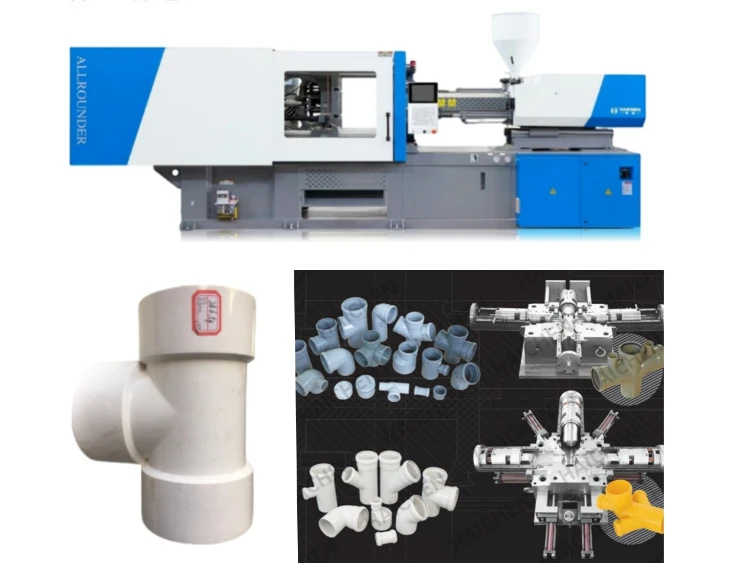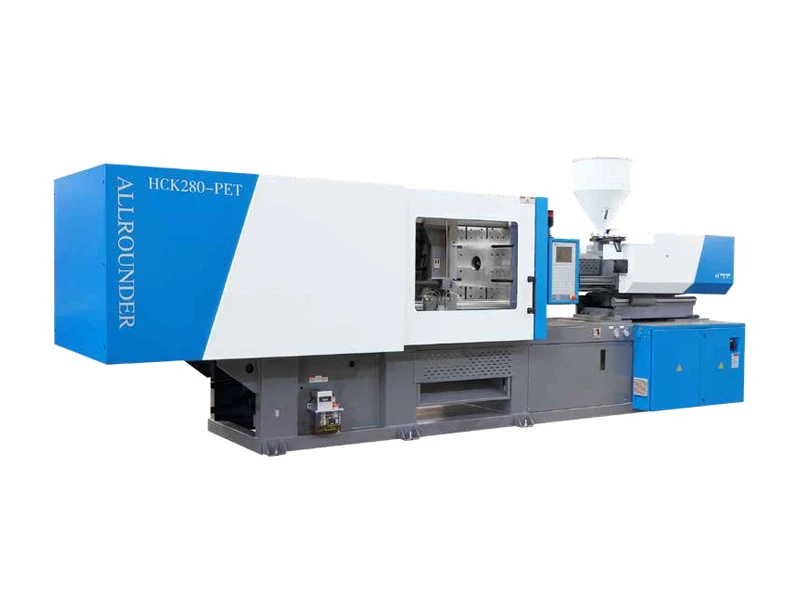
Saudi Arabia PVC pipe fittings market to grow to 2034. Learn drivers, challenges, and choosing the right PVC pipe fitting machine.
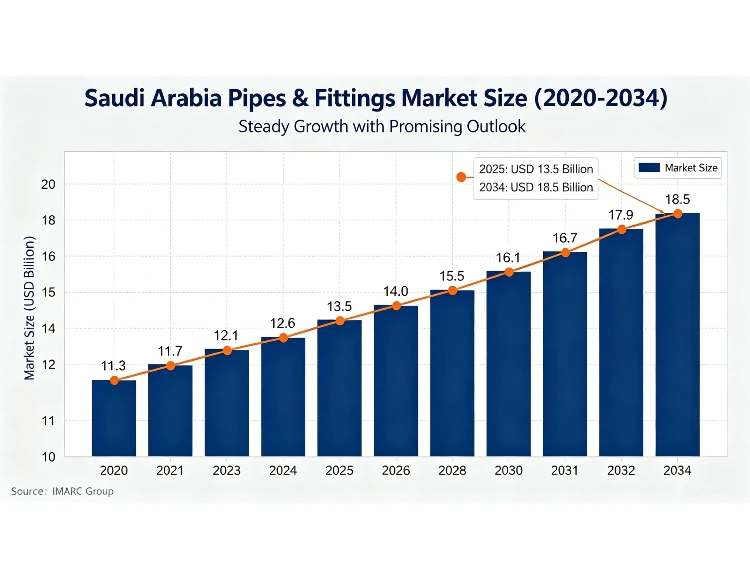
Saudi Arabia is undergoing one of the most ambitious infrastructure transformations in its history. The country’s PVC pipes market reached USD 1.35 billion in 2025 and is projected to reach USD 1.85 billion by 2034, growing at a CAGR of 3.42%. For manufacturers of PVC pipe fittings, this represents a significant opportunity to expand their business in a rapidly growing market.
The broader plastic pipes market in Saudi Arabia is expected to reach SAR 4,755.01 million by 2026, with a CAGR of 4.5%. This growth is driven by massive government investments in infrastructure, water management, and industrial development.
Market Overview – Size, Segments, and Forecast
Historical Trends and 2026-2034 Projections
The Saudi pipes and fittings market has shown consistent growth over the past five years. The PVC pipe fitting injection molding machine market globally was valued at USD 16.64 billion in 2025 and is projected to reach USD 28.09 billion by 2032, with a CAGR of 7.76%. This global trend aligns with Saudi Arabia’s domestic market expansion, creating a favorable environment for manufacturers of PVC plastic pipe fittings.
Application Breakdown
PVC pipe fittings are widely applied across multiple sectors in Saudi Arabia:
- Sewerage and drainage systems
- Plumbing and water supply
- Agricultural irrigation
- HVAC systems
- Oil and gas infrastructure
- Electrical conduit and communication networks
- Firefighting systems
Each of these applications requires specific types of PVC pipe fittings – from elbows and tees to couplings and crosses. Understanding the application landscape helps manufacturers identify which types of PVC pipe fittings are in highest demand.
Key Growth Drivers Behind the Surge

Vision 2030 and Mega-Projects
The Saudi government has announced a trillion-dollar pipeline of infrastructure projects under Vision 2030, aimed at diversifying the economy beyond oil. These mega-projects – including NEOM, the Red Sea Project, and Qiddiya – are driving unprecedented demand for construction materials, including plastic PVC pipes and fittings. Vision 2030 is projected to drive annual pipe consumption growth of 15%.
Rapid Urbanization and Industrialization
Saudi Arabia’s population is growing rapidly, with increasing demand for housing, commercial buildings, and transportation networks. Urbanization drives the need for modern plumbing and drainage systems, all of which rely heavily on PVC pipe fittings.
Water Management and Infrastructure Spending
Water scarcity is a critical issue in the region. The Saudi government is investing heavily in water distribution networks, wastewater treatment plants, and irrigation systems. PVC pipe fittings are the preferred choice for these applications due to their corrosion resistance and cost-effectiveness.
Government Investments Across Sectors
Beyond water management, significant investments are flowing into agriculture, oil and gas, and industrial sectors. All these industries rely on piping systems, creating sustained demand for PVC pipe fittings and the injection molding machines used to produce them.
Why PVC Remains the Preferred Material
PVC (polyvinyl chloride) offers a unique combination of properties that make it the material of choice for pipe fittings in the Saudi market:
- Corrosion resistance: Unlike metal pipes, PVC does not rust or corrode, making it ideal for water and chemical applications.
- Cost-effectiveness: PVC plastic is more affordable than metal alternatives, reducing project costs.
- Durability: PVC pipe fittings have a long service life with minimal maintenance requirements.
- Ease of installation: PVC plastic pipe fittings are lightweight and easy to install, reducing labor costs.
- Chemical resistance: PVC resists a wide range of chemicals, making it suitable for industrial applications.
- Smooth inner surface: Prevents scaling and ensures efficient fluid flow.
For manufacturers, this means consistent and growing demand for PVC pipe fittings across multiple end-use sectors.
Production Challenges in Meeting Saudi Demand
While the market opportunity is clear, producing high-quality PVC pipe fittings presents unique challenges that manufacturers must address.
Thermal Sensitivity and Decomposition Risks
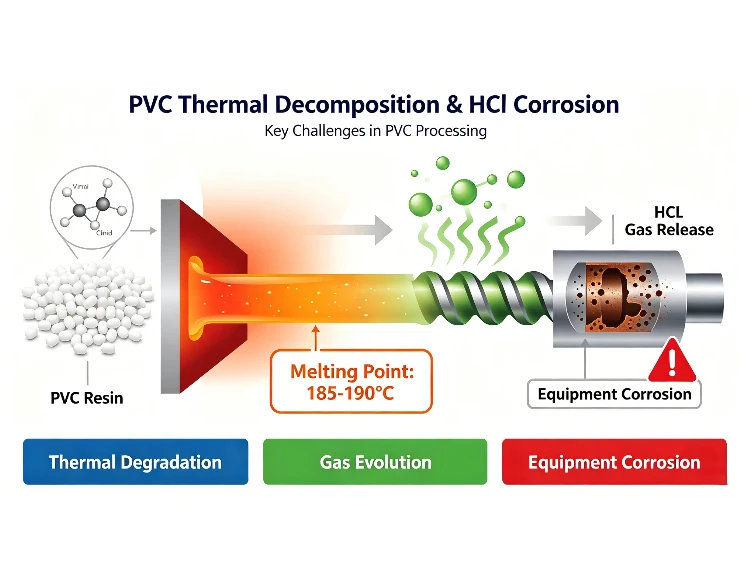
PVC has poor thermal stability. When overheated, PVC undergoes thermal degradation and releases corrosive hydrochloric acid (HCl) gas. This decomposition not only damages equipment but also creates defects in finished products. The processing window for PVC is narrow – the melting temperature must be precisely controlled at 185-190℃, with mold temperature maintained at 50-70℃.
Gas Formation and Surface Defects
PVC tends to generate gas during heating. Without proper venting, this gas becomes trapped in the mold, creating bubbles and black spots on the surface of finished fittings. These defects ruin product quality and reduce manufacturing yield, directly impacting profitability.
Long Cooling Cycles for Thick-Wall Fittings
PVC requires extended cooling times, especially for thick-wall pipe fittings. This limits production throughput and increases per-unit costs. Manufacturers need efficient cooling systems to maintain competitive production rates while ensuring product quality.
Choosing the Right Production Equipment for the Saudi Market
To successfully compete in the Saudi PVC pipe fittings market, manufacturers must invest in the right production equipment. Here are the key considerations.
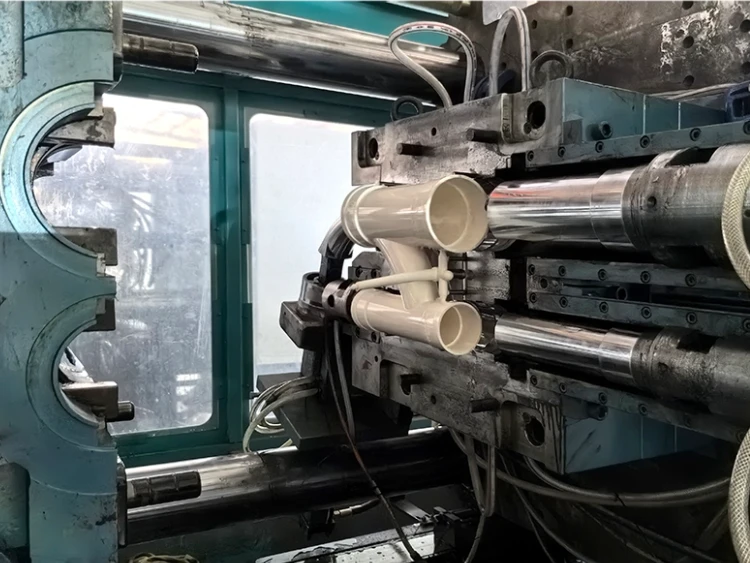
Corrosion-Resistant Screw and Barrel
Standard injection molding machines use ordinary steel screws and barrels that are vulnerable to HCl corrosion. A PVC pipe fitting injection molding machine must feature hard chrome-plated or alloy steel components with enhanced corrosion resistance. At Haichen Machinery, we manufacture screws and barrels specifically engineered to withstand the corrosive environment of PVC processing, ensuring long equipment life and consistent product quality.
Precision Temperature Control Systems
PVC requires precise temperature management to prevent decomposition. A dedicated injection molding machine for PVC pipe fitting production should offer multi-zone independent temperature control with ±1℃ accuracy. Our machines feature advanced temperature control systems that maintain the critical 185-190℃ melting temperature and 50-70℃ mold temperature required for defect-free PVC pipe fittings.
Efficient Venting and Back-Pressure Management
Proper venting is essential to prevent gas entrapment and surface defects. A quality PVC pipe fitting injection molding machine incorporates forced venting modules with back-pressure control. Our PVC-dedicated machines are designed with optimized venting systems that effectively eliminate bubbles and black spots, delivering smooth-surface PVC plastic pipe fittings.
Optimized Cooling for Faster Cycle Times
To address PVC’s long cooling requirements, efficient cooling systems are critical. High-efficiency cooling circuits with large-diameter channels can significantly reduce cycle times for thick-wall fittings. Haichen Machinery’s PVC injection molding solutions feature dual cooling circuits designed to maximize cooling efficiency while maintaining product quality.
Automation Options to Boost Output and Consistency
Automation is transforming PVC pipe fitting production. Robotic arms can handle insert extraction, finished product removal, and sprue separation, making the entire production process more efficient and stable. This reduces errors and fatigue from manual operation while ensuring consistent installation accuracy and sealing of fittings.
At Haichen Machinery, our PVC injection molding machines are designed with automation-ready configurations that allow manufacturers to scale production as they capture opportunities in the Saudi market. From robot integration to automatic packing systems, we provide complete solutions for high-volume PVC pipe fitting production.