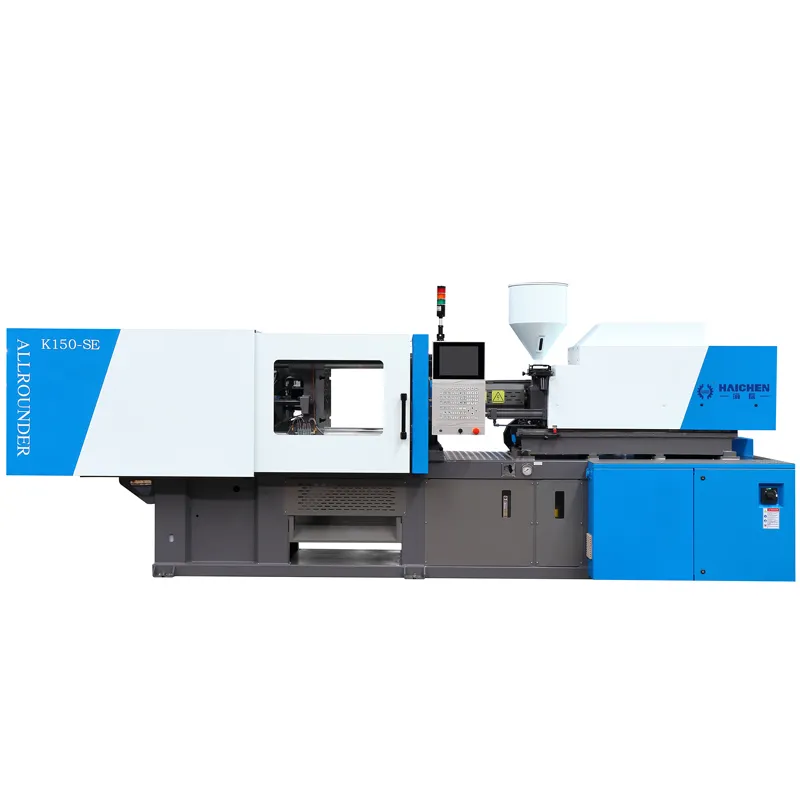
Toy manufacturers sourcing injection molding machines from China face a crowded supplier landscape. Bole Machinery operates as a subsidiary of Chenglu Group with nearly 20 years of development. Tiancheng specializes in servo energy-saving machines for artificial plant parts. Lanson Precision engineered a dedicated toy bricks machine from its GT3 platform with clamping forces of 120–260 tons. Each supplier claims quality, certifications, and competitive pricing. Actual performance varies widely.
Evaluate Chinese plastic toy injection molding machine suppliers across six weighted criteria: technical capability (25%), toy-specific experience (20%), quality certifications (15%), on-time delivery (15%), after-sales support (15%), and communication transparency (10%). Score each supplier 1–5 on every metric and multiply by the weight.
This guide provides a complete supplier scorecard, the specific metrics to verify, red flags that should disqualify a supplier, and a worked comparison example.
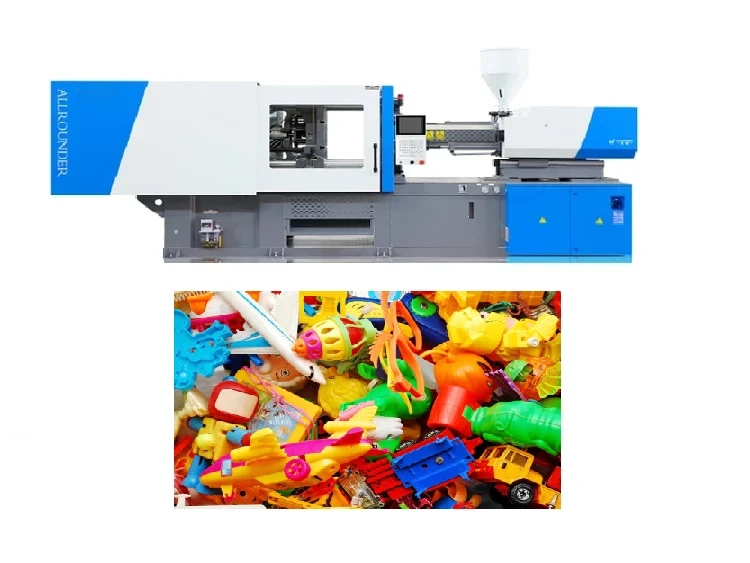
What Makes Toy Injection Molding Different from General Plastic Production?
Toy injection molding differs in three critical ways: child safety compliance (EN71, CPSIA, REACH), high-precision color matching and surface finish, and small-to-medium shot weights with high cavity counts. These requirements demand specific machine capabilities that general-purpose machines may not provide.
The Three Toy-Specific Production Demands
| Requirement | Why It Matters | Machine Impact |
|---|---|---|
| Child safety compliance | Toys touch children’s hands and mouths | Food-grade screw/barrel materials, no heavy-metal contamination |
| Color accuracy and surface finish | Visual appeal drives purchase decisions | High-precision temperature control, polished mold compatibility |
| Small parts, high cavity counts | Toy bricks, wheels, and small components | Shot weight 20–80% of capacity, fast injection response |
Toy bricks, for example, require dimensional tolerance within ±0.05mm for proper interlocking. Lanson Precision developed its toy bricks machine with professional screw and barrel design for wear resistance and plasticizing speed, plus digital back pressure control for product accuracy. A general-purpose machine cannot maintain this level of repeatability across millions of cycles.
ABS toy shells typically process at 200–230°C cylinder temperature, maintaining impact strength around 21kJ/m². ABS melt temperature typically ranges from 200–260°C with mold temperatures of 40–80°C. PP toy components process at melt temperatures of 200–280°C with mold temperatures of 20–80°C. These processing windows are narrower than those for general household plastics.
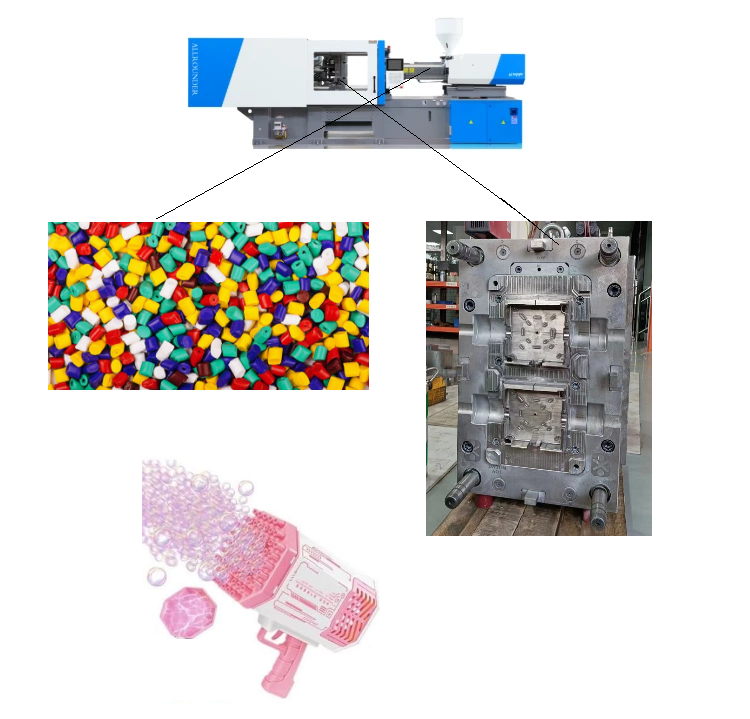
What Technical Capabilities Should You Score for Toy Machine Suppliers?
Score technical capability across three metrics: machine specification match (does the tonnage and shot size fit your mold?), screw and barrel design (is it optimized for ABS/PP toy materials?), and injection control precision (can it maintain ±0.05mm tolerance for interlocking parts?).
Machine Specification Match (35% of Technical Score)
A capable supplier engages with your application before quoting. Key discussion points include mold dimensions, cavity count, part weight, and target cycle time. A supplier who only asks about your budget cannot recommend the right configuration.
| Score | Criteria |
|---|---|
| 5 | Supplier asks clarifying questions about mold dimensions, cavity count, part weight, and material before quoting; provides documented cycle time data from similar applications |
| 4 | Supplier asks some technical questions and provides general tonnage recommendations |
| 3 | Supplier provides catalog recommendations without application-specific analysis |
| 2 | Supplier only provides price list |
| 1 | Supplier cannot explain machine-mold matching logic |
Screw and Barrel Design for Toy Materials (35% of Technical Score)
Toy production uses ABS, PP, and sometimes PC. ABS requires a screw with good mixing properties and wear resistance. Lanson Precision’s toy bricks machine features professional design for wear resistance and plasticizing speed.
| Score | Criteria |
|---|---|
| 5 | Supplier provides documented screw design for ABS/PP with L/D ratio, compression ratio, and wear-resistant treatment specifications |
| 4 | Supplier offers optimized screw for toy materials but without detailed documentation |
| 3 | Standard general-purpose screw |
| 2 | Cannot specify screw parameters |
| 1 | No screw design information available |
Injection Control Precision (30% of Technical Score)
Interlocking toy parts require high repeatability. The machine needs precise shot weight control and fast injection response. Lanson’s GT3-LS120M uses a 10-inch touch screen computer control system with digital back pressure using a proportional back pressure valve for product accuracy.
| Score | Criteria |
|---|---|
| 5 | Shot weight repeatability ±0.5% or better, documented test data available |
| 4 | Shot weight repeatability ±1% |
| 3 | Standard repeatability, no documented data |
| 2 | Cannot provide repeatability specifications |
| 1 | No precision control features |
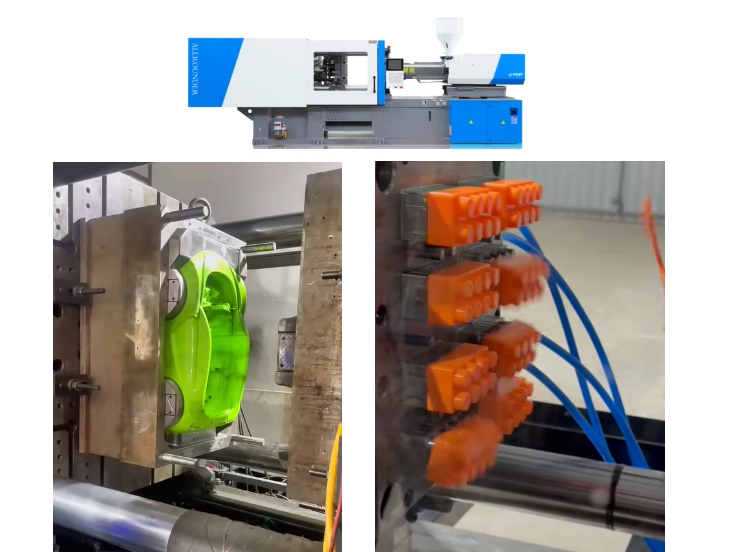
What Toy-Specific Experience Should a Supplier Demonstrate?
Verify documented experience with toy molds at your cavity count and cycle time, examples of machines running ABS/PP toy parts, and references from existing toy manufacturers. A supplier without toy-specific references is a higher risk.
Experience Verification Checklist
| What to Ask | What a Capable Supplier Provides | Red Flag |
|---|---|---|
| Toy mold references | Documented case studies with cavity count, material, cycle time | General plastic experience only |
| Reference customers | Contact information for 2–3 existing toy manufacturers | No references available |
| Sample parts | Test-run samples from a machine matching your tonnage | Photos only |
| Production video | Real-shot footage of the machine running a toy mold | Staged demonstration |
Lanson Precision specifically designed its GT3-LS120M for toy bricks, with automatic inspection devices that detect defective products and save labor costs. This level of toy-specific engineering demonstrates genuine application experience.
What Quality Certifications Should You Verify?
Verify ISO 9001 (quality management), CE marking (EU safety), and for toys specifically, ensure the machine can process materials compliant with EN71 (EU toy safety), CPSIA (US toy safety), and REACH (EU chemical regulation). Request certificate numbers and verify with issuing bodies.
Required Machine Certifications
| Certification | What It Confirms | How to Verify |
|---|---|---|
| ISO 9001 | Quality management system | Check certificate number with issuing body |
| CE Marking | EU safety compliance | Verify with notified body |
| EN ISO 20430 | Injection molding machine safety | Request test report |
Hotonmach’s guide on verifying Chinese suppliers emphasizes that many suppliers present impressive credentials that differ from reality. Common issues include overstated capabilities, quality control systems that exist only on paper, and certifications that may be outdated or improperly maintained. A valid ISO 9001 certificate must have a scope that actually covers injection molding machine manufacturing.
Toy-Specific Compliance Considerations
Your machine supplier should understand the compliance requirements for the toys you produce. EU toy safety standard EN71 requires testing for mechanical and physical properties, flammability, and migration of certain elements. US CPSIA sets limits on lead and phthalates in children’s products. REACH restricts hazardous chemicals in products sold in the EU.
A capable machine supplier can advise on material selection and processing parameters that maintain compliance. For example, ABS toy shells processed at 200–230°C maintain their impact strength and dimensional stability, reducing the risk of defects that could compromise safety.

How Do You Score Operational Reliability?
Score operational reliability across three metrics: on-time delivery rate (target ≥97%), reorder rate (target ≥30%), and response time (target ≤1 hour during business hours). Request documented delivery records from the past two years.
On-Time Delivery Rate
Alibaba’s B2B sourcing guide recommends looking for suppliers with verified on-time shipment records above 97%.
| Score | Criteria |
|---|---|
| 5 | ≥99% on-time delivery with documented records |
| 4 | 97–98% on-time delivery |
| 3 | 90–96% on-time delivery |
| 2 | 85–89% on-time delivery |
| 1 | <85% or cannot provide records |
Reorder Rate
A high reorder rate indicates repeat business and client satisfaction. Suppliers reporting 100% reorder rates demonstrate consistent performance and delivery reliability.
| Score | Criteria |
|---|---|
| 5 | Reorder rate ≥50%, verified through customer references |
| 4 | Reorder rate 30–49% |
| 3 | Reorder rate 20–29% |
| 2 | Reorder rate 10–19% |
| 1 | Reorder rate <10% or cannot provide data |
Response Time
Suppliers responding within one hour demonstrate strong customer service infrastructure.
| Score | Criteria |
|---|---|
| 5 | ≤1 hour during business hours, 24/7 emergency contact |
| 4 | ≤4 hours during business hours |
| 3 | ≤8 hours during business hours |
| 2 | ≤24 hours |
| 1 | >24 hours or inconsistent |
How Do You Evaluate After-Sales Support?
Evaluate after-sales support across three metrics: warranty terms (12+ months preferred), spare parts availability (regional stock vs. order-on-demand), and training/commissioning (on-site support, remote diagnostics, operator training). Target a 12-month warranty with regional spare parts stock.
Warranty and Spare Parts (40% of Support Score)
| Score | Criteria |
|---|---|
| 5 | 12+ month warranty, regional spare parts stock, documented parts availability commitment |
| 4 | 12-month warranty, spare parts within 7 days |
| 3 | 12-month warranty, spare parts within 14 days |
| 2 | 6–12 month warranty, lead time >14 days |
| 1 | <6 month warranty or no spare parts commitment |
Technical Support and Training (35% of Support Score)
| Score | Criteria |
|---|---|
| 5 | On-site commissioning, operator training, remote diagnostics, 24/7 technical hotline |
| 4 | On-site commissioning and operator training |
| 3 | Remote support and documentation only |
| 2 | Limited technical support |
| 1 | No after-sales support |
Engineering Support (25% of Support Score)
Does the supplier help with mold design optimization, process parameter tuning, or troubleshooting after installation?
| Score | Criteria |
|---|---|
| 5 | Ongoing process optimization, mold design consultation, material trial assistance |
| 4 | Initial process setup and parameter guidance |
| 3 | Basic installation support only |
| 2 | Limited engineering support |
| 1 | No engineering support |
Supplier Scorecard Template
Use this template to score each supplier. Score each metric on a 1–5 scale, multiply by the weight, and sum for a total out of 5.
| Evaluation Area | Weight | Metric | Metric Weight | Score (1–5) | Weighted |
|---|---|---|---|---|---|
| Technical Capability | 25% | Machine specification match | 35% | ||
| Screw and barrel design | 35% | ||||
| Injection control precision | 30% | ||||
| Toy-Specific Experience | 20% | Toy mold references | 50% | ||
| Reference customers | 30% | ||||
| Sample parts/testing | 20% | ||||
| Certifications | 15% | ISO 9001 | 40% | ||
| CE marking | 30% | ||||
| EN71/CPSIA awareness | 30% | ||||
| Operational Reliability | 15% | On-time delivery | 40% | ||
| Reorder rate | 35% | ||||
| Response time | 25% | ||||
| After-Sales Support | 15% | Warranty and spare parts | 40% | ||
| Technical support | 35% | ||||
| Engineering support | 25% | ||||
| Communication | 10% | Transparency and documentation | 50% | ||
| Technical team accessibility | 50% | ||||
| Total | 100% | /5 |
Score Interpretation
| Total Score | Rating | Action |
|---|---|---|
| 4.5–5.0 | Excellent | Preferred supplier, negotiate volume terms |
| 3.5–4.4 | Good | Acceptable, address weak areas in contract |
| 2.5–3.4 | Conditional | Requires improvement plan before commitment |
| 1.5–2.4 | Poor | High risk, seek alternatives |
| <1.5 | Unacceptable | Reject |
Worked Example: Comparing Three Chinese Toy Machine Suppliers
| Metric | Supplier A | Supplier B | Supplier C |
|---|---|---|---|
| Machine spec match | 5 (asks technical questions) | 4 (provides recommendations) | 2 (price list only) |
| Screw and barrel design | 4 (documented parameters) | 5 (toy-optimized, documented) | 3 (standard screw) |
| Injection precision | 5 (±0.5% repeatability) | 4 (±1% repeatability) | 3 (no data) |
| Toy mold references | 5 (documented case studies) | 4 (references available) | 2 (general plastic only) |
| Reference customers | 4 (2 references) | 5 (3 references) | 1 (none) |
| ISO 9001 | 5 (verified, in scope) | 5 (verified) | 3 (claimed, unverified) |
| CE marking | 5 (verified) | 5 (verified) | 2 (no CE) |
| On-time delivery | 4 (97%) | 5 (99%) | 3 (no records) |
| Reorder rate | 4 (35%) | 5 (55%) | 2 (15%) |
| Response time | 5 (≤1 hour) | 4 (≤4 hours) | 2 (≤24 hours) |
| Warranty and parts | 4 (12 months, regional) | 5 (12 months, regional) | 3 (12 months, order-on-demand) |
| Technical support | 5 (on-site + remote) | 4 (on-site) | 2 (remote only) |
| Engineering support | 4 (process optimization) | 5 (mold design + process) | 1 (none) |
| Weighted Total | 4.55 | 4.55 | 2.25 |
Interpretation: Supplier A and B both score in the “Excellent” range. Supplier C falls into “Conditional” and should not be selected without a significant improvement plan.
FAQ
What certifications should a Chinese toy injection molding machine supplier have?
At minimum, verify ISO 9001 (quality management) and CE marking (EU safety compliance). For toy production, the machine must process materials compliant with EN71 (EU toy safety), CPSIA (US toy safety), and REACH. Request certificate numbers and verify with issuing bodies.
How do I verify a Chinese supplier’s factory actually exists?
Review business licenses through the National Enterprise Credit Information Publicity System, conduct on-site factory visits to evaluate 5S management and equipment maintenance, and use third-party inspection services for independent verification.
What tonnage injection molding machine is needed for toy production?
Tonnage depends on part size and cavity count. Toy bricks machines typically range from 120–260 tons. Small toy components may run on 85–130 ton machines. Large toy shells with multi-cavity molds may require 150–310 tons. Calculate required clamping force using the formula: Total Projected Area × Material Factor × Safety Factor.
What processing temperature is recommended for ABS toy parts?
ABS toy shells process at 200–230°C cylinder temperature, maintaining impact strength around 21kJ/m². ABS melt temperature typically ranges from 200–260°C with mold temperatures of 40–80°C. ABS requires drying at 75–80°C for 2–4 hours before processing to prevent silver streaks.
What is a good reorder rate for an injection molding machine supplier?
A reorder rate above 30% indicates satisfied buyers who return for more machines. Suppliers reporting 100% reorder rates demonstrate consistent performance and delivery reliability. Rates below 15% should raise questions.
What red flags should disqualify a Chinese machine supplier?
Disqualifying red flags include fake or expired certificates, claimed capacity far exceeding actual production records, perfect samples but inconsistent batch quality, hidden subcontracting, and missing quality documentation. Verify ISO 9001 scope and check certificate validity dates before commitment.
How do I verify toy safety compliance for the machines I purchase?
Your machine supplier should understand EN71, CPSIA, and REACH requirements for toy production. Ask how the machine’s processing parameters maintain material compliance, request test reports for material samples processed on their machines, and verify that the screw and barrel materials do not introduce heavy-metal contamination.