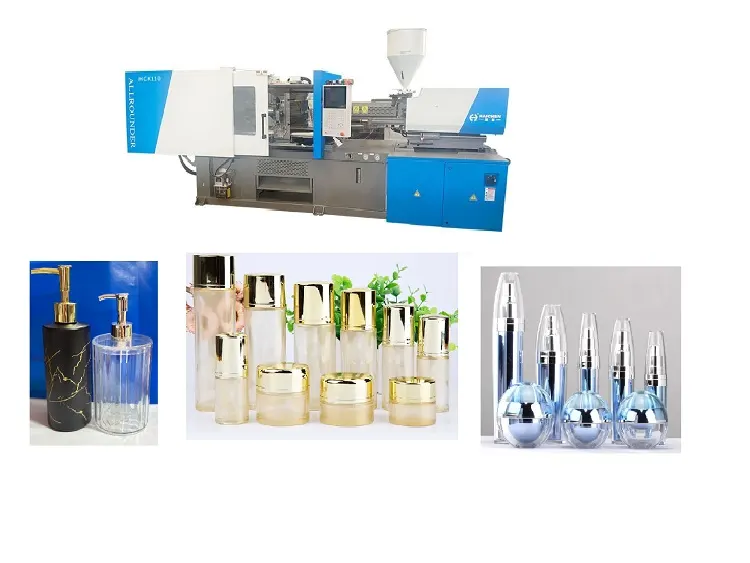
Crystal-clear cosmetic packaging injection molding is a demanding craft. It blends optical perfection with manufacturing discipline. A single speck of dust, a tiny moisture bubble, or a slightly rough mold surface can turn a premium jar into scrap. Therefore, molders must control every variable with precision.
At the center of this process sits the injection molding machine. It must deliver stable melt temperature, precise injection pressure, and repeatable shot weight. Moreover, it must work with the right mold steel and the right drying system. Without these, the glass-look finish remains out of reach.
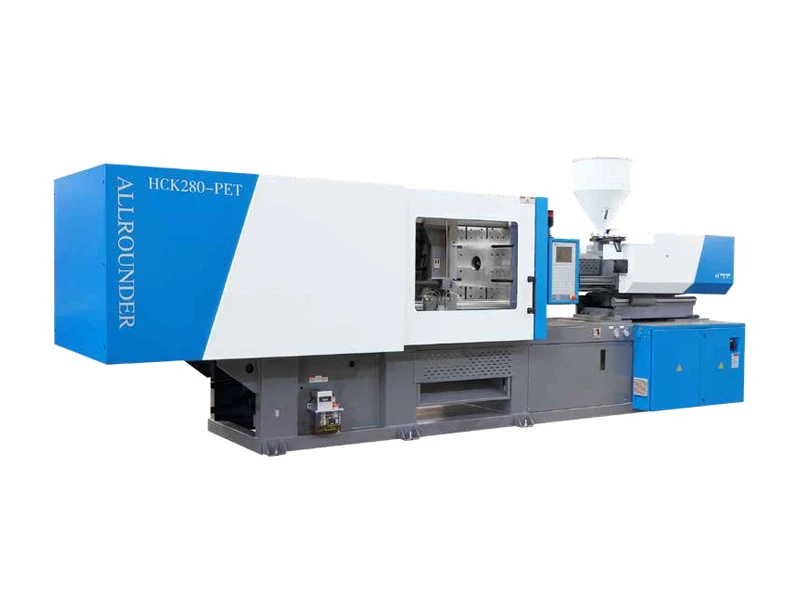
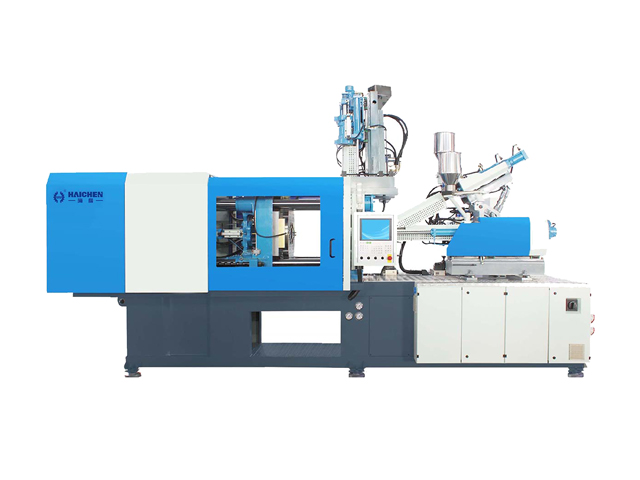
Haichen has built injection molding machines for over two decades. Our HCK series helps molders achieve crystal-clear cosmetic packaging injection molding. This guide explains the technical prerequisites, the two most common defects, and the equipment checklist you need.
Three Technical Prerequisites for a Crystal-Clear Finish
Material Transmittance – PMMA at 92% Is the Ceiling; PETG Thick-Wall Molding Creates Crystal Effects
Material choice sets the optical ceiling. PMMA (acrylic) delivers light transmittance up to 92% with haze as low as 0.4%. Therefore, it remains the top choice for thick-wall cream jars and serum bottles. PETG, on the other hand, offers thick-wall molding that creates a crystal-like luxury effect. However, PETG has slightly lower clarity than PMMA. Transparent ABS and SAN provide 88–90% transmittance at a lower cost. Notably, regrind ratio must stay below 10%, and regrind must be dried separately.
Mirror Mold Grade – A0 Class Ra≤0.01μm Requires S136 Steel
The mold surface directly copies onto the plastic part. For a glass-look finish, the mold needs an SPI A0 or A1 grade. A0 requires surface roughness Ra≤0.01μm, while A1 requires Ra≤0.025μm. Common P20 steel can only reach Ra0.05μm; polishing further creates orange peel. Therefore, S136 steel (hardened to HRC 48–52) becomes the workhorse for optical mirror molds. Its uniform microstructure accepts diamond polishing. NAK80 suits thick-wall transparent parts that do not need high hardness.
Environmental Cleanliness – Regrind Ratio ≤10% to Eliminate Black Spots
Cleanliness is non-negotiable. Dust, oil, or cross-material contamination creates black spots. Therefore, the production area should be isolated or under positive pressure. Moreover, regrind content must not exceed 10%. In addition, regrind requires separate drying and screening. Without these steps, crystal-clear cosmetic packaging injection molding yields high scrap rates.
Silver Streaks and Haze – The Two Toughest Defects in Transparent Injection Molding
Root Cause of Silver Streaks – Moisture Vaporization Creates Micro-Bubbles; Dry to <0.02% Moisture
Silver streaks appear as silvery lines or streaks on the part surface. They form when moisture in the resin vaporizes during melting. The vapor creates micro-bubbles that stretch along the flow path. Therefore, drying is critical. PMMA requires drying at 80–90°C for 2–4 hours. PET requires 160–170°C for 4–6 hours. The target moisture content must be below 0.02%. After drying, the material must stay in a sealed hopper. If it sits longer than 4 hours, re-dry it.
Root Cause of Haze – Uneven Cooling or Excessive Shear Causes Degradation or Crystallization
Haze reduces transparency. It comes from two sources. First, uneven cooling creates internal stress and micro-crystals that scatter light. Second, excessive shear heat degrades the polymer, turning it cloudy. Therefore, mold temperature must be uniform. For PMMA, mold temperature should stay between 60–80°C. For PETG, 20–40°C works well. Moreover, injection speed must not be too high. High shear rates break molecular chains and cause haze.
Solutions – Staged Temperature Control + Multi-Stage Injection Pressure + Precision Venting
To fight silver streaks and haze, use three strategies. First, apply staged temperature control. Set the rear zone at 160–170°C, middle at 170–180°C, and front at 180–190°C. The nozzle should be slightly higher to prevent cold slugs. Second, use multi-stage injection pressure. Start slow, then fast, then slow again. This profile avoids jetting and reduces shear. Third, add precision venting. Vent depths of 0.02–0.03mm at the parting line release trapped air. Consequently, the part achieves a crystal-clear cosmetic packaging injection molding finish.
Equipment Selection Checklist – What Should a Supplier Have?
Temperature Control Precision – Multi-Zone PID ±1°C, Closed-Loop Mold Temperature Controller
The injection molding machine must hold tight temperature. Multi-zone PID control with ±1°C accuracy is the minimum. In addition, a closed-loop mold temperature controller keeps the mold surface stable. For PMMA, this controller must reach 80°C or higher. For PETG, it must cool efficiently. Haichen HCK series machines include multi-zone PID as standard.
Injection Control – Multi-Stage Injection Speed Profile, V/P Switchover at 95–98% Fill
Injection control decides surface quality. The machine needs a multi-stage speed profile. Use a slow fill through the gate, then fast fill to 95–98% of the cavity, then switch to holding pressure. This V/P switchover point prevents overpacking and reduces stress. Moreover, the machine should offer closed-loop pressure control. Haichen HCK series provides these features.
Screw Design – PMMA-Specific Low-Shear Screw to Avoid Degradation
PMMA is shear-sensitive. A standard screw generates too much heat. Therefore, use a low-shear screw with a compression ratio of 2.5:1 to 3:1. The L/D ratio should be 20:1 to 22:1. For PETG, a similar low-shear design works. Haichen offers PMMA-specific screws for HCK series machines.
Mold Capability – S136 Steel + Diamond Polishing + Precision Venting
The mold must match the machine. Use S136 steel for the cavity and core. Polish with diamond paste to reach Ra≤0.01μm. Add precision vents at the parting line and at the end of fill. The vents should be 0.02–0.03mm deep. In addition, the mold needs a balanced cooling layout. Without these, the glass-look finish fails.
Haichen HCK Series Configuration for Transparent Cosmetic Packaging
Recommended Models (150–280 Tons)
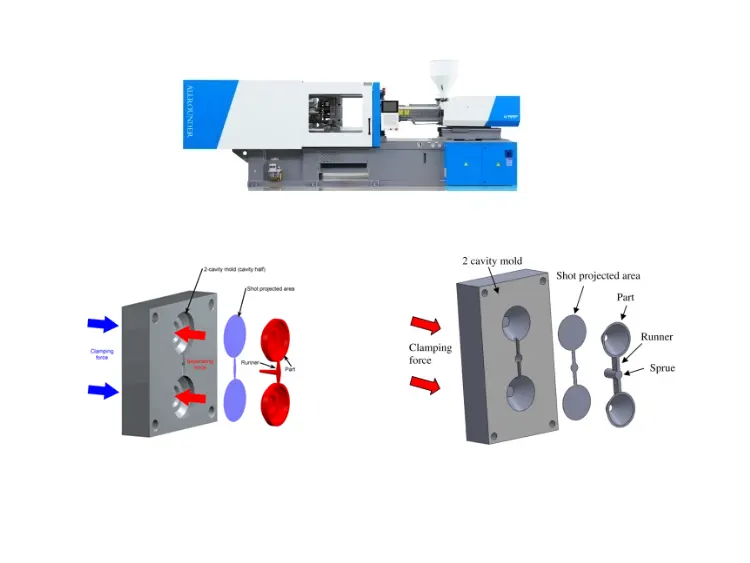
Haichen HCK series covers the tonnage range for transparent cosmetic packaging. For small caps and applicators, use HCK 150. WeFor refill pods and compacts, use HCK 180. For IML tubes and jars, use HCK 230. For large jars and thick-wall caps, use HCK 280.
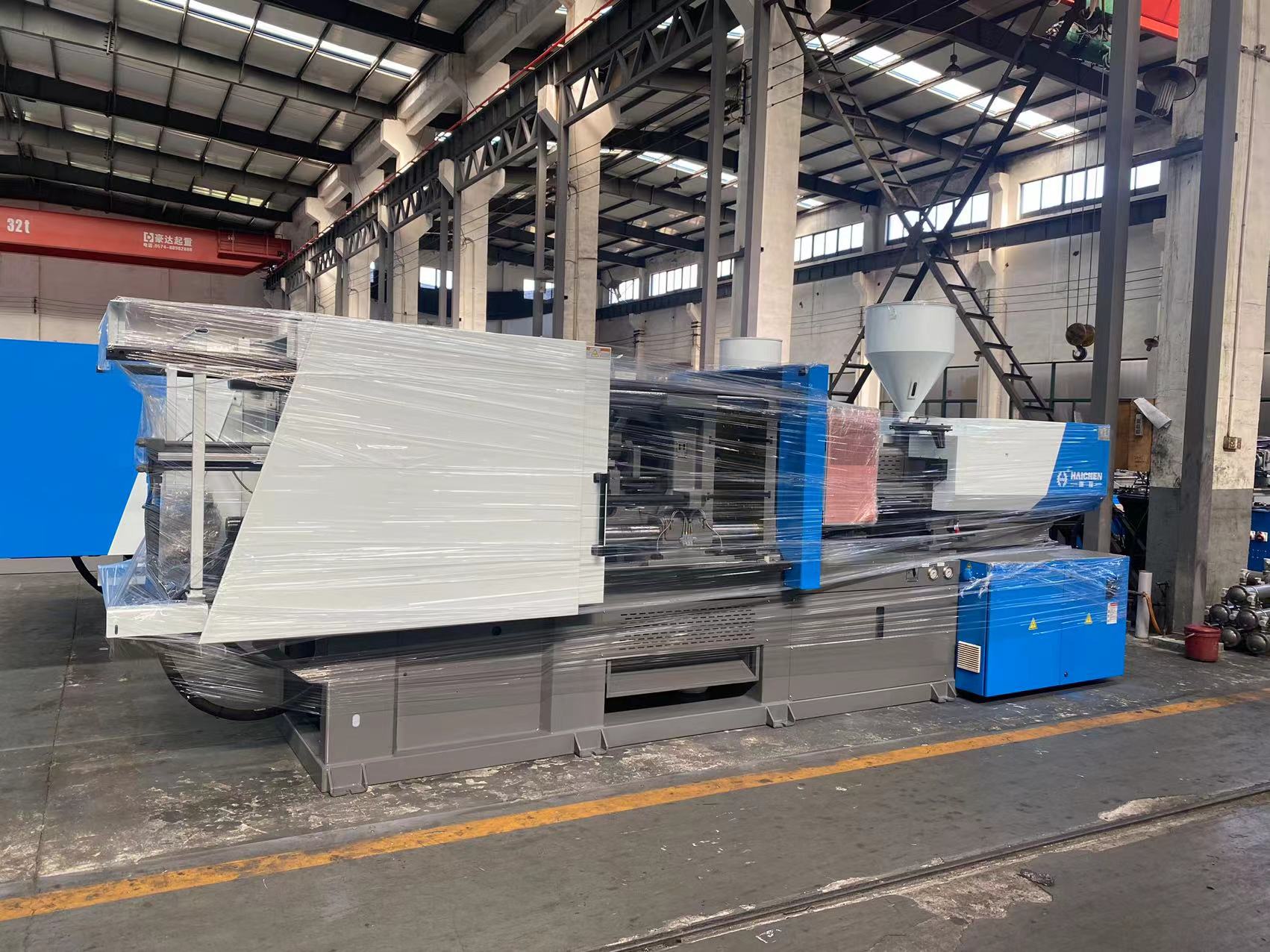
| Model | Clamping Force | Best For |
|---|---|---|
| HCK 150 | 150 tons | Small caps, applicators |
| HCK 180 | 180 tons | Refill pods, compacts |
| HCK 230 | 230 tons | IML tubes, jars |
| HCK 280 | 280 tons | Large jars, thick-wall caps |
Key Configurations (Closed-Loop Injection Control, Multi-Zone PID, CE12 Robot Interface)
Haichen HCK series machines include closed-loop injection control. This control compensates for viscosity changes in PCR or regrind. Moreover, the machines offer multi-zone PID temperature control with ±1°C accuracy. The CE12 robot interface supports automated part removal. These configurations help molders achieve crystal-clear cosmetic packaging injection molding.
Frequently Asked Questions
PMMA vs. PETG for crystal-clear packaging, which is better?
PMMA offers higher transmittance (92%) and better scratch resistance. Therefore, it suits premium thick-wall jars. PETG provides better impact resistance and thick-wall crystal effects. However, PETG has slightly lower clarity. Choose PMMA for maximum glass-look; choose PETG for durability.
Are silver streaks and haze the same problem?
No. Silver streaks come from moisture vaporization. Haze comes from uneven cooling or shear degradation. Silver streaks appear as lines; haze appears as overall cloudiness. Therefore, solutions differ. Dry the material for silver streaks; adjust mold temperature and injection speed for haze.
Supplier says they’ve done transparent parts—how to judge if they can do crystal-clear level?
Ask three questions. First, what mold steel grade do you use? (S136 is a good sign.) Second, what is your drying dew point? (-40°C or lower.) Third, can you show a gloss meter report across multiple batches? If they hesitate, they likely cannot reach the crystal-clear level.
Moving Forward with Crystal-Clear Cosmetic Packaging Injection Molding
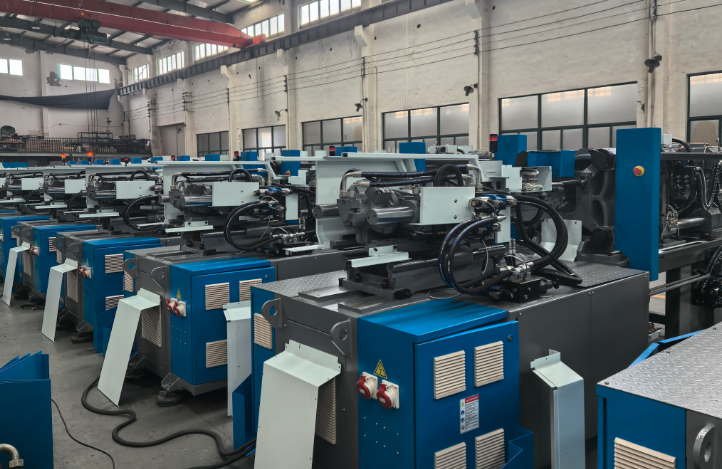
Haichen supports molders who aim for the glass-look finish. Our HCK series machines deliver the temperature stability, injection control, and automation interfaces you need. Moreover, we help you select the right screw and mold configuration. If you want to produce crystal-clear cosmetic packaging injection molding that passes brand audits, contact us. We will help you match the machine to your product.
📩 Contact Haichen for a customized crystal-clear cosmetic packaging injection molding solution.
Author: Yang, Senior Engineer, Haichen Machinery