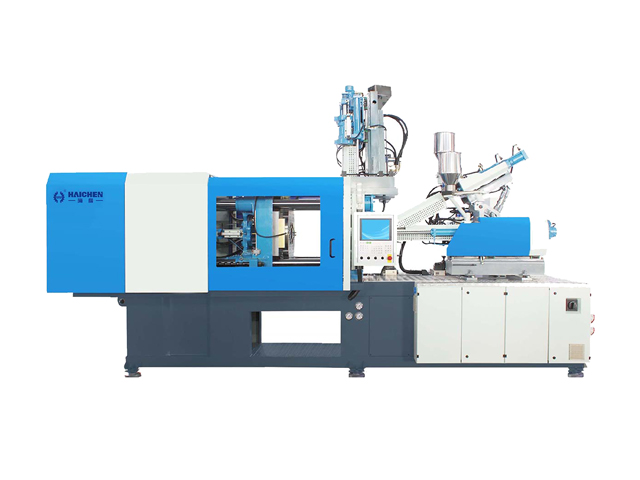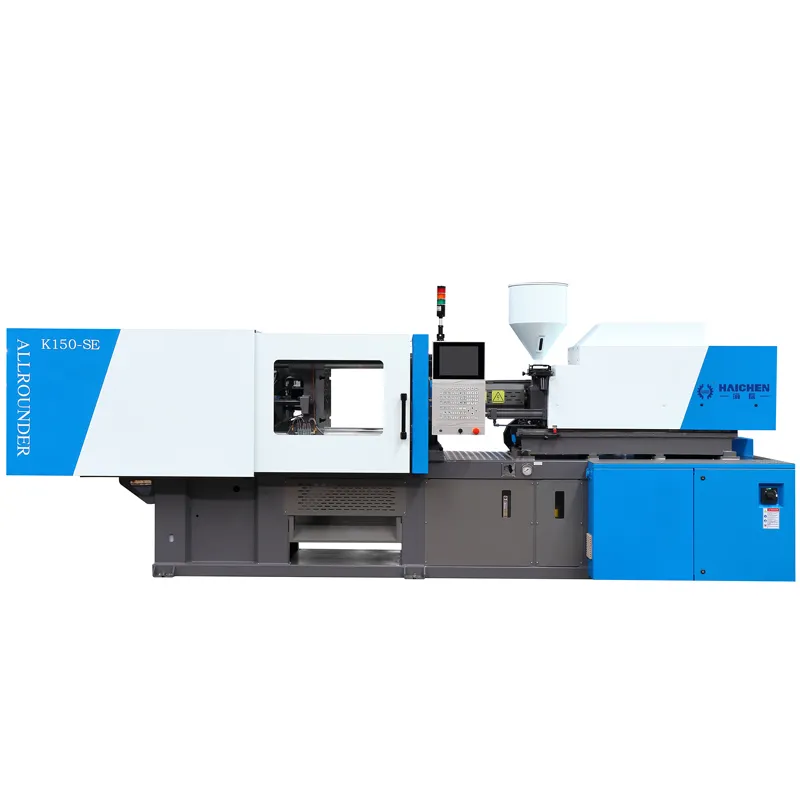
Automating your bottle cap injection molding machine line isn’t optional anymore. It’s how you stay competitive. The global bottle cap mould market hit $6,354 million in 2025** and should reach **$9,597 million by 2032, growing at 5.7% annually. That kind of growth means manual production simply can’t keep up.
A bottle cap injection molding machine running 48 cavities at a 4-second cycle produces 43,200 caps per hour. A 96-cavity cap injection molding machine running faster produces even more. But speed alone doesn’t cut it. You also need consistent quality, low scrap rates, and minimal labor costs.
This guide covers three levels of automation for bottle cap production, the core components of an automated line, and real case studies from actual production floors. Whether you’re starting fresh or upgrading an existing line, you’ll find practical steps to move forward.
- Three Levels of Automation for Bottle Cap Injection Molding
- Core Components of an Automated Bottle Cap Injection Molding Line
- Haichen Case Studies – Real Cap Production Results
- The Economic Case for Automation
- How to Start Your Automation Journey
Three Levels of Automation for Bottle Cap Injection Molding
Not every factory needs full automation from day one. Here are three levels you can choose from, depending on your budget and production goals.
- Level 1 – Semi-Automated Production (Entry Point)
- Level 2 – Robot-Assisted Production (Mid-Level)
- Level 3 – Fully Automated Production Cell (Gold Standard)
Level 1 – Semi-Automated Production (Entry Point)
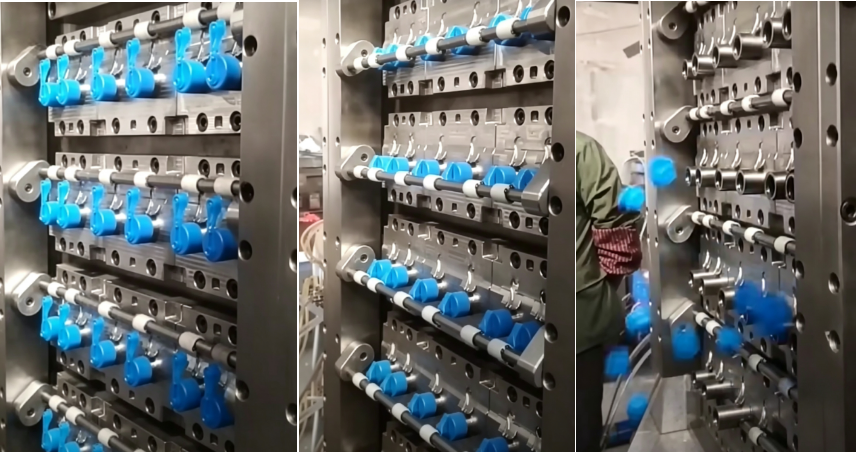
This is where most factories start. Your bottle cap injection molding machine runs the molding cycle automatically, but operators handle part removal, sprue cutting, and packing. This setup works well for small batches, trial runs, or factories with low labor costs.
What you need:
-
A reliable cap injection molding machine with servo control
-
Manual workstations for part handling
-
Basic quality inspection tools
Pros: Lowest upfront investment. Easy to get started.
Cons: Labor costs stay high. Product consistency depends on operator skill.
Level 2 – Robot-Assisted Production (Mid-Level)
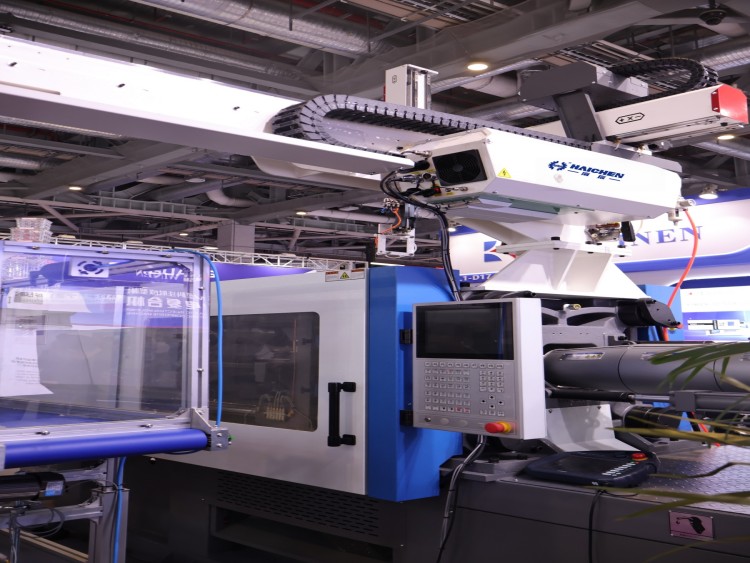
A take-out robot removes caps from the mold as soon as it opens. The robot places caps on a conveyor belt. Operators still handle packing and quality checks, but the most repetitive task is now automated.
What you need:
-
A cap injection molding machine with a CE12 robot interface
-
A 3‑axis servo robot
-
Conveyor belt for part transport
Pros: Cuts labor by 2–3 operators per shift. Improves consistency.
Cons: Higher upfront cost than Level 1. Requires robot programming skills.
Level 3 – Fully Automated Production Cell (Gold Standard)
This is the end game. A fully automated cell integrates the bottle cap injection molding machine, robot, cooling conveyor, vision inspection, and packing station into one seamless system. The entire process runs without human intervention.
What you need:
-
High-speed cap injection molding machine (48–96 cavities)
-
Take-out robot with end-of-arm tooling
-
Cooling conveyor with waterfall sorting
-
Inline vision inspection system
-
Automatic packing station
-
Centralized control system
Pros: Lowest per-unit cost. Highest consistency. 24/7 operation.
Cons: Highest upfront investment. Requires skilled maintenance staff.
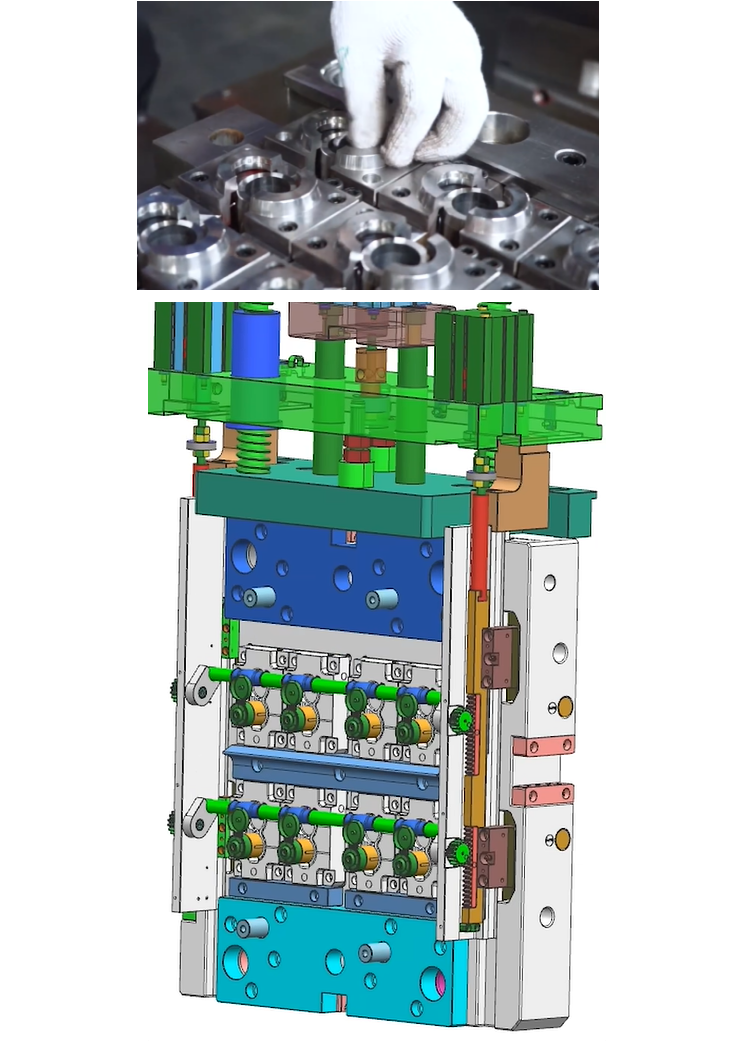
Core Components of an Automated Bottle Cap Injection Molding Line
A fully automated cap production line consists of several key components working together. Here’s what each one does.
- High-Speed Cap Injection Molding Machine
- Take-Out Robot and Automation Integration
- Vision Inspection System
- Cooling and Folding Stations
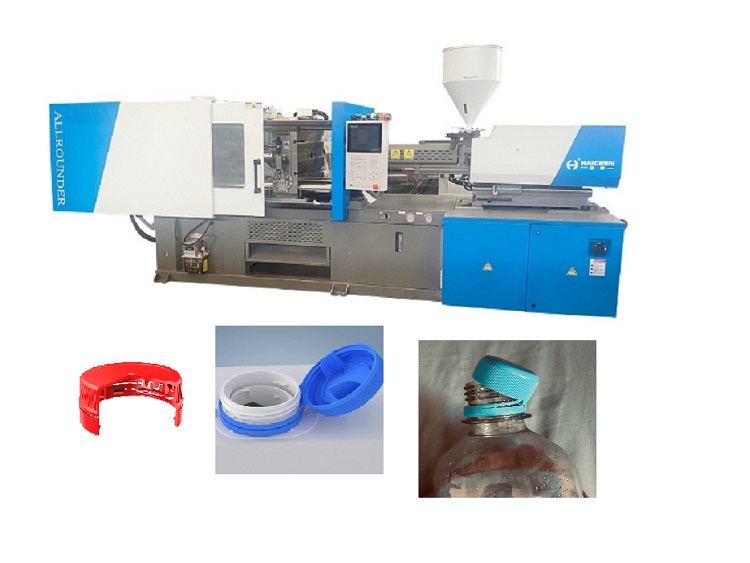
High-Speed Cap Injection Molding Machine
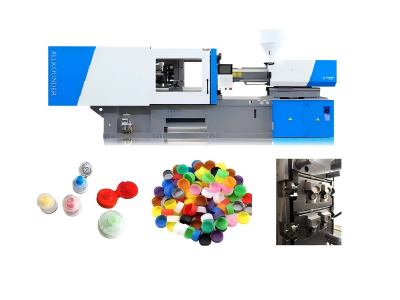
This is the heart of the line. For cap production, you need a machine designed for high speed and multi-cavity molds.
Key specifications to look for:
-
Clamping force: 150–500 tons depending on cavity count
-
Injection speed: Fast enough to fill thin-wall cavities before the melt cools
-
Multi-cavity support: 48 to 96 cavities
-
Servo energy saving: Cuts electricity costs by 30–50%
A 48-cavity mold running at 4 seconds produces 43,200 caps per hour. Some high-speed machines achieve cycle times under 3 seconds with consistent part weight. Haichen supplies cap injection molding machines from 30 to 3000 tons, with clamping force from 3300 kN to 30000 kN.
Take-Out Robot and Automation Integration
The robot removes caps from the mold immediately after ejection. This shortens cycle time and prevents part damage. Modern robots integrate with the cap injection molding machine through standard interfaces like CE12. This allows plug-and-play connection with most robot brands.
Haichen’s HCK series machines come with CE12 robot interfaces as standard. The robot places caps on a cooling conveyor with waterfall sorting. Caps travel through the conveyor while cooling, then move to the folding station.
Vision Inspection System
Inline quality inspection is essential for high-volume cap production. A vision system checks each cap for defects like short shots, sink marks, and dimensional deviations. Faulty parts are detected and automatically filtered out.
Cooling and Folding Stations
After ejection, caps are still hot. They travel through a cooling conveyor with waterfall sorting. The folding station bends the tamper-evident band inward for a secure fit on the bottle neck. This cooling and folding process is fully automated and integrated into the production cell.
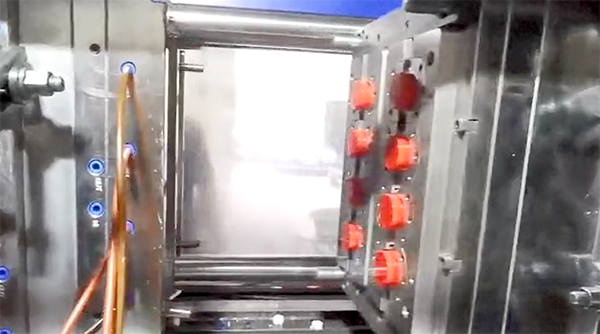
Haichen Case Studies – Real Cap Production Results
Haichen has helped many factories automate their cap production. Here are real examples from their production floor.
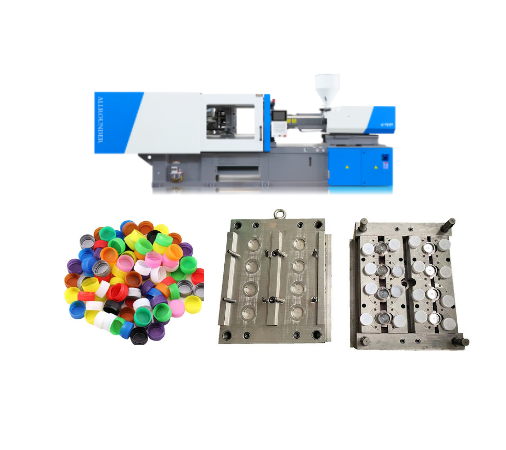
H3: Flip Cap (21mm) – 12 Cavities on HCK 180
A customer producing small flip caps (21mm) needed consistent quality and faster cycles. Haichen recommended the HCK 180 with a 12-cavity mold. The result: a 15-second cycle time with stable part quality. The HCK 160 delivered the speed and precision needed for this small, detailed part.
H3: Oil Bottle Cap – 24 Cavities on HCK 310
For higher volume production, an oil bottle cap customer used a 24-cavity mold on the HCK 310. This setup achieved 5,000 caps per hour. The HCK 310’s larger shot capacity and clamping force handled the bigger mold with ease.
H3: Flip Cap (60mm) – 4 Cavities on HCK 230
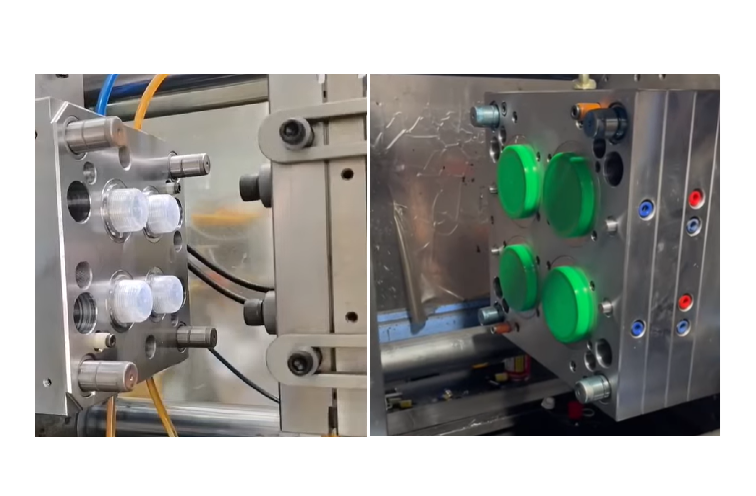
A medium-sized flip cap (60mm) ran on an HCK 230 with a 4-cavity mold. Cycle time: 20 seconds. This configuration balanced output and investment for a mid-volume producer.
H3: Honey Jar Cap (100mm) – 2 Cavities on HCK 110
For larger caps like honey jar lids, a customer used the HCK 110 with a 2-cavity mold. Cycle time: 15 seconds. The HCK 110’s compact design and precise control made it ideal for this application.
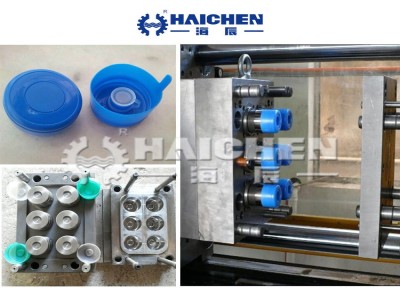
H3: Cap with Locking (65mm) – 8 Cavities on HCK 180
A more complex cap design with a locking mechanism ran on the HCK 180 with an 8-cavity mold. Cycle time: 15 seconds. The HCK 180 handled the complex geometry without compromising speed or quality.
Haichen Cap Production Cases
| Cap Type | Mold Cavities | HCK Model | Cycle Time | Key Feature |
|---|---|---|---|---|
| Flip cap (21mm) | 12 | HCK 180 | 15s | Precision small-part molding |
| Oil bottle cap | 24 | HCK 310 | 5,000 caps/hour | High-volume output |
| Flip cap (60mm) | 4 | HCK 230 | 20s | Medium-volume balance |
| Honey jar cap (100mm) | 2 | HCK 110 | 15s | Large cap precision |
| Cap with locking (65mm) | 8 | HCK 180 | 15s | Complex geometry handling |
The Economic Case for Automation
Automation requires investment. But the returns are real and measurable. Here’s what you can expect.
H3: Labor Cost Reduction
A semi-automated cap line needs 4–5 operators per shift. A fully automated line needs 1 operator per shift (just for monitoring). That saves 3–4 operators per shift.
For a factory running three shifts, that means saving 9–12 operators. At typical labor costs, automation pays for itself within 12–18 months.
H3: Quality Improvement
Automated systems reduce human error. Vision inspection catches defects that human eyes miss. Consistent robot handling prevents part damage. The result: scrap rates drop from 5% to under 2%.
H3: Higher Output
Robots work faster than humans. They never get tired. A fully automated line can run 24/7 with minimal downtime. This increases daily output by 10–15% compared to manual lines.
H3: Energy Savings
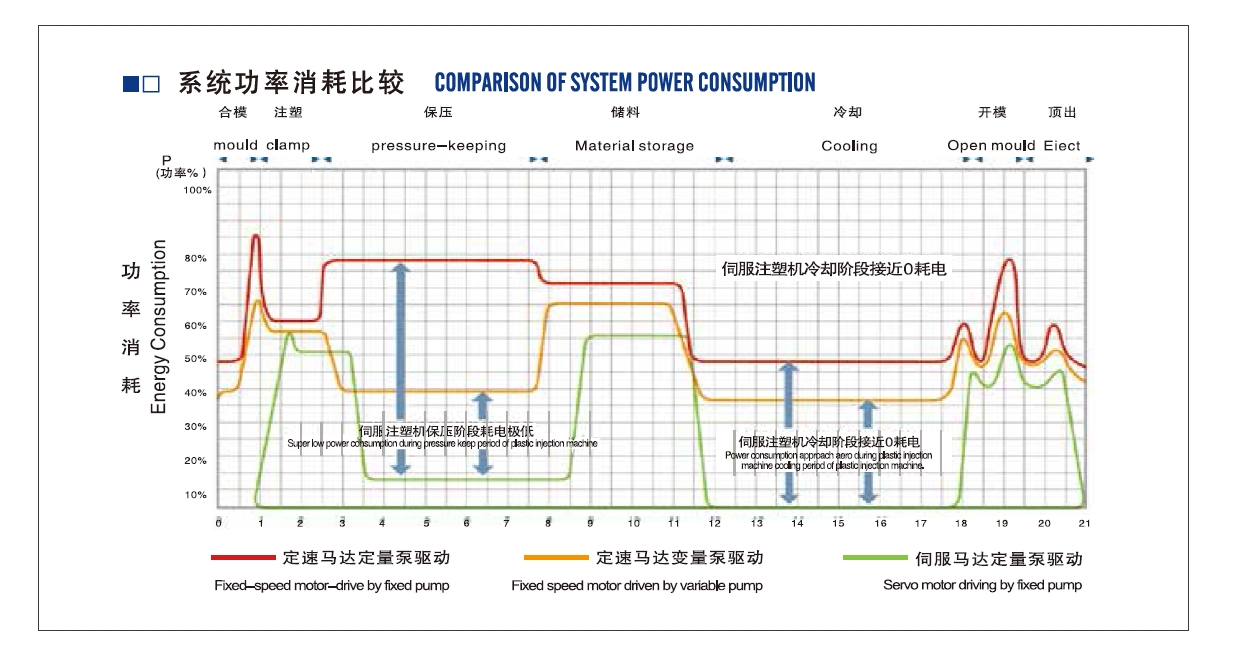
Haichen’s HCK series cap injection molding machines come with servo energy saving as standard. This reduces electricity costs by 30–50% compared to traditional hydraulic machines. Over a year of 24/7 operation, the electricity savings alone can pay for a significant portion of the machine’s cost.
H3: Investment Payback
| Automation Level | Investment | Labor Savings | Typical Payback |
|---|---|---|---|
| Level 1 (Semi-auto) | Lowest | 0–1 operator | N/A |
| Level 2 (Robot-assisted) | Moderate | 2–3 operators | 12–18 months |
| Level 3 (Full auto) | Highest | 4–5 operators | 12–18 months |
How to Start Your Automation Journey
You don’t need to build a fully automated line overnight. Here is a practical path forward.
- Assess Your Current Production
- Start with Robot-Assisted Removal
- Add Conveying and Inspection
- Move to Full Automation
- Monitor and Optimize
Step 1 – Assess Your Current Production
Start by measuring your current output, labor costs, and scrap rate. Identify the biggest bottlenecks. Is it part removal? Sprue cutting? Quality inspection? This tells you where automation will have the biggest impact.
Step 2 – Start with Robot-Assisted Removal
The easiest automation upgrade is a take-out robot. A robot removes caps from the mold and places them on a conveyor. This alone saves 2–3 operators per shift.
Make sure your cap injection molding machine has a CE12 robot interface. Haichen’s HCK series machines come with this as standard. You can add a robot later without rewiring.
Step 3 – Add Conveying and Inspection
Once the robot is running, add a cooling conveyor and vision inspection system. This automates part transport and quality checking.
Step 4 – Move to Full Automation
When you are ready, integrate the folding station and automatic packing. This completes the fully automated cell.
Step 5 – Monitor and Optimize
Use digital assistance systems to monitor and optimize the process. These systems analyze injection in real time and adjust parameters automatically.
Frequently Asked Questions
What is a bottle cap injection molding machine?
A bottle cap injection molding machine melts plastic pellets and injects them into a mold to form bottle caps and closures. The machine heats the plastic, injects it under high pressure, cools it, and ejects the finished caps.
How many cavities does a cap mold need?
It depends on your output target. For medium production, 24–32 cavities is common. For high volume, 48 cavities is standard. Some systems run 72 cavities for ultra-high production. Haichen offers molds from 6 to 72 cavities.
What materials are used for injection molded caps?
Common materials include PP (polypropylene), PE (polyethylene), and PS (polystyrene). PP is the most common choice for beverage caps due to its balance of strength, flexibility, and cost.
What is the typical cycle time for cap injection molding?
High-speed machines achieve 1.35 to 4 seconds per cycle. A 48-cavity mold typically runs at 2.5 to 4 seconds. Haichen’s HCK series achieves cycle times from 15 to 20 seconds depending on cap size and cavity count.
How much can servo energy saving reduce electricity costs?
Servo-driven cap injection molding machines save 30–50% on energy compared to traditional hydraulic machines. Haichen’s servo systems can save up to 70% in some applications.
What automation interfaces do Haichen machines support?
Haichen’s HCK series comes with CE12 robot interfaces as standard. This allows plug-and-play connection with most major robot brands.
How do I choose the right HCK model for cap production?
It depends on your cap size, cavity count, and output target. Here is a quick reference based on Haichen’s case studies:
| Cap Type | Cavities | Recommended HCK Model |
|---|---|---|
| Small flip cap (21mm) | 12 | HCK 160 |
| Medium flip cap (60mm) | 4 | HCK 200 |
| Large cap with locking (65mm) | 8 | HCK 160 |
| Oil bottle cap | 24 | HCK 300 |
| Honey jar cap (100mm) | 2 | HCK 110 |
Haichen Machinery – your bottle cap injection molding machine partner. From semi-automated to fully automated production, we help you build the right line for your cap production needs.
Author: Yang, Senior Engineer, Haichen Machinery