Where does the plastic cutlery you use every day actually come from?
Every time you order takeout, fly on a plane, or go camping, you pick up a plastic fork or plastic spoon and throw it away without a second thought. But have you ever wondered—how is plastic cutlery made, from pellets to finished products?
Understanding how plastic cutlery is made not only gives you a new appreciation for everyday items—if you are a brand owner or entrepreneur, it might also open up new business opportunities.
Today we break down the entire production process of plastic knives, plastic forks, and plastic spoons in about 5 minutes.
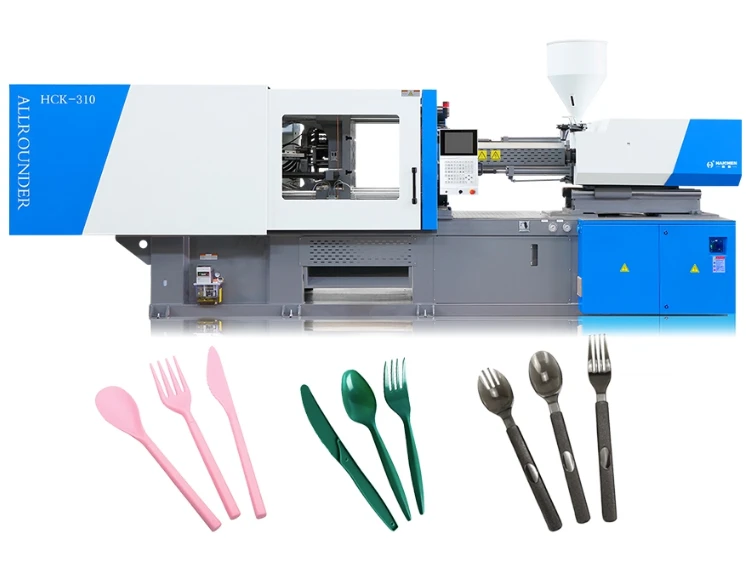
Four Steps to Understand How Plastic Cutlery Is Made
The production of plastic knives, plastic forks, and plastic spoons has only four steps—but each one matters.
Step 1: Plastic Pellets Arrive
First, everything starts with bags of plastic pellets. The most common materials for cutlery are PP (polypropylene) and PS (polystyrene) —they look like tiny white or translucent grains of rice.
Different materials give different feel. For example, PP is tough and flexible, while PS is rigid with a high-gloss surface. The choice depends on what kind of product you want.
Step 2: Melted into “Plastic Porridge”
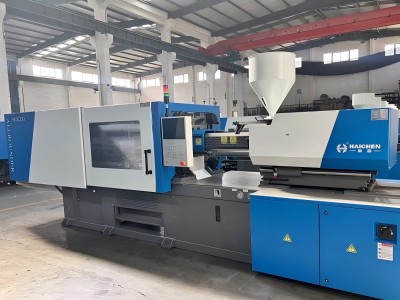
Next, workers pour the plastic pellets into the hopper of the injection molding machine, and the machine feeds them into the heated barrel. At temperatures between 200°C and 300°C, the solid pellets melt into a thick, viscous liquid—like a pot of heated porridge.
Precise temperature control is the key here. If the temperature drops too low, the plastic won’t melt properly. On the other hand, if the temperature rises too high, the material degrades, turning yellow and brittle.
Step 3: Injected into the Mold Under High Pressure
Then, the machine pushes the molten plastic under high pressure into a precision metal mold. This mold is the “template” that determines the shape of the cutlery.
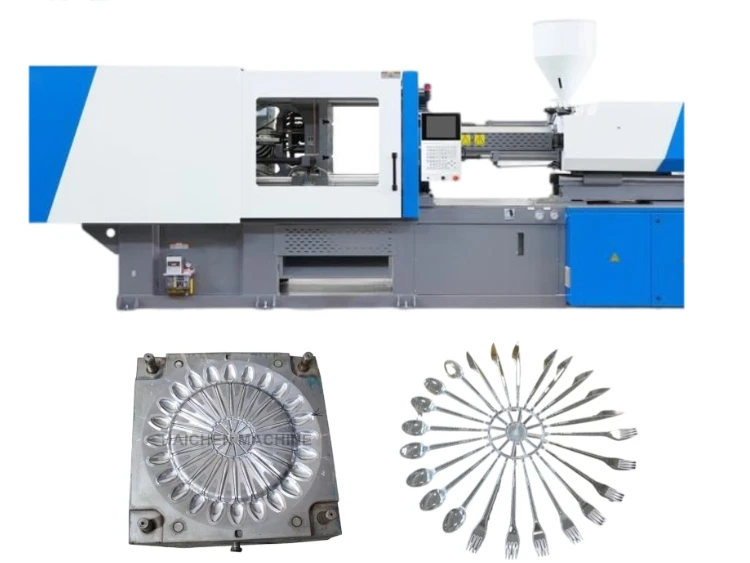
Inside the mold, hollow spaces shaped like plastic knives, plastic forks, and plastic spoons—called cavities—await the molten plastic. The plastic fills every cavity, and as a result, it takes on the shape of the product when it cools.
Step 4: Cooled, Opened, and Ejected
Finally, the plastic cools rapidly inside the mold, transforming from liquid back to solid—and this takes just seconds.
The mold opens, and a robotic arm removes the finished products. A complete plastic fork or plastic spoon is born. This is the core of how plastic cutlery is made.
How Many Pieces Can One Cycle Produce? It Depends on the Mold
You might be wondering: how many pieces can be produced in one cycle?
The answer depends on the mold’s cavity count. A cavity is the hollow space inside the mold that shapes the product—one cavity produces one piece per cycle.
Haichen’s cutlery molds are available in 8, 20, 24, 40, and 48 cavities. More cavities mean more output per cycle and lower cost per piece.
A Plastic Spoon Goes from Pellet to Finished Product in Just 9 Seconds
Believe it or not—a plastic spoon can go from pellets to finished product in as little as 9 seconds.
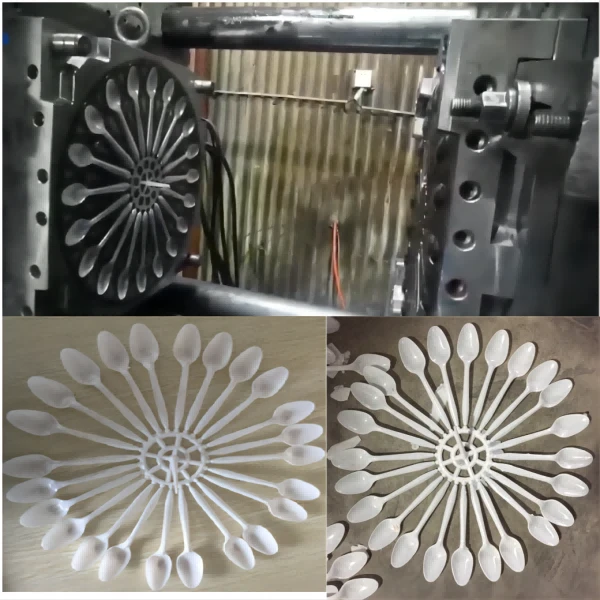
Haichen’s actual production data shows the HCK230 injection molding machine paired with a 20-cavity spoon mold. Each plastic spoon weighs 2.6g and measures 16cm in length. One cycle runs every 9 seconds, producing 20 plastic spoons per cycle.
As a result, this setup produces 8,000 plastic spoons per hour. That is the efficiency of injection molding when you understand how plastic cutlery is made. Learn more about Haichen’s cutlery injection molding solutions.
Can Knives, Forks and Spoons Be Made in the Same Cycle?
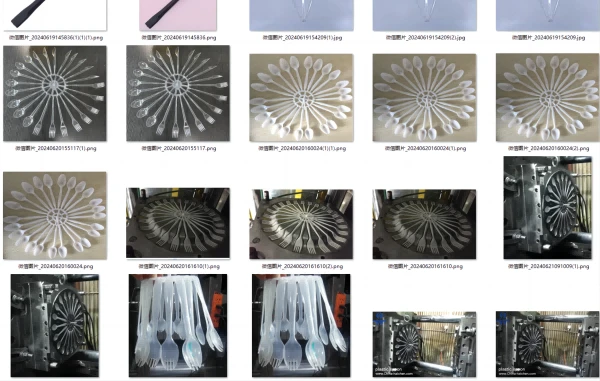
Yes. A single mold can contain three different cavity shapes—plastic knife, plastic fork, and plastic spoon—all in one mold.
3-in-1 Knife, Fork and Spoon Mold
Haichen offers a 3-in-1 knife, fork and spoon mold: 24 cavities, paired with the HCK230 machine, running a 9-second cycle, producing a full set of cutlery in one shot. Each set weighs 9g and measures 16.21cm, using PP material.
2-in-1 Spoon and Fork Mold
If you only need plastic spoons and plastic forks, there is also a 2-in-1 spoon and fork mold: 48 cavities, paired with the HCK310 machine, running a 10-second cycle.
Haichen – The Equipment Partner Behind Global Cutlery Production
Haichen is an injection molding machine manufacturer with over 20 years of experience, serving more than 1,000 factories worldwide. Moreover, from cutlery mold design to machine selection to mass production, Haichen provides complete one-stop solutions.
The injection molding machine control system supports 21 languages, making it easy to use no matter which country you are in. For instance, one customer commented: “Haichen’s injection molding machines have not only met but exceeded our expectations.” Browse Haichen’s product center for more machine options.
Read Haichen’s official case study on plastic cutlery injection molding to learn more about how plastic cutlery is made and how Haichen can help you start your production.