The disposable cutlery market continues to grow. Restaurants, food delivery services, and catering companies all need plastic forks, knives, and spoons in large quantities. To stay competitive, manufacturers must produce high volumes at low cost per piece. A fully automated plastic cutlery made production line is the most effective way to achieve this goal.
This article explains how a complete automated line works. We will cover the key components: high-speed side-entry robots for part removal, vision inspection systems for quality control, conveyor systems for transport, and automatic packaging machines. We will also discuss how a single operator can manage multiple machines in a well-designed workshop.
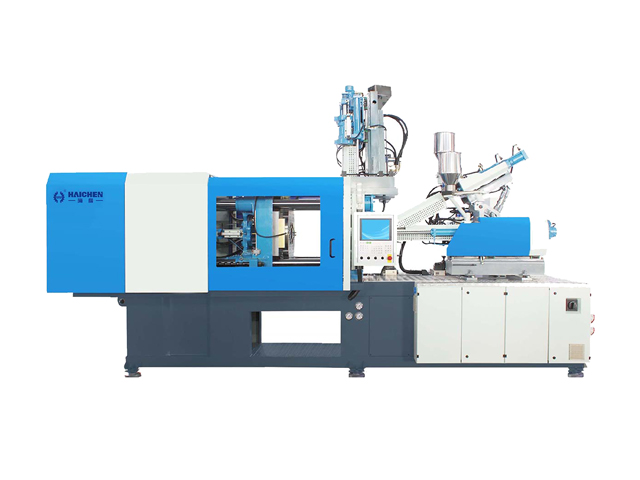
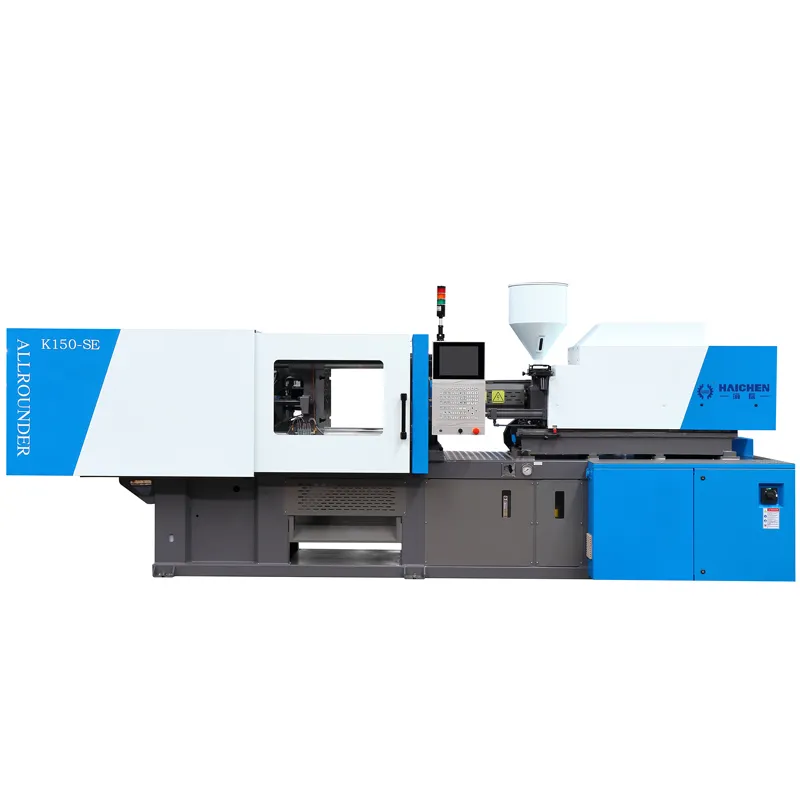
As a Disposable Cutlery injection molding machine manufacturer, Haichen provides integrated solutions that include the knife fork spoon injection molding machine, mold, and auxiliary equipment.
What Are the Core Components of an Automated Cutlery Production Line?
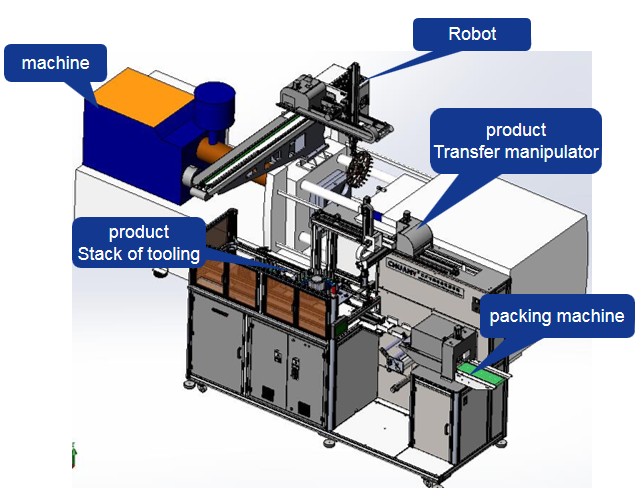
The core components are a high-speed injection molding machine, a multi-cavity cutlery mold, a side-entry robot, a vision inspection system, conveyors, a stacker, and an automatic packaging machine. All components must be matched by cycle time, output, and part handling method.
What Injection Molding Machine Specifications Are Needed for Thin-Wall Cutlery?
For thin-wall cutlery under 0.3 mm, the machine needs high injection speed, consistent shot weight, strong clamping force, and stable temperature control. Servo-hydraulic systems reduce energy use by 30–50%. Common models for cutlery run from 230 to 310 tons.
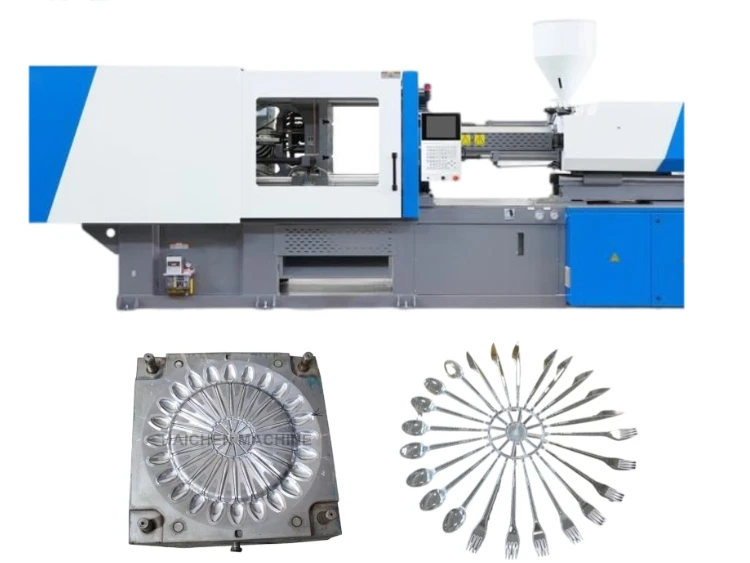
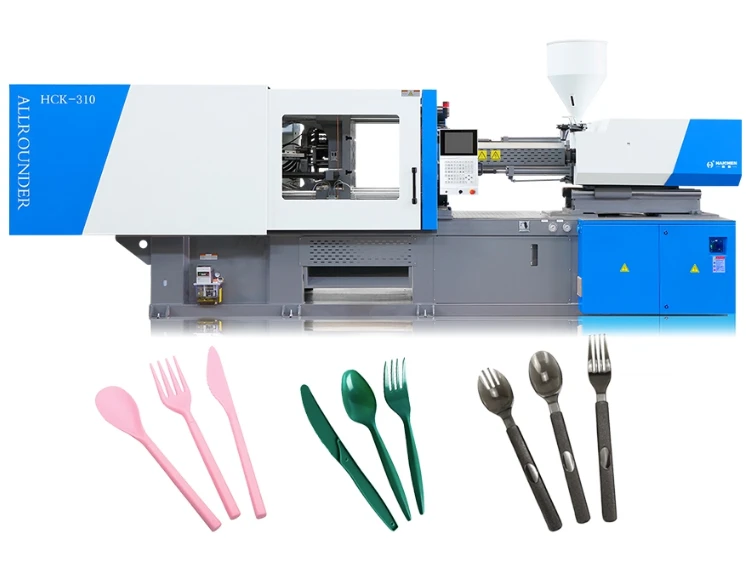
Haichen’s HCK230 and HCK310 machines are common choices for disposable cutlery production. The HCK230 can run a 20-cavity spoon mold with a 9-second cycle time. The HCK310 handles a 48-cavity spoon and fork mold with a 10-second cycle time. These proven combinations deliver consistent output and quality.
High-Speed Injection Molding Machine
The injection molding machine is the heart of the production line. It melts plastic resin and injects it into the mold cavity. For disposable cutlery, the machine must support thin-wall molding. Parts like spoons and forks have wall thicknesses under 0.3mm. The machine needs high injection speed to fill the mold before the plastic cools.
A good machine also delivers consistent shot weight. This ensures every fork or spoon has the same dimensions. The clamping unit must hold the mold closed under high pressure during injection. This prevents flash and reduces material waste. Many manufacturers use servo-hydraulic systems that save 30-50% energy compared to standard machines.
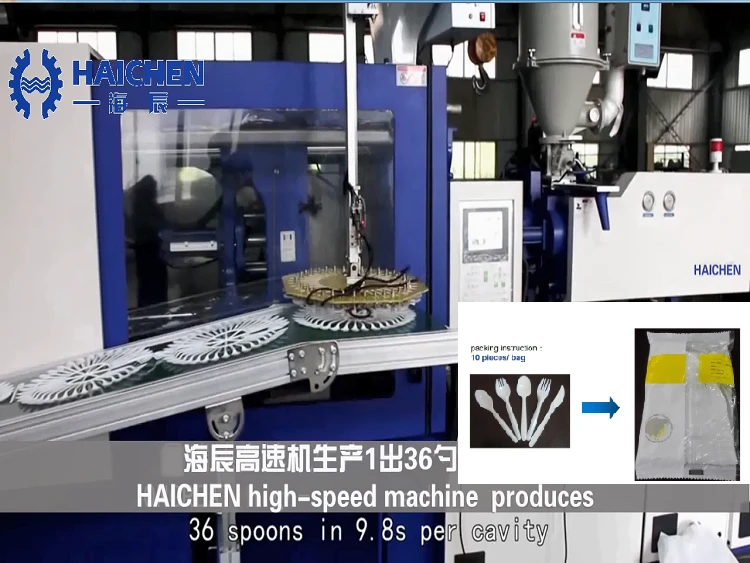
Haichen produce high-speed plastic cutlery injection molding machine. Please see below production video of Haichen plastic spoons injection molding machine actual production. 36pcs plastic spoons only need 9.8seconds in one cycle time. That is in one hour, the plastic spoons output is 13,224 pieces. How fast is Haichen high-speed injection molding machine!
How Many Cavities Should a Disposable Cutlery Mold Have?
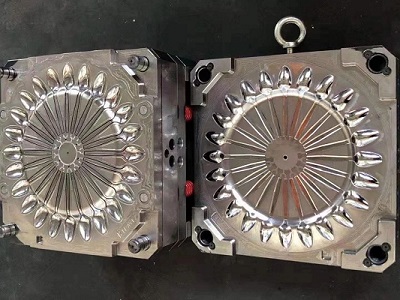
Disposable cutlery molds typically have 24, 48, or 64 cavities. Some applications use stacked molds with 48+48 cavities. More cavities mean higher output per hour, but the injection molding machine must have enough shot volume, clamping force, and plasticizing capacity.
Mold design affects cycle time. Good cooling channel design helps parts solidify faster. Hot runner systems reduce material waste. The mold steel must withstand millions of cycles. Common steel grades include H13, S136, and 1.2344. These materials offer good wear resistance and long service life.
High-Speed Side-Entry Robot
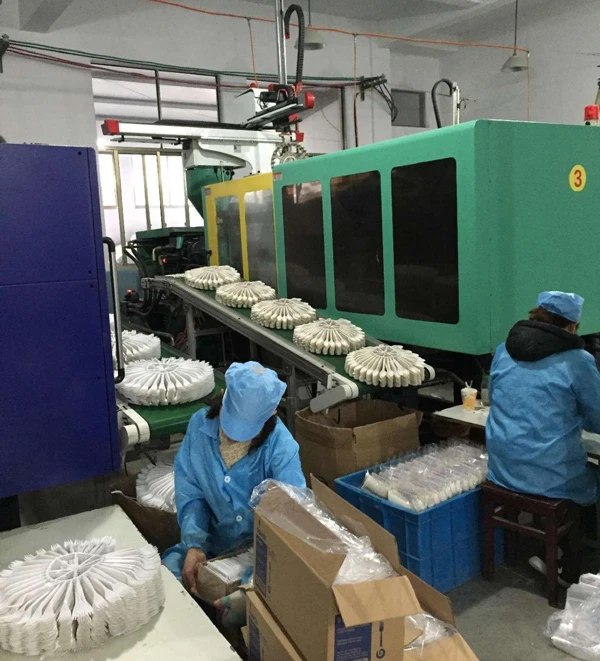
After the mold opens, parts must be removed quickly. A high-speed side-entry robot performs this task . The robot enters from the side of the machine. It grips the parts and removes them from the mold.
Side-entry robots are faster than standard top-entry robots. They reduce the overall cycle time by 1-2 seconds. This adds up to significant extra output over a full shift. The robot also stacks parts in an organized manner for the next stage of the line.
Packaging and End Of Disposable Cutlery Production Lines
The final stage of the line prepares the cutlery for shipment. Automated packaging machines handle this task with minimal human intervention.
Automatic Packaging Machine
The packaging machine wraps or bags the stacked cutlery. It uses plastic film material like OPP, BOPP, or CPP. After finishe plastic disposable knife fork spoon injection molding, this packing machine can run at speeds up to 200 pieces per minute. Film width adjusts up to 250mm and thickness ranges from 0.018-0.035mm.
Automated packaging eliminates manual handling. This reduces labor costs and improves hygiene. The parts remain untouched from the moment they leave the mold until the final package is sealed.
Integrated Conveyor Systems
Conveyors connect each stage of the production line. They move parts from the robot to the inspection station. Then they carry parts to the stacker and finally to the packaging machine.
A well-designed conveyor system prevents bottlenecks. It ensures smooth flow even at high production speeds. Barcode readers and tracking systems monitor production in real time.
Workforce Efficiency with Automatic Disposable Cutlery Production Lines
Automation changes the way workshops operate. Fewer workers are needed to run the production line.
One Operator for Multiple Machines
A fully automated line allows one operator to manage several machines . This reduces labor costs dramatically. One example shows a line that reduced labor from 10-20 workers to just 1-2 operators .
The operator monitors the system from a central control panel. Modern machines offer multi-language interfaces and remote monitoring capabilities. Some systems allow internet remote control and real-time parameter adjustments .
Training and Maintenance Requirements
Automation does not eliminate the need for skilled workers. Operators need training to run the equipment properly. Maintenance staff must keep the robots and packaging machines in good condition.
Haichen provides on-site commissioning support and operator training. The company’s service team helps customers get production running quickly. Spare parts are available to minimize downtime.
How to Choose a Disposable Cutlery Injection Molding Machine Manufacturer?
Choose a manufacturer that can supply the injection molding machine, mold, robot, conveyor, and packaging line as a matched system. Check proven cycle times, cavity compatibility, servo energy savings, training, spare parts, and after-sales support.
Haichen’s Integrated Cutlery Production Solutions
Haichen offers complete solutions for disposable cutlery production. The company has over 20 years of experience in injection molding machine manufacturing .
Machines and Molds That Work Together
Haichen provides injection molding machines and molds as a matched system. The machines use servo motors and precise controls . Common models for cutlery production range from HCK230 to HCK310, depending on mold size and cavity count .
For example, Haichen’s HCK230 machine runs a 20-cavity spoon mold with a 9-second cycle time. The HCK310 handles a 48-cavity spoon and fork mold with a 10-second cycle time . These proven combinations deliver consistent output and quality.
Complete Turnkey Support
Haichen supplies more than just machines. The company offers molds, auxiliary equipment, and automation solutions. This integrated approach eliminates compatibility problems between different suppliers .
Haichen’s engineering team provides technical support from mold design to mass production. They help customers optimize cooling channel layouts and ejection timing. The company also offers training, installation, and after-sales service through its global network.
Fully automated production lines are the standard for disposable cutlery manufacturing. They reduce labor costs, improve hygiene, and increase output. A complete line includes a high-speed injection molding machine, multi-cavity mold, side-entry robot, vision inspection, and automatic packaging.
FAQ
How fast can a fully automated disposable cutlery production line run?
It depends on cavities and cycle time. A 36-cavity spoon mold with a 9.8-second cycle can produce 13,224 pieces per hour. A 48-cavity mold with a 10-second cycle can theoretically produce 17,280 pieces per hour.
How many operators are needed?
A fully automated line typically needs 1–2 operators. Manual lines may need 10–20 workers.
What is the best cavity number for disposable cutlery?
Common choices are 24, 48, and 64 cavities. Stacked molds with 48+48 cavities are also used. The best choice depends on machine shot volume, clamping force, and target output.
What packaging materials are used?
OPP, BOPP, and CPP films are common. Film width can adjust up to 250 mm, and thickness usually ranges from 0.018–0.035 mm.
What causes low output in an automated cutlery line?
The most common causes are long mold cooling, slow robot take-out, packaging film jams, inconsistent shot weight, and material moisture.
Haichen provides integrated solutions as a plastic knife injection molding manufacturer. The company combines proven machine designs with expert technical support. This helps customers achieve reliable, high-volume production.
Contact Haichen to discuss your cutlery production needs.