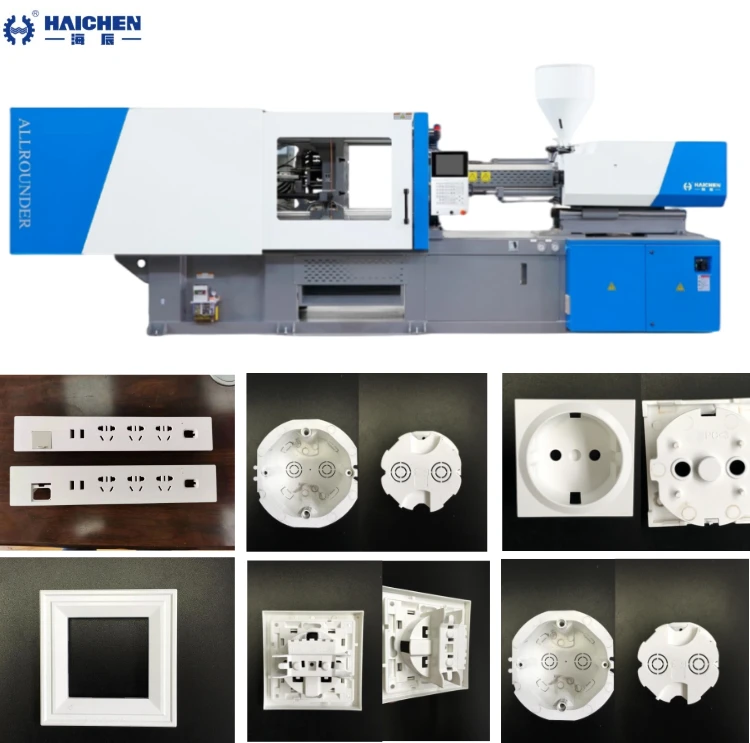
The light switch is made through injecting molding, the melted plastic material is injected into a designed mold to form the shaped light switches.
To make the light switch, the injectin molding machine first takes light switch plastic materials from a hopper. Then, the switch socket making machine barrel melted the plastics and the screw inject them into a closed light switch mould. After cooling, the mold opens and the machine ejects the finished light switches. The entire cycle takes about 15-30 seconds per batch, depending on the cavity count and light switch size.
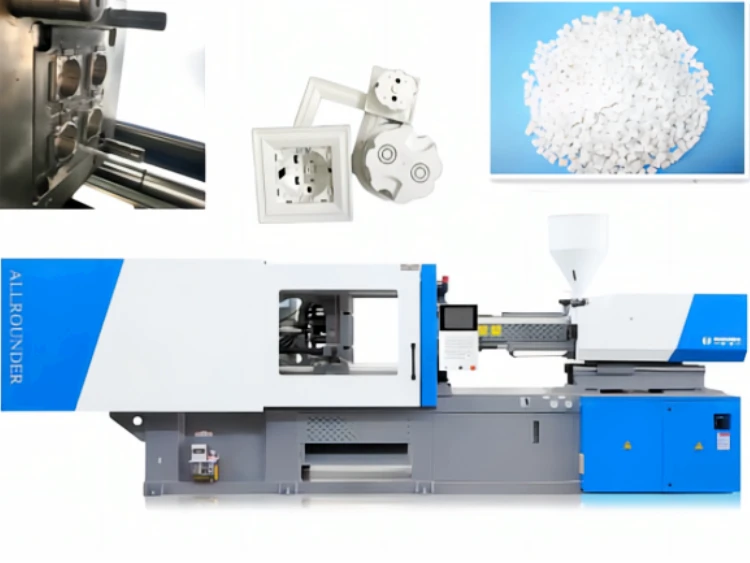
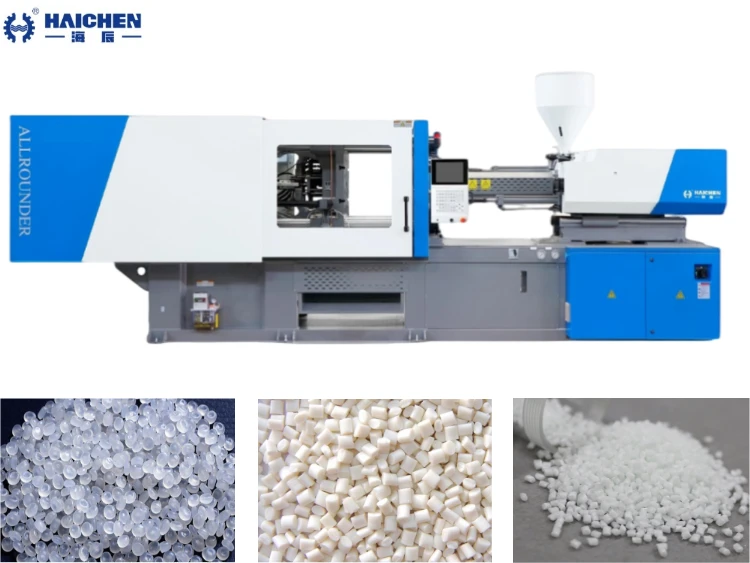
Step 1 – Choose Light switch Plastic Material
- Different Light switch material type
- Dry material
Different light switch material type
The common plastic materials for plastic light switch include polycarbonate (PC), ABS, and polypropylene (PP). PC provides high impact resistance and transparency, making it suitable for light switch covers, 3way light switch, wall switch and so on. ABS is an economical choice with good toughness and durability for general environments, for example swich covers, injection box cover, etc. PP is applicable for like switch panel and socket frame.
Dry materials
The injection molding machine feeds plastic material from a hopper into a heated barrel. The barrel has several heating zones. The first zone warms the pellets. The middle zones melt them completely. The front zone keeps the plastic at injection temperature.
Step2-Plastic Injection Molding for Light Switch
- Machine types for light switch production
- Key machine specifications
- injection molding machine features
Machine types for light switch production
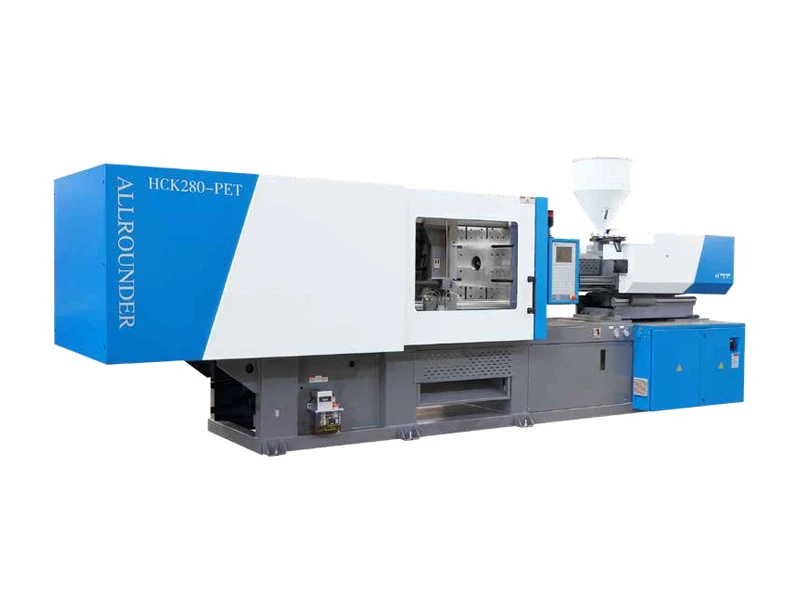
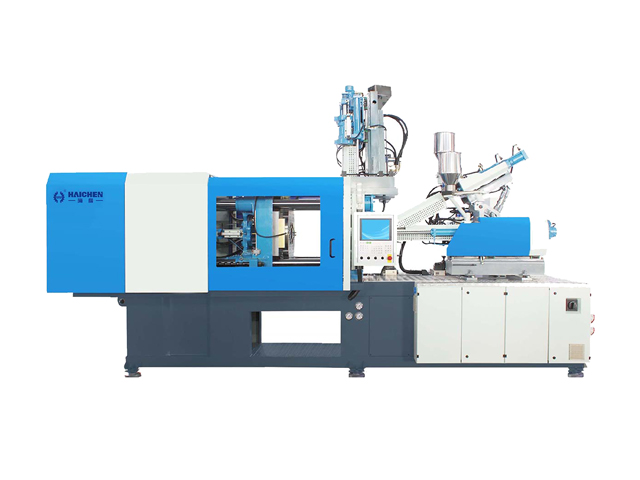
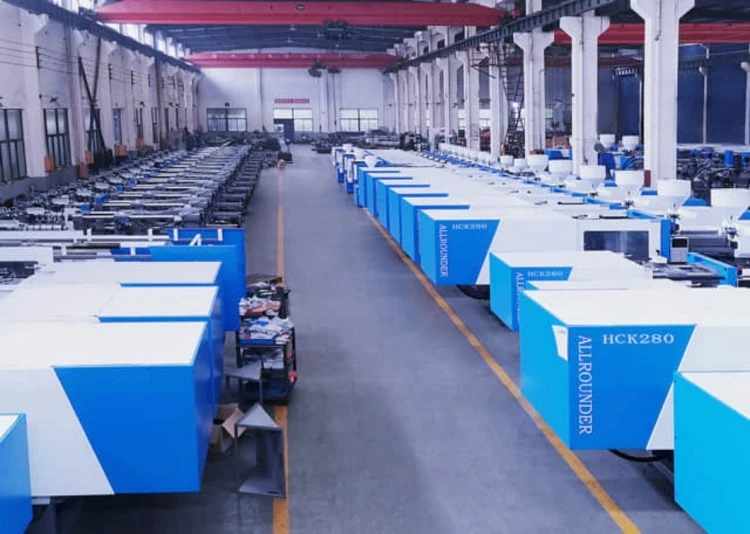
What kind of machines can produce plastic switch panels and sockets? Horizontal light switch and socket manufacturing machine is the standard choice for plastic light switch injection molding production. Our Haichen injection molding machines use hydraulic or servo-hydraulic systems to generate clamping force. The machine’s injection weight capacity should match the switch part weight.
Key specifications to consider
When selecting a light swtich socket making machine for light switch production, focus on four parameters. The injection molding machine clamping force must be high enough to keep the mold shut during injection. Injection volume determines how much plastic the machine can push per cycle. Tie-bar spacing affects the maximum mold size the machine can accommodate. Platen size influences how the mold mounts to the machine.
| HCK150 PLASTIC INJECTION MOLDING MACHINE | ||||
| INJECTION UNIT | ||||
| ITEM | UNIT | A | B | C |
| INJECTION UNIT | ||||
| Screw diameter | mm | 36 | 40 | 45 |
| Screw L/D ratio | L/D | 24.4 | 22.0 | 19.5 |
| Shot volume(theoretical) | cm3 | 204 | 251 | 318 |
| Injiection weight(ps) | g | 185 | 229 | 289 |
| oz | 6.5 | 8.1 | 10.2 | |
| Injection pressure | Bar | 2154 | 1745 | 1378 |
| Injection rate | cm3/s | 130 | 161 | 203 |
| Plasticizing capacity | g/s | 11 | 17 | 22 |
| Screw speed (Max.) | r/min | 240 | ||
| CLAMPING UNIT | ||||
| Clamping force | Kn | 1500 | ||
| Space between tie bars(W×H) | mm | 460×410 | ||
| Platens size | mm | 665×610 | ||
| Opening stroke | mm | 400 | ||
| Min.Mold height | mm | 200 | ||
| Max.Mold height | mm | 510 | ||
| Distance between platens(daylight) | mm | 910 | ||
| Ejector stroke | mm | 130 | ||
| Ejector force | Kn | 45 | ||
| OTHERS | ||||
| Systerm pressure | Bar | 175 | ||
| Pump motor | Kw | 20 | ||
| Heating power | Kw | 10.6 | ||
| Oiltank cubage | L | 160 | ||
| Machine dimension(L×W×H) | m | 4.8×1.2×1.7 | ||
| Machine weight | t | 4.7 | ||
Light Swtich Injection Molding Machine features
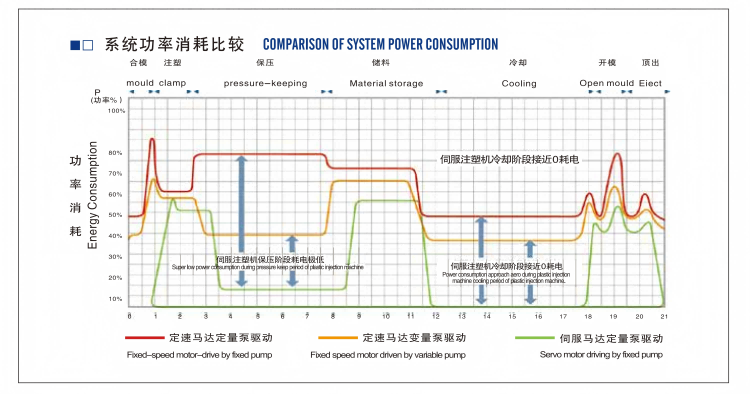
We offers injection molding machines specifically configured for electrical light switch production. Our HCK series machines provide precise temperature control for sensitive materials like PC and ABS. The closed-loop servo control system maintains consistent injection speed and pressure. This ensures each switch part has uniform wall thickness and dimensional accuracy. Our machines also feature energy-saving servo motors that reduce power consumption by 30-50% compared to standard hydraulic machines.
Step3-Design Light Switch Injection Molds
- Mold materials
- Multi-cavity mold design
- Cooling and ejection systems
Mold materials and construction
Light Switch moulds are typically made from tool steel grades like P20, 718, H13, or S136. These steels withstand the high pressures and temperatures of repeated injection cycles.
P20 steel offers good durability at a lower cost for medium-volume production. H13 and S136 provide better heat resistance and wear resistance for high-volume runs. The mold surface often receives a mirror polish or texture finish depending on the switch part’s appearance requirements.
Multi-cavity mold design
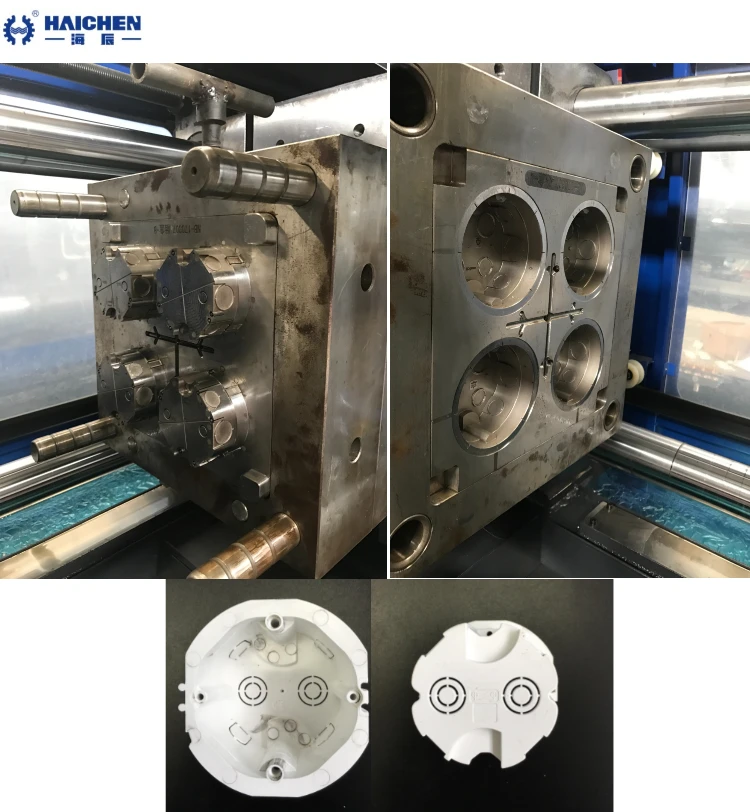
Switch molds commonly use multi-cavity designs to increase production output. A 4-cavity mold can produce four switch covers in one cycle. Some molds use 8 or even 16 cavities for high-volume production.
The cavity layout must balance plastic flow to all cavities evenly. Unbalanced flow leads to inconsistent part quality across cavities. Hot runner systems keep the plastic molten as it travels to each cavity, reducing material waste.
With different molds design, they can be produced by different shape forms of light switch cover, wall switch, switch cover, switch panel, socket frame and so on.
Cooling and ejection systems
The mold includes cooling channels that circulate water to remove heat from the plastic. Uniform cooling prevents warping and ensures dimensional stability.
For light switch parts with snap hooks or undercuts, the mold uses side-action mechanisms or lifters for clean ejection. Ejector pins push the finished parts off the mold core. The ejection system must operate smoothly to prevent damage to small switch features like button holes or clip slots.
Step4-Auxiliary Equipment for light Switch Injection
- Auto loader for material feeding
- Dryer for moisture removal
- Chiller for temperature control
Auto loader for material feeding
An auto loader automatically feeds plastic pellets from a storage container into the injection molding machine’s hopper. This equipment eliminates manual material handling and ensures consistent feed rates. For switch production, the auto loader can be programmed to deliver specific amounts of material per cycle. Some systems include a vacuum loader that pulls pellets through sealed pipes, keeping the material clean and dry.
Dryer for moisture removal
Plastic materials like ABS and PC absorb moisture from the air during storage. This moisture causes surface defects like silver streaks on the finished switch parts. A hopper dryer uses hot air to remove moisture from the pellets before they enter the machine. The drying temperature and time vary by material. ABS typically needs 80-90°C for 2-4 hours. PC requires 120°C for 3-4 hours.
Chiller for temperature control
A chiller provides cooled water to the mold’s cooling channels. Consistent water temperature between 7-30°C ensures uniform cooling of the switch parts. Proper cooling reduces cycle time and prevents warping. For high-cavity switch molds, a chiller with higher flow capacity is necessary to remove heat quickly. Some facilities also use mold temperature controllers for applications requiring precise surface finishing on visible switch components.
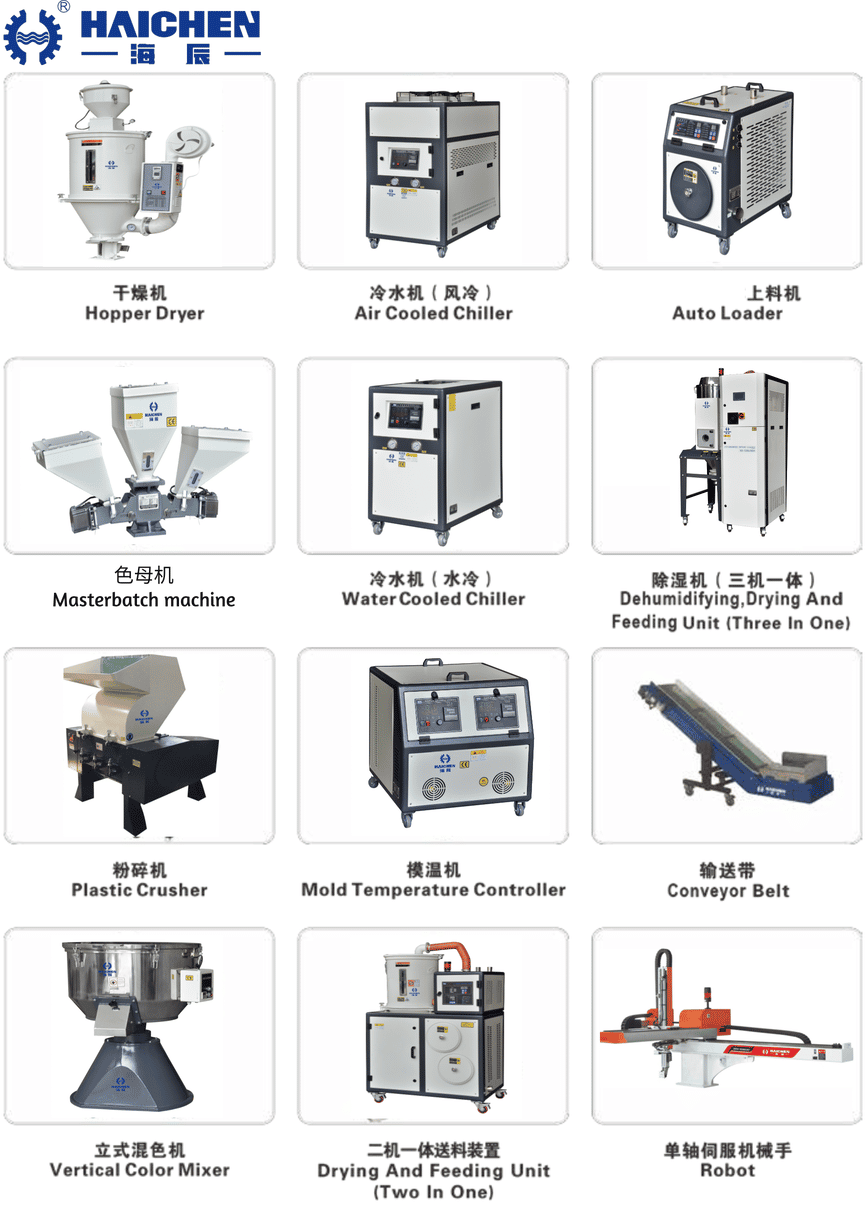
We provide complete solutions for light switch production, from plastic junction box machine selection to technical support.
With more than 10years experience, we supply professional electrical Switch Injection Molding Machine: Price, Selection & Production Guide.
Please Contact us for discussion.