
A plastic stool injection molding machine produces plastic stools for homes, schools, gardens, offices, and commercial spaces. However, not every stool needs the same machine. A small stackable stool made from PP has different molding needs from a wide stool with armrests or a transparent PC stool with a detailed surface.
For this reason, buyers should check the product size, projected area, part weight, material, mold design, and required output before selecting a machine. The clamping force is important, but the injection unit and mold space matter too.
Haichen offers HCK series machines for large plastic furniture applications. Its published stool examples include the HCK530 and HCK1200, used for different product and material requirements. The best model for your project still depends on the actual part and mold data.
This guide explains how to choose a plastic stool making machine, calculate the required clamping force, match the injection unit to PP, ABS, or PC, and plan the production line around your target output.
What Is a Plastic Stool Injection Molding Machine?
A plastic stool injection molding machine melts plastic pellets and injects the melt into a stool mold. The mold forms the seat, legs, armrests, ribs, and other product details. After the plastic cools, the machine opens the mold and removes the finished part.
A typical stool production system includes:
- Injection molding machine
- Plastic stool mold
- Material loader
- Chiller and mold temperature control
- Robot or automatic take-out system
- Conveyor or handling equipment
For a simple stool, the factory may need only a machine, mold, and basic auxiliary equipment. However, high-volume production can benefit from a robot and a more complete material-handling system.
The key is to match the machine with the full mold and production process rather than choose it by tonnage alone.
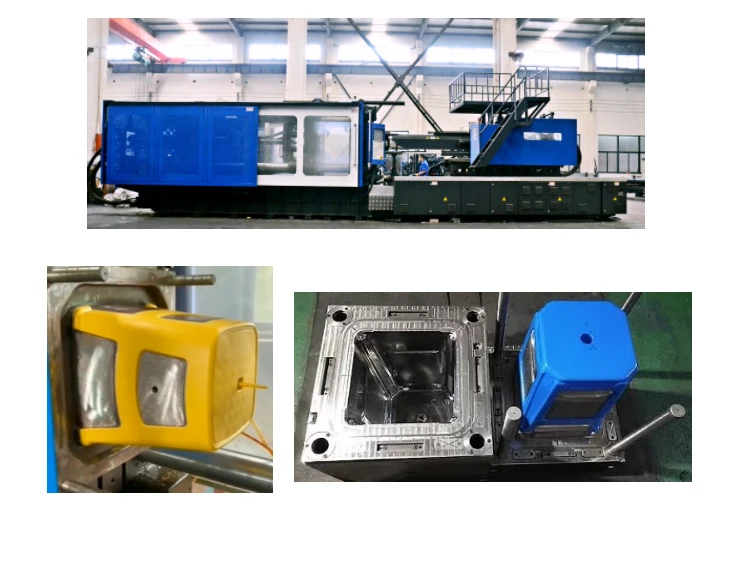
Three Key Factors in Plastic Stool Machine Selection
Stool Size, Projected Area, and Part Weight
Start with the product drawing or a sample.
The stool’s projected area affects the required clamping force. Part weight affects the shot size, while wall thickness and shape affect filling and cooling.
A wide stool can have a larger projected area than a narrow stool, even when both have a similar height. Likewise, armrests can increase the mold width and create a need for side-action mechanisms.
Before selecting the machine, collect these details:
- Product length and width
- Product height
- Part weight
- Wall thickness
- Projected area at the mold parting line
- Number of mold cavities
The total shot weight must cover all molded parts and the runner system, where applicable. Therefore, a machine may have enough clamping force but still lack the injection capacity needed for the job.
Stool Design and Mold Structure
The stool design affects mold dimensions, opening stroke, ejection, and core-pulling requirements.
A low stackable stool may use a relatively simple mold. In contrast, a deep stool or a stool with armrests may need more mold space and extra moving parts.
Check the following before ordering a stool injection molding machine:
- Tie-bar spacing
- Platen size
- Mold thickness range
- Mold opening stroke
- Ejector stroke
- Mold weight
- Hydraulic core-pull requirements
For example, a mold with side sliders may need independent hydraulic core-pull circuits. A deep product may also need enough opening space for safe removal.
These details matter because a machine with sufficient clamping force may still be unsuitable if the mold does not fit.
Plastic Material and Injection Unit Design
The material affects melt flow, injection pressure, screw design, and processing temperature.
PP is common for plastic stools because it combines low weight, useful toughness, and practical processing. ABS can suit parts that need a different balance of rigidity and surface finish. PC can fit selected premium or transparent designs, but it usually requires closer attention to drying and processing conditions.
Therefore, buyers should tell the supplier which resin they plan to use. The screw diameter, shot capacity, plasticizing rate, and screw design should then match the actual material and part weight.
How to Calculate Clamping Force for a Plastic Stool Mold
Clamping force keeps the mold closed while the machine injects molten plastic into the cavity.
A useful starting formula is:
Clamping force (ton-force) = Total projected area (cm²) × Estimated cavity pressure (kgf/cm²) ÷ 1,000 × Safety factor
Use the total projected area of all cavities and the relevant runner area. Also, make sure all units match before doing the calculation.
For example, a stool mold with a total projected area of 1,200 cm² and an estimated cavity pressure of 380 kgf/cm² gives:
1,200 × 380 ÷ 1,000 = 456 ton-force before the safety factor.
With a factor of 1.15, the estimate becomes about 524 ton-force. A machine around 530 tons could be a candidate, but the mold designer and machine supplier should confirm the projected area, cavity pressure, and final machine selection.
This example shows the calculation method, not a universal rule for every stool.
Do not use a fixed “tons per cm²” value for every product. The correct clamping force depends on the cavity pressure and the projected area. The machine’s maximum injection pressure is not the same as the pressure inside the mold cavity.
For more detail, see How to Calculate Injection Molding Machine Clamping Force.
How to Choose a Plastic Stool Machine by Product Type
Different stools call for different machine configurations. Use the following table as a guide to the factors you need to check, not as a final tonnage recommendation.
| Stool Type | Main Selection Factors | Machine Features to Check |
|---|---|---|
| Children’s stool | Small part weight and projected area | Shot capacity, mold fit, stable filling |
| Stackable PP stool | Part geometry and cycle target | Clamping force, shot size, cooling |
| Wide stool with armrests | Larger projected area and side actions | Clamping force, platen size, core-pull circuits |
| Deep or tall stool | Product depth and ejection clearance | Opening stroke, mold height, ejection |
| Heavy-duty stool | Higher part weight and wall thickness | Injection capacity, cooling, mold strength |
| Transparent PC stool | Material and surface demands | Suitable screw, drying, temperature control |
| Textured stool | Mold surface and filling behavior | Injection control, mold temperature, venting |
The table helps narrow the options. However, two stools of the same type may still need different machines if their mold designs, cavity pressures, or production volumes differ.
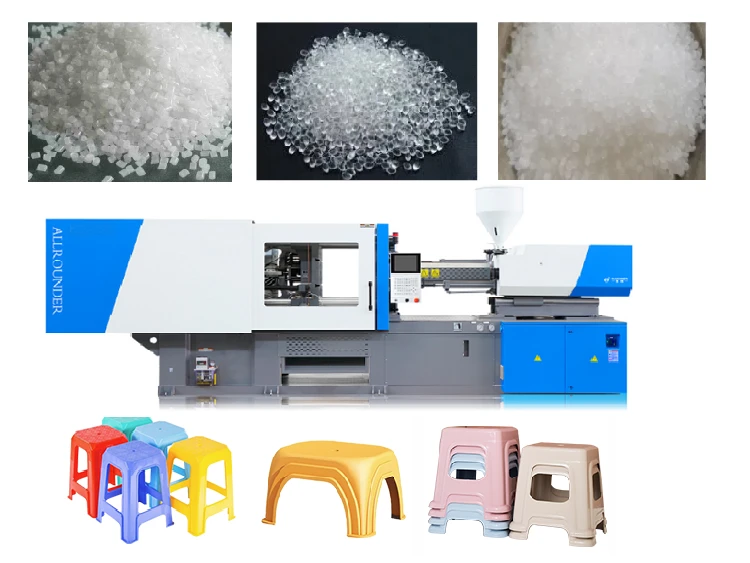
PP, ABS, and PC: How Material Changes Machine Selection
PP Stool Injection Molding
Polypropylene is a common material for stools. It is light and often suits high-volume household furniture production.
For PP, check whether the injection unit can handle the total shot weight within the target cycle. Also, review the mold’s flow path and cooling system.
If the factory uses recycled PP, the material source and flow behavior may vary. Therefore, confirm that the selected resin can meet the required product strength and quality. The process may need adjustments when the material grade changes.
ABS Stool Injection Molding
ABS can suit stool designs that need a different balance of rigidity, impact resistance, and surface finish.
However, the machine should be configured for the selected ABS grade. Check the required shot size, screw design, injection pressure, and material drying requirements.
Do not apply the same settings to PP and ABS without checking the resin data. Their flow behavior and processing windows can differ.
PC Stool Injection Molding
Polycarbonate can be used for selected premium or transparent stools. It may also appear in products with demanding visual details.
PC needs careful moisture control and process setup. The material supplier’s drying instructions should be followed, while the machine should provide suitable temperature and injection control.
For textured products, the mold surface, venting, and filling profile affect how clearly the details form.
A low-shear screw may be appropriate for some PC applications, but the exact screw design should match the resin and the product.
Which Haichen HCK Machine May Fit Your Plastic Stool?
Haichen’s published stool-related information includes application examples using the HCK530 and HCK1200. The company also presents its HCK series for large plastic furniture production. These examples help buyers understand possible machine configurations, but they do not set a fixed tonnage for all stools.
HCK530 for Selected PP Stool Applications
Haichen’s current published example describes an HCK530 used for a stackable PP stool with a height of about 45 cm and a part weight of about 1.5 kg. The page reports a 32-second cycle for that application.
That result should be treated as an application example. Actual cycle time depends on the mold, wall thickness, cooling, resin, and process settings.
HCK1200 for a More Demanding PC Stool
Haichen’s current article also describes an HCK1200 application for a PC stool with hollow armrests and surface texture. The page lists an approximately 2.5 kg shot and a 65-second cycle.
This example illustrates why material and mold design matter. A large transparent product with detailed features may need a different injection unit and process setup from a simple PP stool.
Before using any specific model, confirm its current clamping force, shot capacity, opening stroke, tie-bar spacing, and available screw configuration against your product and mold drawings.
How to Match the Injection Unit to Stool Weight
Shot capacity is one of the first items to check after clamping force.
Use this simple calculation:
Total shot weight = Part weight × Number of cavities + Runner weight
For a single-cavity stool with a part weight of 1.5 kg, the total shot is at least 1.5 kg before adding the runner weight. A multi-cavity mold needs enough injection capacity for all parts in the same cycle.
The machine should also have enough plasticizing capacity to prepare the next shot before the following injection. Otherwise, the injection unit may limit the cycle even if the mold and clamping unit are suitable.
Do not choose a machine only because its published maximum shot weight appears large enough. Ask the supplier to review the shot size, screw diameter, plasticizing rate, material, and cycle together.
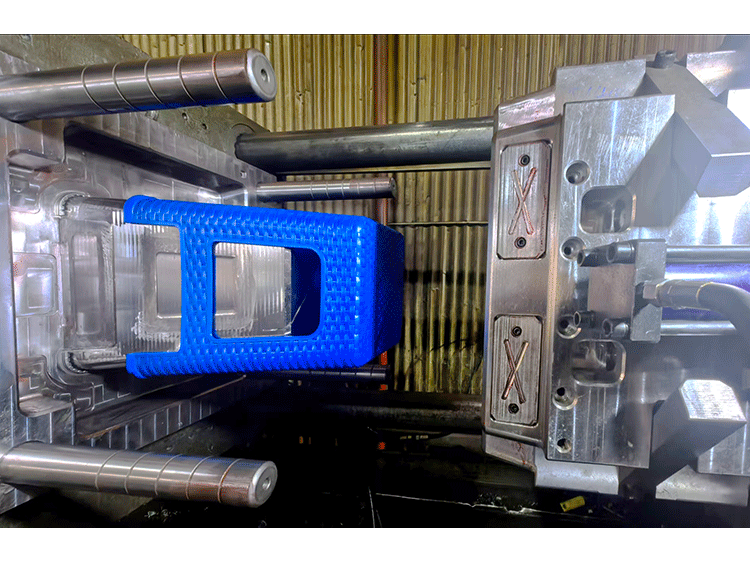
Why Mold Opening Stroke and Tie-Bar Spacing Matter
The mold must fit the machine, and the finished stool must have enough clearance for ejection.
A deep stool can be difficult to remove if the mold opening stroke is too short. In addition, the mold must fit between the tie bars and within the machine’s permitted mold-height range.
Before you order, compare the mold drawing with the machine specification. Check the tie-bar spacing, platen size, mold height, opening stroke, ejector stroke, and mold weight.
For stools with armrests, sliders, or other side features, also check the required core-pull movement and hydraulic connections.
These checks prevent a costly situation in which the machine has enough clamping force but cannot operate the mold as planned.
How to Improve Plastic Stool Production Efficiency
A suitable machine gives the factory a stable starting point. The mold, cooling system, and handling process then affect output.
Improve Cooling
Cooling often takes a large part of the molding cycle. A suitable cooling layout can remove heat more evenly and help control warpage.
However, do not shorten cooling time without checking the part. The stool must be stable enough for ejection and handling.
Use Automation Where It Helps
A robot can remove the stool and transfer it to a conveyor or inspection area. This can reduce manual handling and keep the machine cycle more consistent.
For high-volume production, plan robot access and the part-removal path during the mold and machine selection stage.
Reduce Scrap
Flash, short shots, sink marks, and warpage all add cost.
Check the root cause before changing the settings. For example, flash may point to mold condition or clamping issues, while sink marks may need a review of part thickness, packing, and cooling.
The operator should keep records of cycle time, part weight, material lot, and key process settings. These records help the team spot changes before they cause a large amount of scrap.
Review Energy Use
A servo-energy-saving machine can be worth evaluating when the machine runs for long hours. However, the actual energy saving depends on the comparison machine, operating pattern, process settings, and product.
For a fair comparison, record energy use under similar production conditions rather than relying on a general percentage.
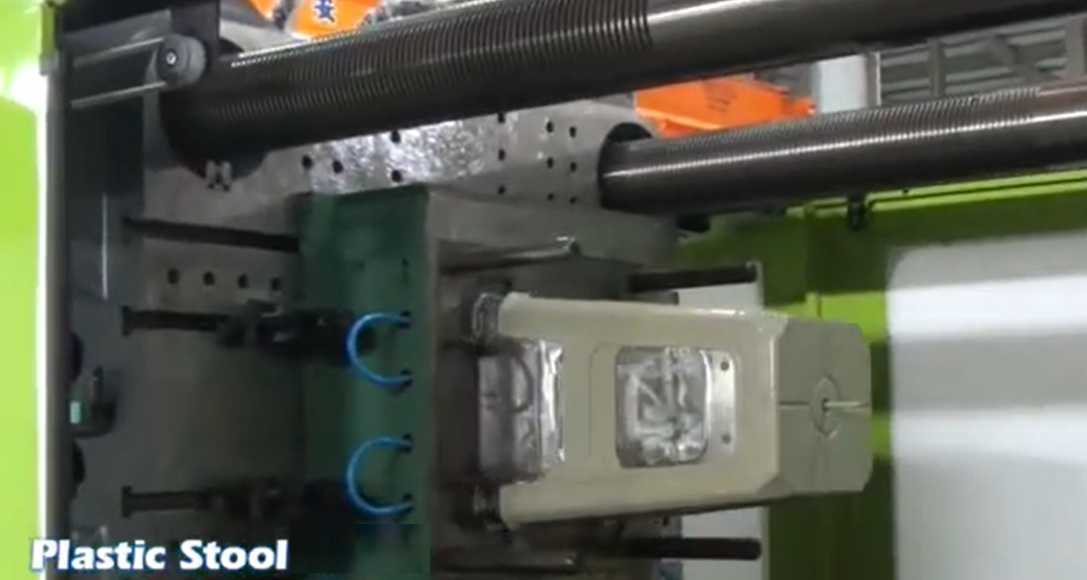
Common Mistakes When Choosing a Plastic Stool Injection Molding Machine
Choosing Tonnage by Guesswork
A supplier’s general range can help with early planning, but the final selection needs projected area, estimated cavity pressure, and a safety factor.
Ignoring Shot Capacity
A machine may have enough clamping force but still lack the injection capacity for the total shot. Check both requirements before ordering.
Forgetting Mold Opening Clearance
A deep stool or a stool with side features may need more opening stroke and mold space than expected. Always verify the actual mold dimensions.
Using One Screw Setup for Every Material
PP, ABS, and PC can have different processing needs. The screw and barrel should match the selected resin and product requirements.
Planning Automation Too Late
If the factory intends to use a robot, check the interface, mold opening, part release, and robot access before finalizing the machine and mold.
How Much Does a Plastic Stool Production Line Cost?
The full investment depends on machine size, mold design, auxiliary equipment, and automation.
This selection article focuses on choosing the machine and matching it to the product. For equipment budgets, mold costs, and auxiliary equipment costs, see Haichen’s separate guide:
Plastic Stool Machinery Cost Guide for Production Lines
That page covers the main cost items for a stool production line. Keeping the selection and cost topics separate also helps buyers find the information they need more easily.
What Information Should You Send for a Machine Quotation?
To receive a useful machine recommendation, prepare these details:
- Stool drawing or sample
- Material and material grade
- Part weight
- Projected area, if available
- Mold cavity number
- Mold dimensions
- Required opening stroke
- Target cycle time
- Daily or annual output
- Automation requirements
With this information, Haichen can review the clamping force, injection unit, mold fit, screw configuration, and auxiliary equipment for your project.
Frequently Asked Questions
What tonnage injection molding machine do I need for a plastic stool?
The required tonnage depends on projected area, estimated cavity pressure, mold design, and the selected safety factor. Part weight affects shot capacity, so it must be checked separately.
Is a 530-ton machine enough for a plastic stool?
It may suit some stool applications. Haichen’s published information includes an HCK530 example for a stackable PP stool. However, the actual mold must still pass checks for clamping force, shot size, mold dimensions, and opening stroke.
Which plastic is best for making stools?
PP is a common choice for many household stools. ABS and PC can suit other product requirements. The right material depends on strength, appearance, cost, and the design of the finished stool.
Can one machine produce both PP and PC stools?
It may be possible if the machine’s capacity and mold requirements fit both jobs. However, the screw configuration and process settings may need to change. Confirm material compatibility with the machine supplier before planning frequent material changes.
How do I know whether the mold will fit the machine?
Check the tie-bar spacing, platen size, mold-height range, opening stroke, ejector stroke, and mold weight against the machine data. A mold drawing helps the supplier confirm compatibility.
What is the typical cycle time for a plastic stool?
Cycle time depends on part thickness, material, mold cooling, mold design, and automation. Haichen’s published examples list different cycle times for PP and PC stool applications, but each figure applies to its specific setup.
What information does Haichen need to recommend a machine?
Send the stool drawing, resin, part weight, projected area, mold cavity number, mold dimensions, and target output. Haichen can then review the machine requirements and suggest a suitable configuration.
Request a Plastic Stool Injection Molding Machine Recommendation
Send Haichen your stool drawing or sample, material, part weight, mold cavity number, and target output. The team can review the required clamping force, shot capacity, mold space, and automation needs before recommending a machine for your production line.
Haichen Machinery– your partner for stool production. From HCK 530 to HCK 1200, we help you get the right plastic stool injection molding machine for your needs.
Author: Yang, Senior Engineer, Haichen Machinery


