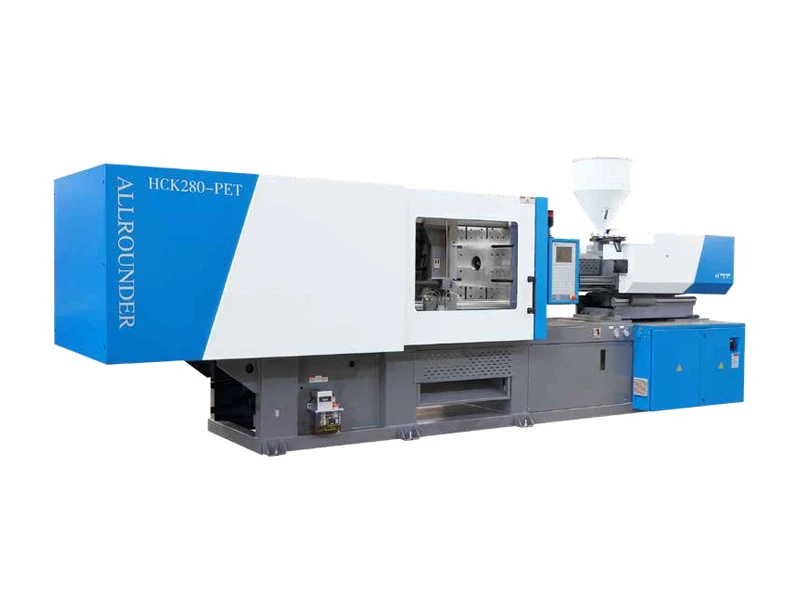
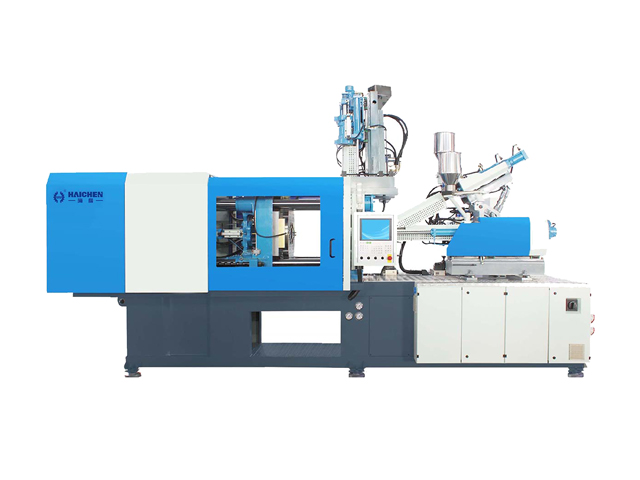
Injection molding does not depend on the injection molding machine alone. A good production line also needs the right auxiliary equipment.
These machines help with cooling, material drying, material feeding, part removal, and plastic recycling.
However, not every injection molding machine needs the same setup. A small machine making simple PP parts may need only basic equipment.
On the other hand, a large machine running long production cycles may need a full automatic system.
Therefore, when we select auxiliary equipment as an injection molding machine manufacturer, we first look at the machine, material, output, and production process.
Then we choose the equipment that fits the actual job.
What Is Injection Molding Auxiliary Equipment?
Injection molding auxiliary equipment refers to the machines that support the main injection molding machine during production.
The injection molding machine melts plastic, fills the mold, and forms the plastic part. At the same time, auxiliary equipment handles other important jobs around the machine.
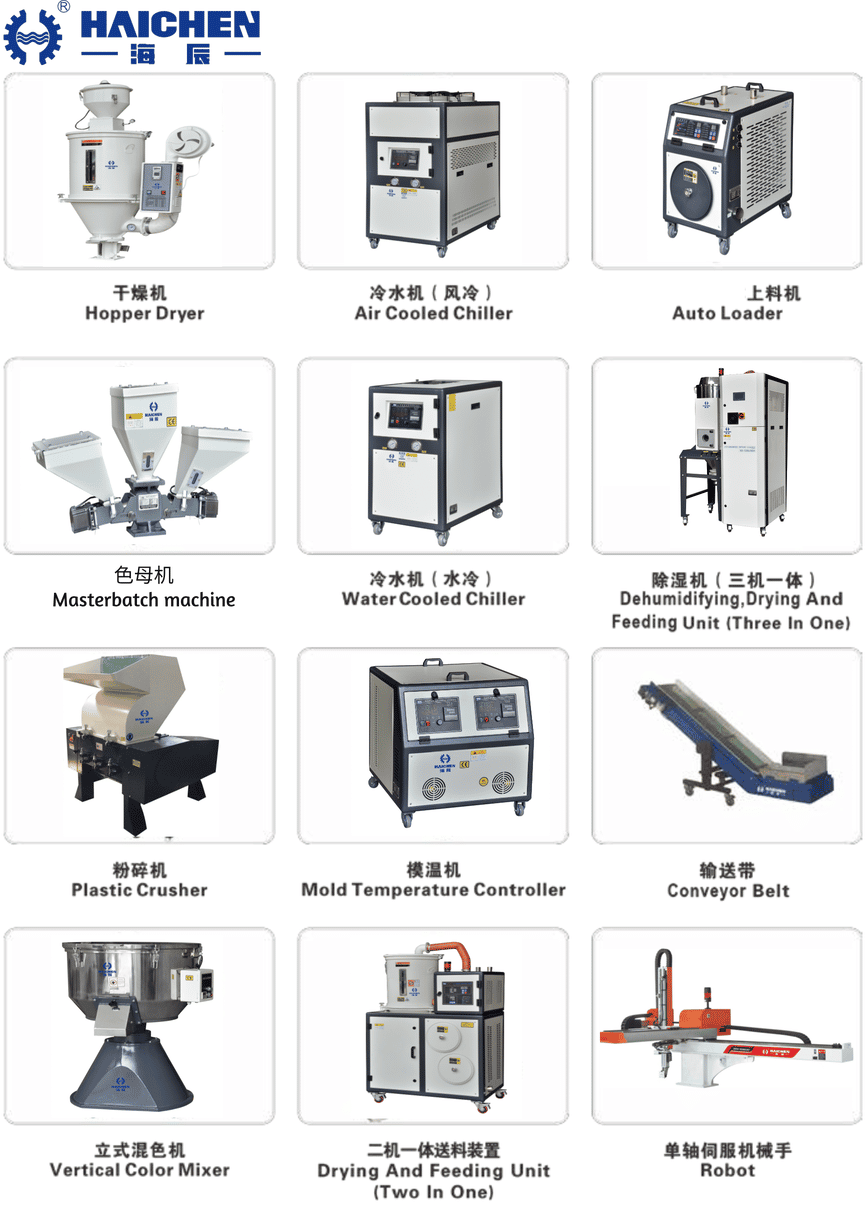
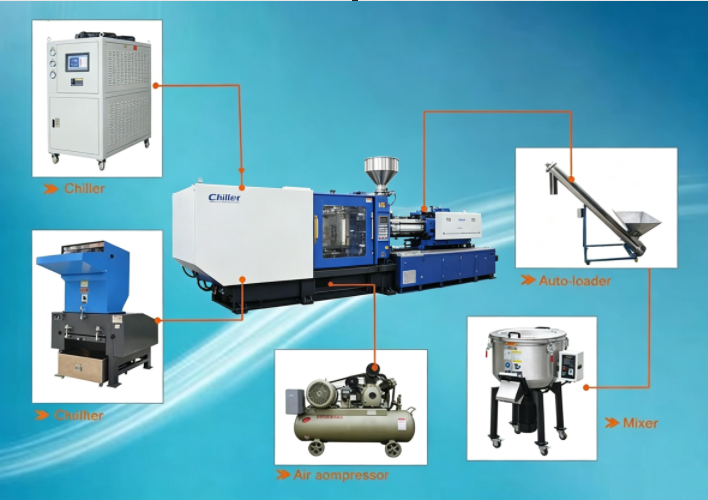
For example, a chiller controls cooling water, while a hopper dryer removes moisture from plastic. An auto loader moves plastic pellets into the machine.
A robot can remove finished parts, and a crusher can process plastic waste.
In simple terms, the injection molding machine does the main production work, while auxiliary equipment helps it run smoothly.
Why Is Auxiliary Equipment Important?
The right auxiliary equipment can improve production stability and reduce manual work.
For example, stable cooling can help keep the production cycle steady. Proper material drying can reduce problems caused by moisture. Also, automatic material feeding can reduce the need for workers to add plastic by hand.
Moreover, good auxiliary equipment can support longer production runs. This becomes more important when the factory runs several injection molding machines or works with high production output.
So, auxiliary equipment should not be treated as an extra cost only. It should form part of the complete injection molding system.
What Equipment Does an Injection Molding Machine Need?
The required equipment depends on the production job.
A basic injection molding setup may include:
- Injection molding machine
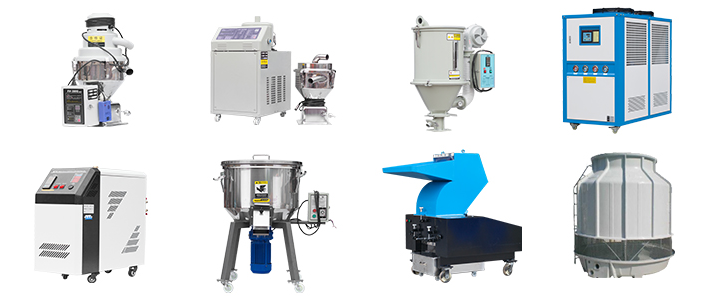
- Chiller or cooling system
- Hopper dryer
- Auto loader
Some production lines may also need:
- Mold temperature controller
- Plastic crusher
- Injection molding robot
- Conveyor
- Central material feeding system
For example, a small factory may use one dryer and one auto loader for each machine. In contrast, a large factory may use central cooling and material feeding for several injection molding machines.
Therefore, there is no single auxiliary equipment list that fits every factory.
What Are the Main Types of Injection Molding Auxiliary Equipment?
Different auxiliary machines have different jobs. The best choice depends on what the injection molding machine needs during production.
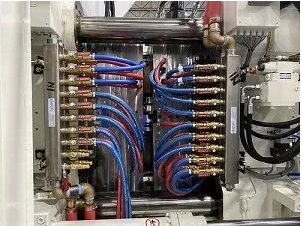
Chiller and Cooling System
A chiller provides cool water for the production system. It can help control the heat produced during injection molding.
Stable cooling matters because temperature changes can affect cycle time and production stability. A chiller can also support machine cooling, mold cooling, or other cooling needs, depending on the production setup.
For a small injection molding machine, a small chiller may be enough. However, larger machines and high-output production lines may need more cooling capacity.
When we select a chiller, we normally check the machine size, material, cycle time, cooling demand, and number of machines.
Hopper Dryer and Dehumidifier
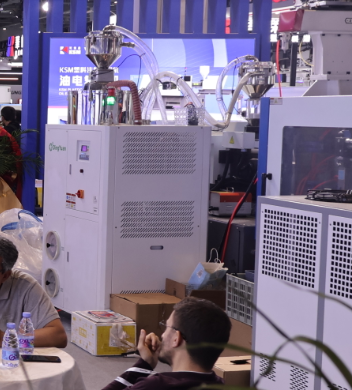
A hopper dryer removes moisture from plastic pellets before they enter the injection molding machine.
Some plastics can take in moisture from the air. If the material contains too much moisture, it can cause bubbles, silver marks, poor surface quality, or weak parts.
PP and PE often have lower drying needs. However, materials such as PET, PA, and PC usually need better moisture control.
A dehumidifying dryer can provide more stable drying for materials that need a low moisture level.
Therefore, check the plastic material first. Then choose a dryer with enough capacity for the machine’s material use.
Auto Loader
An auto loader moves plastic pellets from a storage container to the injection molding machine.
For small production jobs, workers may add material by hand. However, manual feeding becomes less practical when the machine runs for many hours or uses a large amount of plastic.
An auto loader can reduce manual work and keep material feeding more steady.
For high-output injection molding machines, automatic feeding also helps the machine keep running without frequent material checks.
Mold Temperature Controller
A mold temperature controller controls the temperature of the water or oil used in the production process.
Although this equipment works around the mold, its main value lies in helping the injection molding machine maintain a stable production cycle.
Different plastic materials may need different temperature ranges. Therefore, the controller should match the material and production requirements.
Water-type units suit many normal applications, while oil-type units can support higher temperature work.
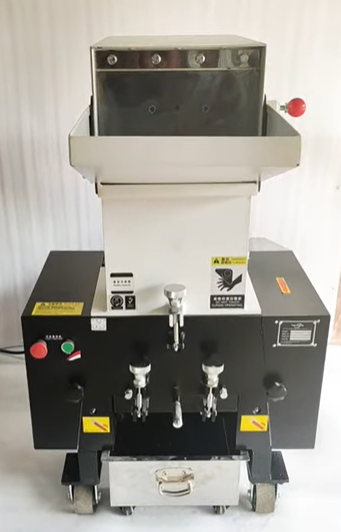
Plastic Crusher and Granulator
Plastic production creates runners, sprues, edge waste, and rejected parts.
A crusher or granulator breaks suitable plastic waste into smaller pieces. The factory can then reuse the material when the product and process allow it.
However, not all waste should go directly back into production. The factory should check the material type and the allowed recycled material ratio first.
For this reason, the crusher should match the production output of the injection molding machine.
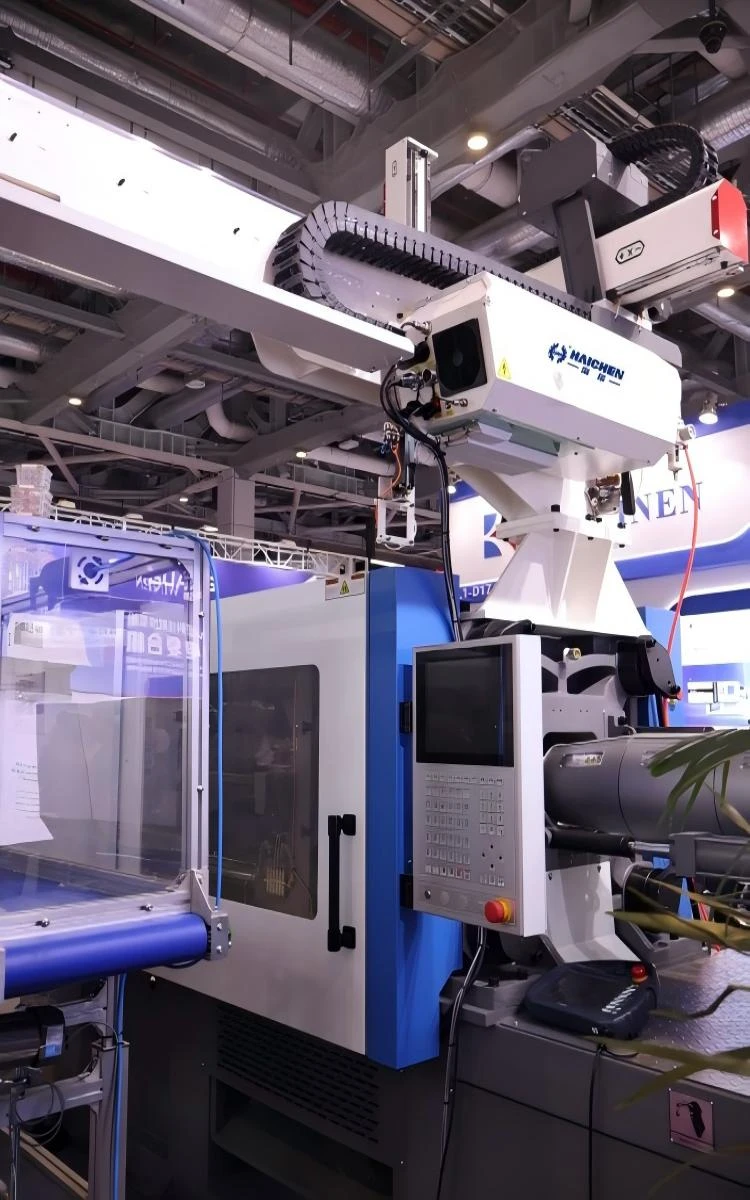
Injection Molding Robot
An injection molding robot removes finished parts from the production area and moves them to the next step.
For example, a robot can:
- Remove parts
- Place parts on a conveyor
- Stack parts
- Sort parts
- Move parts to another process
Manual removal may work well for small production jobs. However, high-volume production can benefit from a robot because it reduces manual work and supports a more stable production cycle.
How to Choose Auxiliary Equipment for an Injection Molding Machine
The right equipment should match the complete production process. As an injection molding machine manufacturer, we normally start with the machine output and then check the material, cooling, and automation needs.
Match Equipment Capacity With Machine Output
Machine output is one of the first things to check.
A small injection molding machine may use only a small amount of plastic per hour. A large machine, however, may use much more material and create a higher cooling load.
Therefore, auxiliary equipment should have enough capacity to support the machine.
For example, when choosing an auto loader, check material use per hour. When choosing a chiller, check the cooling load. When choosing a crusher, check the amount of plastic waste.
The key point is simple: the auxiliary equipment should keep up with the injection molding machine.
Choose Equipment Based on Plastic Material
Plastic material affects auxiliary equipment selection.
Some materials need drying before injection. Others may need tighter temperature control. Recycled material may also need special handling.
For this reason, check the plastic type before choosing a dryer, temperature controller, or material feeding system.
For example:
- PP: usually has simple drying needs
- PE: usually has simple drying needs
- ABS: may need drying before production
- PC: needs good moisture control
- PA: often needs careful drying
- PET: needs strong moisture control
Always check the material supplier’s processing data before setting the final conditions.
Consider Cooling and Temperature Requirements
Cooling needs depend on more than machine tonnage.
You should also consider:
- Plastic material
- Part weight
- Cycle time
- Production output
- Cooling water temperature
- Number of machines
A small injection molding machine with a short cycle may need much less cooling than several large machines running at high output.
Therefore, do not choose a chiller only by the machine’s clamping force. Check the actual production conditions.
Consider Automation and Production Volume
Production volume also affects the auxiliary equipment setup.
For low-volume production, manual material feeding and part removal may still make sense. As production grows, an auto loader, robot, conveyor, and central feeding system can reduce manual work.
For high-volume production, automation can also help the factory keep a more stable production cycle.
So, choose automation based on the actual production goal rather than adding equipment simply because it is available.
How to Set Up a Complete Injection Molding Production Line
There is no need to use a complex system for every project. The setup should grow with the production needs.
Basic Setup
A basic line may include:
Injection molding machine → Hopper dryer → Auto loader → Cooling system
This setup can meet the needs of many small and medium production jobs.
If the plastic requires tighter temperature control, you can add a mold temperature controller.
For plastic waste, you can also add a small crusher.
Automated Setup
An automated line can add part removal and material handling equipment.
A typical setup may include:
Injection molding machine → Robot → Conveyor → Inspection or packing
At the same time, the auto loader feeds material into the machine, while the cooling system controls the production temperature.
This setup can reduce manual work and make long production runs easier to manage.
High-Volume Production Setup
Large factories may need a more complete system for several injection molding machines.
A high-volume setup may include:
- Multiple injection molding machines
- Central cooling system
- Central material feeding
- Dehumidifying dryers
- Injection molding robots
- Conveyors
- Plastic crushers
- Automatic packing equipment
Here, the important point is system matching.
For example, if several large injection molding machines share one cooling system, the cooling capacity must cover the total demand. The same idea applies to material feeding and plastic recycling.
Common Auxiliary Equipment Problems
Even the right equipment can cause problems if the capacity, settings, or maintenance do not match the production line.
Insufficient Cooling
Insufficient cooling can make the production cycle unstable.
Common causes include:
- Chiller capacity is too small
- Water flow is too low
- Water temperature is too high
- Filters are dirty
- Cooling lines have poor flow
First, check the actual cooling demand. Then check water flow and temperature.
If the machine runs normally at low output but struggles at high output, the cooling system may need more capacity.
Poor Material Drying
Poor drying can cause bubbles, silver marks, weak parts, and poor surface quality.
First, check whether the plastic needs drying. Then check the dryer temperature, drying time, air flow, and material amount.
Also, do not leave moisture-sensitive materials in an open environment for too long after drying.
Unstable Material Feeding
If the auto loader cannot move material at a steady rate, the injection molding machine may stop or run unevenly.
Possible causes include:
- Loader capacity is too small
- Feeding pipe is blocked
- Feeding distance is too long
- Material does not flow well
- Loader settings are incorrect
Therefore, check the material use of