
A small injection molding machine can be a practical choice for laboratories, electronics, medical components, precision gears, prototypes, and other small plastic parts. However, choosing a compact machine does not simply mean choosing the lowest tonnage available.
The product weight, projected area, cavity number, mold size, resin, shot capacity, cycle time, and required output all affect machine selection.
For example, a laboratory specimen may only need a compact 30-ton machine, while a small electronic housing with several cavities may require considerably more clamping force and injection capacity.
This page explains what small injection molding machines can produce, how to choose the right tonnage, how shot size affects the selection, what influences machine price, and how Haichen’s HCK series fits different small-part applications.
What Is a Small Injection Molding Machine?
A small injection molding machine uses the same basic molding process as larger machines. The injection unit melts thermoplastic resin and injects it into a mold. The clamping unit keeps the mold closed during filling and holding. After cooling, the machine opens the mold and ejects the finished part.
The main difference is the machine’s clamping force, injection capacity, mold space, and physical footprint.
There is no single industry-wide definition of a “small” machine. Some suppliers use the term for machines below 50 tons, while others include machines extending well beyond that range. Current commercial pages show small-machine offerings across a wide range, from very small laboratory equipment to machines approaching 100 tons or more.
For this reason, buyers should compare the actual machine specifications instead of relying on the word “small.”
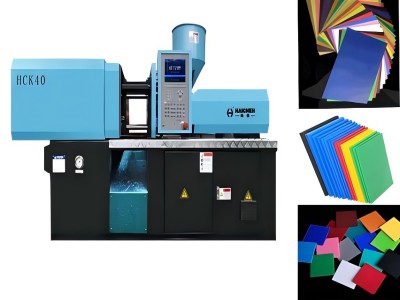
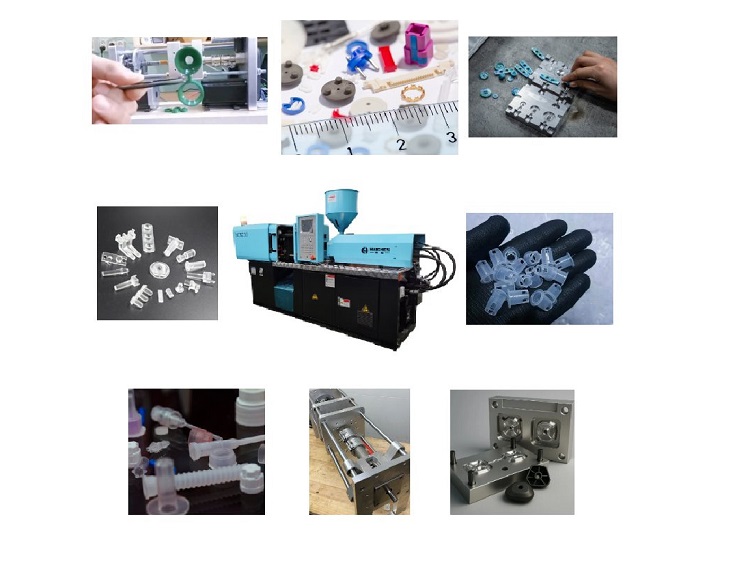
Typical applications include:
- Laboratory test specimens
- Color cards and material samples
- Small gears
- Electronic components
- Connectors
- Small housings
- Medical components
- Consumer-product accessories
- Prototypes
- Small-batch production
Small Injection Molding Machine Applications
Laboratory and Research Applications
Laboratories often need to process small quantities of material for testing, research, and formulation development.
Haichen’s HCK30 targets laboratory applications such as tensile specimens, impact specimens, and color cards. The machine uses a compact design and supports multiple operating languages, which can simplify use in research and teaching environments.
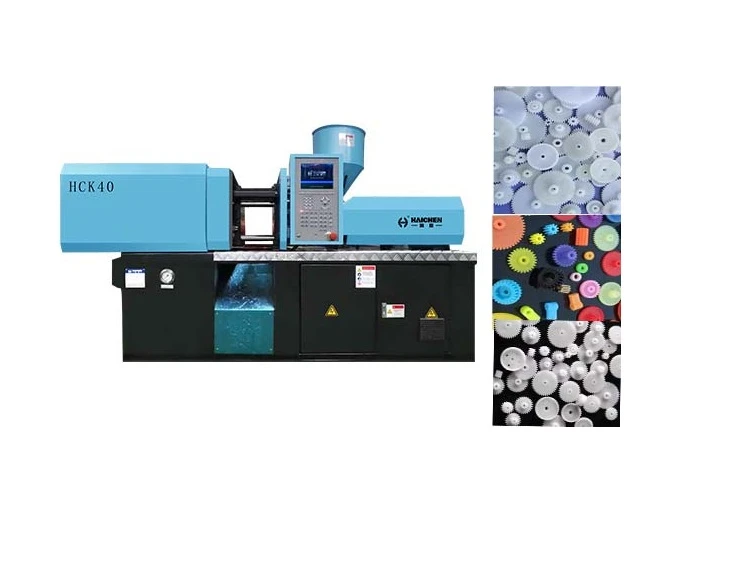
A laboratory machine can help teams:
- Compare resin grades
- Prepare test specimens
- Evaluate color formulations
- Develop new materials
- Produce prototype samples
Because these projects often involve small shot sizes, buyers should pay attention to injection-unit configuration and shot control rather than clamping force alone.
Precision Gears and Small Components
Small gears and technical components require stable molding conditions.
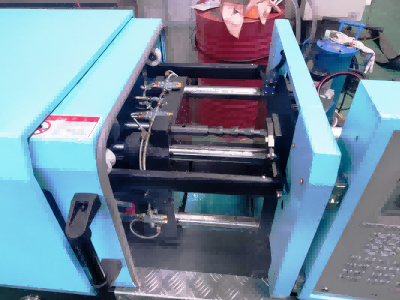
Haichen’s HCK50 targets precision gears and electronic components. The published configuration includes a thickened mold plate, small mold locating holes, and a dual-cylinder injection arrangement designed to improve injection stability.
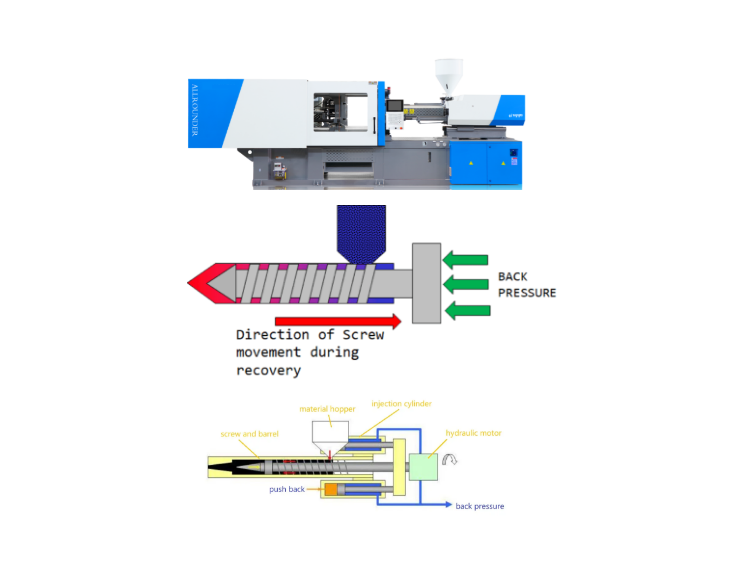
This type of machine suits applications where the manufacturer needs:
- Stable injection
- Repeatable shot control
- Compact tooling
- Controlled plasticizing
- Short production cycles
However, machine precision does not come from the injection machine alone. The mold, material, process parameters, measuring system, and operating conditions all affect final part quality.
Electronics and Medical Components
A compact molding machine can also work well for small electronic and medical parts.
Current small-machine products from established manufacturers target applications such as medical components, electronic connectors, precision gears, technical molding, and laboratory work.
For these applications, manufacturers often pay close attention to:
- Part consistency
- Shot-to-shot repeatability
- Temperature control
- Mold protection
- Clean production conditions
- Automated part handling
The required machine configuration depends on the actual part rather than simply classifying it as a medical or electronic product.
How to Choose the Right Tonnage
Clamping force is one of the first specifications most buyers check. However, you should not choose a machine from product weight alone.
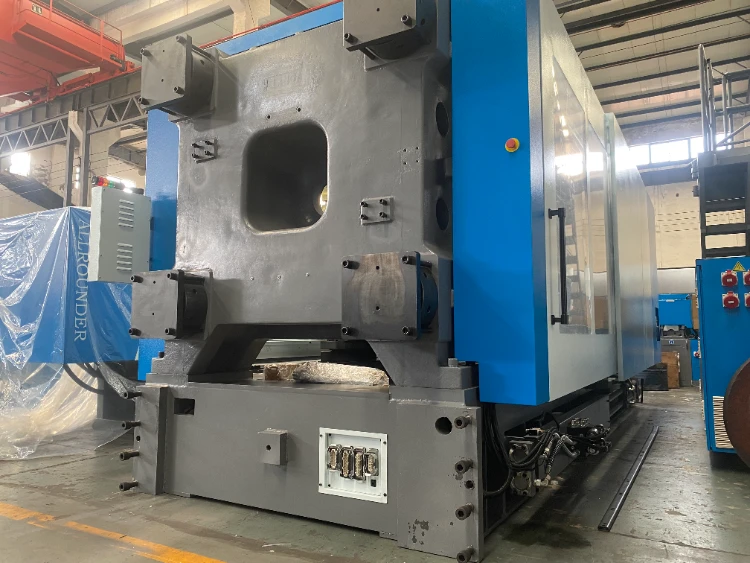
The main factors include:
- Projected area
- Number of cavities
- Material
- Expected cavity pressure
- Mold layout
- Required safety margin
A basic engineering relationship is:
Required clamping force ≈ projected area × average cavity pressure × safety factor
The exact calculation depends on the product and molding conditions.
For example, a 2-gram connector and a 20-gram housing may both use a small machine, but their projected areas and mold layouts can be very different.
At the same time, excessive clamping force does not automatically improve quality. It can increase equipment cost and, in some applications, increase mold stress and energy consumption. Current injection-machine guidance also recommends matching clamping force to the actual projected area and process requirements.
When Is a 30-Ton Machine Suitable?
A 30-ton machine can suit very small molded parts, laboratory work, test specimens, and selected precision applications.
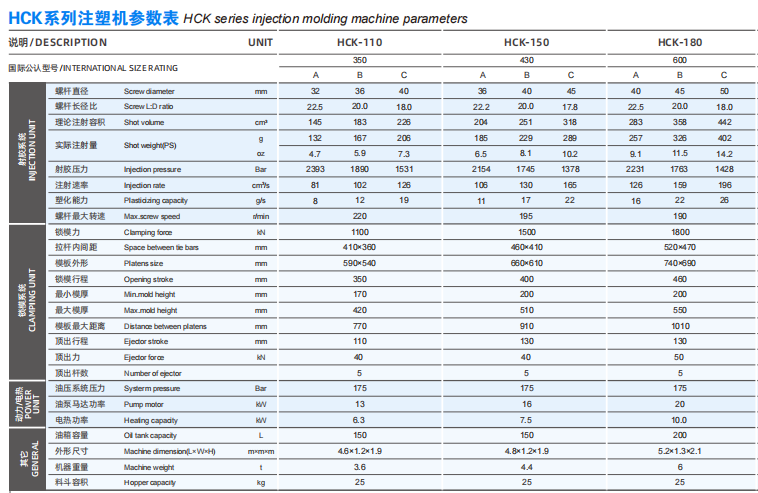
Haichen’s HCK30 is a 30-ton model. Its published specifications include two screw options with theoretical shot volumes of 31 cm³ and 37 cm³ and PS injection weights of 28.2 g and 33.6 g respectively.
The actual usable shot depends on the material and operating conditions, so buyers should not treat the PS shot weight as the usable limit for every resin.
When Does a 50-Ton Machine Make Sense?
A 50-ton machine provides more clamping capacity and injection capacity than a 30-ton unit.
Haichen positions the HCK50 toward precision gears and electronic components.
A 50-ton machine can make sense when the product, mold, and cavity count exceed the practical range of a smaller machine.
What About 70- or 80-Ton Machines?
As the product or mold becomes larger, buyers may need additional clamping force, shot capacity, and mold space.
Haichen currently lists HCK30, HCK40, HCK50, HCK70, and HCK80 within its small-machine range.
The right model still depends on the mold and product.
A larger number on the machine does not automatically mean better performance.
Shot Size Matters as Much as Tonnage
Clamping force tells you how much force the machine can apply to the mold. Shot size tells you how much material the injection unit can prepare and inject.
These are different requirements.
A basic calculation is:
Total shot weight = part weight × cavity number + runner weight
For example, a 5-gram part in a four-cavity mold needs 20 grams of part material before adding the runner system.
The machine also needs enough plasticizing capacity to recover the next shot within the required cycle.
This is particularly important for high-cycle small-part production.
A machine can have enough clamping force but still perform poorly if the injection unit does not match the required shot size or recovery time.
Screw and Barrel Selection for Small Plastic Parts
The injection unit should match the resin and shot size.
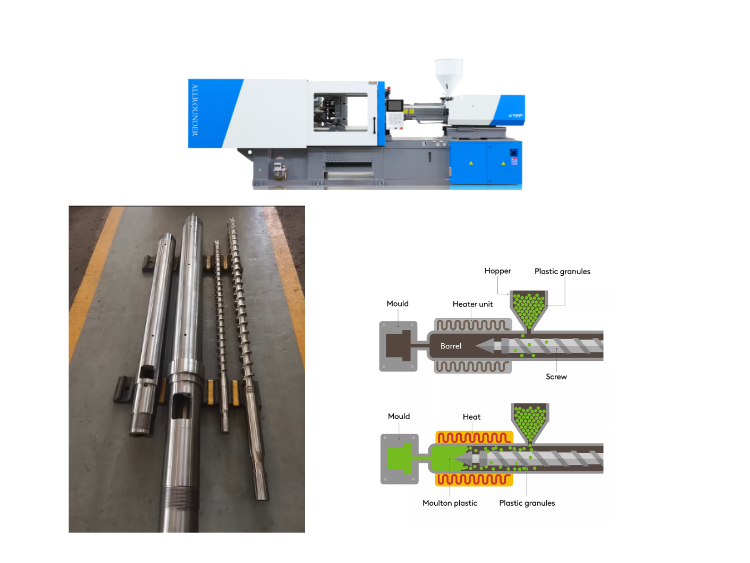
Screw Diameter
A smaller screw can offer better control for smaller shot sizes.
However, the screw also needs enough plasticizing capacity to meet the target cycle time.
L/D Ratio
L/D affects melting behavior and residence time.
There is no single L/D ratio that fits every small-part application. Haichen’s HCK30, for example, offers two screw configurations with different L/D values.
This illustrates why buyers should compare the machine’s actual screw specifications with the chosen resin and application.
Screw Speed
The machine should plasticize the required shot without forcing the screw to operate at an unnecessarily high speed.
Resin grade, shot size, and cycle time all affect the appropriate settings.
Screw and Barrel Material
Haichen’s published small-machine configuration offers several screw and barrel options, including nitrided, hard-chrome-plated, and bimetallic configurations for different material requirements.
That gives manufacturers more flexibility when they need to process different plastics.
Mold Size and Tie-Bar Spacing
Small machines still need sufficient mold space.
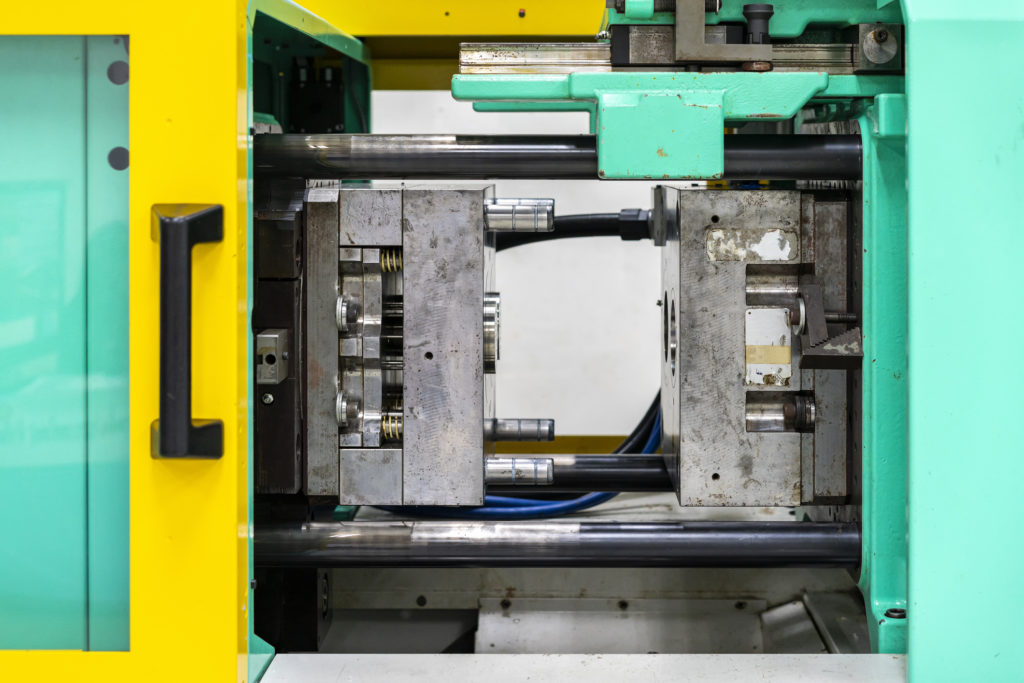
Before ordering, check:
- Tie-bar spacing
- Platen size
- Mold width
- Mold height
- Maximum mold height
- Opening stroke
- Ejector stroke
- Mold weight
Haichen’s small-machine design includes a relatively spacious clamping area and tie-bar configuration intended to accommodate small molds and, where applicable, multi-cavity tooling.
A machine with the correct tonnage can still become unsuitable if the mold does not physically fit.
Therefore, always send the actual mold dimensions to the machine manufacturer before confirming the model.
Small Injection Molding Machine for Multi-Cavity Production
A small machine does not necessarily mean a one-cavity mold.
If the product is small enough, manufacturers can use multiple cavities to increase output.
For example:
One cavity
Lower mold investment and simpler filling control.
Two to four cavities
Higher output while keeping mold complexity manageable.
Higher cavity count
Potentially much higher output for very small products.
However, more cavities also increase:
- Total shot size
- Mold cost
- Runner complexity
- Filling-balance requirements
- Cooling requirements
So, cavity number and machine size should always be considered together.
Small Injection Molding Machine and Automation
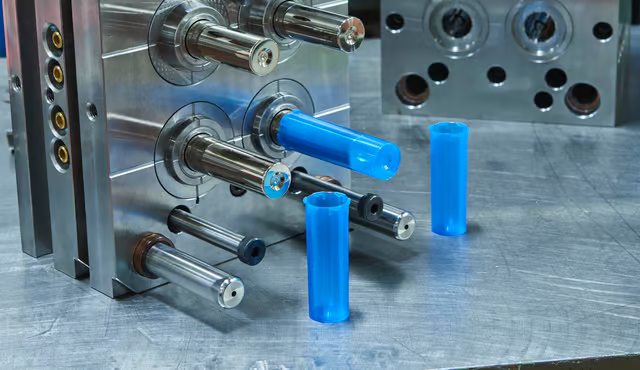
Compact molding equipment can integrate with automated production cells.
A typical cell can include:
Material loading → injection molding → robot removal → inspection → conveyor
Automation can support:
- Part removal
- Insert loading
- Sorting
- Inspection
- Packaging
- Scrap separation
This approach works particularly well when the product has a short cycle time and the factory needs consistent handling.
ENGEL’s current small-machine offering, for example, integrates machine control with robots and peripherals, while emphasizing compact clamping dimensions and automation for technical, medical, electronics, and packaging applications.
Small Injection Molding Machine Price
The price of a small injection molding machine varies significantly.
Public market listings currently show compact machines from several thousand dollars into tens of thousands of dollars, depending on tonnage, machine type, age, configuration, and included equipment.
For example, used machines under 200 tons can range broadly from around $10,000 to $80,000, while new and highly configured machines can cost more.
For a new production machine, the quotation may include very different levels of:
- Clamping force
- Injection capacity
- Screw and barrel
- Hydraulic or electric drive
- Servo system
- Controller
- Automation
- Robot interface
- Auxiliary equipment
Therefore, buyers should not compare machine prices without comparing the configuration.
What Determines Small Injection Molding Machine Price?
The main cost drivers are:
Machine size
A higher clamping force normally increases machine cost.
Injection unit
Larger shot capacity and more advanced injection systems can increase price.
Drive system
Hydraulic, servo-hydraulic, and all-electric platforms have different cost structures.
Screw and barrel
Special materials or wear-resistant configurations can add cost.
Automation
Robots, conveyors, inspection, and automatic loading increase the scope of the production cell.
Mold
The mold is usually quoted separately and can represent a significant portion of the total project investment.
Auxiliary equipment
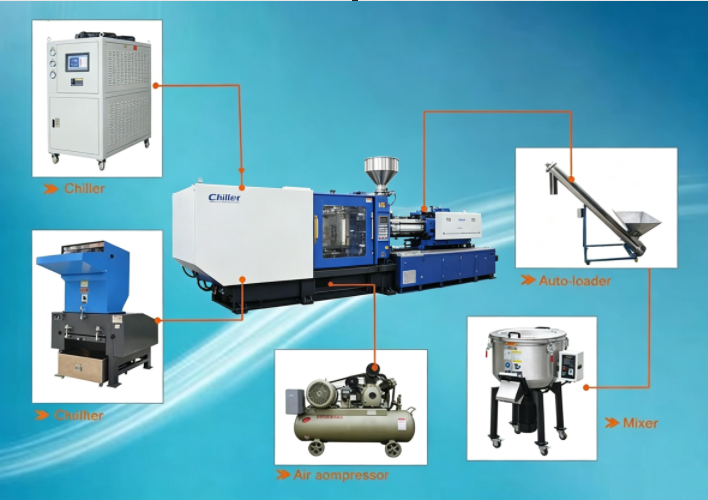
Chillers, dryers, loaders, and other equipment can also affect the final quotation.
Small vs. Large Injection Molding Machines
The difference between small and large machines is not simply machine size.
Small Machines
Small machines generally offer:
- Lower clamping force
- Smaller shot capacity
- Smaller footprint
- Lower mold and material capacity
- Easier installation
- Suitability for small parts
They are particularly useful for precision components, laboratory molding, prototypes, and dedicated small-part production.
Large Machines
Large machines provide:
- Higher clamping force
- Larger shot capacity
- More mold space
- Greater capability for large products
- More opportunities for large multi-cavity molds
They also require more floor space, stronger infrastructure, and more substantial material and cooling systems.
The decision should therefore come from the product and production target rather than the general idea that one machine class is “better.”
How to Select a Small Injection Molding Machine for Your Product
Before asking for a quotation, prepare the following information:
| Information | Why It Matters |
|---|---|
| Part weight | Determines shot requirement |
| Part dimensions | Helps calculate projected area |
| Material | Affects processing conditions |
| Cavity number | Determines total shot and output |
| Mold dimensions | Confirms machine fit |
| Cycle time | Determines plasticizing demand |
| Annual output | Helps size production capacity |
| Automation level | Determines cell configuration |
With these details, the supplier can make a more accurate recommendation.
For example, a 30-ton machine may suit a one-cavity laboratory mold, while a 70- or 80-ton machine may better match a larger multi-cavity production mold.
Haichen Small Injection Molding Machine: HCK30 to HCK80
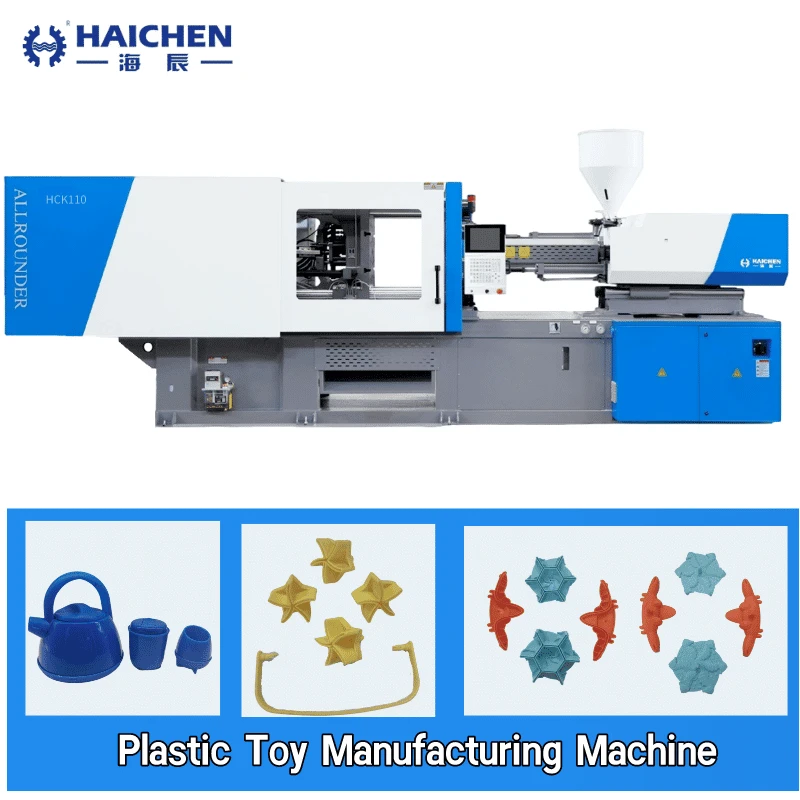
Haichen currently presents the HCK30, HCK40, HCK50, HCK70, and HCK80 as part of its small-machine range.
The range covers several applications:
| Model | Clamping Force | Typical Application |
|---|---|---|
| HCK30 | 30 tons | Laboratory specimens, color cards and very small parts |
| HCK40 | 40 tons | Small molded components |
| HCK50 | 50 tons | Precision gears and electronic components |
| HCK70 | 70 tons | Small technical parts |
| HCK80 | 80 tons | Larger small-part and multi-cavity applications |
These applications are general references rather than fixed rules. Haichen’s engineers can select the actual model from the product drawing, material, mold, cavity number, shot requirement, and production target.
HCK Small Machine Features
The published Haichen configuration includes:
- Five-point double-toggle clamping system
- Double-cylinder injection system
- Multi-stage injection speed and pressure control
- Multi-stage holding pressure control
- Screw-position transducer
- Closed-loop barrel temperature control
- Low-speed, high-torque screw drive
- Low-pressure mold protection
- Automatic mold-height adjustment
- Mold water-flow regulation
- Multiple screw and barrel options
- Optional core pull and other auxiliary devices
Haichen also states that its servo power system can adjust output according to the actual production requirement, with claimed energy-saving performance ranging from 20% to 80% depending on the plastic part and material. Because the actual result depends strongly on the application, buyers should treat this as a product-specific claim rather than a guaranteed saving for every project.
Frequently Asked Questions
What is a small injection molding machine used for?
A small injection molding machine can produce laboratory specimens, color cards, small gears, connectors, electronic components, medical parts, and other small plastic products.
What tonnage is considered a small injection molding machine?
There is no universal definition.
Some suppliers focus on machines below 50 tons, while others include machines up to 100 tons or more. The correct classification depends on the supplier and application.
Is a 30-ton injection molding machine enough for small parts?
It can be, depending on the product projected area, mold, cavity number, and shot size.
Haichen’s HCK30 targets laboratory and very small-part applications.
What is the difference between a mini and a small injection molding machine?
Manufacturers use these terms differently.
“Mini” often refers to extremely compact or low-tonnage equipment, while “small” can cover a wider range.
For this reason, compare clamping force, shot capacity, mold dimensions, and machine footprint instead of relying on the name.
How much does a small injection molding machine cost?
The price depends on machine size, injection unit, drive system, screw and barrel, automation, mold requirements, and auxiliary equipment.
Public listings currently show a broad range, from several thousand dollars for basic compact equipment to much higher prices for new or highly configured machines.
Can a small injection molding machine produce precision parts?
Yes, but precision depends on the complete molding system.
The machine, mold, resin, process settings, temperature control, and measurement system all contribute to the final result.
Can a small injection molding machine run PP, ABS and PC?
Many compact machines can process common thermoplastics, but the machine configuration and process parameters should match the selected resin.
Haichen’s HCK30 product information lists multiple thermoplastic materials among supported applications.
Can a small machine use a multi-cavity mold?
Yes.
The machine can support multiple cavities when the total shot weight, clamping force, mold dimensions, injection capacity, and cycle time remain within the machine’s operating range.
Does a small machine need a robot?
Not necessarily.
Manual removal can suit prototypes and low-volume production. Automation becomes more useful when the factory needs short cycles, consistent handling, high output, or labor reduction.
How do I choose between HCK30, HCK50 and HCK80?
Start with:
Part weight + projected area + material + cavity number + mold dimensions + cycle time + target output.
Then match those requirements to the machine’s clamping force, shot capacity, plasticizing capacity, and mold space.
Can Haichen provide a complete small-part molding solution?
Yes.
Depending on the application, Haichen can configure the injection molding machine together with mold support, material loading, cooling equipment, robots, conveyors, and other auxiliary equipment.
Send the product drawing, part weight, material grade, cavity number, mold dimensions, target cycle time, and production output to Haichen for machine selection.
Author: Yang, Senior Engineer, Haichen Machinery


