Profit in small part injection molding depends on three metrics: efficiency, precision, and yield. These metrics directly affect unit cost and payback period.
Many buyers search for small plastic injection molding machine ofr sale and only compare machine prices. They ignore the real bottlenecks in small part production: cooling time ratio, part removal speed, and dimensional stability.
This article analyzes the efficiency bottlenecks and precision requirements of small part injection molding. It also calculates the payback period for batch production using a 40-ton horizontal machine as an example.
Where Are the Efficiency Bottlenecks in Small Part Injection Molding
What products suit a small injection molding machine?
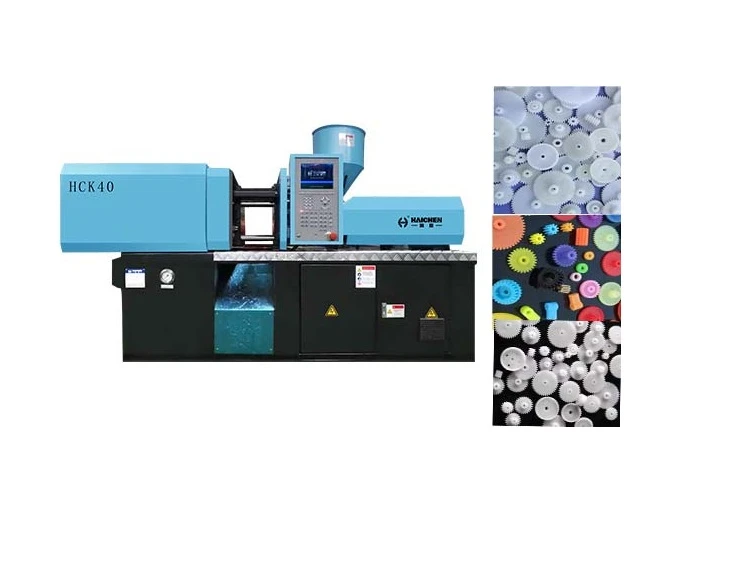
It suits small, light, high-precision plastic parts. Typical products include electronic connectors, medical parts, precision gears, small housings, and toy parts.
How do I choose the shot size for a small plastic injection molding machine?
Keep the shot size between 30% and 80% of the machine’s capacity. Too low causes long residence time and material degradation. Too high causes incomplete filling. First calculate the total weight of the part plus the runner. Then match a machine with the right injection capacity.
Cooling Time Takes Up Most of the Production Cycle
The injection molding cycle has five stages: injection, holding, cooling, mold opening, and part removal. Cooling takes the longest.
Cooling accounts for more than 60% of the injection molding cycle. Some sources show cooling can reach 80% of the production cycle. This means reducing cooling time has the biggest impact on output.
Cooling time depends on part wall thickness, material heat transfer, and mold temperature control. Small parts have thin walls, so they should cool fast. But poor cooling channel design extends cooling time.
Part Removal Speed Determines Actual Output
After the mold opens, the part must come out. Manual removal is slow and can damage parts.
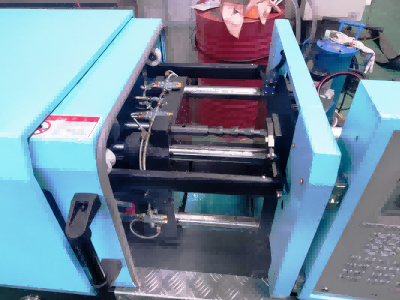
For injection molding small parts, automation level in part removal directly affects actual output. Robot removal keeps cycle time at the set value. It avoids the variation that comes with manual operation.
With a robot, removal time drops from 5-8 seconds by hand to 1.5-3 seconds. Cycle time becomes more stable, and yield improves.
How HAICHEN Small Machines Match Efficiency Needs
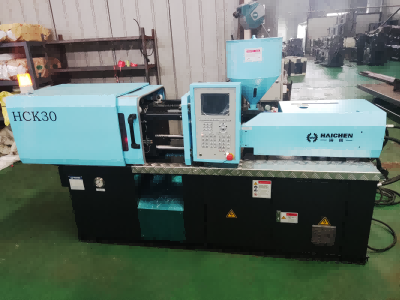
HAICHEN small injection machines support robot and conveyor integration. Our HCK30 to HCK110 small injection molding machine models can fit automatic part removal systems. This reduces manual handling. The machines use servo-hydraulic systems with fast injection response. This shortens fill time.
Precision Requirements for Small Part Molding
Dimensional Tolerance and Repeatability
Small parts usually need tolerances within ±0.01 mm. Some precision parts need ±0.005 mm.
Machine repeatability determines part consistency between batches. Screw stroke control accuracy, injection pressure stability, and mold temperature uniformity all affect repeatability.
For a small injection molding machine, the clamping force adjustment range matters. When molding micro parts around 0.1 grams, clamping force can drop to 5 tons. This avoids mold deformation from too much force.
How Material Fit Affects Precision
Different materials need different precision settings. PP shrinks more. ABS holds dimensions well. PC is clear but sensitive to shear.
If a small machine has only one general-purpose screw, plasticizing becomes uneven when processing multiple materials. Uneven plasticizing causes part weight variation. This affects assembly precision.
HAICHEN small injection machines offer multiple screw diameter options. The HCK40ton small injection molding machine model offers A screw diameter 27mm, B screw diameter 30 screws. These match the precision needs of different part weights.
| 国际标准型号 | INTERNATIONAL CLASS NO | HCK40 | ||
| 注射装置 | INJECTION UNIT | |||
| A | B | |||
| 螺杆直径 | Screw diameter | mm | 27 | 30 |
| 螺杆长径比 | Screw L/D ratio | L/D | 20.7 | 18.7 |
| 理论注射容量 | Shot volume(theoretical) | cm3 | 52 | 64 |
| 注射重量 | Injection weight(ps) | g | 47 | 58 |
| 注射压力 | Injection pressure | Mpa | 207.5 | 168 |
| 注射速率 | Injection rate | g/s | 40 | 50 |
| 螺杆转速 | Screw speed(Max.) | r/min | 200 | |
| 锁模装置 | CLAMPING UNIT | |||
| 锁模力 | Clamping force | kN | 400 | |
| 拉杆间距(宽*高) | Space between tie bars(WxH) | mm | 260×240 | |
| 移模行程 | Opening stroke | mm | 240 | |
| 最小模厚 | Min.Mold height | mm | 100 | |
| 最大模厚 | Max.Mold height | mm | 300 | |
| 顶出行程 | Ejector stroke | mm | 60 | |
| 顶出力 | Ejector force | kN | 25 | |
| 其他 | OTHERS | |||
| 最大油泵压力 | Max.Pump pressure | Mpa | 14 | |
| 油泵马达功率 | Pump motor power | Kw | ||
| 加热功率 | Heating power | Kw | 3 | |
| 外形尺寸(长*宽*高 | Machine dimension(LxWxH) | m | 2.94×1.1×1.65 | |
| 机器重量 | Machine weight | t | 1.8 | |
Payback Period Calculation
What is the payback period for a small injection molding machine?
The payback period depends on order volume. For daily output of 19,200 small parts, the payback period is about 5-7 months. For smaller batch production of 5,000 parts per day, the payback period is about 12-18 months. Servo energy-saving models shorten the payback period.
Equipment Investment and Operating Cost
Take a 60-ton horizontal small injection machine as an example. The machine price is about $13,500. Supporting equipment includes the mold (aluminum mold about $800-$3,000), robot, and conveyor.
Operating costs include electricity, labor, and maintenance. Servo machines save 30%-60% on electricity compared to standard hydraulic machines. Small part production uses about 0.8 kWh per hour on average.
Output and Return Calculation
Take small electronic parts as an example. Part weight is 5 grams. The mold has 4 cavities. Cycle time is 15 seconds including cooling and removal.
Daily output (20 hours of operation):
-
Cycles per hour: 3600 ÷ 15 = 240
-
Daily cycles: 240 × 20 = 4,800
-
Daily output: 4,800 × 4 = 19,200 parts
At a profit of $0.01 per part, daily profit is $192. Monthly profit is about $5,760 (30 days).
After labor, electricity, and material loss, net return is about $3,000-$4,000 per month. Total investment with supporting equipment is about $18,000-$20,000. The payback period is about 5-7 months.
If order volume is smaller and daily output drops to 5,000 parts, the payback period extends to 12-18 months. This matches industry data: small batch production pays back in 12-18 months.
HAICHEN Small Machine ROI Advantage
The HAICHEN HCK40 model costs about 10800usd. It has 400kn clamping force and suits small part batch production. HAICHEN has over ten years of injection machine manufacturing experience. We provide full warranty and remote debugging support. Our servo energy-saving system lowers electricity costs and shortens the payback period.
The efficiency bottleneck in small part injection molding is cooling time and part removal speed. Cooling takes more than 60% of the production cycle. Robot removal stabilizes cycle time and improves yield.
Precision depends on machine repeatability and material fit. A machine with multiple screw options handles different materials.
The payback period varies by output. For daily output of 19,200 small parts, the payback period is about 5-7 months. For smaller batch production, the payback period is 12-18 months.
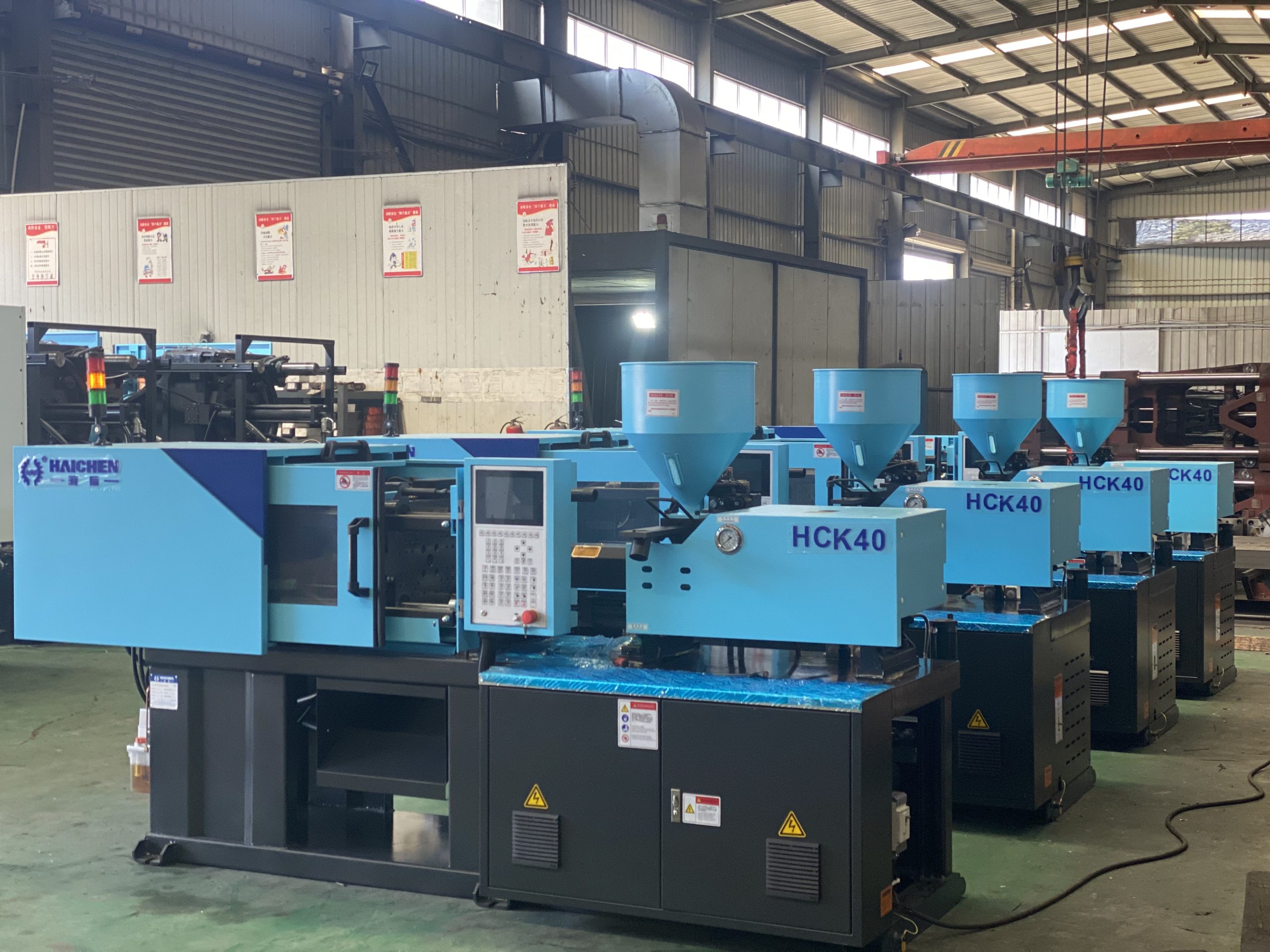
HAICHEN offers small injection machines from 30 tons to 110 tons. They support robot integration and multiple screw configurations. Our servo energy-saving system lowers operating costs and shortens the payback period.
Contact HAICHEN for small injection machine selection advice and ROI calculation. Send your product information, and we will help you match the right small injection molding machine.