
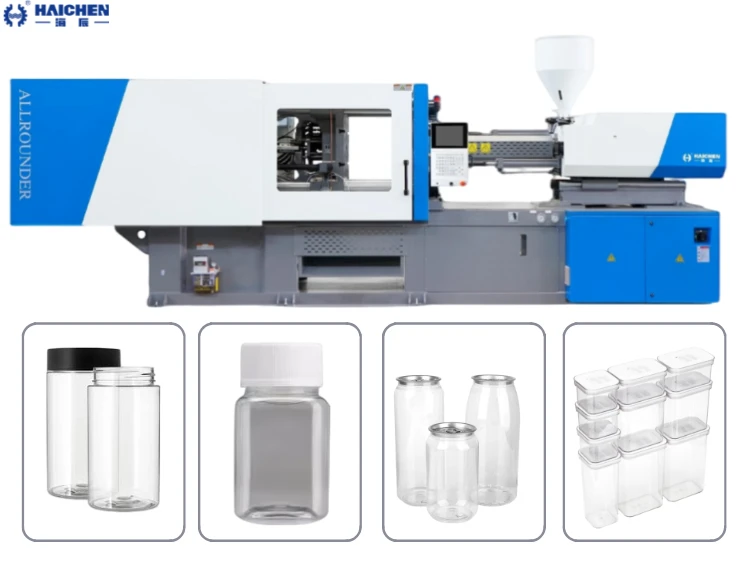
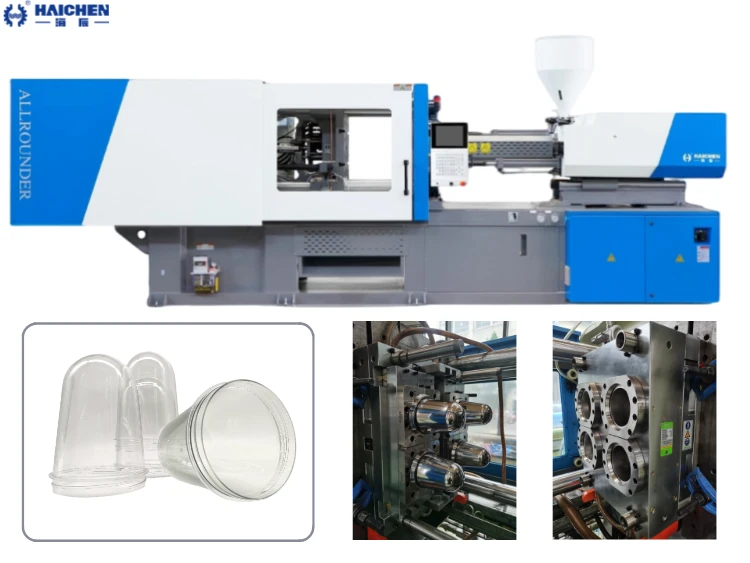
As a jar preform injection molding machine manufacturer, we not only design and manufacture ordinary PET preform injection molding machines, but also develop a series of specialized machines for wide-mouth preforms (Jar Preform). Wide-mouth preforms are used for products such as honey bottles, peanut butter jars, cream jars, food storage containers, and large cosmetic jars. These preforms have large openings (commonly 63mm, 89mm, 110mm, or even 120mm) and thicker walls, making them much more difficult to manufacture than ordinary 28mm preforms—the plastic shrinks unevenly, the large opening is prone to elliptical deformation, and the thick walls require longer cooling times.
We face daily demands from customers for various diameters, weights, and production volumes. Our work is not simply copying standard models, but rather recalculating the clamping force, designing the clamping unit, matching the injection screw, and adjusting the electrical control parameters of our jar preform injection molding machine based on each customer’s product characteristics.
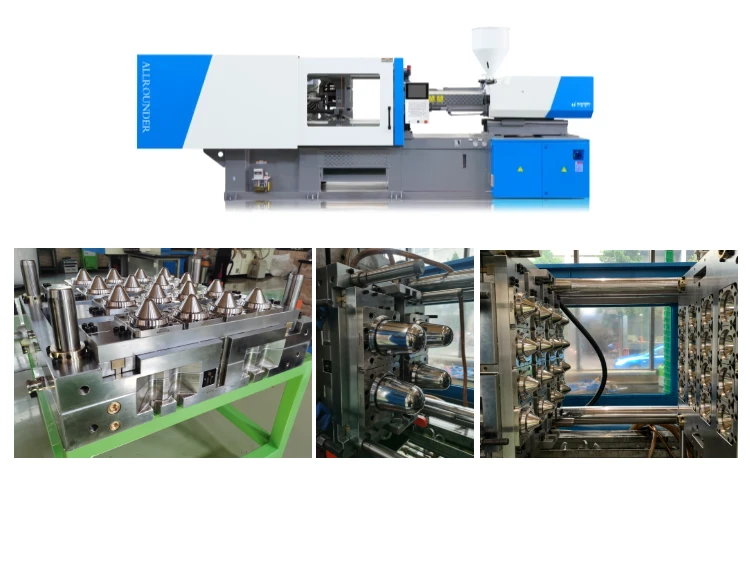
As a machine builder, we face different customer needs every day – different neck sizes, different preform weights, different output targets. We do not simply sell standard models. For each wide‑mouth PET container preform, we recalculate the clamping force, redesign the clamping unit, match the injection screw, and fine‑tune the control parameters. Below we explain how we design each part of our wide‑mouth PET jar preform machine, how the machine works, and what technical features and applications we offer. If you plan to make large‑diameter PET jar preforms, this article will help you understand the thinking behind machine selection.
- How We Design the Main Parts of Our Wide‑Mouth PET Jar Preform Machine
- How Our Wide‑Mouth PET Jar Preform Machine Works
- Technical Features and Applications of Our Wide‑Mouth PET jar preform injection molding machine
How We Design the Main Parts of Our Wide‑Mouth PET Jar Preform Machine – Every Part Targets Large Diameters and Thick Walls
- Clamping Unit
- Injection Unit
- Control Unit
- Auxiliary Units
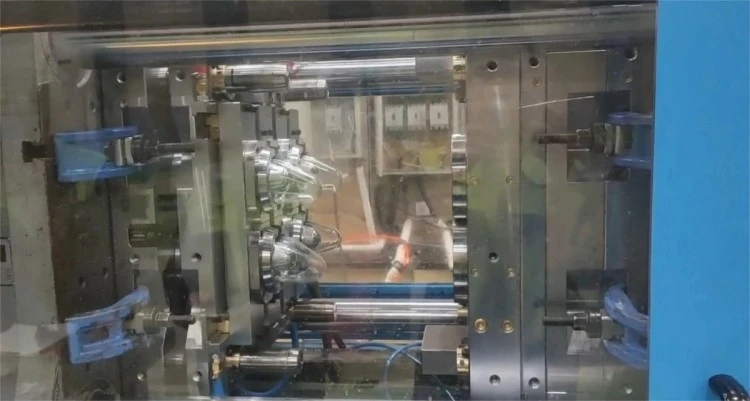
Clamping Unit – We Thicken Platens and Tie‑Bars to Handle Large Projected Areas
Wide‑mouth PET jar preform molds have much larger projected areas than water preform molds. The wide neck also creates side forces that can bend the platens. In our clamping unit design, we do three things:
-
Thicken platens by 15‑20% – for the same tonnage, our HCK‑PET wide‑mouth series uses heavier castings than standard PET machines.
-
Use thicker tie‑bars – this increases bending stiffness. Real test: with an 8‑cavity 110mm PET jar preform mold, we control neck ovality within 0.15mm.
-
Strengthen the toggle linkage – we use a five‑point double toggle for smooth motion and efficient force transfer.
We calculate the final tonnage based on the customer‘s mold drawing using finite element analysis. For example, an 8‑cavity 110mm wide‑mouth PET preform mold has a projected area of about 2500cm². We recommend 460‑600 tons. Below is our jar preform injection molding machine selection table – every row comes from a real order.
| Wide‑Mouth Jar Neck Size | Cavities | Recommended Clamping Force (tons) | Typical Preform Weight | Cycle Time (approx.) | Our Common Models |
|---|---|---|---|---|---|
| 63–83mm | 4–6 cavities | 180–270T | 30–50g | 22–28 seconds | HCK210‑PET ~ HCK280‑PET |
| 89–110mm | 6–8 cavities | 360–460T | 50–80g | 25–30 seconds | HCK360‑PET ~ HCK460‑PET |
| 110–120mm | 8–12 cavities | 460–700T | 70–110g | 28–35 seconds | HCK460‑PET ~ HCK700‑PET |
| 120mm+ | 4–8 cavities | 700–800T | 100–150g | 35–40 seconds | HCK700‑PET ~ HCK800‑PET |
Real case: We supplied an HCK460‑PET to a food packaging company in Jiangsu, China. With an 8‑cavity 110mm PET jar preform mold and external cooling, the cycle time stays at 25 seconds. The line has run for two years.
Injection Unit – We Choose Large Screws and Multi‑Stage Holding Pressure for Thick Walls
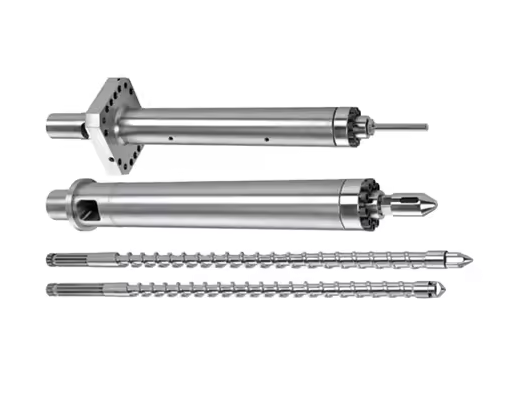
Wide‑mouth PET container preforms need a large shot weight per cavity (up to 100‑150g) and have uneven wall thickness from neck to bottom. We offer several screw diameter options. We also select the screw geometry based on your material (virgin PET, rPET, or hot‑fill grades).
-
Larger screw diameter – on a 460‑ton frame, we use a 55‑65mm PET screw. Plasticizing capacity is 30% higher than a standard machine.
-
Multi‑stage holding pressure – our controller supports 5 independent holding stages. We help you set the curve: high pressure to pack thick sections, medium pressure to maintain, low pressure to seal the gate.
-
Bimetallic wear‑resistant screw – for customers running rPET, we recommend a bimetallic screw. It lasts 2‑3 times longer.
Control Unit – We Develop PET‑Specific Algorithms and Store Many Recipes
Wide‑mouth PET jar preforms are very sensitive to temperature and timing. Our control system is not a generic version; it is optimized for PET:
-
PID temperature control – independent zones for barrel, hot runner, and nozzle, accuracy ±1°C. We run a thermal balance test before every shipment.
-
Multi‑stage injection and holding profiles – we can store up to 128 mold recipes. After a mold change, you recall the recipe and get good parts within 5 minutes.
-
CE12 robot interface – we pre‑configure signal mapping for major robot brands (Wittmann, Sepro, local brands). Plug and play.
Auxiliary Units – We Provide Complete Line Integration, Not Just Scattered Parts
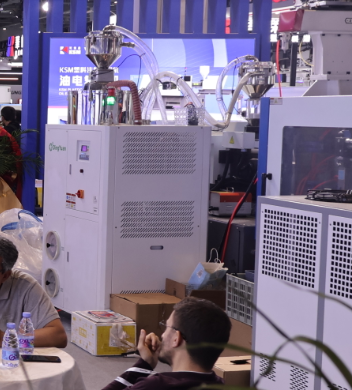
Many customers buy only the machine and then try to match dryers, chillers, and robots themselves. The result is poor coordination. Our approach: when we design the machine, we already include interfaces, timing, and power needs for auxiliary equipment. We work with a few reliable suppliers for dryers, chillers, external cooling stations, and servo robots. We integrate and test the whole line before delivery.
How Our Wide‑Mouth PET Jar Preform Machine Works – From Pellet to Preform Step by Step
- Drying and Feeding
- Melting and Plasticizing
- Injection and Holding Pressure
- Cooling Inside the Mold
- Mold Opening and Jar preform Removal
- Post‑Processing and Packing
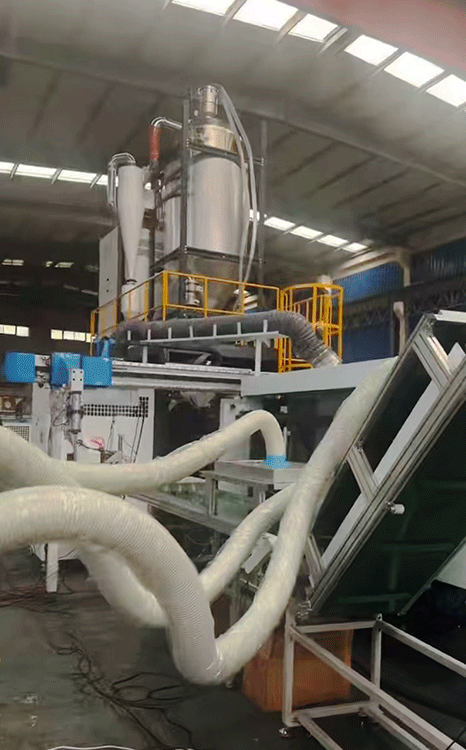
Drying and Feeding
PET pellets go into the dehumidifying dryer we supply. After 4‑6 hours, the dew point drops below ‑40°C. An auto loader moves the dry pellets to the machine hopper without touching humid air. Our control system includes a “hopper low” alarm to prevent empty running.
Melting and Plasticizing
The large screw rotates and pushes the material forward. Heaters raise the temperature to about 280°C. Our screw design – with the right compression ratio and mixing head – gives even melt without degrading the material. We set back pressure between 5‑10 bar.
Injection and Holding Pressure
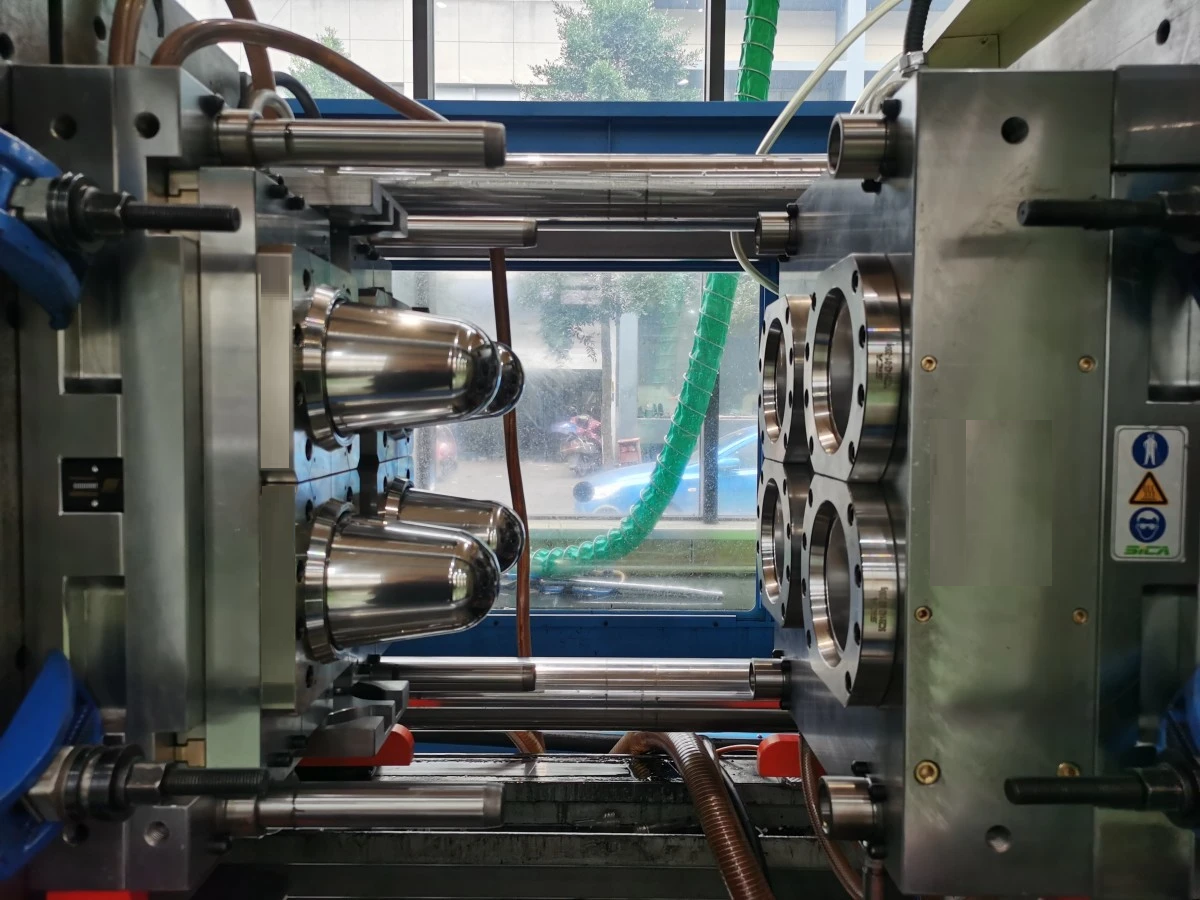
The screw moves forward. Melt flows through valve gates of the hot runner into the multi‑cavity mold (typically 4‑8 cavities). We set the injection speed profile based on mold flow analysis: slow through the gate, fast to fill, then slow to prevent overshoot. After filling, we switch to multi‑stage holding pressure. A typical profile we help customers tune: first stage 80 bar for 1.5 seconds, second stage 60 bar for 1.0 second, third stage 40 bar for 0.5 second.
Cooling Inside the Mold
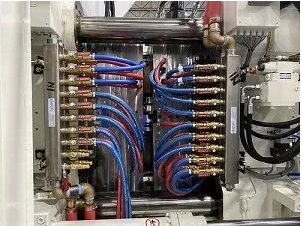
Chilled water at 8‑12°C runs through the mold’s cooling channels. Our machine design reserves enough cooling water flow capacity to avoid hot spots. In‑mold cooling takes about 50‑60% of the cycle. We often recommend mold flow analysis to optimize the cooling layout.
Mold Opening and Jar preform Removal
After the mold opens, our servo robot reaches in and takes out all preforms at once. Air scissors cut the sprues automatically. The robot then moves the wide‑mouth PET jar preforms to an external cooling station (cooling sleeves or pins). They cool there for another 5‑10 seconds. Our control system and the robot sync through the CE12 interface, so the robot never hits the mold.
Post‑Processing and Packing
After external cooling, the robot or a conveyor moves the PET jar preforms to a packing area. Workers or an automatic packer put them into boxes. The machine, robot, chiller, and dryer all work together continuously.
Technical Features and Applications of Our Wide‑Mouth PET jar preform injection molding machine
- High‑Rigidity Clamping for Large Diameters
- Multi‑Stage Holding Pressure + External Cooling Solve Thick‑Wall Problems
- Low Cavity Count but High Stability, Good for Frequent Mold Changes
- Which Products Fit Our Wide‑Mouth PET Machine Best
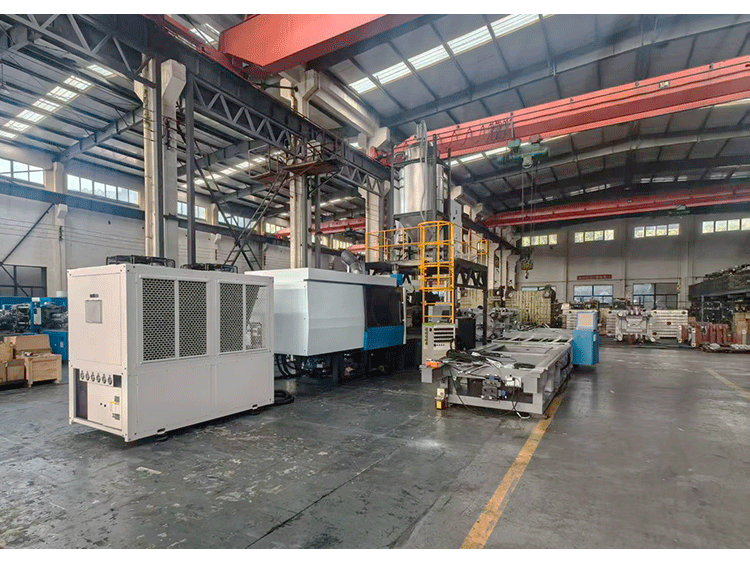
High‑Rigidity Clamping for Large Diameters
We use thicker platens, thicker tie‑bars, and a wider toggle linkage within our jar preform injection molding machine. Before each machine leaves our factory, we check platen parallelism with a laser interferometer. The error stays below 0.05mm/m. This is our basic quality control as a manufacturer.
Multi‑Stage Holding Pressure + External Cooling Solve Thick‑Wall Problems
We have built a process database from over 100 wide‑mouth PET jar preform cases. For a 110mm jar preform with 6mm wall thickness, our standard configuration keeps sink marks below 0.1mm deep and cycle time at 25 seconds (45 seconds without external cooling). We design the external cooling station ourselves and integrate it with the robot – no extra work for the customer.
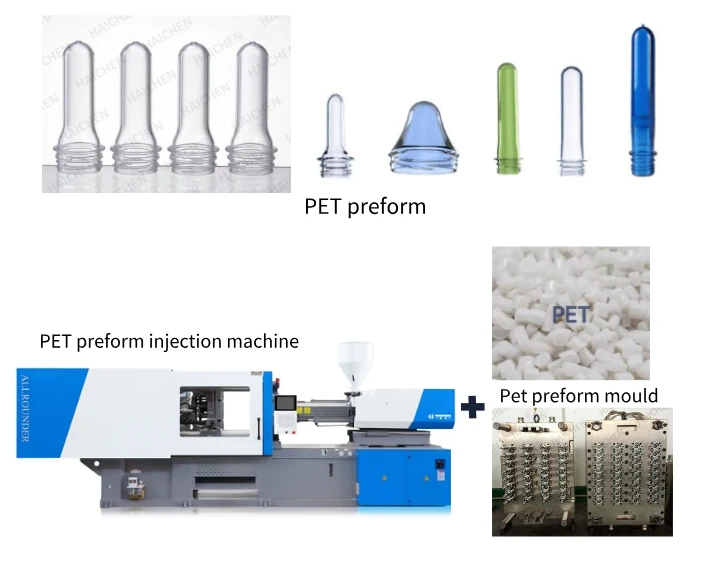
Low Cavity Count but High Stability, Good for Frequent Mold Changes
Wide‑mouth PET container preform molds usually run 4‑12 cavities – much fewer than water preform molds. Customers often need to produce different neck sizes and weights. Our control system supports fast recipe recall. After a mold change, you get good parts within 5 minutes. Our wide platens also make mold changes easier.
Applications – Which Products Fit Our Wide‑Mouth PET Machine Best
-
Food jars – honey, peanut butter, jam, cream. Need good sealing and clear appearance.
-
Home storage canisters – dry food, snacks, candy. Large openings make them easy to use.
-
Cosmetic pots – face cream, body lotion. Need even wall thickness and nice look.
-
Small industrial containers – chemicals, paint (small packs). Need chemical resistance.
Our wide‑mouth PET jar preform injection molding machines have been exported to Southeast Asia, the Middle East, South America, and Africa. We serve over 100 food and cosmetic packaging companies. If you have a specific PET jar preform need – tell us your neck size, preform weight, target output, and material – we will send you a free machine proposal.
Common Questions – Let’s Discuss
Q1: As a manufacturer, can you customize the machine for my special Jar prodcutiion needs?
Yes. We do not just sell standard models. If you need different tie‑bar spacing, taller mold height, or extra hydraulic core‑pull interfaces, we can modify the casting and design. Our engineers work with you one‑on‑one.
Q2: How much more expensive is your wide‑mouth PET machine than a standard PET machine?
Because we use heavier castings, larger screws, and stronger hydraulics, the price is typically 15‑25% higher. But the efficiency gain and lower scrap rate let most customers recover the difference within one year.
Q3: Do I really need external cooling for wide‑mouth PET jar preforms?
We strongly recommend it. Without external cooling, cycle time increases by 30‑50%, raising your cost per part. Even if you do not buy it at the start, we reserve the interfaces and program space for future addition.
Q4: Can your machine run rPET (recycled material)?
Yes. We will supply a bimetallic wear‑resistant screw and add viscosity compensation logic in the control system. We can also run a trial with your material in our factory to find the best parameters.
Q5: Do you offer whole‑plant planning besides machines?
Yes. We can help you plan the workshop layout, water and power circuits, compressed air, and material conveying system. Our team has turnkey integration experience.
Leave your comments below. Tell us about your wide‑mouth PET jar preform production needs or questions. You can also contact us directly with your neck size, preform weight, daily output, and material – we will give you a free machine configuration plan.
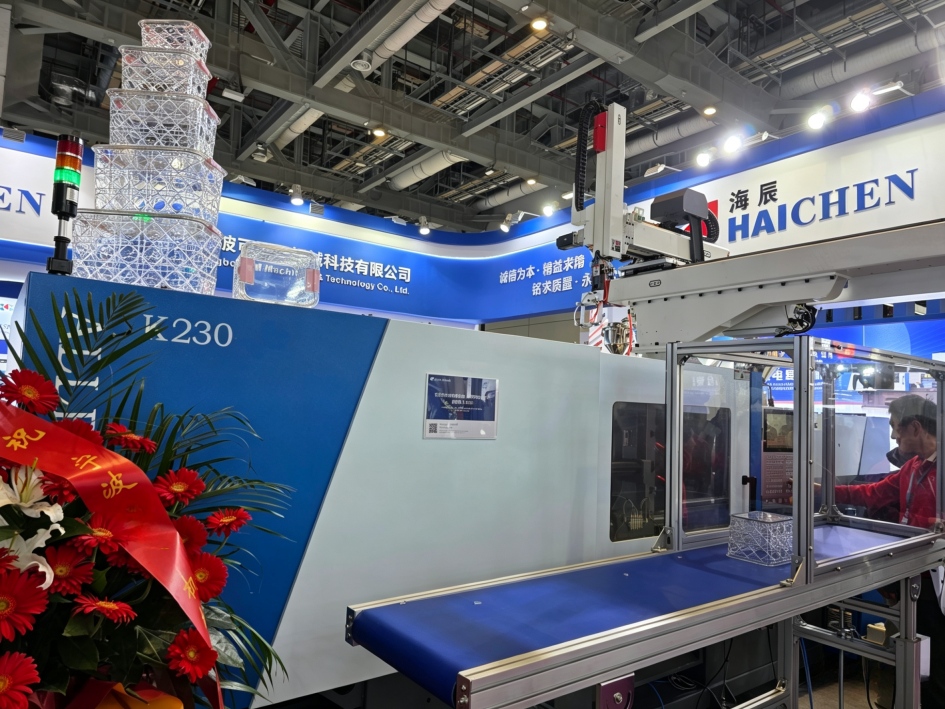
Haichen Machinery – We design, build, and commission wide‑mouth PET jar preform injection molding machines. 20+ years of experience, one‑stop service.


