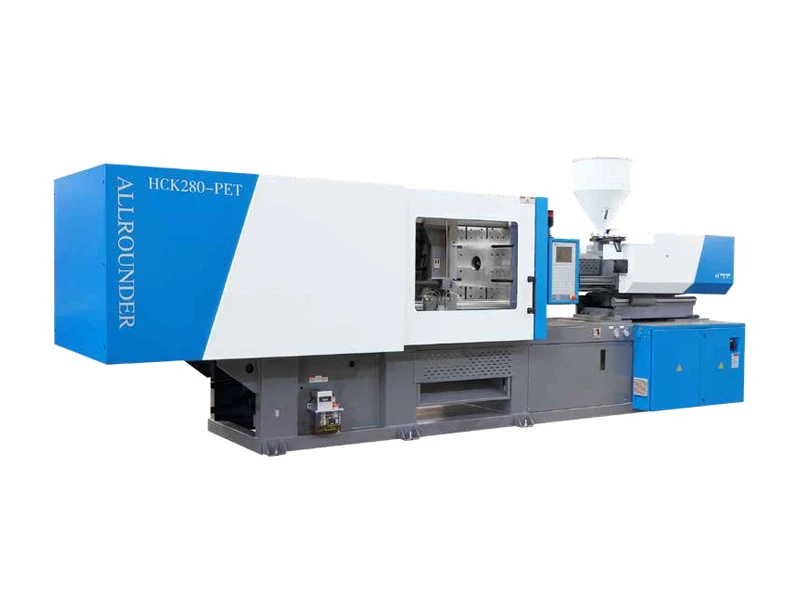
A plastic basin production line usually needs more than an injection molding machine.
A basic setup includes the machine, basin mold, cooling system, and material handling equipment. Depending on production volume, a factory may also add robots, conveyors, and automatic packing systems.
The total investment depends on the basin design, production target, mold, machine size, automation level, and local installation conditions.
This guide explains the main equipment, cost factors, and planning points for a plastic basin production line.
What Equipment Does a Plastic Basin Production Line Need?
A typical production line may include:
- Injection molding machine
- Plastic basin mold
- Material loader
- Dryer when required
- Water chiller
- Mold temperature controller when required
- Plastic crusher
- Robot or take-out system
- Conveyor
- Packing equipment
A small factory does not always need all of these machines. For example, operators can remove and pack the basins manually when production volume is low.
For higher output, automatic material loading, product removal, and conveying can reduce manual work.
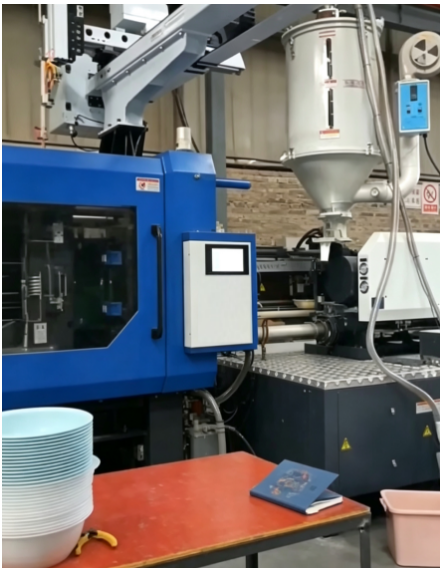
How to Select the Injection Molding Machine
The machine should match the actual basin and mold.
The main points are:
- Clamping force
- Shot capacity
- Screw size
- Mold dimensions
- Tie-bar spacing
- Production cycle
A basin has a wide projected area, so product weight alone cannot determine machine tonnage. The machine should also provide enough injection capacity for the product and runner.
A preliminary clamping force calculation can use:
Required clamping force ≈ projected area × cavity pressure × safety factor
For a more accurate selection, the manufacturer should check the basin drawing, product weight, material, cavity number, mold size, and production target.
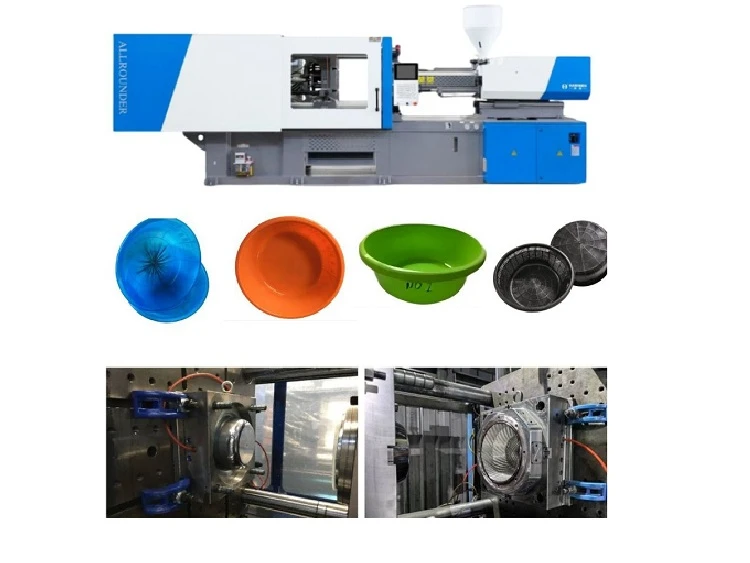
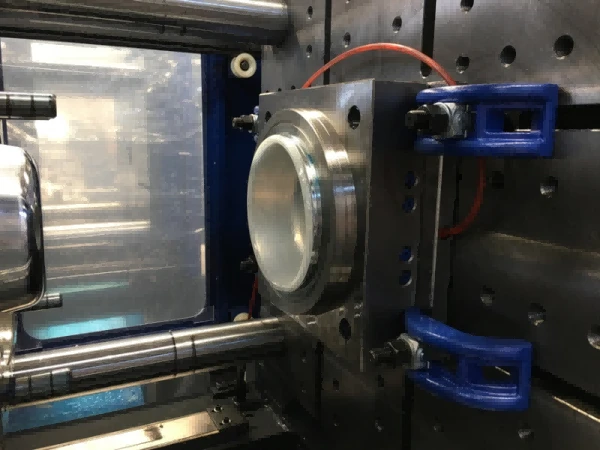
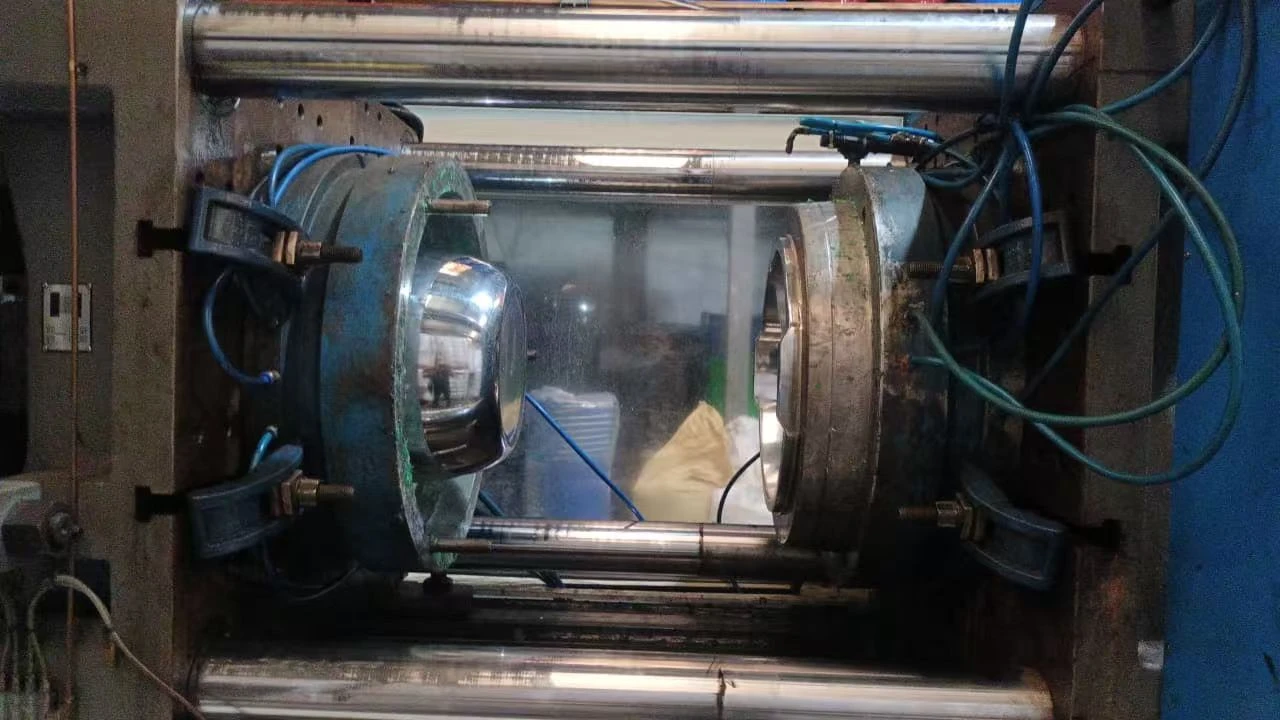
How Does the Mold Affect the Production Line?
The mold is one of the main costs in a basin production project.
The final mold cost depends on:
- Product size
- Cavity number
- Mold steel
- Runner system
- Gate design
- Cooling system
- Surface requirements
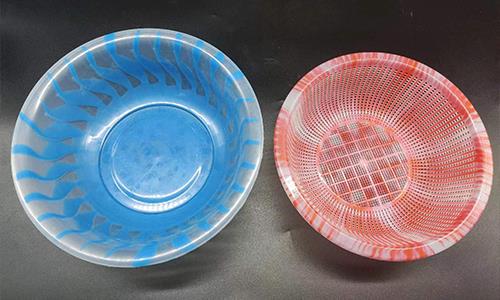
Large household basins often use a single-cavity mold because the product and mold can be large.
A multi-cavity mold can increase output, but it also increases mold cost and shot requirements. Therefore, more cavities are not always the best option.
The cooling system also matters. Good mold cooling can help control cycle time and product quality.
What Supporting Equipment Is Needed?
Cooling System
A chiller provides cooling water for the mold and machine system when required. The required cooling capacity depends on the material, product weight, cycle time, mold design, and local conditions.
Material Handling
A loader can transfer plastic pellets from a storage container to the machine hopper.
A dryer may be required depending on the material and processing conditions.
Product Handling
Operators can remove the basins manually for smaller production runs.
For higher-volume production, a robot and conveyor can automate product removal and transfer.
Recycling
A plastic crusher can process suitable production scrap for later use when the material and product requirements allow it.
How Much Does a Plastic Basin Production Line Cost?
There is no fixed price for every production line.
The main investment usually includes:
| Cost Item | What Affects the Cost |
|---|---|
| Injection molding machine | Machine size and configuration |
| Basin mold | Size, cavities, steel and mold structure |
| Cooling equipment | Required cooling capacity |
| Material handling | Loader, dryer and related equipment |
| Automation | Robot, conveyor and packing system |
| Installation | Electrical, water and air connections |
| Logistics | Packing, shipping and local delivery |
The machine is an important part of the investment, but it is not the only cost.
For this reason, a complete project quotation should consider the machine, mold, supporting equipment, and required production capacity together.
What Affects the Total Production Cost?
The initial investment is only part of the cost.
Production cost also depends on:
Material Consumption
Product weight, runner waste, recycled material ratio, and material price all affect material cost.
Electricity
Machine size, cycle time, heating, cooling, and auxiliary equipment affect power consumption.
Labor
Manual product removal and packing require more operators than an automated line.
Production Volume
A high-volume project may justify a larger mold cavity count or more automation because the equipment cost can be spread across more products.
Therefore, the cheapest equipment is not always the lowest-cost production solution.
How Many Basins Can a Production Line Make?
Production capacity mainly depends on cycle time, cavity number, and machine utilization.
A simple planning formula is:
Daily output = 86,400 ÷ cycle time × cavity number × utilization rate
For example, a single-cavity mold with a 20-second cycle and 85% utilization gives:
86,400 ÷ 20 × 1 × 85% = 3,672 pieces/day
This is a planning figure rather than guaranteed output.
Actual production can be lower because of mold adjustment, inspection, material loading, maintenance, and other downtime.
If a factory needs higher output, it can consider a shorter cycle, more cavities, additional machines, or a higher level of automation.
How to Plan a Plastic Basin Production Line
Start with the production target instead of buying the machine first.
Prepare these basic details:
- Basin drawing or product photo
- Product dimensions
- Product weight
- Material
- Required daily output
- Cavity number
- Mold dimensions
- Target cycle time
- Desired automation level
- Destination country
Then the equipment can be matched to the project.
For example:
Basin → Mold → Injection molding machine → Cooling → Product removal → Inspection → Packing
A small project may use manual removal and packing.
A larger project can add automatic loading, robotic product removal, conveyors, and other equipment.
This approach helps avoid buying equipment with too little capacity or paying for unnecessary automation.
What Information Is Needed for a Complete Quote?
A supplier normally needs the basin product information and production target before giving a complete quotation.
The most useful information includes:
- Product drawing
- Product weight
- Material and grade
- Required quantity
- Cavity number
- Existing mold information
- Mold dimensions, if available
- Desired automation level
- Destination port or country
If you already have a mold, its drawing and dimensions are especially useful.
With this information, the supplier can evaluate the machine, mold, cooling system, and other equipment as one production solution.
FAQ
What machines are needed to make plastic basins?
A basic line needs an injection molding machine and basin mold. Depending on the production volume, it may also need a loader, chiller, dryer, crusher, robot, conveyor, and packing equipment.
How much does a plastic basin production line cost?
There is no standard price. The total cost depends on the machine, mold, cooling equipment, automation, installation, and logistics.
What material is commonly used for plastic basins?
PP is widely used for household plastic basins. Other materials may also be used depending on product requirements.
How many basins can one machine make per day?
Output depends mainly on cycle time, cavity number, and machine utilization. The basic formula is:
86,400 ÷ cycle time × cavity number × utilization rate
Actual output depends on production conditions.
Can one machine produce different basin sizes?
Yes, provided that the different molds fit the machine and the machine has enough clamping force, injection capacity, mold space, and ejection range.