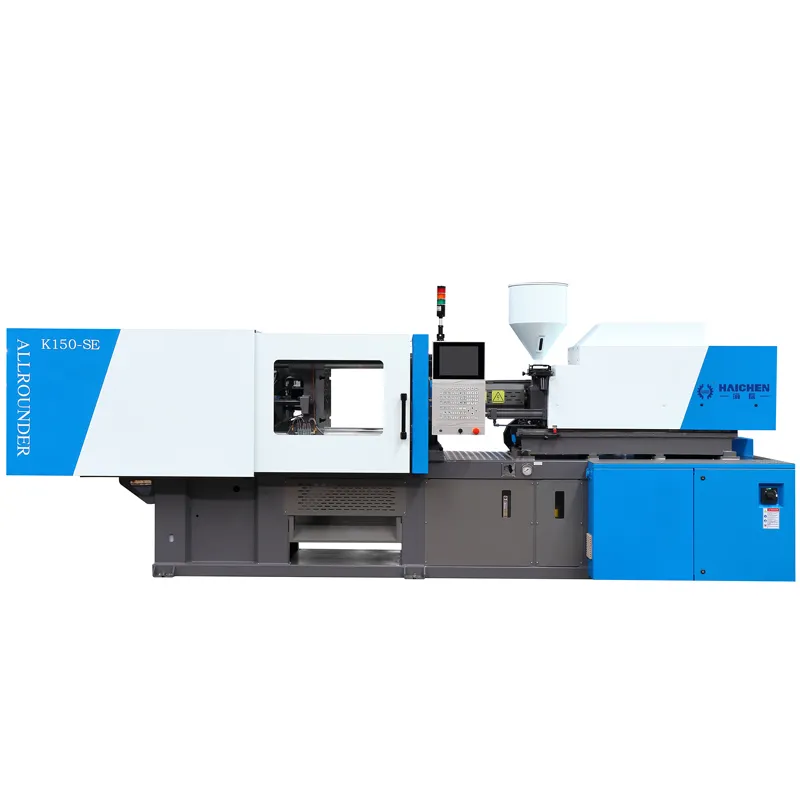
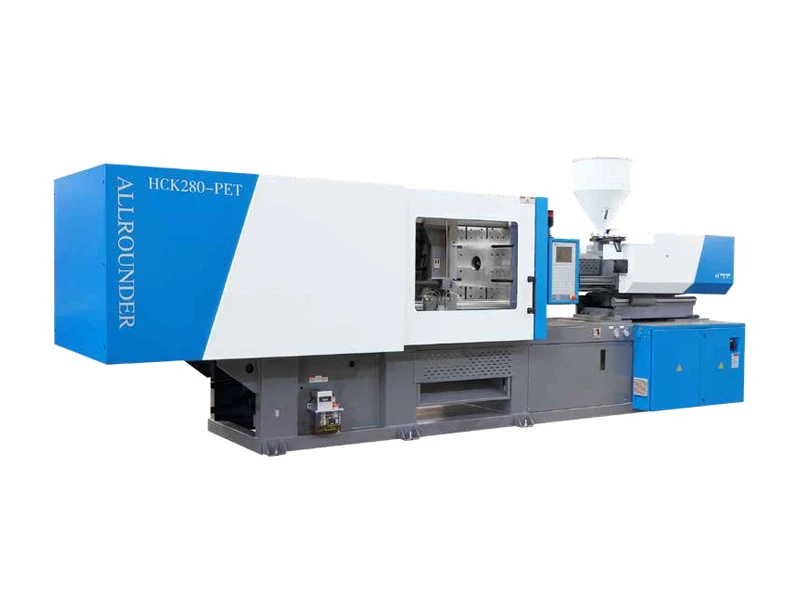
Choosing a plastic bowl injection molding machine is not simply a matter of choosing a machine with higher tonnage.
The bowl size, product weight, cavity number, mold design, material, cycle time, and runner system all affect the machine configuration.
For example, a small plastic bowl may weigh only about 13 g, but the required machine still depends on the mold layout and production target.
In our experience, 230T to 310T injection molding machines can be suitable for many small plastic bowl projects.
This guide explains how to evaluate the machine, mold, and production conditions for plastic bowl injection molding.
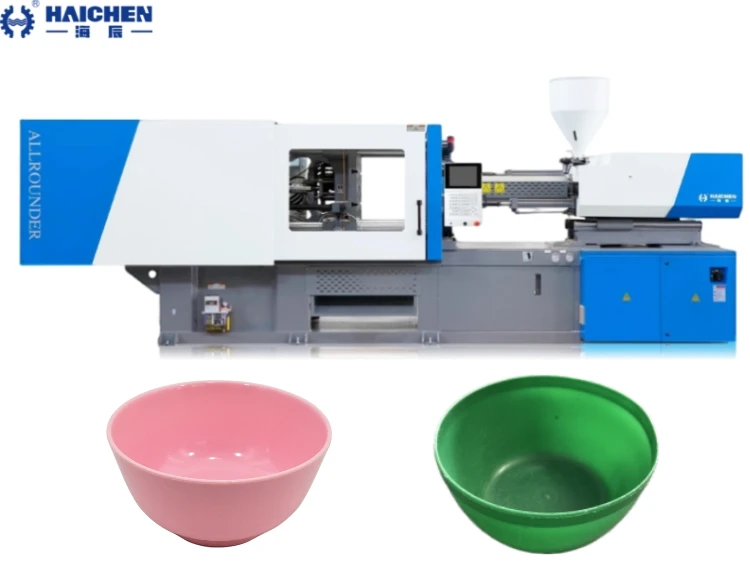
What Plastic Bowls Can Be Made by Injection Molding?
Plastic bowls can serve different purposes. Common applications include food bowls, disposable bowls, household bowls, and small containers.
For injection molding projects, the product design can vary in diameter, depth, wall thickness, weight, and shape. Therefore, two bowls that look similar may still require different mold and machine configurations.
A typical small bowl project may have these specifications:
- Product: Plastic bowl
- Application: Food bowl
- Material: PP or PS
- Product weight: About 13 g
- Product size: About 112 × 50 × 48 mm
- Mold cavities: 1,2, or 4
- Typical machine range: 230T–310T
- Cycle time: About 20 seconds
- Runner: Hot runner or cold runner
- Mold steel: H13 or another customized option
These values provide a useful production reference. However, they should not become a fixed machine-selection rule because every bowl mold has different requirements.
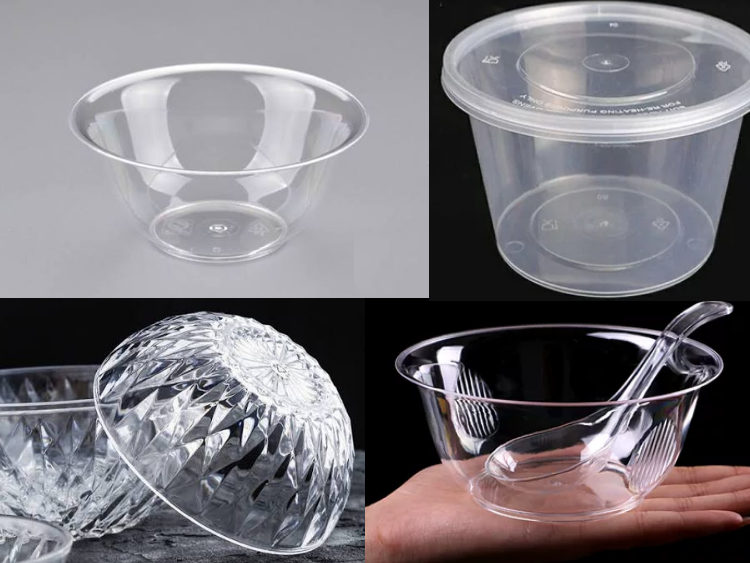
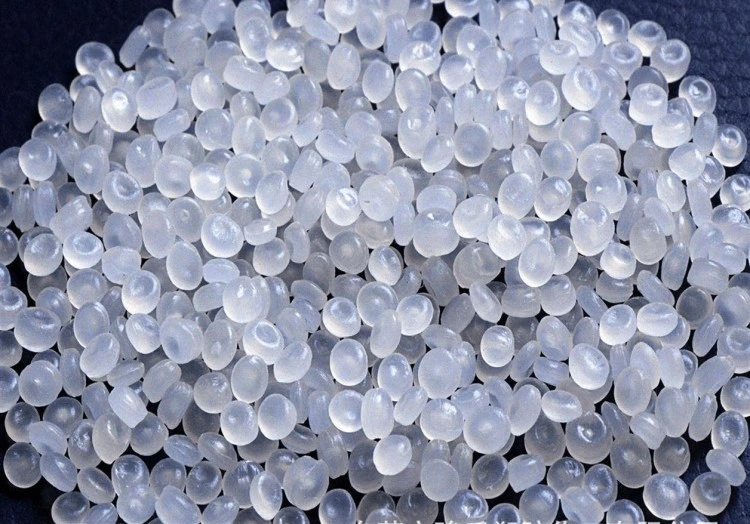
Why Are PP and PS Common Materials for Plastic Bowls?
PP and PS can both be used for plastic bowl production, but they behave differently during injection molding.
PP offers good toughness and is widely used for many plastic food containers and household products. Haichen’s existing bowl and basin production references also include PP applications.
PS can provide a different appearance and processing behavior. Therefore, the material should be confirmed before selecting the screw, barrel settings, mold design, and processing parameters.
For food-related products, the manufacturer should also confirm the required material grade and applicable food-contact requirements for the target market.
The word “PP” alone does not automatically mean that a material meets every food-contact regulation.
What Makes Plastic Bowl Injection Molding Different?
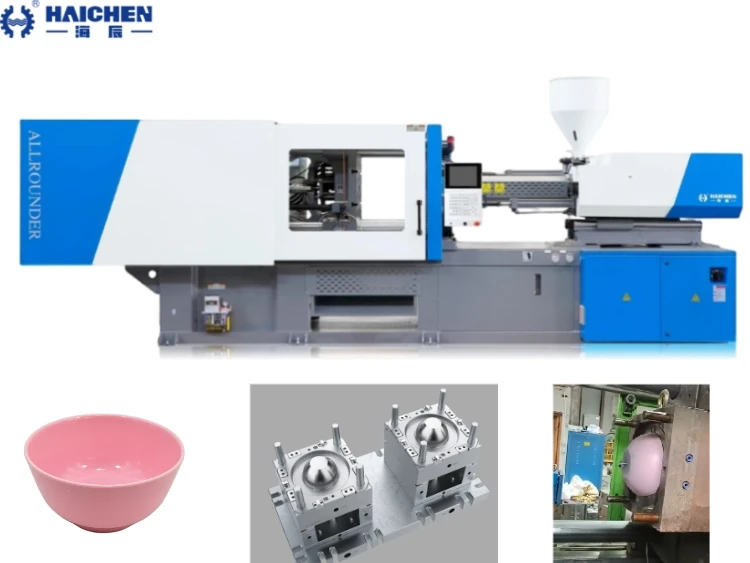
A plastic bowl has a relatively thin wall and a curved cavity. As a result, filling, cooling, and demolding need to work together.
The machine should provide stable injection control, while the mold should provide balanced filling and cooling.
For a small bowl weighing around 13 g, the product weight itself is not enough to determine the machine size.
The following factors matter:
- Bowl diameter and depth
- Wall thickness
- Projected area
- Product weight
- Number of cavities
- Runner weight
- Injection speed
- Required cycle time
- Mold dimensions
- Mold opening requirements
- Ejection method
Therefore, we recommend selecting the machine after checking the complete product and mold design.
How Does Cavity Number Affect Bowl Production?
Cavity number directly affects production capacity.
For example, suppose the cycle time is 20 seconds:
| Mold | Theoretical Output |
|---|---|
| 1 cavity | 180 pcs/hour |
| 2 cavities | 360 pcs/hour |
| 4 cavities | 720 pcs/hour |
The calculation is:
Output per hour = 3,600 ÷ cycle time × cavity number
These numbers represent theoretical output. Actual production will usually be lower because of machine stops, material loading, quality inspection, mold adjustment, and other production factors.
Increasing the cavity number can improve output, but it also increases mold complexity and may change the required injection and clamping performance.
That is why a 4-cavity mold should not be selected only because it produces more pieces. The complete mold and machine configuration must support the target cycle.
How Does the Bowl Mold Affect Machine Selection?
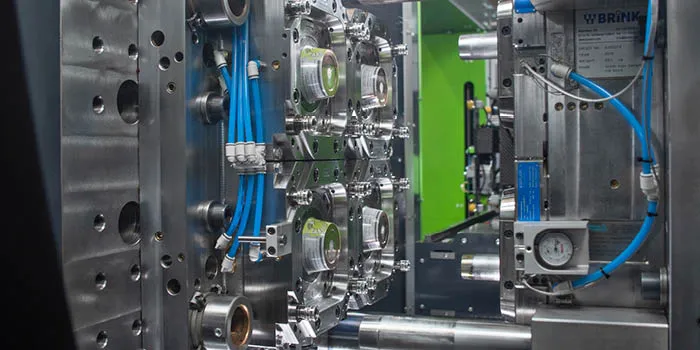
The mold is one of the most important parts of a plastic bowl production project.
For the machine, we normally check:
- Mold width and height
- Tie-bar spacing
- Platen dimensions
- Mold weight
- Mold opening stroke
- Ejection stroke
- Required clamping force
- Injection unit capacity
The mold also affects the filling and cooling process.
For bowl production, the cooling channels should provide reasonably balanced cooling around the cavity. Uneven cooling can contribute to deformation or dimensional differences after ejection.
The mold steel can also be customized according to the project. H13 can be used for some bowl mold applications, while other steel grades may also be selected according to production volume, mold structure, surface requirements, and customer requirements.
Haichen’s existing plastic product cases show that mold material and mold configuration vary according to the actual product. For example, its published plastic bowl reference uses a cold runner, one cavity, 718 steel, and a 410 × 410 × 300 mm mold for a 37 g bowl.
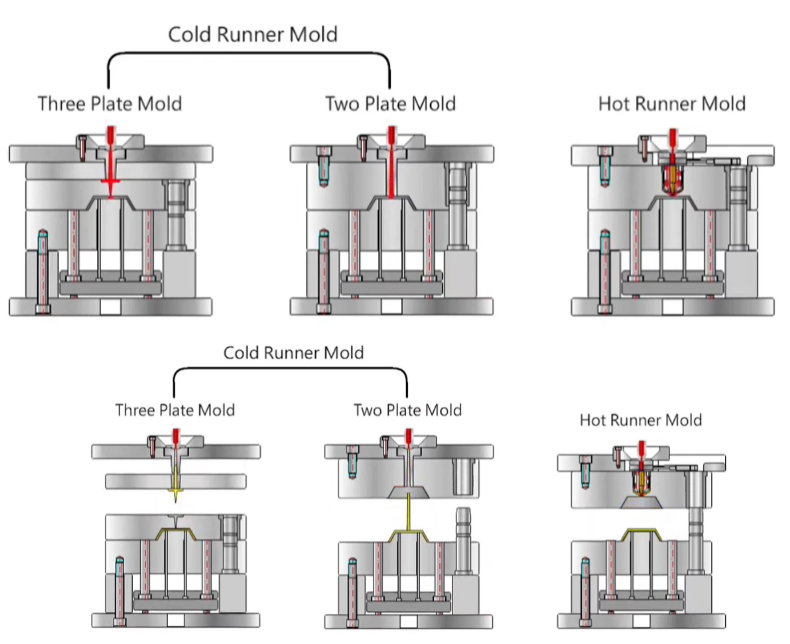
Hot Runner or Cold Runner for Plastic Bowl Molds?
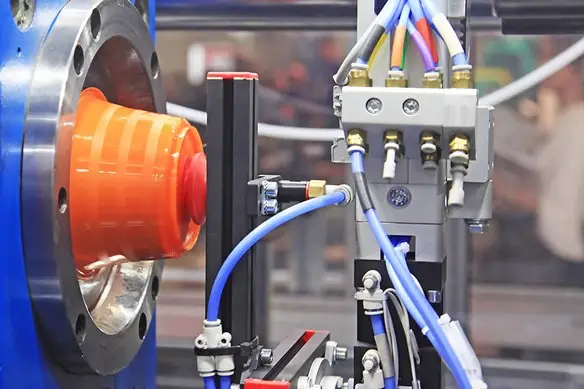
Both hot runner and cold runner systems can be used for plastic bowl production.
Cold Runner
A cold runner mold is relatively straightforward and can be suitable for many bowl applications.
However, the runner creates additional material that must be separated or handled after molding. For high-volume production, this can become an important consideration.
Hot Runner
A hot runner system can reduce runner waste because the material remains in the hot runner system instead of forming a conventional cold runner.
However, the mold structure becomes more complex, and the hot runner system requires appropriate temperature control and maintenance.
Therefore, neither system should be treated as the universal choice.
The better option depends on:
- Bowl weight
- Cavity number
- Material
- Production volume
- Gate location
- Mold design
- Required surface appearance
- Material waste requirements
The final runner design should come from the actual bowl mold rather than from a general rule.
What Injection Molding Machine Is Suitable for Plastic Bowls?
For the small plastic bowl specifications described above, Haichen commonly considers 230T to 310T injection molding machines.
However, the machine model should be confirmed after reviewing the actual mold.
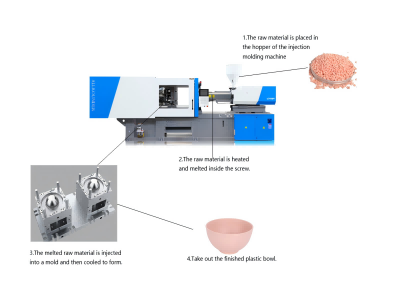
The basic selection process is:
Product → Material → Cavity number → Mold → Injection requirements → Clamping requirements → Machine
This approach is more reliable than choosing a machine from product weight alone.
For example, a 13 g bowl with one cavity and a 13 g bowl with four cavities have very different production requirements.
The total shot also includes the runner system when applicable.
The machine must therefore have enough injection capacity for the complete shot while also providing suitable injection performance for the bowl geometry.
How Can You Calculate Plastic Bowl Production Capacity?
Cycle time is another important factor.
Your typical reference is around 20 seconds per cycle.
If one cavity produces one bowl during each cycle, the theoretical output is:
3,600 ÷ 20 = 180 bowls per hour
For a 2-cavity mold:
180 × 2 = 360 bowls per hour
For a 4-cavity mold:
180 × 4 = 720 bowls per hour
This calculation gives the theoretical production rate. The actual daily output depends on working hours, machine utilization, quality requirements, material changes, mold maintenance, and other factory conditions.
For this reason, when a customer asks, “How many bowls can this machine make per day?”, we first need to know the cavity number and cycle time.
Why Can Transparent Plastic Bowls Turn Yellow?
Yellowing is one of the important problems to consider when producing transparent plastic bowls.
When a transparent product changes from clear to yellow, the cause may not come from one single setting. Possible factors include:
Excessive Material Temperature
If the material stays at an unsuitable temperature for too long, thermal degradation may occur. This can affect the appearance of transparent products.
Long Residence Time
A small bowl may have a small shot weight compared with the plasticizing capacity of the machine.
If the machine uses an injection unit that is too large for the actual shot, the material may stay in the barrel for too long.
Therefore, the injection unit should match the actual shot size as closely as practical.
Excessive Shear
High screw speed, excessive back pressure, or unsuitable plasticizing conditions can increase shear.
For transparent products, stable plasticizing is particularly important because small changes in material condition can become visible on the finished surface.
Material Condition
The raw material itself can also affect color.
Manufacturers should check:
- Material grade
- Storage condition
- Drying requirements
- Recycled material content
- Contamination
- Material changeover
- Residence time in the barrel
Therefore, when a transparent bowl becomes yellow, we recommend checking the material + temperature + residence time + screw settings + barrel condition together instead of changing only one parameter.
How Can Manufacturers Improve Transparent Bowl Quality?
For transparent plastic bowls, the production team should focus on process stability.
First, use the correct material grade for the product.
Next, keep the barrel temperature within the suitable processing range recommended for that material. Avoid unnecessary overheating.
Then, check the actual shot size against the injection unit capacity. A very small shot compared with the machine’s maximum shot can increase residence time.
After that, review screw speed and back pressure. The goal is stable plasticizing rather than simply faster plasticizing.
Finally, inspect the barrel and screw if the yellowing problem continues after process adjustments.
This approach helps separate a machine-setting problem from a material or equipment-condition problem.
What Auxiliary Equipment Does Plastic Bowl Production Need?
The injection molding machine and mold form the core of the production system. Depending on the factory, other equipment may also be required.
Typical auxiliary equipment includes:
- Material loader
- Hopper dryer
- Chiller
- Mold temperature controller
- Crusher or granulator
- Robot or automatic take-out system
- Conveyor
- Packing equipment
Not every bowl factory needs all of these machines.
For example, a small production project may use manual product removal and packing. A high-volume project may use automatic take-out and conveying equipment.
Haichen’s existing plastic basin production information also identifies loaders, dryers, coolers, and crushers as common supporting equipment for plastic product production.
What Information Should You Send Before Choosing a Bowl Machine?
To recommend a suitable plastic bowl injection molding machine, we normally need:
- Bowl drawing or product sample
- Product dimensions
- Product weight
- Plastic material
- Cavity number
- Target production quantity
- Preferred cycle time, if known
- Hot runner or cold runner requirement
- Mold dimensions, if the mold already exists
- Mold weight
- Factory power supply
- Required automation level
If you already have a mold, please also provide the mold drawing or mold specification.
With this information, the machine selection can be based on the actual project instead of a general tonnage recommendation.
Haichen Plastic Bowl Injection Molding Solution
Haichen can evaluate the bowl, mold, and machine as one production project.
For small plastic bowl applications, the machine selection can be considered within the 230T–310T range, while the final model depends on the actual cavity number, mold, shot, and production requirements.
We can also customize the mold configuration, including cavity number, runner system, and mold steel according to the project.
The main goal is not simply to choose a larger injection molding machine. Instead, the machine and mold should work together to achieve stable filling, cooling, demolding, cycle time, and product quality.
FAQ
What machine is used to make plastic bowls?
Plastic bowls are commonly produced with an injection molding machine and a dedicated bowl mold. For the small bowl applications discussed in this guide, 230T–310T machines can be considered, depending on the actual mold and production requirements.
Can PP be used for plastic food bowls?
Yes, PP is commonly used for many plastic food containers and bowls. However, the specific PP grade should match the product’s intended application and applicable food-contact requirements.
Can PS be used for plastic bowls?
Yes. PS can also be used for certain bowl applications. The machine and processing conditions should be selected according to the specific PS grade.
Should I use a hot runner or cold runner?
Both systems can work. The choice depends on the bowl design, cavity number, material, production volume, mold design, and material-waste requirements.
What is the typical cycle time for the bowl example?
The production reference provided for this type of bowl is about 20 seconds per cycle. Actual cycle time depends on the product, mold, material, cooling system, and machine settings.
Can the mold use H13 steel?
Yes. H13 can be used for some plastic bowl molds. Other mold steels can also be customized according to the project requirements.