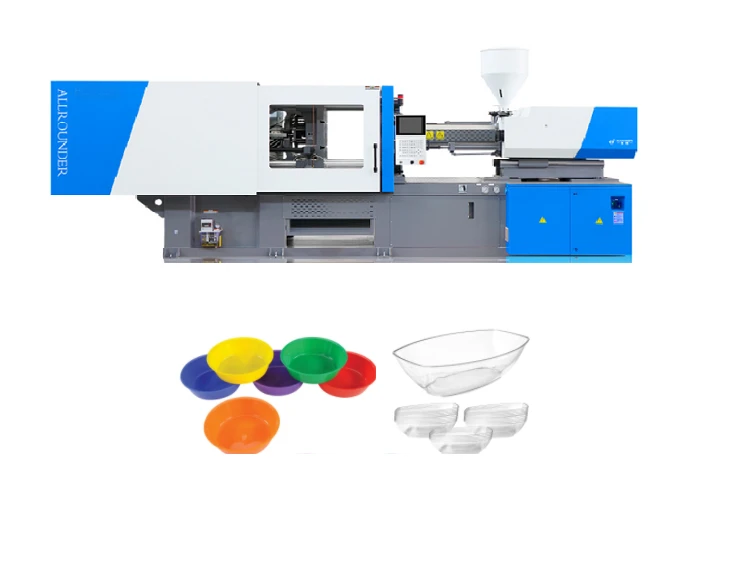
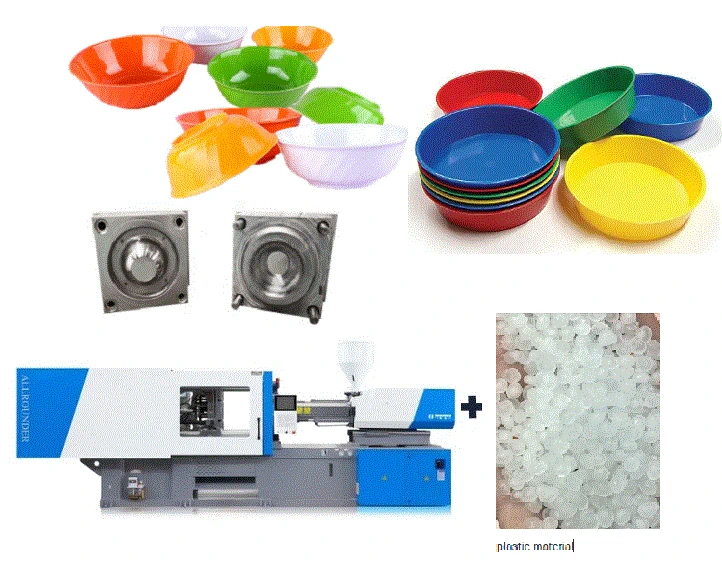
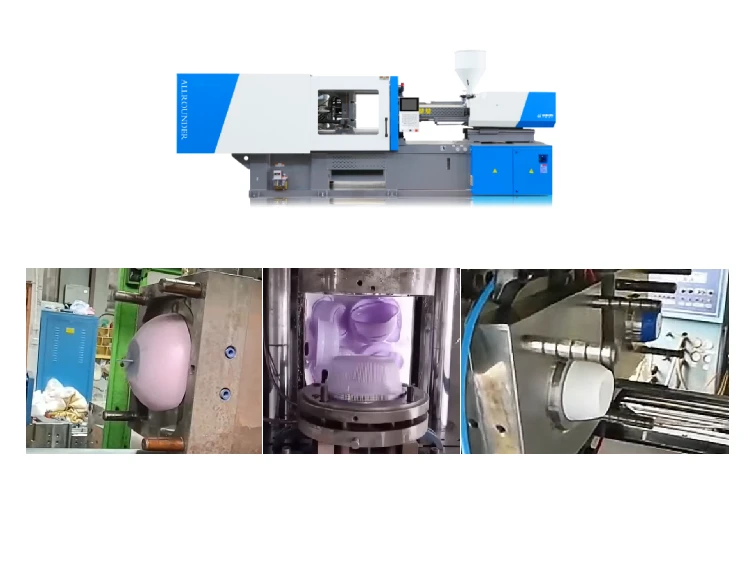
Plastic bowls made by plastic bowl injection molding machine are everywhere — in kitchens, restaurants, supermarkets, and food packaging. They come in different sizes, wall thicknesses, and materials. But one thing stays the same:plastic bowls are high-volume, low-margin products. Even a small reduction in per‑unit cost can make a big difference to your bottom line.
Many bowl manufacturers focus only on raw material prices when trying to cut costs. But they overlook three equally important areas:machine energy consumption,labor efficiency, andscrap rate. The right plastic bowl injection molding machine can help you reduce all three.
This guide explainshow to choose the right plastic bowl injection molding machineandhow to reduce per‑unit costthrough smart machine selection, servo energy saving, and automation. We cover tonnage selection, cavity count, screw design, and auxiliary equipment — everything you need to know to make a cost‑effective investment.
What Makes Plastic Bowl Molding Different from Other Products?
How to Choose the Right Plastic Bowl Injection Molding Machine
How to Reduce Per‑Unit Cost in Plastic Bowl Production
Haichen HCK Series for Plastic Bowl Production
What Makes Plastic Bowl Molding Different from Other Products?
Plastic bowls are not the same as general plastic parts. They have specific characteristics that affect machine selection and production cost.
Thin Walls and Multi‑Cavity Molds
Food‑Grade Material Requirements
High‑Volume Production Means Cost Sensitivity
plastic bowl making injection machine
Thin Walls and Multi‑Cavity Molds
Plastic bowls typically have wall thickness between0.8mm and 2.5mm. Thin walls mean fast cooling and short cycle times — but they also require high injection speed to fill the cavity before the melt cools.
Most bowl manufacturers runmulti‑cavity molds(4, 8, 16, or even 32 cavities per mold) to achieve high output. More cavities lower your per‑part cost but require higher clamping force and more precise temperature control.
Plastic bowls often use food‑grade materials like PP (polypropylene), PS (polystyrene), or PET. Different materials have different processing requirements:
plastic bowls production line
Material
Melting Temperature
Key Characteristics
PP
160–180°C
Flexible, good heat resistance, food‑grade
PS
180–200°C
Rigid, lower cost, suitable for cold food
PET
250–280°C
Clear, recyclable, needs drying
Your plastic bowl injection molding machine must handle the specific material you plan to use. PP is the most common choice for reusable bowls. PS is often used for disposable bowls.
High‑Volume Production Means Cost Sensitivity
Plastic bowls are produced in huge quantities. A single factory can produce millions of bowls per month. At that volume, every fraction of a cent matters. This is whycycle timeandenergy consumptionare critical factors in machine selection.
A machine that runs 1 second faster per cycle can produce thousands more bowls per day. A machine that saves 30% on electricity can save you thousands of dollars per year. These savings add up fast in high‑volume bowl production.
How to Choose the Right Plastic Bowl Injection Molding Machine
Selecting the right plastic bowl injection molding machine comes down to three factors:output target determines cavity count,bowl size determines clamping force, andmaterial determines screw design.
Output Target → Cavity Count
Bowl Size → Clamping Force
Material → Screw Design and Temperature Control
Output Target → Cavity Count
Your daily output target is the starting point for machine selection. More cavities mean more parts per cycle, but they also require a larger machine.
Daily Output Target
Recommended Cavities
Recommended Tonnage
Under 10,000 pcs
4 cavities
80–120 tons
10,000–50,000 pcs
8 cavities
120–180 tons
50,000–150,000 pcs
16 cavities
180–250 tons
Over 150,000 pcs
24–32 cavities
250–350 tons
How to calculate: Start with your daily output target. Add 20% margin for peak seasons and maintenance. Divide by your daily running hours (usually 22) to get hourly output. Then work backward to find the cavity count based on your target cycle time.
For a standard 16‑cavity bowl mold with a 15‑second cycle, you can produce about3,800 bowls per hour— roughly84,000 bowls per day(22 hours).
Bowl Size → Clamping Force
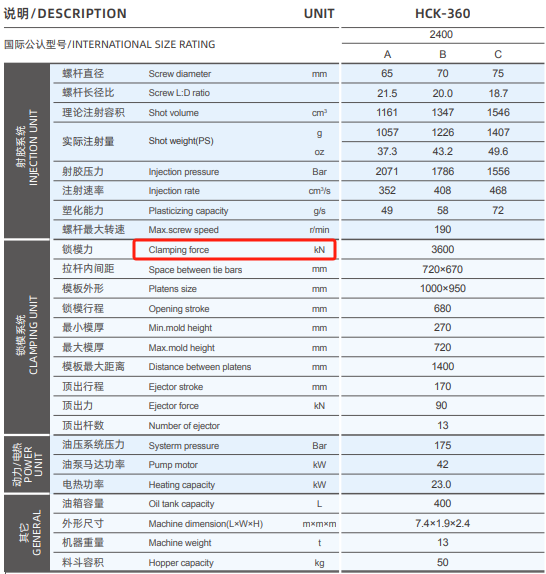
Clamping force must be sufficient to hold the mold closed against the melt pressure. The basic formula is:
Clamping Force (tons) = Projected Area (cm²) × Cavity Pressure (kg/cm²) ÷ 1000 × Safety Factor
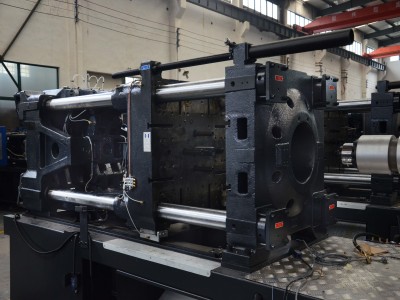
clamping force in injection molding machine
For PP material, cavity pressure typically ranges from350–450 kg/cm². Always add a15‑20% safety margin.
Example calculation:
A bowl with a 200mm diameter has a projected area of about314 cm². With a 4‑cavity mold, the total projected area is about1,256 cm². Using PP with 400 kg/cm² cavity pressure:
1,256 × 400 ÷ 1000 = 502 tons
Add 20% safety margin =about 600 tons
This is why large bowls or high‑cavity molds need bigger machines. A 4‑cavity large bowl mold may need 600 tons, while a 16‑cavity small bowl mold may only need 250 tons.
Material → Screw Design and Temperature Control
Different materials need different screw designs. For PP and PS, a standard general‑purpose screw works well. For PET, you need a special screw with a longer L/D ratio and precise temperature control.
PP is the most common choice for plastic bowls. It flows well and has a wide processing window. However, PP shrinks more (1.5‑2.5%), so you need good holding pressure control to avoid sink marks.
Haichen HCK series machinesoffer multiple screw options for different materials. Our standard screws handle PP and PS efficiently. For PET, we can provide specialized screws with optimized L/D ratios and temperature profiles.
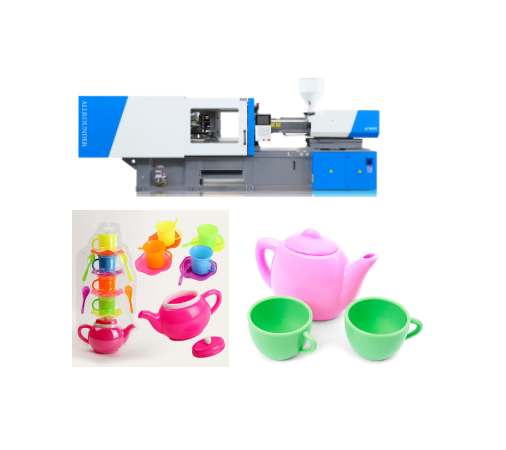
plastic tea kettle
How to Reduce Per‑Unit Cost in Plastic Bowl Production
Cutting per‑unit cost in plastic bowl production requires a systematic approach. Here are four proven strategies.
Servo Energy Saving – Cut Electricity Bills by 30‑50%
Multi‑Cavity Production – Lower Cost Per Part
Automation – Reduce Labor Dependency
Stable Production – Reduce Scrap Rate
Servo Energy Saving – Cut Electricity Bills by 30‑50%
Energy consumption is one of the largest operating costs in bowl production. Traditional hydraulic machines run continuously, wasting power during cooling and holding phases.
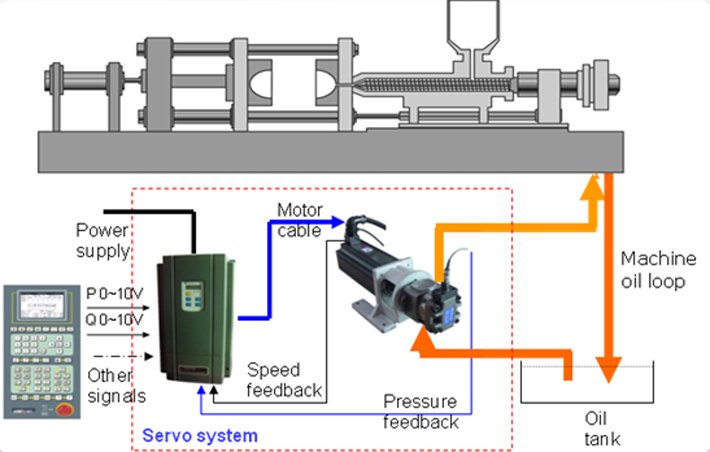
A servo‑driven plastic bowl injection molding machine adjusts power based on real‑time demand. During holding and cooling, the motor nearly stops. This is like a car that shuts off at a red light instead of idling.
Haichen HCK series machinescome with servo energy saving as standard. Compared to traditional hydraulic machines, they save30‑50% on electricity. For a factory running 24/7, that saving can amount to tens of thousands of dollars per year.
servo-motor-injection-moulding-machine
Multi‑Cavity Production – Lower Cost Per Part
More cavities mean more parts per cycle, which lowers the per‑part cost of machine time and labor. A 16‑cavity mold produces twice as many bowls per cycle as an 8‑cavity mold, with roughly the same cycle time.
The trade‑off is higher mold cost and higher clamping force requirement. But for high‑volume production, the per‑part savings quickly justify the investment.
Example: A 16‑cavity mold for small bowls may cost $15,000–25,000 more than an 8‑cavity mold. But if it doubles your daily output, the additional mold cost is recovered in a few months.
Automation – Reduce Labor Dependency
Labor is a hidden cost in bowl production. A semi‑automated line may need 4‑6 operators per shift for part removal, sprue cutting, and packing.
A fully automated line runs from injection to packing with1 operator per shift(just for monitoring). The savings add up fast:
Automation Level
Operators per Shift
Annual Labor Cost
Manual
5 people/shift
$75,000
Robot‑assisted
3 people/shift
$45,000
Fully automatic
1 person/shift
$15,000
Haichen HCK series machines come withCE12 robot interfacesas standard. You can plug and play with most robot brands without extra wiring. Many customers recover automation investment within12‑18 months.
Stable Production – Reduce Scrap Rate
Scrap rate directly affects per‑unit cost. Every 1% increase in scrap eats into your profit margin.
A stable plastic bowl injection molding machine with precise temperature control and consistent shot weight produces fewer defects. Common bowl defects include:
Defect
Cause
Machine Solution
Sink marks
Insufficient holding pressure
Multi‑stage holding pressure control
Warpage
Uneven cooling
Optimized cooling channel design
Short shots
Low injection speed
High‑speed injection capability
Flash
Insufficient clamping force
Accurate clamping force control
Haichen HCK series machinesfeature multi‑stage holding pressure control and high‑precision electronic rulers. These ensure consistent shot weight and part dimensions, cycle after cycle.
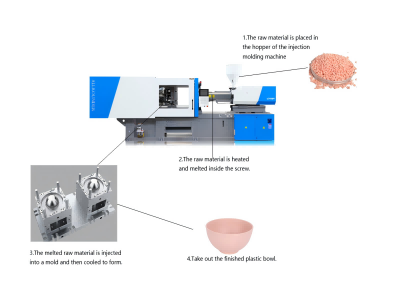
Three Injection Molding Processes in the Production of Plastic Bowls
Haichen HCK Series for Plastic Bowl Production
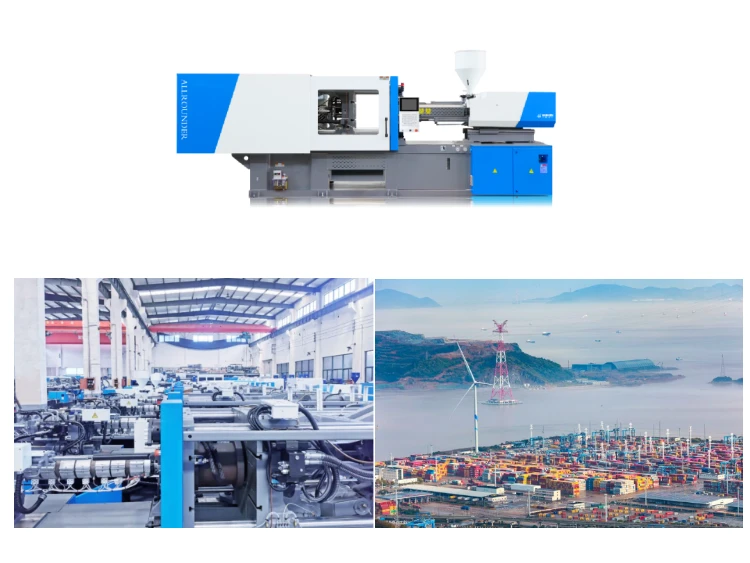
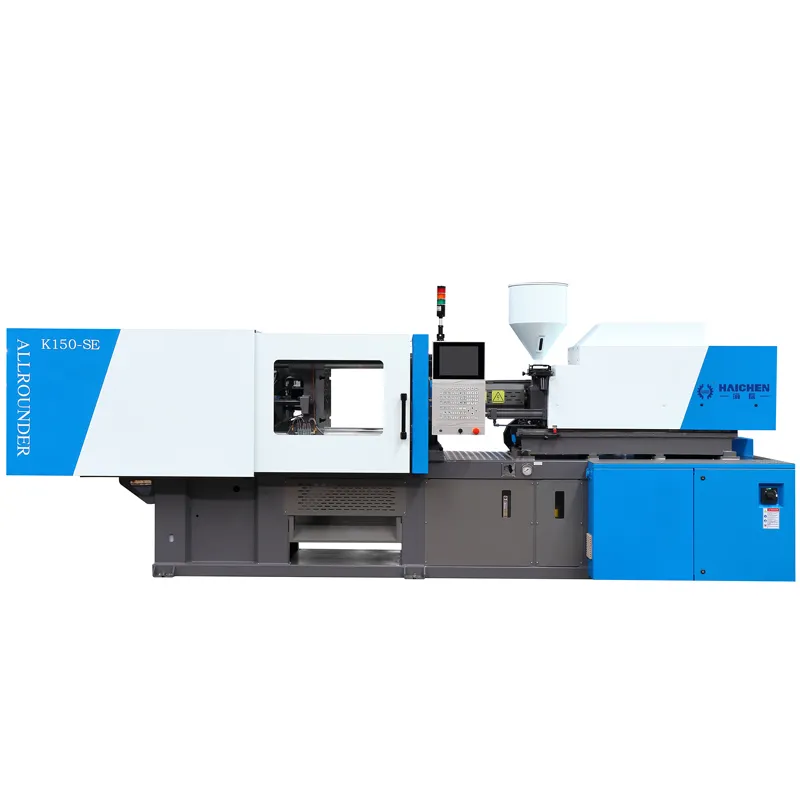
Haichen HCK series plastic bowl injection molding machines are designed specifically for high‑volume, thin‑wall bowl production.
Wide Tonnage Range for Different Bowl Sizes
Designed for High‑Volume Production
Proven in Real Production
Wide Tonnage Range for Different Bowl Sizes
Haichen HCK series covers30 tons to 3,000 tons. For plastic bowl production, we typically recommend:
Bowl Type
Diameter
Recommended HCK Model
Clamping Force
Small bowl
100–150mm
HCK 180–HCK 280
180–280 tons
Medium bowl
150–200mm
HCK 280–HCK 460
280–460 tons
Large bowl
200–250mm
HCK 460–HCK 600
460–600 tons
Our HCK series machines featureservo energy saving,multi‑zone PID temperature control, andCE12 robot interfaces. These are standard features — not optional add‑ons.
Designed for High‑Volume Production
Haichen HCK series machines run fast and stable. With a 16‑cavity bowl mold, cycle times can reach12‑15 seconds. That meansover 80,000 bowls per dayfrom a single machine.
The double‑cylinder injection design ensures stable, repeatable performance. The high‑rigidity clamping unit keeps the mold closed under high pressure — preventing flash and dimensional variations.
Proven in Real Production
We have supplied plastic bowl injection molding machines to customers across Asia, the Middle East, South America, and Africa. Many of our customers run HCK machines 24/7, year after year.
With over 10 years of experience in injection molding, we understand the specific challenges of bowl production — thin walls, multi‑cavity molds, and food‑grade materials. Our machines are built to handle them.
Common Questions About Plastic Bowl Injection Molding
What is the minimum tonnage for plastic bowl production?
For small bowls (under 150mm diameter) with a 4‑cavity mold,120‑180 tonsis usually sufficient. For larger bowls or higher cavity counts, you need more tonnage. Use the formula: projected area × cavity pressure ÷ 1000 × safety factor.
How many cavities should a bowl mold have?
It depends on your output target. For medium‑volume production,8 cavitiesis common. For high‑volume production,16‑24 cavitiesgives better per‑part cost.And for very high volume,32 cavities or morecan be cost‑effective.
Which material is best for plastic bowls?
PPis the most common choice — it’s flexible, heat‑resistant, and food‑grade.PSis cheaper but more brittle, suitable for disposable bowls.PETis clear and recyclable but requires higher processing temperatures.
Haichen
How much can servo energy saving really save?
A servo‑driven plastic bowl injection molding machine can save30‑50% on electricitycompared to a traditional hydraulic machine. The exact saving depends on your production volume and local electricity rates.
Haichen Machinery– your plastic bowl injection molding machine partner. From HCK 180 to HCK 600, we help you get the right machine for your bowl production line.
📩Contact usfor a customized plastic bowl injection molding machine solution based on your specific bowl size and output target.