
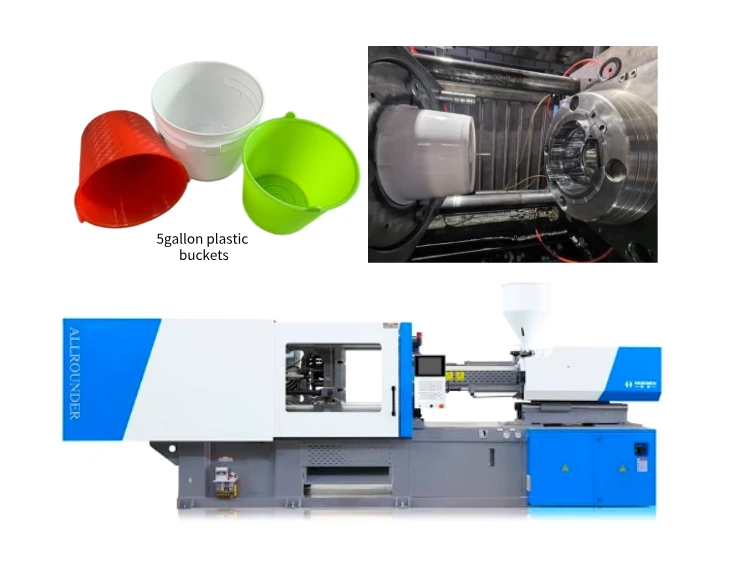
A plastic bucket injection molding production line mainly includes selection material, design mould, choose injection machine model and auxiliary equipemt.
Injection molding production line for plastic bucekt mainly has below four parts:
- Choose main raw materials used for plastic bucket Manufacturing: PP or HDPE
- Design mould: based on the plastic bucket datas
- Select machine: choose the appropriate injection molding machine model based on the plastic bucket material and mold
- Choose auxiliary equipment: autoloader, dryer, chiller, crusher, robotic arm, and in-mold labeling (IML) machine, etd.
The plastic bucket injection molding production line starts with material selection. Manufacturers of plastic buckets injection molding machine usually choose PP or HDPE for bucket production. PP offers good impact resistance, and HDPE provides better strength for heavy-duty buckets. The line then uses a custom mold designed to the bucket’s exact size and shape. A properly designed mold ensures even wall thickness and prevents defects like leakage or warping.
There are so many diffferent types of plastic buckets and different manufacturing process. And the plastic injection molding machine is one the core of the line. While Haichen machinery , as one of the Chinese plastic buckets injection molding machine manufacturer with skills to select the right bucket injection molding machine model based on the bucket material and mold specifications. Key factors include clamping force, injection volume, and screw design. A 10-20L bucket typically needs a 400-600 ton machine, while larger industrial buckets may require 700 tons or more.
The complete line also includes auxiliary equipment. An auto loader feeds plastic pellets into the machine. A chiller controls mold temperature for consistent cooling. A crusher recycles scrap material. A robot removes finished buckets from the mold. An in-mold labeling (IML) system adds labels during the molding cycle for decorative or branded buckets.
Select Material for Plastic Buckets
-
PP properties for plastic buckets
-
HDPE properties for plastic buckets
-
Material affects bucket quality
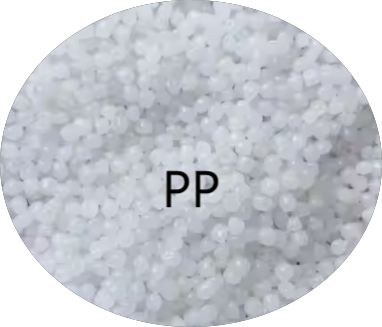
PP properties for buckets
PP is lightweight and has good flowability. It works well for standard buckets used in households and food storage. PP also resists fatigue, so buckets with handles last longer under repeated use.
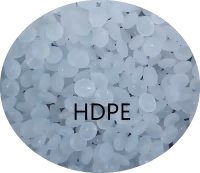
HDPE properties for plastic buckets
HDPE is stronger and more rigid than PP. It provides excellent chemical resistance. For this reason, HDPE suits industrial buckets, chemical containers, and outdoor applications. HDPE also performs well at low temperatures.
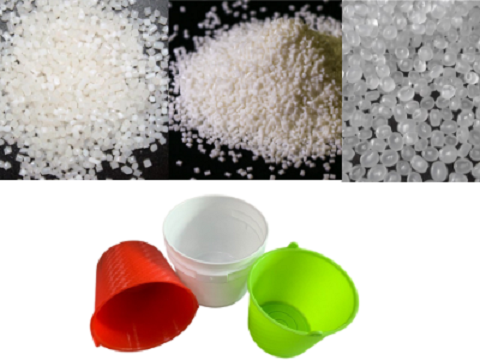
Material affects bucket quality
The right material ensures the bucket does not crack or leak. PP gives good impact resistance for daily use. HDPE offers higher strength for heavy loads. Haichen well know the main raw materials used for injection plastic bucket manufacturing. Thus we will be glad to helps our customers select the best main raw materials used for plastic bucket Manufacturing for their bucket application.
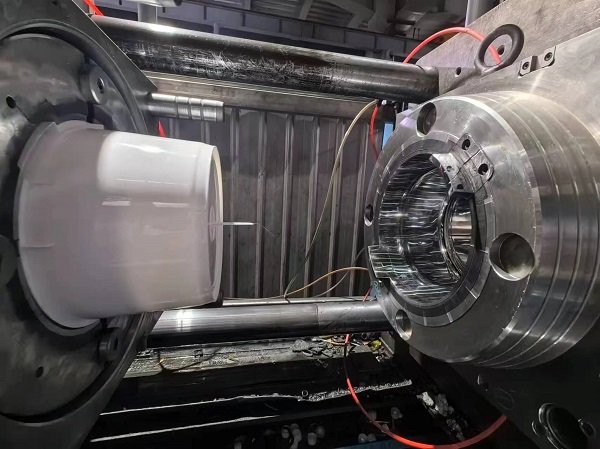
Design Plastic Bucket mould
-
Mold steel selection
-
Cooling system design
-
Gate and runner design
Mould material selection
P20 steel is common for bucket molds because it offers good durability at a lower cost. 718H steel provides better polishability for high-quality surface finishes. Beryllium copper is used in critical areas like the core top because it transfers heat quickly and reduces cooling time.
Cooling system design
A good cooling system removes heat evenly from the bucket. Uneven cooling causes warping and inaccurate dimensions. Cooling channels are placed close to the mold cavity. Proper cooling reduces cycle time and improves bucket quality.
Gate and runner design
The gate is where plastic enters the mold cavity. The runner system guides plastic from the nozzle to the gate. A hot runner system reduces material waste. The gate location affects plastic flow and bucket strength. A properly placed gate prevents weak spots in the finished bucket.
Select bucket plastic Injection machine
An injection molding machine is a machine for manufacturing plastic products by the injection molding process. It consists of four main subsystems: the injection unit, the clamping unit, the drive unit, and control systems.
-
Clamping force calculation for plastic buckets
-
Injection volume and shot size
-
Mold dimensions and machine tie-bar spacing
- Haichen machine models for different bucket sizes
Clamping force calculation for plastic buckets
Clamping force keeps the mold shut during injection. For plastic buckets, the required force depends on the bucket’s projected area and the main raw materials used for plastic bucket Manufacturing used.
The formula is F >= K × P × A, where F is clamping force (tons), K is a safety factor (1 to 1.2), P is cavity pressure (MPa), and A is the projected area (cm²).
For a standard 5-gallon bucket with a projected area of about 2000 cm² using HDPE, the required force is 400 to 700 tons. Using too little force causes flash defects on the bucket rim. Using too much force wastes energy and increases machine wear.
Injection volume and shot size
The machine must have enough injection capacity for each bucket. The shot size includes the bucket weight plus the runner system weight.
A general rule is that the total shot weight should not exceed 80% of the machine’s maximum injection capacity. For a 5-gallon bucket weighing 600g, the shot size needs about 700g to account for the runner.
Haichen machines provide injection weight data for each screw diameter option. For example, the HCK700 with a 95mm screw delivers 3064g of injection weight for PS material. Moreover, we also have real case study of Plastic water bucket with lid injection molding production process
Mold dimensions and machine tie-bar spacing
The mold must fit between the machine’s tie bars. The mold width and height should be smaller than the space between tie bars. For bucket molds, the mold height must also fall within the machine’s min and max mold height range. Haichen HCK series machines provide tie-bar spacing data. The HCK700 has tie-bar spacing of 970*920mm and a max mold height of 970mm. This accommodates large bucket molds with deep cavities.
| Haichen HCK310 PLASTIC INJECTION MOLDING MACHINE | ||||
| INJECTION UNIT | ||||
| ITEM | UNIT | A | B | C |
| INJECTION UNIT | ||||
| Screw diameter | mm | 60 | 65 | 70 |
| Screw L/D ratio | L/D | 23.8 | 22.0 | 20.4 |
| Shot volume(theoretical) | cm3 | 919 | 1078 | 1251 |
| Injiection weight(ps) | g | 836 | 981 | 1138 |
| oz | 29.5 | 34.6 | 40.1 | |
| Injection pressure | Bar | 2078 | 1771 | 1527 |
| Injection rate | cm3/s | 309 | 362 | 420 |
| Plasticizing capacity | g/s | 42 | 51 | 60 |
| Screw speed (Max.) | r/min | 210 | ||
| CLAMPING UNIT | ||||
| Clamping force | Kn | 3100 | ||
| Space between tie bars(W×H) | mm | 670×620 | ||
| Platens size | mm | 950×900 | ||
| Opening stroke | mm | 610 | ||
| Min.Mold height | mm | 270 | ||
| Max.Mold height | mm | 670 | ||
| Distance between platens(daylight) | mm | 1280 | ||
| Ejector stroke | mm | 170 | ||
| Ejector force | Kn | 90 | ||
| OTHERS | ||||
| Systerm pressure | Bar | 175 | ||
| Pump motor | Kw | 41 | ||
| Heating power | Kw | 26.0 | ||
| Oiltank cubage | L | 400 | ||
| Machine dimension(L×W×H) | m | 6.5×1.6×2.1 | ||
| Machine weight | t | 10.3 | ||
Haichen machine models for different bucket sizes
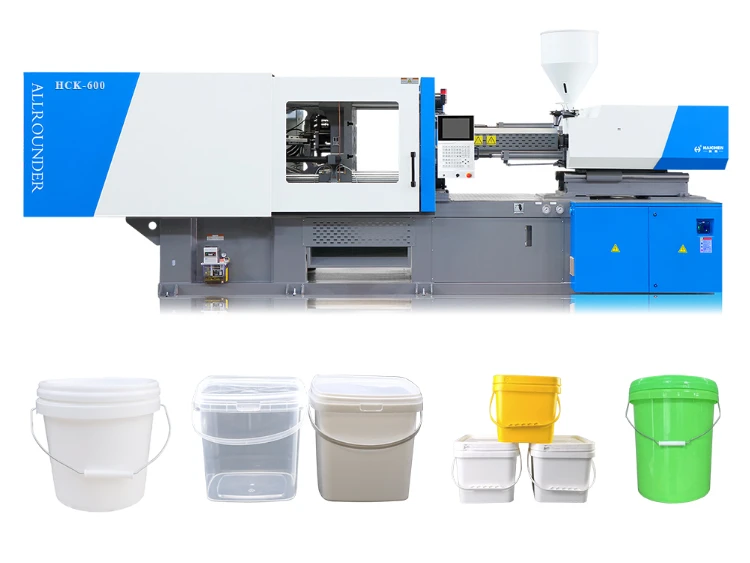
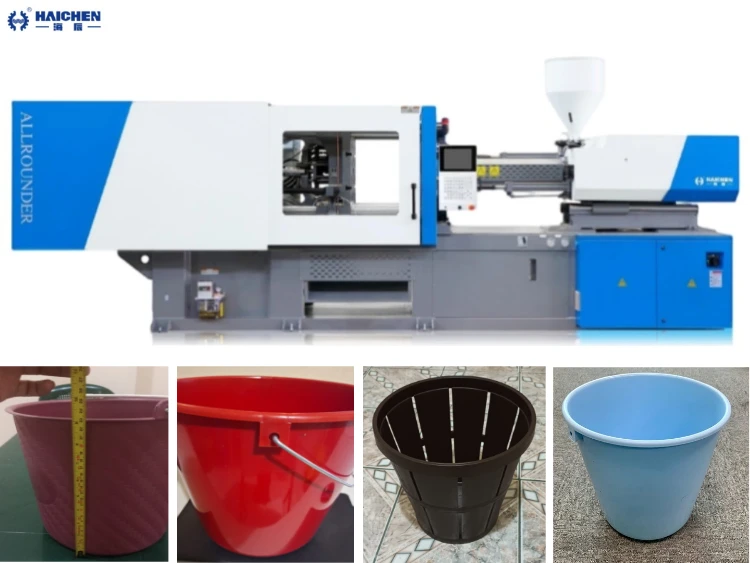
Haichen offers a range of machines models for plastic bucket injection molding production. These plastic bucket injection machines can meet various types of plastic buckets and different manufacturing process.
- The HCK 310 suits small buckets up to 600g.
- The HCK 530 works for standard 10-15L buckets.
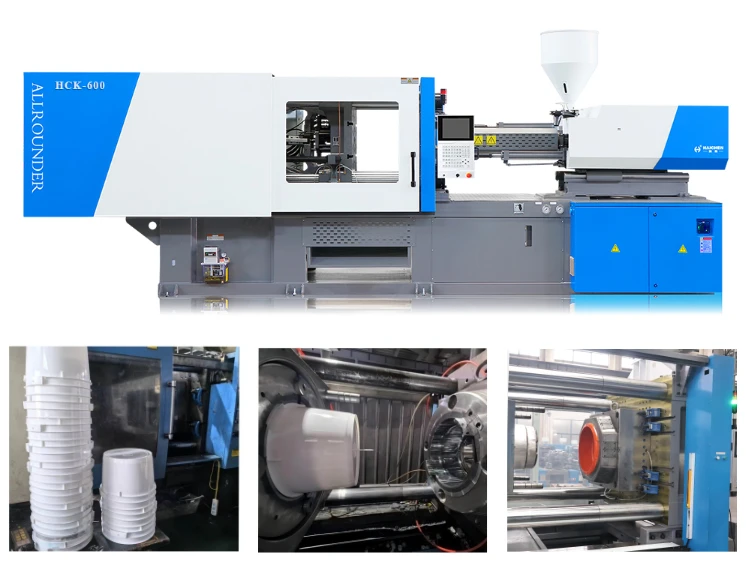
- The HCK 600 handles 20L paint pails.
- The HCK 700 suits large industrial buckets and multi-cavity molds.
For deep bucket cavities, Haichen machines provide large opening stroke. The HCK 700 has an opening stroke of 960mm, which allows easy removal of tall buckets.
We know the problems and solutions in the production of plastic buckets. So no need to worry about it. If any demand, our engineer team will help solve it.
Choose Auxiliary Equipment for Plastic Bucket Production line
Auxiliary equipments can improve plastic bucket production efficiency and enhance automatic production process.
-
Auto loader and dryer
-
Chiller and cooling system
-
Crusher for recycling
-
Robot and IML system
Auto loader and dryer
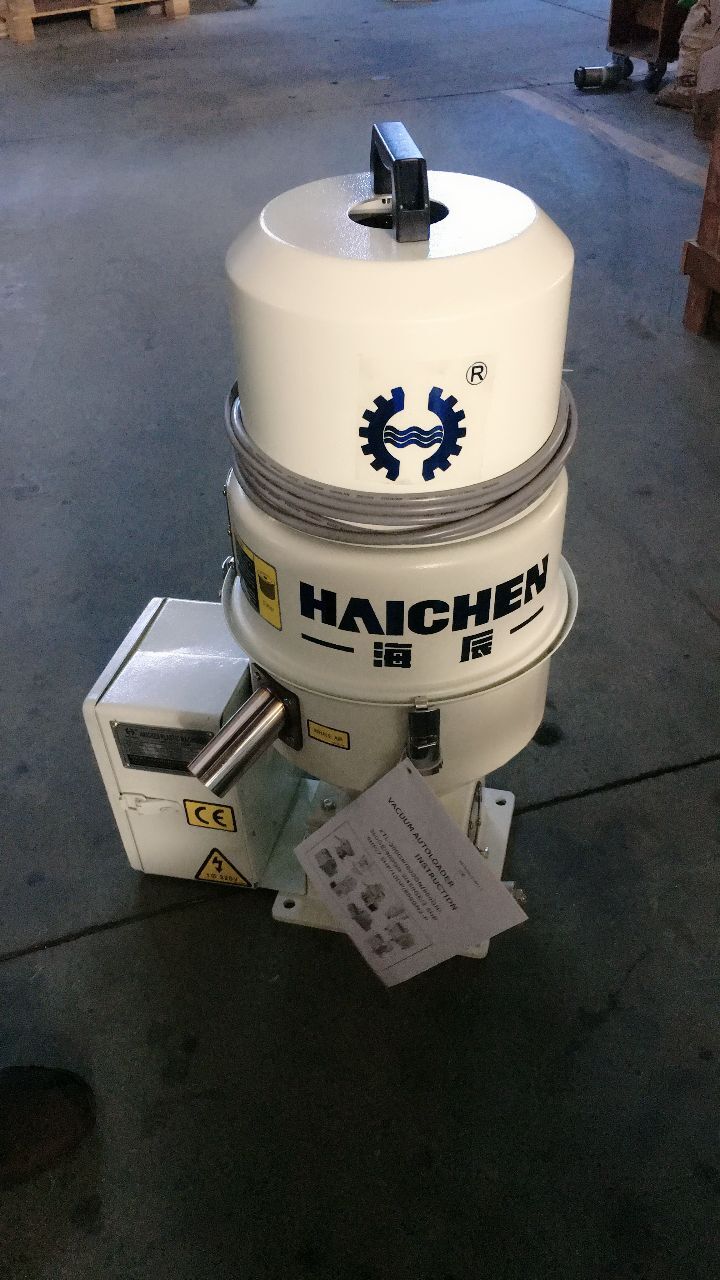
An auto loader feeds plastic pellets from a storage bin into the machine. A dryer removes moisture from the material. Dry pellets prevent surface defects on finished buckets. This equipment runs automatically, so operators focus on other tasks.
Chiller and cooling system
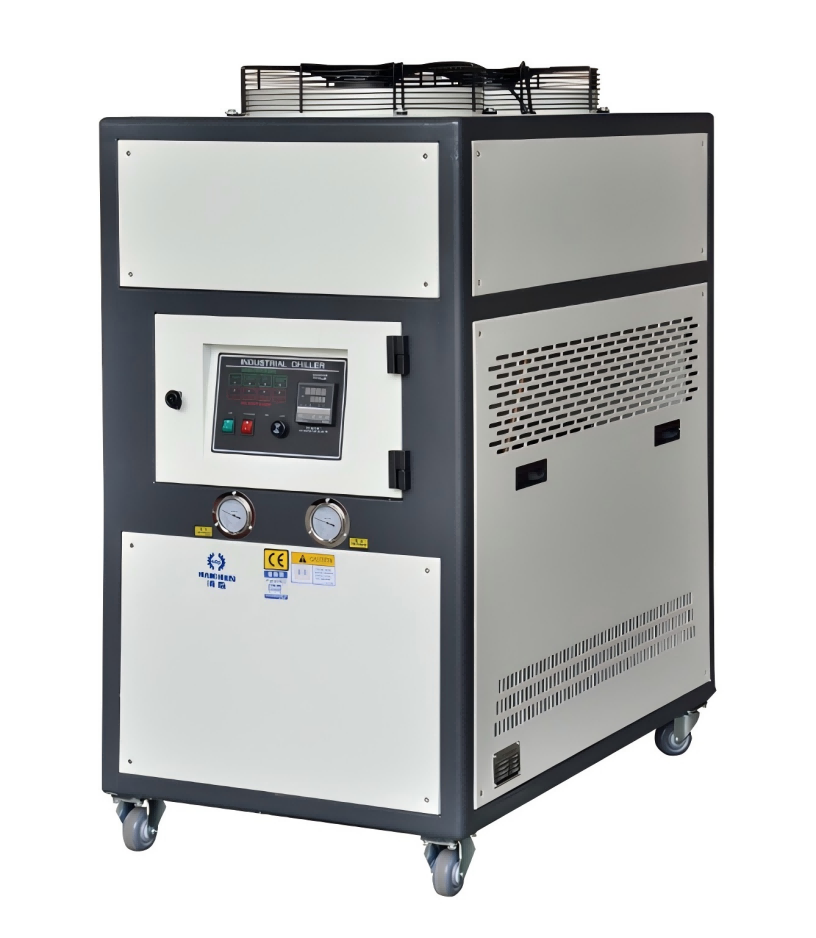
A chiller provides cooled water to the mold’s cooling channels. The water temperature stays between 7-30°C. Consistent water temperature ensures even cooling. This reduces cycle time and prevents warping.
Crusher for recycling
A crusher grinds scrap plastic into small pieces. These pieces can be mixed with virgin material for new buckets. This reduces raw material costs by 20-40%. The crusher handles sprues, runners, and rejected buckets.
Robot and IML system
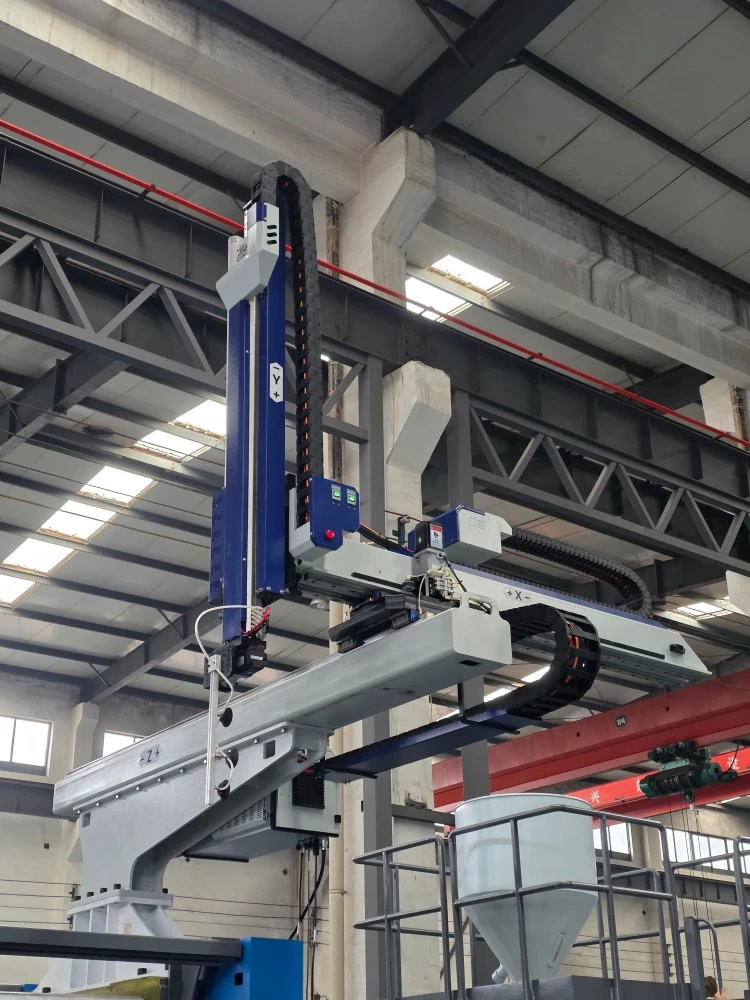
A robot removes finished buckets from the mold. This speeds up the cycle and prevents damage. An in-mold labeling (IML) system places labels inside the mold before injection. The label bonds with the bucket surface during molding. IML eliminates post-printing steps and gives a premium look.
A plastic bucket injection molding production line includes four main components.The main raw materials used for plastic bucket Manufacturing selection uses PP or HDPE based on bucket strength needs. Mold design focuses on steel quality, cooling channels, and gate placement. The injection molding machine must match the bucket size and material. Auxiliary equipment includes auto loaders, chillers, crushers, robots, and IML systems. Haichen as one famous Chinese plastic bucket injection molding machine manufacturer has over ten years of experience in bucket production lines. We provide complete solutions from machine selection to operator training.
Contact us to build your plastic bucket production line.


