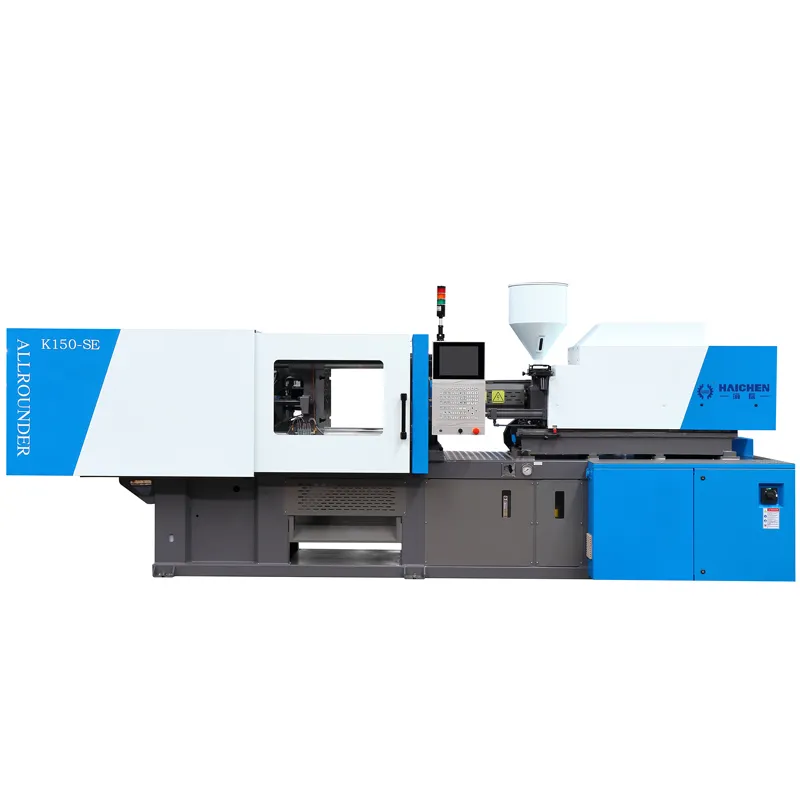
A plastic clothes peg making machine production line normally combines injection molding with automatic assembly.
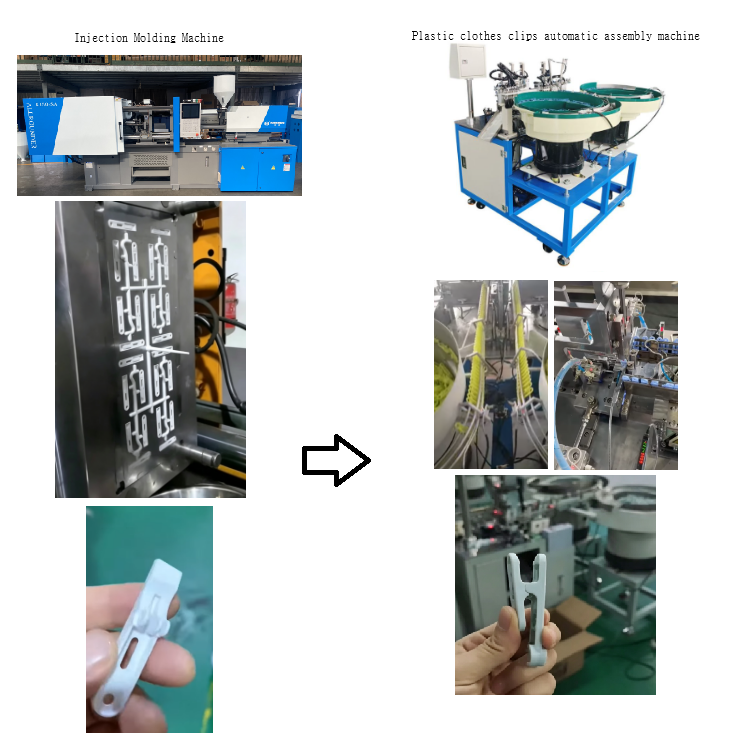
First, an injection molding machine produces the plastic clothes peg components from PP material. Then, an automatic assembly machine combines the molded components with metal springs to make finished clothes pegs.
For example, one Haichen production setup uses an HCK230 injection molding machine, a 32-cavity mold and a 20-second molding cycle. The automatic assembly machine used in this setup can assemble approximately 40–50 finished clothes pegs per minute.
However, the machine, mold and assembly equipment must be matched as one production system. This guide explains the complete manufacturing process, machine selection, mold requirements, production capacity and automatic assembly process.
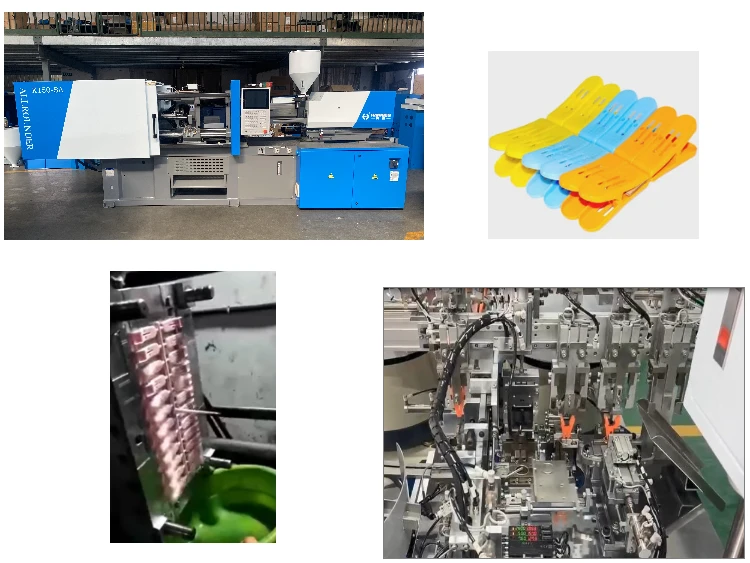
What Machines Are Needed to Make Plastic Clothes Pegs?
A complete plastic clothes peg production line normally includes:
- Injection molding machine
- Plastic clothes peg mold
- Material loader
- Chiller
- Mold temperature controller, when required
- Automatic take-out or conveyor system
- Clothes peg automatic assembly machine
- Inspection equipment
- Packaging equipment
The exact configuration depends on production volume.
For a small factory, manual handling may be acceptable. On the other hand, high-volume manufacturers can connect molding, feeding and assembly equipment to reduce manual labor.
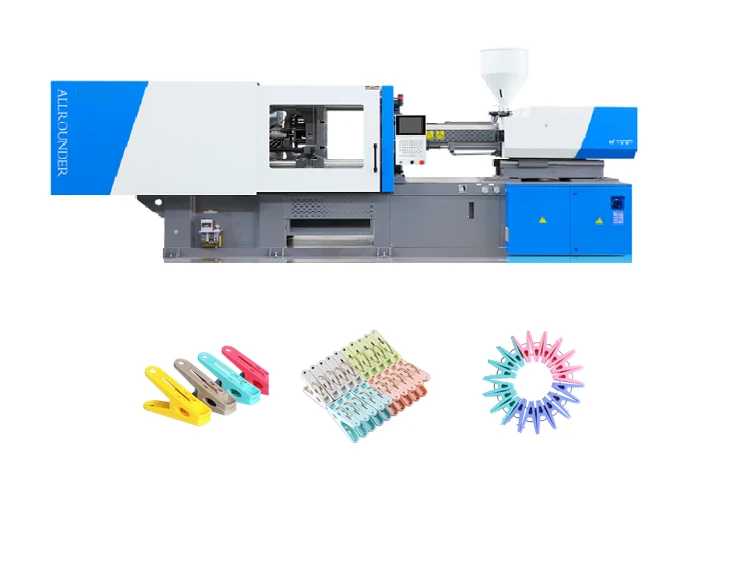
Plastic Clothes Peg Injection Molding Machine
The injection molding machine melts PP pellets and injects the material into a multi-cavity mold.
One Haichen production setup uses:
| Parameter | Production Example |
|---|---|
| Injection molding machine | Haichen HCK230 |
| Clamping force | 230 ton |
| Material | PP |
| Mold cavities | 32 |
| Molding cycle | 20 seconds |
This is a specific production example, not a universal rule that every 32-cavity clothes peg mold requires a 230-ton machine.
The final machine should be selected after checking the mold’s projected area, shot weight, mold dimensions, injection requirements and target output.
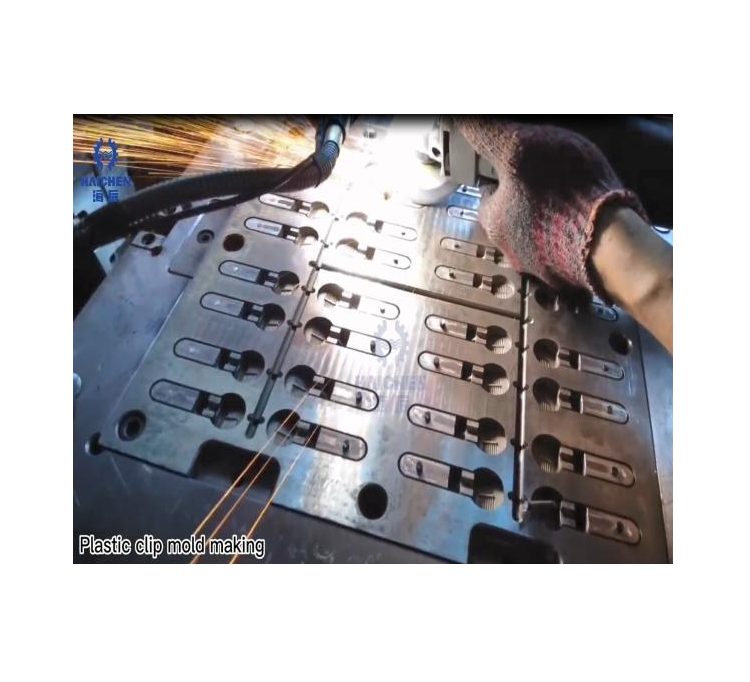
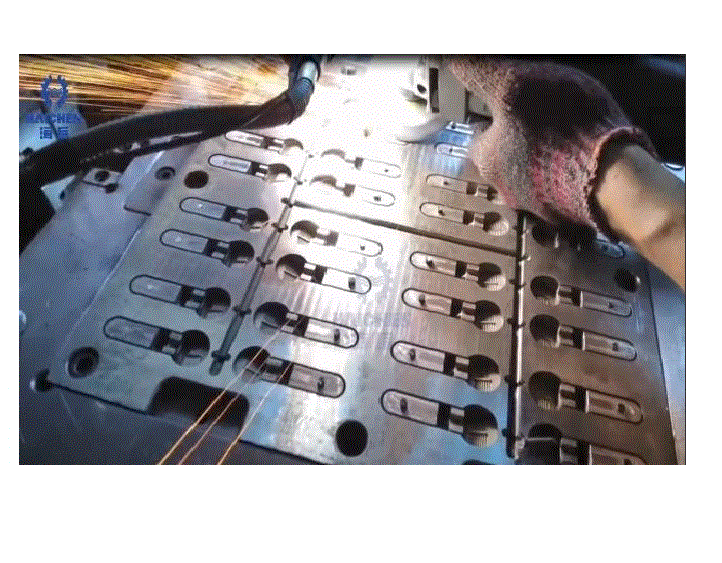
32-Cavity Clothes Peg Mold
The mold determines how many plastic components can be produced during each injection cycle.
A 32-cavity mold can produce multiple components simultaneously. Therefore, it is suitable for high-volume production.
However, increasing cavity number also increases:
- Required shot weight
- Projected area
- Mold size
- Cooling requirements
- Mold cost
- Machine requirements
For this reason, manufacturers should select cavity number according to actual production demand rather than simply choosing the largest possible mold.
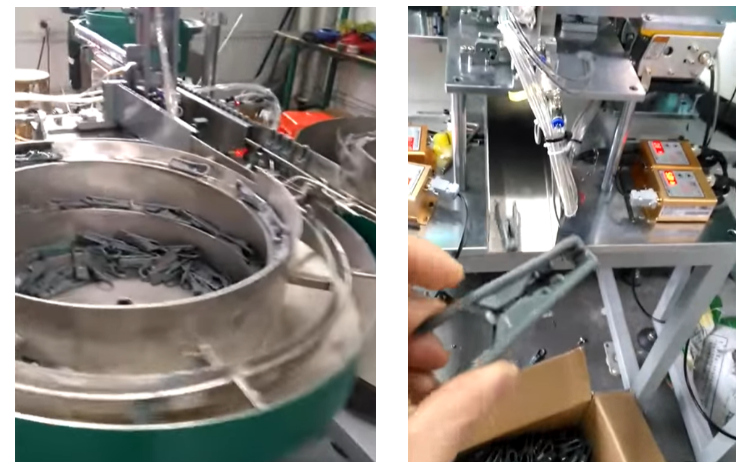
Automatic Clothes Peg Assembly Machine
Injection molding only produces the plastic components.
A finished clothes peg also requires a metal spring and correct assembly.
The automatic assembly machine can:
- Feed the molded plastic components.
- Separate and orient the components.
- Feed the metal springs.
- Position the components and spring.
- Assemble the parts.
- Transfer finished clothes pegs to the collection area.
In the production example described above, the assembly machine can reach approximately 40–50 finished pieces per minute.
How to Choose a Plastic Clothes Peg Mold?
The mold is one of the most important parts of the production system.
When choosing a clothes peg mold, check:
Cavity Number
More cavities increase output per cycle.
However, they also increase mold cost, shot weight and machine requirements.
Therefore, cavity number should be based on the target production volume.
Shot Weight
The machine must have enough injection capacity for the complete shot.
A basic calculation is:
Shot weight = Component weight × Number of cavities + Runner weight
The actual value should be calculated from the mold design.
Mold Dimensions
The mold must fit the injection molding machine.
Check:
- Mold width
- Mold height
- Tie-bar spacing
- Platen size
- Mold weight
- Mold opening stroke
- Ejector stroke
A machine may have enough clamping force but still be unsuitable if the mold cannot physically fit inside the clamping unit.
Cooling and Ejection
A multi-cavity mold needs balanced cooling.
The ejection system should also remove all components smoothly without damaging the molded parts.
For high-volume production, mold reliability is especially important because small problems can affect thousands of parts.
How Are Plastic Clothes Pegs Made?
The complete production process can be summarized as:
PP material → Injection molding → Cooling → Ejection → Component feeding → Spring feeding → Automatic assembly → Inspection → Packaging
Each stage affects the next one.
Therefore, a manufacturer should evaluate the entire production line instead of selecting the injection molding machine separately from the assembly equipment.
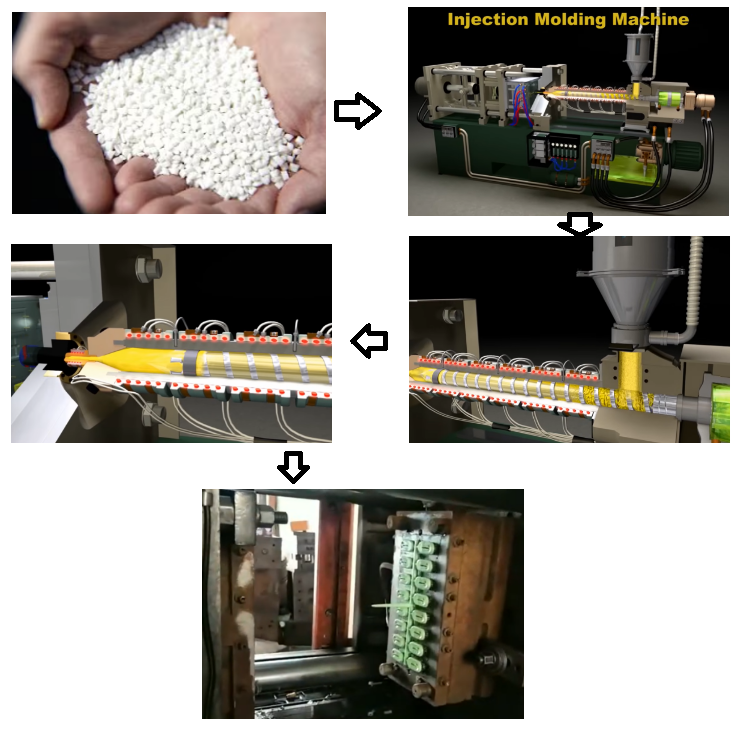
Step 1: Prepare the PP Material
PP pellets are loaded into the injection molding machine.
If colored clothes pegs are required, color masterbatch can be mixed with the base resin according to the material supplier’s recommended ratio.
PP is widely used for many plastic handle and household products because of its low density, toughness and injection molding characteristics.
For clothes pegs, however, the material should also provide sufficient flexibility and fatigue resistance because the finished product is repeatedly opened and closed.
Virgin PP and recycled PP may have different processing and mechanical properties. Therefore, the actual resin grade should be tested before mass production.
Step 2: Inject PP Into the Mold
The machine heats the PP pellets inside the barrel until the material reaches the required processing condition.
The screw then injects the molten PP into the mold cavities.
For a 32-cavity mold, the machine produces multiple plastic components during one molding cycle.
The main process parameters include:
- Injection speed
- Injection pressure
- Holding pressure
- Melt temperature
- Screw position
- Cooling time
These parameters should be adjusted according to the actual PP grade and mold design.
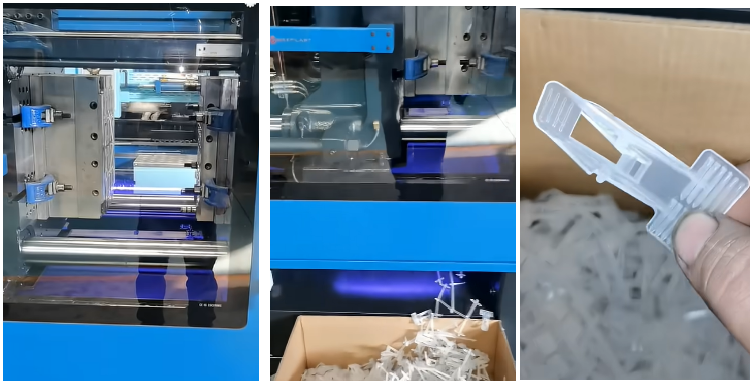
Step 3: Cool and Eject the Components
After filling and holding pressure, cooling begins.
Cooling channels inside the mold remove heat from the molded components.
Balanced cooling is important because uneven cooling can cause:
- Warpage
- Dimensional variation
- Uneven shrinkage
- Longer cycle times
Once the components reach the required temperature, the mold opens and the ejector system removes them.
A conveyor, robot or operator can then transfer the components to the assembly area.
Step 4: Assemble the Plastic Components and Spring
The molded components enter the automatic assembly machine.
The feeding system separates and orients the parts before assembly.
Meanwhile, a spring-feeding mechanism supplies the metal springs.
The machine then positions the plastic components and spring and completes the assembly.
Finally, the finished clothes pegs move to the collection or packaging station.
The assembly process must maintain stable part orientation and dimensional consistency. Otherwise, incorrect feeding can reduce the actual assembly rate.
What Injection Molding Machine Is Used for Plastic Clothes Pegs?
The correct machine depends on the actual mold and product requirements.
Important parameters include:
- Mold cavity number
- Product or component weight
- Total shot weight
- Projected area
- Required clamping force
- Mold dimensions
- Injection speed
- Injection capacity
- Required production volume
One real Haichen production setup uses an HCK230 230-ton injection molding machine with a 32-cavity mold and a 20-second cycle.
The reason for using HCK230 is not simply the cavity number. The machine is selected according to the complete mold and product requirements.
Therefore, manufacturers should provide the product drawing and mold specifications before confirming the final machine model.
How Many Plastic Clothes Pegs Can the Machine Produce?
A basic molding-output formula is:
Theoretical output per hour = Number of cavities × 3600 ÷ Cycle time
For the 32-cavity, 20-second example:
32 × 3600 ÷ 20 = 5,760 cavity outputs per hour
However, this figure should not automatically be called 5,760 finished clothes pegs per hour.
The reason is simple: one finished clothes peg may require more than one molded plastic component.
Therefore, the manufacturer must first confirm how many plastic components the mold produces for one complete clothes peg.
Actual production also includes:
- Machine startup
- Material changes
- Mold adjustment
- Quality inspection
- Machine downtime
- Maintenance
- Assembly interruptions
As a result, practical output is normally lower than theoretical output.
How Fast Can the Automatic Assembly Machine Work?
The automatic assembly machine in this production setup can assemble approximately:
40–50 finished clothes pegs/minute
Therefore:
40 × 60 = 2,400 pieces/hour
and:
50 × 60 = 3,000 pieces/hour
So the theoretical assembly capacity is approximately:
2,400–3,000 finished clothes pegs/hour
The actual rate depends on spring feeding, component orientation, machine stops and product quality.
How Do You Balance Injection Molding and Assembly Capacity?
This is an important consideration when designing a complete clothes peg production line.
The molding stage and assembly stage do not necessarily have the same theoretical output.
For example:
| Production Stage | Example Capacity |
|---|---|
| Injection molding | 32-cavity mold |
| Molding cycle | 20 sec |
| Theoretical cavity output | 5,760/hour |
| Automatic assembly | 40–50 pcs/min |
| Assembly capacity | 2,400–3,000 finished pcs/hour |
These numbers should be interpreted together with the number of plastic components required for one finished peg.
If molding produces components faster than the assembly machine can process them, a temporary component buffer can be used.
Alternatively, manufacturers can adjust the molding schedule, assembly speed or number of assembly stations.
Therefore, the goal is not to maximize the speed of one machine. The goal is to create a balanced production line.
FAQ
What machine is used to make plastic clothes pegs?
A plastic clothes peg production line normally uses an injection molding machine to produce the PP components and an automatic assembly machine to install the metal springs.
What injection molding machine is suitable for a 32-cavity clothes peg mold?
One Haichen production setup uses an HCK230 230-ton injection molding machine with a 32-cavity mold and a 20-second molding cycle.
However, this should be treated as a production example rather than a universal machine-selection rule. The final machine should be selected from the actual mold and product specifications.
How many components can a 32-cavity mold produce?
If each cavity produces one component, a 32-cavity mold produces 32 components per molding cycle.
At a 20-second cycle, this equals:
32 × 3600 ÷ 20 = 5,760 components/hour
The number of finished clothes pegs depends on how many molded components are required for one complete peg.
How many finished clothes pegs can the assembly machine produce?
The automatic assembly machine in this production example can produce approximately 40–50 finished pieces per minute, or 2,400–3,000 pieces per hour under continuous operation.
Actual output may vary because of feeding interruptions, downtime and quality inspection.
What material is commonly used for clothes pegs?
PP is commonly used because it offers low density, toughness and suitable flexibility. The final PP grade should be selected according to the product’s mechanical and processing requirements.
Can recycled PP be used?
Yes, recycled PP may be used when its properties meet the product requirements. However, manufacturers should test the actual material before mass production because recycled PP can have different flow and mechanical properties.
How many cavities should a clothes peg mold have?
There is no universal cavity number.
The correct choice depends on:
- Required output
- Product weight
- Machine capacity
- Mold cost
- Cycle time
- Investment budget
A 32-cavity mold is one practical example for high-volume production.
Can the injection molding machine and assembly machine work as one production line?
Yes. The two stages can be connected with conveyors, robots or component-feeding systems.
The key is to balance molding capacity with assembly capacity and maintain a stable supply of correctly molded components.