
Plastic clothespin raw materials determine product quality, production efficiency, and final cost.
As an experienced injection molding machine manufacturer, Haichen Machinery has worked with over 1,000 factories worldwide on plastic clothespin raw materials selection and processing optimization.
This guide covers the complete range of plastic clothespin raw materials — resins, spring wire, and chemical additives — along with drying parameters, process conditions, and material-specific machine requirements for each.
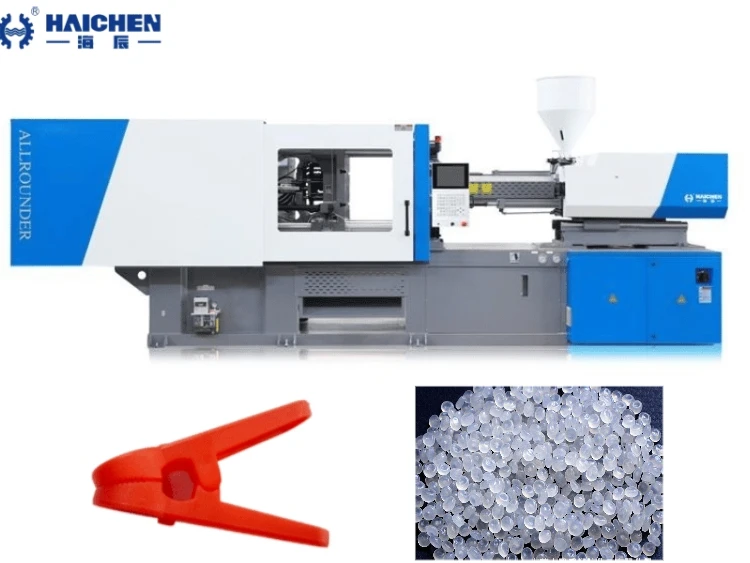
As an experienced injection molding machine manufacturer, Haichen Machinery has worked with over 1,000 factories worldwide on plastic clothespin raw materials selection and processing optimization.
This guide covers the complete range of plastic clothespin raw materials — resins, spring wire, and chemical additives — along with drying parameters, process conditions, and material-specific machine requirements for each.
Essential Plastic Clothespin Raw Materials and Their Properties
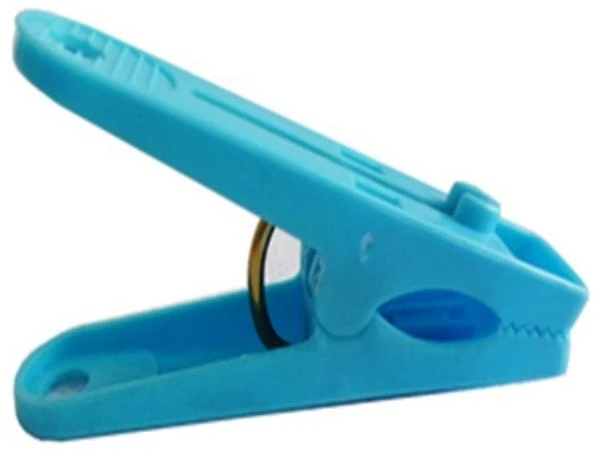
Every clothespin consists of three primary material groups: the plastic halves, the metal spring, and various chemical additives that enhance performance. Each plays a critical role in the final product.
Thermoplastic Resins (The Clothespin Halves)
The plastic body requires a polymer that offers a balance of flexibility, tensile strength, and cost-effectiveness. Two main materials dominate the market:
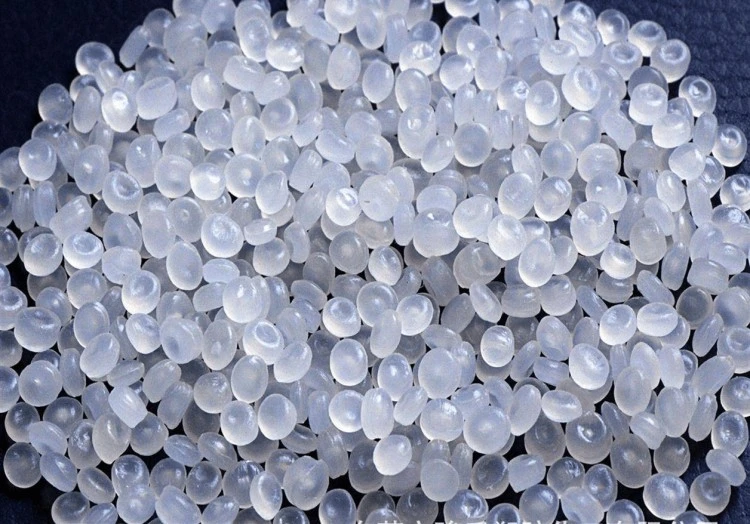
Polypropylene (PP) – The most common material for standard consumer clothespins. It offers excellent fatigue resistance (bending repeatedly without snapping), high chemical resistance, and very low raw material cost. Injection molding grade PP with a medium-to-high Melt Flow Index (MFI) is used to ensure the molten plastic completely fills the thin walls of multi-cavity molds quickly.
High-Impact Polystyrene (HIPS) – Used for more rigid, premium, or brittle-feeling clothespins. It provides higher rigidity than PP, resulting in less flexing under heavy loads, but is more prone to snapping if dropped on concrete or over-extended.
Other Resin Options for Special Applications:
- PA66 (Nylon) – Used for high-temperature or heavy-load applications. Cost is 3-4 times higher than PP, but service life can be up to 2 times longer.
- TPE/TPR (Thermoplastic Elastomer) – Used for anti-slip clothespin heads that require soft contact with clothing. Highly flexible, non-slip, but more expensive.
- PLA/PBAT (Biodegradable Materials) – Used for eco-friendly clothespins. Environmentally friendly but lower strength and slower molding cycle.
Spring Wire (The Tension Mechanism)
The gripping force comes from a metal spring. While plastic clothespin raw materials primarily focus on the polymer halves, the spring wire is equally critical to product performance. Since clothespins are constantly exposed to outdoor moisture and rain, corrosion resistance is critical.
Galvanized Steel Wire – The industry standard for mass-market clothespins. Carbon steel coated with a protective zinc layer offers high tensile strength and excellent spring memory at a low price point.
Stainless Steel Wire (Grade 201 or 304) – Used for premium, rust-free, or marine-grade clothespins. Significantly more expensive than galvanized wire, but virtually immune to rust, preventing brown stains on wet clothing.
Essential Chemical Additives (The Compound Mix)
Raw plastic resins degrade quickly under direct environmental exposure. These masterbatch additives are mixed into the plastic clothespin raw materials right before injection molding to ensure long-term durability:
UV Stabilizers – Crucial for outdoor longevity. Without a UV masterbatch, sunlight rapidly breaks down polymer chains, causing clothespins to become chalky, brittle, and snap within a single summer season.
Color Masterbatches – Highly concentrated pigments added to clear or milky raw pellets, giving clothespins their bright, uniform colors.
Impact Modifiers – Sometimes added to cheaper recycled plastics to increase toughness and prevent the peg legs from shattering under high pressure.
How to Choose Between PP and HIPS for Your Clothespin
Use this decision matrix to select the optimal resin for your specific application:
| Application Condition | Recommended Resin | Reason |
|---|---|---|
| Outdoor use (direct sunlight exposure) | PP + UV stabilizer | PP has superior UV fatigue resistance compared to HIPS |
| Indoor / retail display use | HIPS | Higher surface gloss, brighter color appearance |
| Heavy-duty use (thick blankets, multiple layers) | PP | High fatigue strength, resists breaking under repeated bending |
| Low cost and fast cycle time priority | PP | Lower material cost, shorter molding cycle |
| Surface coating or plating required | HIPS | Higher surface polarity provides better adhesion for coatings |
Material Cost Comparison per 1,000 Clothespins
Understanding the cost impact of each material option helps optimize your production budget:
| Material Solution | Cost per kg | Part Weight | Cost per 1,000 pcs | Pros and Cons |
|---|---|---|---|---|
| PP (virgin resin) | $1.20 | 5.5g | $6.60 | High toughness, good fatigue resistance, moderate cost |
| PP (30% rPET blend) | $0.84 | 5.5g | $4.62 | 30% cost reduction, eco-friendly, slightly lower toughness |
| HIPS (virgin resin) | $1.35 | 5.5g | $7.43 | High rigidity, excellent surface finish, but more brittle |
Key insight: Switching from virgin PP to a 30% rPET blend can save approximately $2,000 per year for a production line running 1 million clothespins annually, while maintaining acceptable mechanical properties.
The Key to Adapting Raw Materials for Producing Plastic Clothespins in Injection Molding
Different raw materials have strict restrictions on injection molding parameters. Haichen equipment achieves precise matching through intelligent control. Below is a comparison of process requirements for common materials:
| Raw Material | Drying Temp / Time | Barrel Temp (℃) | Mold Temp (℃) | Special Process Requirements |
|---|---|---|---|---|
| PP (Polypropylene) – Most Common | 80–100℃ / 1–2h | 200–230 | 20–60 | High-pressure holding to prevent shrinkage |
| HIPS (High-Impact Polystyrene) | 75–85℃ / 1–2h | 180–220 | 30–60 | High-speed filling to prevent melt lines |
Drying and Moisture Control
PP and HIPS can absorb surface moisture. Using a dehumidifying dryer with the parameters shown above prevents bubbles, splay marks, and hydrolysis during injection. Inadequate drying leads to weak parts and shortened mold life.
Haichen Technical Solutions
For the different processing characteristics of PP and HIPS, Haichen uses independent temperature control modules at the nozzle section (±1℃ accuracy) to achieve dynamic variable temperature control, effectively reducing flow marks and surface defects. Our servo energy-saving system saves 40%–60% energy compared to conventional hydraulic presses when producing PP clothespins, while maintaining stable injection speed to ensure consistent filling across all cavities of multi-cavity molds.
Advantages of HAICHEN Injection Molding Machine in Raw Material Processing
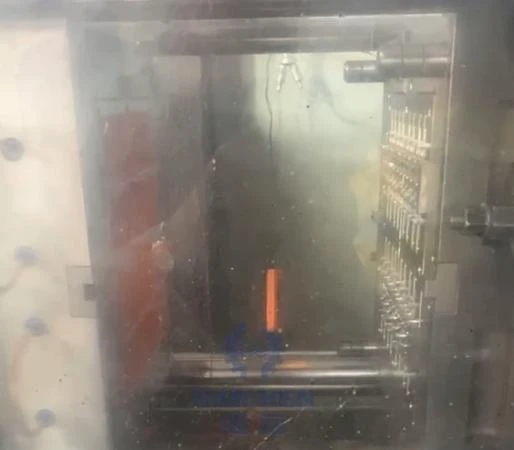
Targeting the common thin-wall and multi-structure characteristics of plastic clothespins, our equipment innovation focuses on three core areas:
Precision Color Matching System
Through a real-time online masterbatch mixing device (±0.5% accuracy), we effectively solve batch color difference issues in PP clothespins, improving product appearance consistency and reducing raw material waste.
Thin-Wall High-Speed Injection Molding
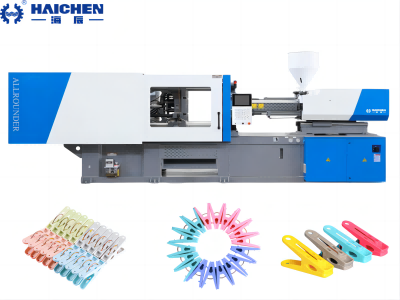
HAICHEN high-speed machine series (HCK-H series) are specifically designed for high-speed filling of thin-wall products. For a clothespin with 1.2mm wall thickness, the high-speed machine achieves injection speeds of 400mm/s or higher, with a single-piece cycle time of just 12 seconds – 25% higher efficiency than the industry average. Equipped with accumulator technology and servo-hydraulic drive systems, these machines deliver instantaneous high-pressure injection, making them especially suitable for multi-cavity molds and continuous high-volume production of thin-wall parts.
Flexible Mold Adaptation
A South American customer case illustrates this advantage: the customer produces anti-slip clothespins with a side-sealing structure. HAICHEN’s five-axis linkage clamping system achieves 0.03mm-level flash control, ensuring stable molding of complex structures.
Fast Color and Material Changeover
Our machines are equipped with efficient purging systems that reduce downtime during material or color changes. This flexibility is especially valuable for manufacturers producing different clothespin grades or colors on the same line.
Common Defects and Material-Related Solutions
When defects occur, the root cause often traces back to material selection or processing parameters. Use this table to diagnose and resolve issues:
| Defect | Likely Material Cause | Recommended Solution |
|---|---|---|
| Surface bubbles / splay marks | Insufficient drying, residual moisture | Extend drying time, check dryer temperature, verify material moisture content below 0.1% |
| Flash / burrs | MFI too high (material too fluid) | Switch to lower MFI grade, or reduce injection pressure |
| Short shot (incomplete filling) | MFI too low (material too viscous) | Switch to higher MFI grade, or increase melt temperature |
| Ejection warpage / deformation | Inconsistent shrinkage | Increase cooling time, switch to lower-shrinkage resin |
| Color mismatch between batches | Uneven masterbatch dispersion | Use online mixing system (HAICHEN achieves ±0.5% accuracy) |
How Plastic Clothespin Raw Materials Affect Machine Selection
Different plastic clothespin raw materials impose different demands on your injection molding machine:
- PP (Polypropylene): Requires moderate injection pressure but benefits from high-speed filling to prevent premature cooling. Haichen’s HCK series with servo-hydraulic drive delivers consistent pressure and speed for PP clothespins.
- HIPS (High-Impact Polystyrene): Requires higher injection speed to prevent weld lines and flow marks. Our HCK-H high-speed series, with injection speeds of 400mm/s and above, is specifically designed for HIPS and other thin-wall materials.
- UV Masterbatches and Colorants: These additives can affect melt flow and require gentle screw design to prevent thermal degradation. Haichen’s machines feature precision mixing sections and real-time temperature control to preserve additive effectiveness.
Frequently Asked Questions About Plastic Clothespin Raw Materials
Q: Which resin is best for outdoor plastic clothespins?
A: Polypropylene (PP) is the top choice for outdoor clothespins, offering excellent fatigue resistance, chemical resistance, and low cost. For premium rust-proof requirements, we recommend stainless steel springs paired with PP bodies. We can help you select the optimal material combination based on your specific application and budget.
Q: What are the differences in drying and processing parameters between PP and HIPS?
A: PP requires drying at 80–100°C for 1–2 hours, with a barrel temperature of 200–230°C. HIPS requires drying at 75–85°C for 1–2 hours, with a barrel temperature of 180–220°C. HAICHEN machines feature independent temperature control modules (±1℃ accuracy) that can precisely set parameters for each material to ensure optimal molding quality.
Q: How does HAICHEN handle materials containing UV stabilizers and color masterbatches?
A: Our real-time online masterbatch mixing device achieves ±0.5% accuracy, evenly dispersing additives without thermal degradation. The screw design features gentle mixing sections that ensure color consistency and UV protection while reducing material waste.
Q: What is the actual efficiency of HAICHEN high-speed machines in thin-wall clothespin production?
A: The HAICHEN HCK-H series high-speed machines are specifically designed for thin-wall products, achieving injection speeds of 400mm/s or higher. For 1.2mm wall thickness clothespins, the single-piece cycle time is just 12 seconds – 25% higher than the industry average. Paired with the five-axis linkage clamping system, even complex structures can mold stably. For detailed technical proposals, please visit our injection molding machine page or submit an inquiry via our contact page. More company information is available on our about us.


