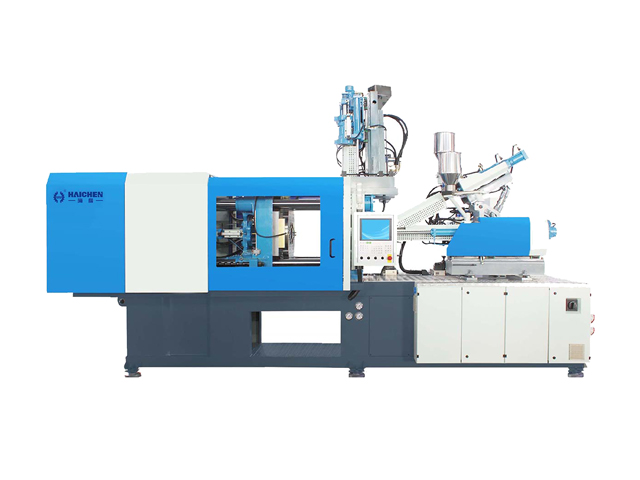
If you are evaluating a PVC pipe fittings injection molding machine, you have probably noticed that different suppliers quote very different prices for machines that look similar on paper. The tonnage might be the same, the clamping system might look comparable, but the price gap can be significant. Where does that difference come from? The answer often lies in one component: the screw.
The screw is the component that directly touches the material. It pushes, compresses, melts, and homogenizes the PVC before injection. A well-designed screw produces consistent, high-quality fittings year after year. A poorly designed screw creates defects, breaks down, and costs you money in scrap and downtime. For a PVC pipe fittings injection molding machine, the screw is not just another part — it is the heart of the entire system.
PVC is not an easy material to process. It is thermally sensitive, corrosive, and highly viscous. Processing PVC pipe fittings requires a screw that is built differently — with corrosion resistance, low-shear geometry, proper compression ratio, and the right length-to-diameter ratio. A standard screw designed for PP or PE will fail quickly when running PVC, leading to black spots, degraded material, and short screw life.
This article explains why the screw matters so much for your PVC pipe fittings injection molding machine and what you need to look for when evaluating one.
What the Screw Does in PVC Injection Molding
- The Three Functions of a Screw
- Why PVC Requires a Different Screw Design
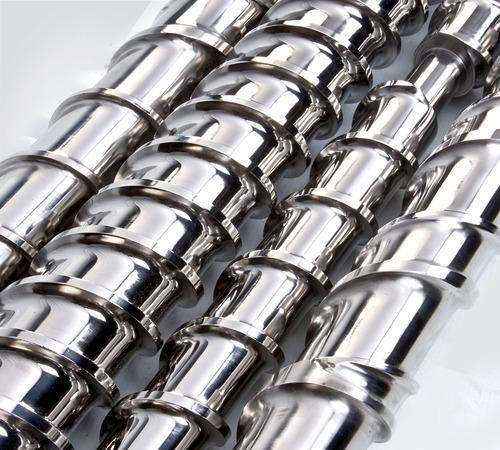
The Three Functions of a Screw
The screw performs three essential functions in every injection molding cycle. First, it conveys the PVC pellets forward from the hopper into the barrel. Second, it compresses the material, generating friction that helps melt the PVC. Third, it homogenizes the melt, ensuring a uniform temperature and composition before injection.
For PVC, however, the challenge is managing shear heat. Too much friction creates excessive heat — and PVC degrades quickly when overheated. Too little friction means the material does not melt properly. The screw must balance these competing demands. In a PVC pipe fittings injection molding machine, this balance is even more critical because fittings have complex geometries that require consistent melt quality.
Why PVC Requires a Different Screw Design
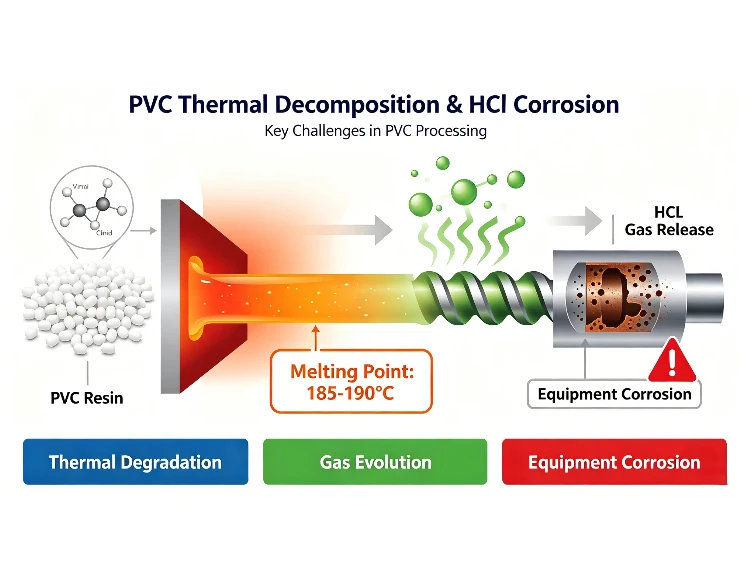
PVC is not like PP or PE. It has three specific characteristics that demand a dedicated screw design. First, PVC degrades when overheated, so it requires low shear to prevent excessive heat generation. Second, PVC releases acidic gases during heating, so the screw and barrel must resist corrosion. Third, PVC has high viscosity, so the screw must provide adequate compression without creating hot spots.
A standard screw designed for PP or PE generates too much shear heat for PVC. That heat causes the PVC to degrade, releasing HCl gas and creating black spots in the finished fittings. Over time, the corrosive gas attacks the screw surface, causing pitting and wear that shortens screw life. A dedicated PVC pipe fittings injection molding machine screw addresses all three of these challenges through specialized design features.
When selecting a PVC pipe fittings injection molding machine, pay close attention to the screw specification. It is not an area where you want to compromise.
What Makes a Good PVC Screw – Four Key Features
- Corrosion-Resistant Material
- Low-Shear Geometry
- Proper Compression Ratio
- Appropriate L/D Ratio
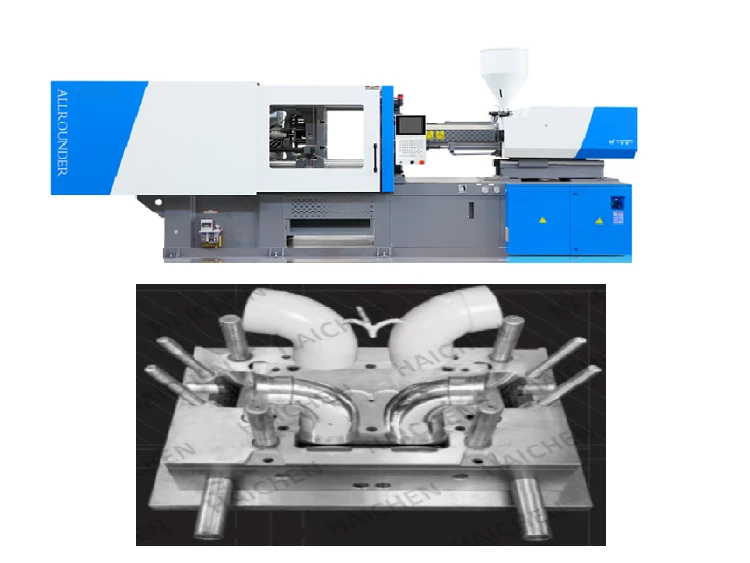
Corrosion-Resistant Material
PVC releases hydrochloric acid (HCl) gas when it heats up. This gas attacks the screw surface, causing pitting, corrosion, and eventually failure. A good PVC pipe fittings injection molding machine screw must resist this corrosion.
Industry practice calls for chrome-plated or alloy steel screws with hard chrome plating for corrosion resistance. The chrome plating creates a barrier that protects the screw from HCl attack. Some manufacturers use bimetallic barrels for even better wear and corrosion resistance.
When evaluating a PVC pipe fittings injection molding machine, ask the supplier: “What material is your screw made of? Is it chrome-plated or nitrided?” If the answer does not include corrosion-resistant treatment, keep looking.
Low-Shear Geometry
PVC is shear-sensitive. Excessive shear generates heat, and heat degrades PVC. A good PVC pipe fittings injection molding machine screw uses low-shear geometry to prevent overheating.
Low-shear design means gradual transitions between screw sections rather than abrupt changes. The screw should have shallow flight depths to reduce friction and a pointed or tapered tip to minimize material stagnation. Some manufacturers describe this as a “multi-compression screw” or “double-wave design” that delivers low shear with high melt performance.
When evaluating a PVC pipe fittings injection molding machine, ask: “Is your screw designed for low shear? What specific features reduce shear heat?”
Proper Compression Ratio
Compression ratio is the ratio of the screw’s feed zone depth to its metering zone depth. For PVC, the recommended compression ratio is between 1.6 and 2.5.
Too high a compression ratio generates excessive shear heat, causing PVC degradation and black spots. Too low a compression ratio results in incomplete melting, leading to poor part quality and weak weld lines. For rigid PVC, a compression ratio of 2.0 to 2.5 is suitable. For soft PVC, you can go slightly higher, but for hard PVC, keep it as low as possible.
When evaluating a PVC pipe fittings injection molding machine, ask: “What is the compression ratio of your screw? Why did you choose that ratio for PVC?”
Appropriate L/D Ratio
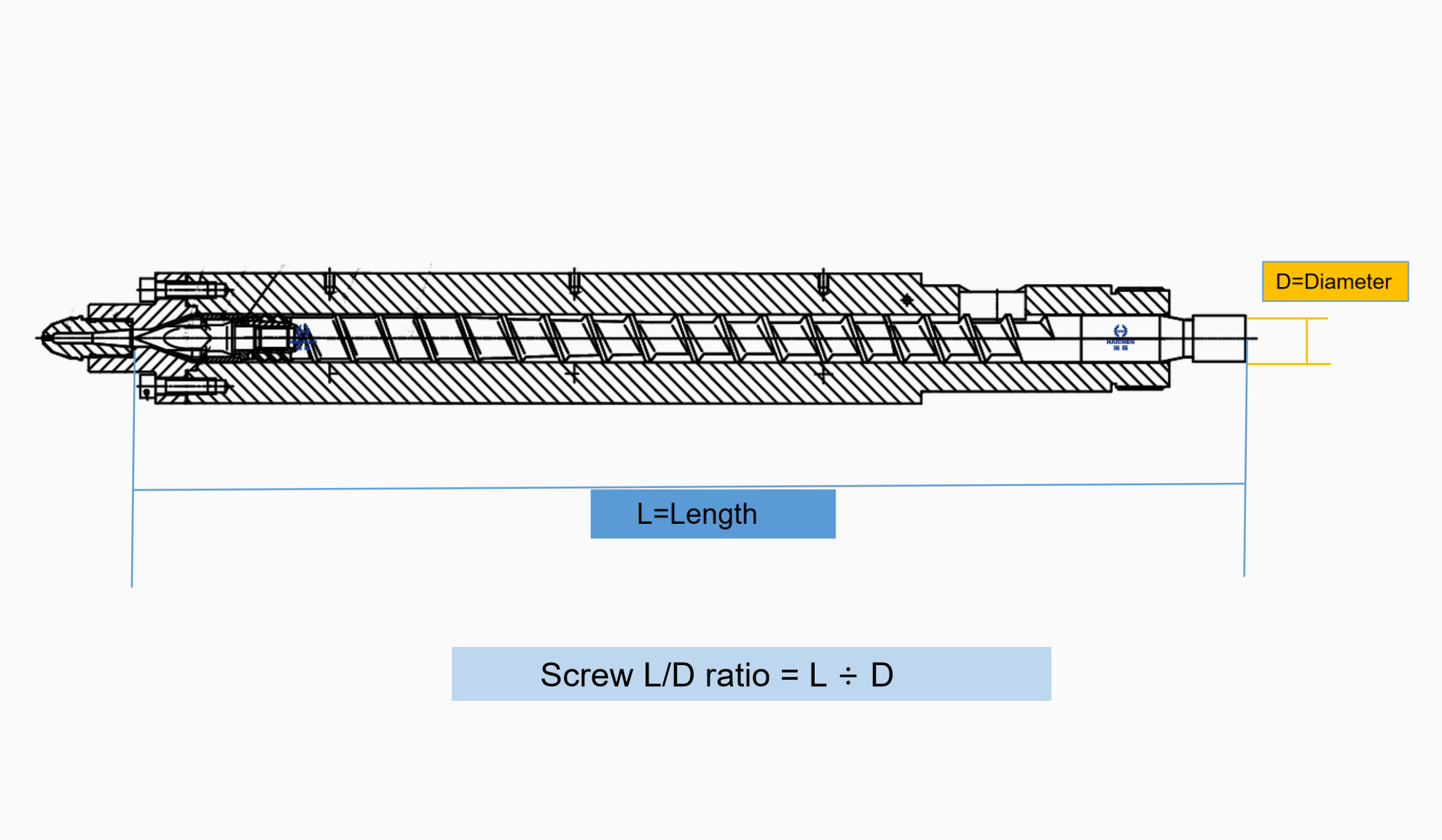
The length-to-diameter (L/D) ratio affects how long the material stays in the barrel and how much shear it experiences. For PVC, a longer L/D ratio can actually increase degradation risk because the material stays in the barrel longer.
The recommended L/D ratio for PVC injection molding screws is typically 18:1 to 22:1. A shorter L/D ratio reduces residence time, which helps prevent thermal degradation of PVC. However, the screw must still be long enough to provide adequate melting and homogenization.
When evaluating a PVC pipe fittings injection molding machine, ask: “What is the L/D ratio of your screw? How did you determine the optimal ratio for PVC?”
How Screw Design Affects Pipe Fitting Quality
- Surface Quality – Bubbles, Black Spots, and Gloss
- Dimensional Accuracy – Consistency Across Cavities
- Strength – Avoiding Weld Lines and Weak Points
Surface Quality – Bubbles, Black Spots, and Gloss
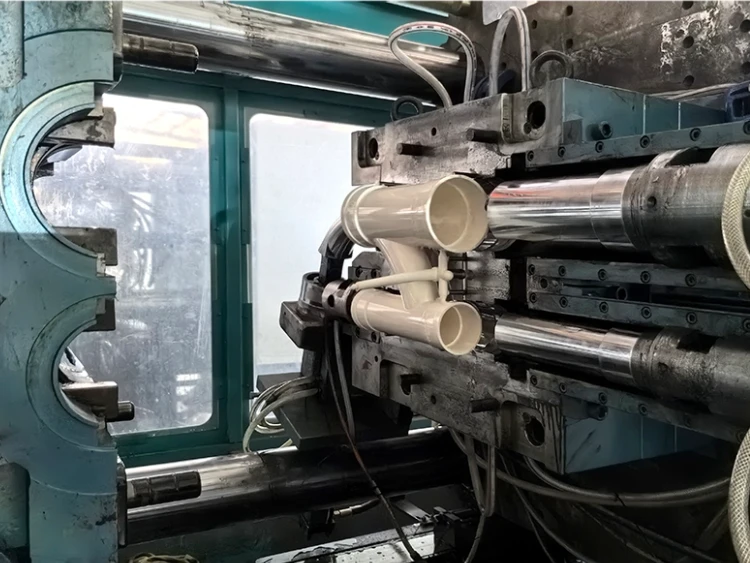
Poor screw design directly causes surface defects. Excessive shear heat degrades PVC, creating black spots that appear as dark discolorations on the fitting surface. Inadequate venting and poor melt homogeneity trap gases, creating bubbles in the finished part.
A well-designed PVC pipe fittings injection molding machine screw produces a melt that is uniform in temperature and composition. That uniform melt fills the mold evenly, resulting in smooth, glossy surfaces with no defects. The right screw makes this possible.
Dimensional Accuracy – Consistency Across Cavities
PVC’s high viscosity means small variations in melt temperature or pressure cause large variations in fill behavior. If the screw design creates temperature variations in the melt, different cavities will fill differently.
A good PVC pipe fittings injection molding machine screw ensures consistent melt quality across every cycle. That consistency translates to consistent dimensions across all parts, cycle after cycle. When you run multi-cavity molds, this consistency is especially critical.
Strength – Avoiding Weld Lines and Weak Points
Melt homogeneity directly affects weld line strength. When melt fronts meet inside the mold, they must be at the same temperature and viscosity to fuse properly. A poorly designed screw creates temperature variations in the melt, leading to weak weld lines.
Weak weld lines reduce the strength of the finished pipe fitting. For pressure-rated fittings, this can be a serious safety concern. A good PVC injection molding machine screw delivers a homogeneous melt that produces strong, reliable fittings.
What to Look for When Evaluating a PVC Screw
Questions to Ask Suppliers
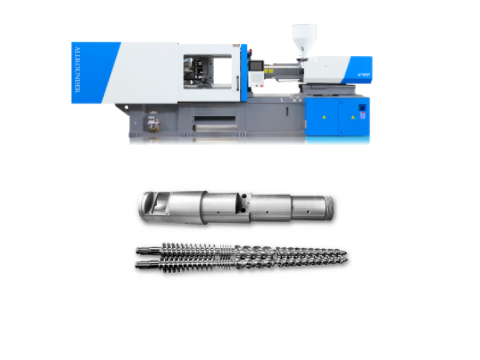
When evaluating a PVC pipe fittings injection molding machine, ask these five questions about the screw:
-
“What material is your screw made of?” Look for chrome-plated, nitrided, or bimetallic options.
-
“What is the compression ratio?” Should be between 1.6 and 2.5 for PVC.
-
“What is the L/D ratio?” Around 18:1 to 22:1 is typical for PVC.
-
“Is the screw tip designed for low shear?” Look for a pointed or tapered tip.
-
“How long do your PVC screws typically last?” A good PVC screw should last 3–5 years with proper maintenance.
Red Flags to Watch For
Watch for these warning signs when evaluating a supplier:
-
“We use the same screw for all materials” — PVC requires a dedicated screw design.
-
“Chrome plating is optional” — It is not optional; it is required for PVC.
-
“We do not know the compression ratio” — An experienced supplier should know this.
-
“No special shutdown procedure is needed” — PVC requires cleaning with PS or PE before shutdown.
-
“We have not run PVC before” — If they lack PVC experience, your PVC pipe fittings injection molding machine may fail prematurely.
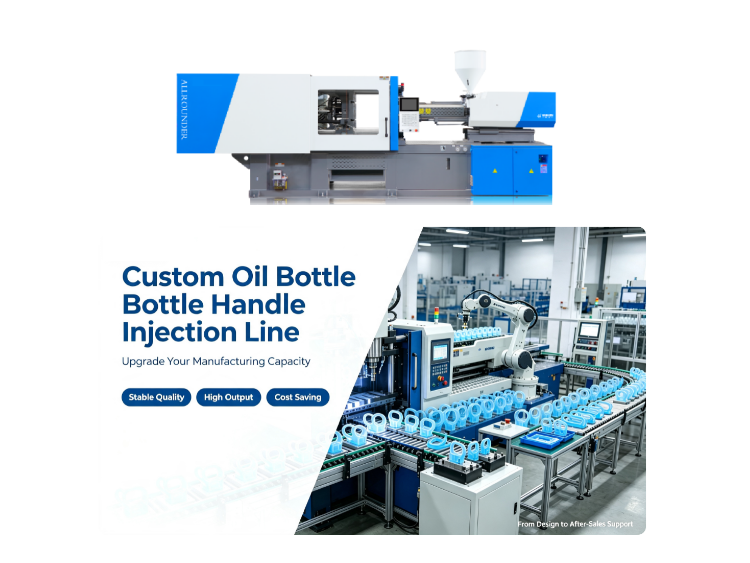
Haichen specializes in PVC pipe fittings injection molding machines with dedicated screw designs. Our PVC pipe fittings injection molding machine feature hard chrome plating for corrosion resistance, low-shear geometry to prevent PVC degradation, and optimized compression ratios for consistent melt quality. With over 10 years of experience in PVC processing, we understand what it takes to keep your production running reliably.
📩 Contact Haichen for PVC pipe fittings injection molding machines with screws engineered specifically for PVC.