https://www.youtube.com/watch?v=O767Hwde5I4
Where Does the Cost Come From in Plastic Spoon Production?
Raw Materials – The Biggest Slice of the Pie
Raw materials are by far the largest cost driver in plastic spoon and fork injection molding. For the two most common materials, PP and PS, raw materials typically account for 60–70% of total operating costs. The table below gives a quick comparison:
| Material | Typical Price Range | Main Characteristics |
|---|---|---|
| PS (Polystyrene) | $1.0–2.0/kg | Low cost, rigid but brittle |
| PP (Polypropylene) | $1.2–2.5/kg | Flexible, durable, better impact strength |
| PLA (Polylactic Acid) | ~$2.5–3.5/kg | Biodegradable, but higher cost |
PP offers better flexibility and impact resistance, which makes it a good choice for spoons that need to bend without breaking. PS is cheaper but more brittle, so it works well for standard forks and knives. PLA meets environmental regulations but costs significantly more and requires specialized equipment.
Machine and Energy Costs
Energy consumption is another major piece of the cost puzzle. Traditional fixed‑pump hydraulic machines run continuously, wasting power during cooling and holding phases.
Servo‑hydraulic machines, on the other hand, adjust their power consumption based on real‑time demand. This means they only use energy when they are actually moving. As a result, they can cut energy use by 30–50% compared to older hydraulic models. For a factory that runs 24/7, that kind of saving adds up very quickly.
Labor and Scrap Rate
Labor and scrap are the two hidden costs that many manufacturers underestimate. A semi‑automated cutlery line typically needs 4–6 operators per shift for part removal, sprue cutting, and packing. Meanwhile, every 1% increase in scrap rate directly eats into your profit margin. At a 5% scrap rate, you are wasting 5 out of every 100 parts — along with all the material, energy, and labor that went into them.
How to Reduce Material Costs Without Sacrificing Quality
Material Selection – PS, PP, or PLA
Choosing the right material is not just about the price per kilogram. It is about total cost of ownership.
- PS is the cheapest option and flows easily. That makes it great for high‑volume standard cutlery. However, it is brittle and tends to break under stress.
- PP costs a bit more but offers better flexibility and impact resistance. For spoons that need to scoop without snapping, PP often gives you better value.
- PLA is biodegradable and meets environmental regulations. However, it costs significantly more and needs specialized processing equipment.
If your customers do not require biodegradable products, PP or PS will give you the lowest per‑unit cost. If environmental compliance is a must, then you need to factor in both the higher material cost and the equipment upgrades required for PLA.
Optimize Part Design and Wall Thickness
The most direct way to reduce material usage is to reduce wall thickness without compromising strength. Disposable cutlery can have walls as thin as 0.3mm. Every 0.1mm reduction can save you 3–5% in material.
Using mold flow analysis software during the design phase helps you identify where you can remove material without weakening the product. This also shortens cooling time and increases output.
Use Recycled Materials Where Possible
Recycled materials offer significant cost advantages:
- rPS (recycled polystyrene) is typically 15–25% cheaper than virgin PS.
- rPET is also becoming more common in non‑food‑contact applications.
On top of that, rPS production uses much less energy and reduces carbon emissions by up to 60% compared to virgin PS. However, recycled materials require machines with better screw wear resistance and temperature control precision to handle variations in material consistency.
How the Right Injection Molding Machine Lowers Per-Unit Cost
Servo Energy Saving – Cut Your Electricity Bill by 30–50%
A servo‑driven plastic spoon injection molding machine adjusts its power usage based on actual demand. During holding and cooling, the motor almost stops. This is like a car that shuts off at a red light instead of idling.
Compared to traditional fixed‑pump hydraulic machines, servo‑hydraulic plastic spoon and fork injection molding machines can save you 30–50% on energy. For a 24/7 cutlery factory, that saving can easily amount to thousands of dollars per year.
Haichen’s HCK series plastic spoon injection molding machines come with servo energy‑saving as standard. They deliver 20–40% energy savings while maintaining high‑speed performance.

High‑Speed, Multi‑Cavity Production – Lower Cost Per Part
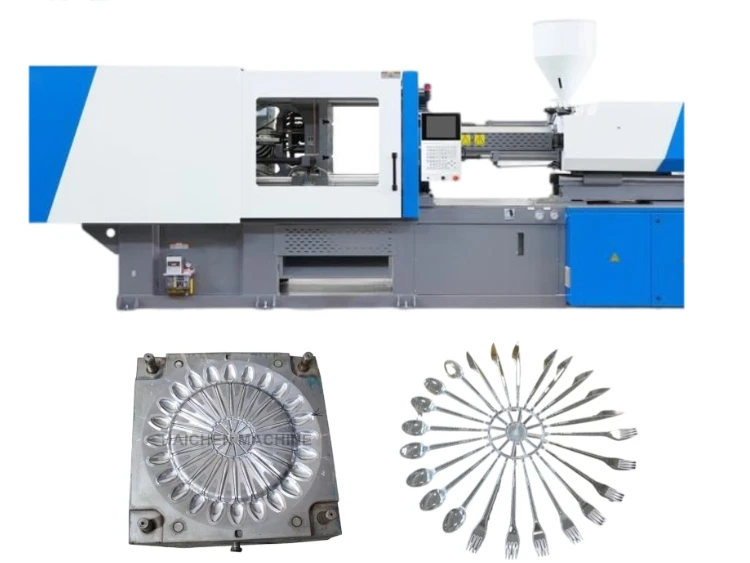
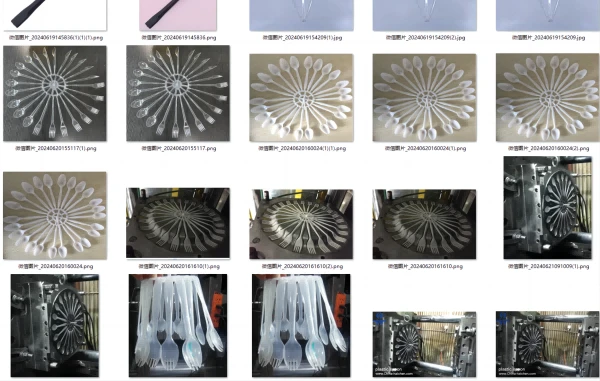
Disposable cutlery is a thin‑wall product that needs high‑speed injection molding. The more cavities your mold has, the more parts you produce per cycle. And the shorter your cycle time, the more parts you produce per day.
Typical cutlery molds run 24 to 48 cavities, with cycle times as short as 5–7 seconds for thin‑wall designs. Higher cavity counts reduce the per‑part cost of machine time and labor.
Haichen HCK series plastic spoon injection molding machines for cutlery typically use 180–280 ton models, configured based on your mold size and cavity count.
Automation – Reduce Labor Dependency
Automation is the most direct way to cut labor costs. Robot part removal and automatic sprue cutting can save you 2–3 operators per shift.
A fully automated line runs from injection to packing with zero human contact, which also improves hygiene standards. Haichen HCK series plastic spoon injection molding machines come standard with CE12 robot interfaces. They are plug‑and‑play with most major robot brands.
Stable Production – Reduce Scrap Rate
Stable production is the foundation of a low scrap rate. Haichen HCK series plastic spoon injection molding machines feature high‑precision electronic rulers and closed‑loop control systems. These ensure consistent shot weight and part dimensions.
Lowering your scrap rate from 5% to 2% is like adding 3% more output without any extra material or energy. For a factory making tens of millions of parts per year, that means hundreds of thousands of extra good parts annually.
Real-World Example – How Much Can You Save?
Typical Cutlery Production Scenario
Let us compare two configurations for a 24‑cavity PP cutlery line running 24/7:
| Cost Item | Traditional Configuration | Haichen Optimized Configuration | Savings |
|---|---|---|---|
| Energy per part | Baseline | –30% | Significant |
| Labor | 4 people/shift | 1 person/shift | –75% |
| Scrap rate | 5% | 2% | –60% |
| Mold amortization | 24 cavities | 32 cavities | –20% |
Annual Savings Calculation
Based on the above comparison, a cutlery factory producing 50 million spoons per year can achieve:
- 15–25% total per-unit cost reduction
- 12–18 months payback period for the equipment investment
- $30,000–50,000 annual savings on electricity alone
- $80,000–120,000 annual savings on labor costs
All together, the right combination of material selection, machine configuration, and automation can reduce your per‑unit cost by 15–25%. And the equipment investment typically pays for itself in 12–18 months through lower energy bills, reduced labor, and higher yield.
Case Study – Southeast Asian Cutlery Manufacturer
A customer in Southeast Asia producing PP cutlery upgraded from a traditional hydraulic machine to a Haichen HCK 230 plastic spoon injection molding machine with servo energy saving. The results:
- Energy consumption dropped 37% in the first month
- Scrap rate dropped from 4.5% to 1.8%
- Labor reduced from 4 operators/shift to 2
- Daily output increased 18% due to shorter cycle times
- Total per-unit cost decreased 22%
- Investment recovered in 14 months
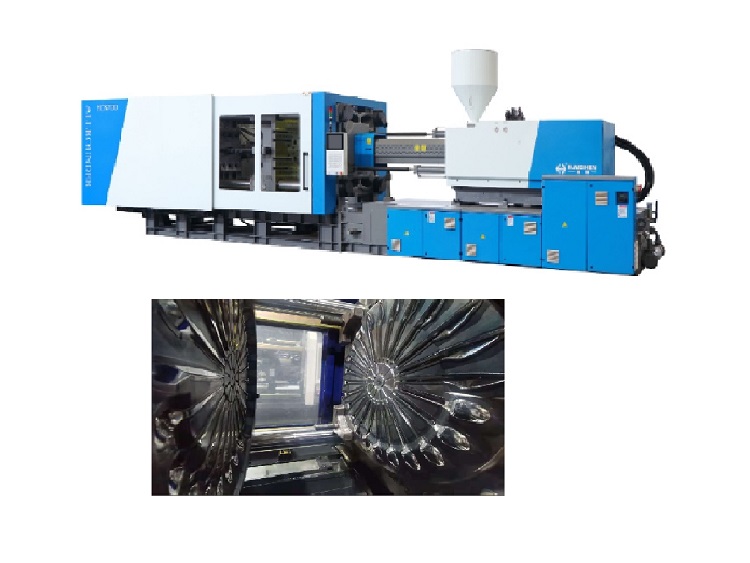
Haichen HCK Series for Spoon and Fork Production
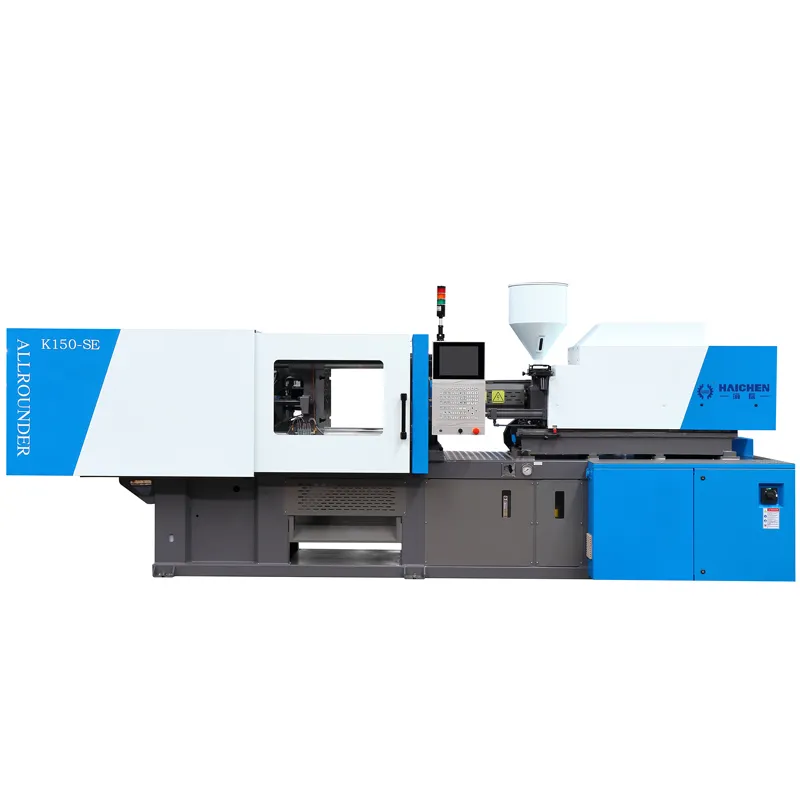
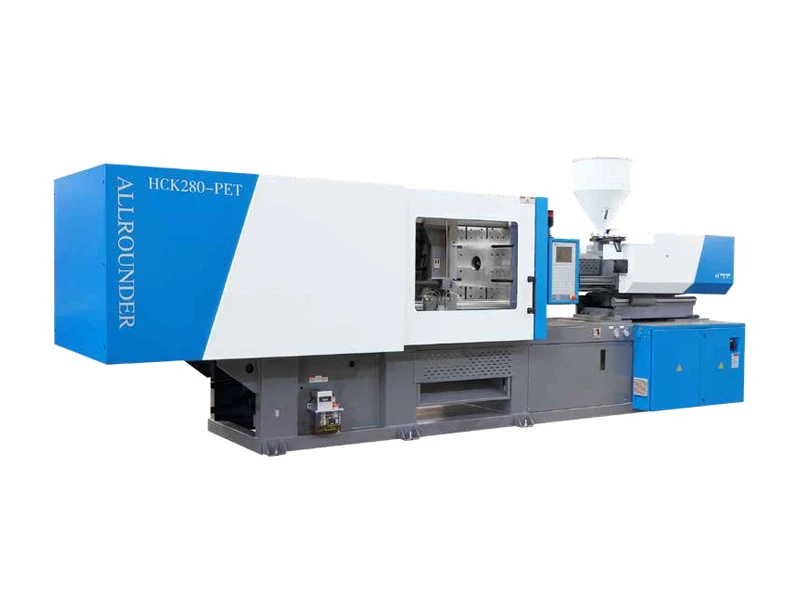
Haichen’s HCK series plastic spoon injection molding machines are designed specifically for high‑volume, thin‑wall cutlery production. Our machines are built for 24/7 operation with minimal maintenance.
Recommended HCK Models for Cutlery Production
| HCK Model | Clamping Force | Recommended Cavities | Best for | Cycle Time (PP) |
|---|---|---|---|---|
| HCK 180 | 180 tons | 16–24 cavities | Spoons, small forks | 8–10s |
| HCK 230 | 230 tons | 24–32 cavities | Standard cutlery sets | 7–9s |
| HCK 280 | 280 tons | 32–40 cavities | High-volume cutlery | 6–8s |
| HCK 310 | 310 tons | 40–48 cavities | Ultra-high volume production | 5–7s |
All Haichen HCK series plastic spoon injection molding machines come with:
- Servo energy saving – reduces electricity costs by 30–50%
- CE12 robot interface – supports automation integration
- Multi-stage injection and holding pressure control – for consistent part quality
- High-precision electronic ruler – for consistent shot weight
- Multi-language control system – supports 21 languages
- Multi-cavity support – up to 48 cavities
Frequently Asked Questions
What is a plastic spoon injection molding machine?
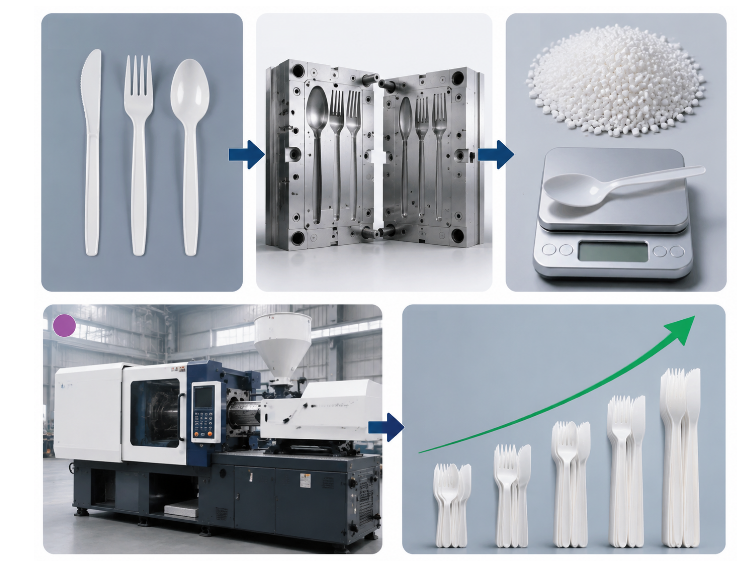
A plastic spoon injection molding machine melts plastic pellets and injects them into a mold to form spoons, forks, and knives. The machine heats the plastic, injects it under high pressure, cools it, and ejects the finished parts. These machines are designed for high‑speed, high‑cavity production of thin‑wall parts.
What is the biggest cost driver in plastic spoon production?
Raw materials typically account for 60–70% of total operating costs. Energy consumption and labor are the next largest cost drivers. A servo‑driven plastic spoon injection molding machine can significantly reduce energy costs.
How much can automation reduce per-unit cost?
Automation can reduce labor costs by 50–75% by cutting operator headcount from 4–5 per shift to 1. Combined with energy savings and reduced scrap, automation typically reduces total per‑unit cost by 15–25%.
What is the payback period for a new plastic spoon injection molding machine?
A servo‑driven plastic spoon injection molding machine typically pays for itself in 12–18 months through lower energy bills, reduced labor, and higher output. In the Southeast Asian case study above, the payback period was 14 months.
Can I use recycled materials in spoon production?
Yes. rPS (recycled polystyrene) is 15–25% cheaper than virgin PS and can produce comparable quality parts. However, recycled materials require a plastic spoon injection molding machine with better screw wear resistance and temperature control precision.
Does Haichen provide whole-line solutions for cutlery production?
Yes. Haichen provides the plastic spoon injection molding machine, mold recommendations, drying system, chilling system, robot, and conveyor. We also provide installation, commissioning, and operator training. Our service covers many countries worldwide.
Haichen Machinery – your plastic spoon injection molding machine partner. From HCK 180 to HCK 310, from 16 to 48 cavities, we help you reduce per‑unit cost and increase output.
Author: Yang, Senior Engineer, Haichen Machinery