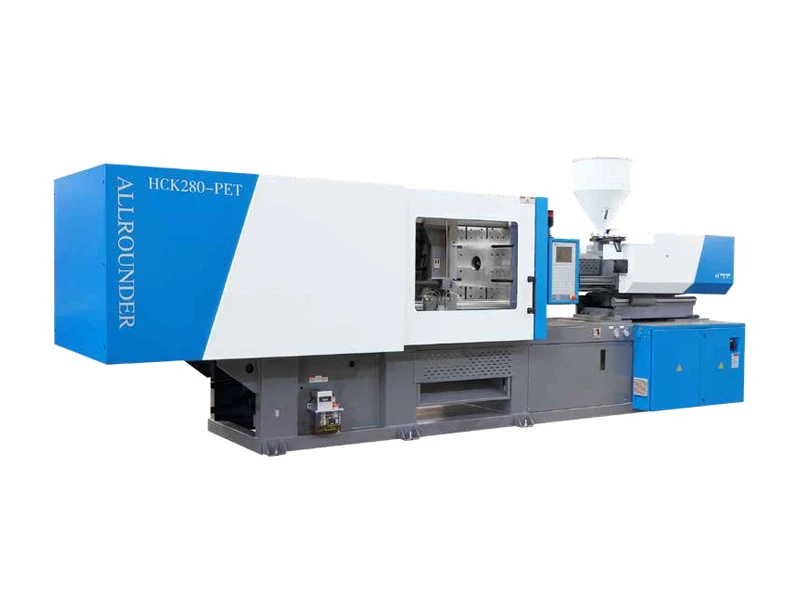
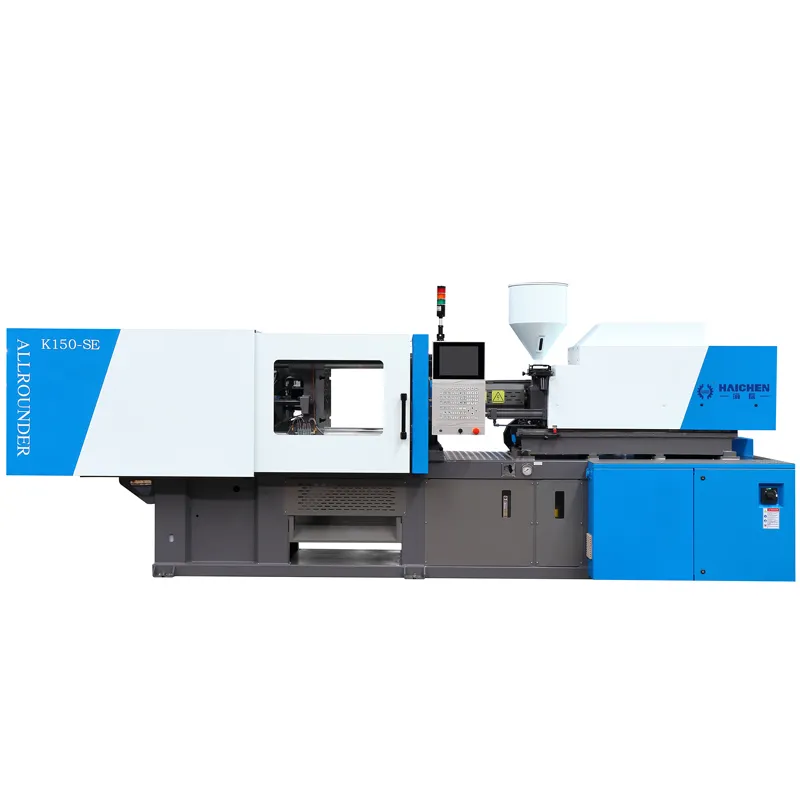
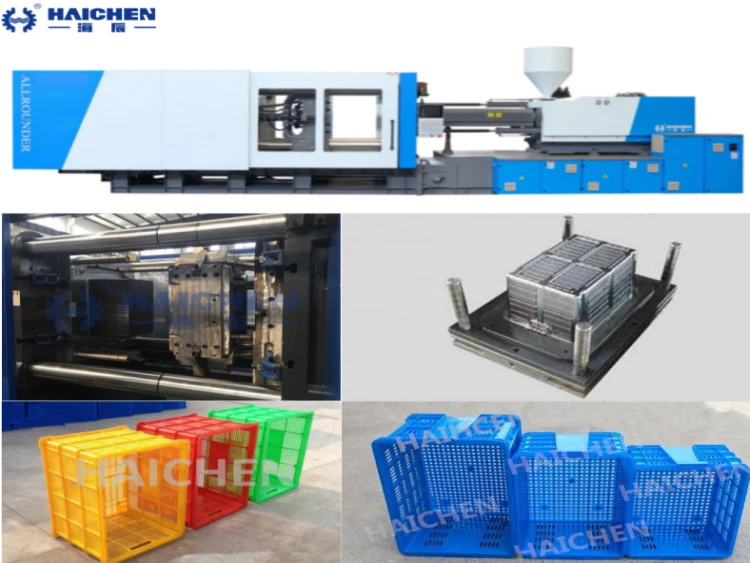
To choose the most suitable plastic crates injection molding production line the most basic requirement is based on the intended use, size, and weight of the plastic crates you want to produce.Then it was deduced to know the size of the mold, the tonnage of the machine, and the amount of automated auxiliary equipment required.
Plastic crates and turnover boxes are indispensable tools in modern warehousing, logistics, and home life. From household storage boxes to fresh produce transport crates, from beer bottle transfer boxes to seafood sealing boxes, the demand is enormous, and the variety is vast.Plastic crates injection molding is almost the only industrial production technology for this type of product. Different application scenarios have significantly different requirements for the structure, materials, and durability of the boxes, which poses a great challenge to the selection of injection molding machines and processes.
Based on the two main uses of home storage and goods transportation, we have accumulated systematic experience from mold design to machine matching. This article aims to share these experiences with global customers in a popular science format, while also looking forward to receiving professional feedback from the market to promote industry progress jointly.As a manufacturer based in Ningbo, Zhejiang, with over ten years of experience in injection molding machine R&D and production, Haichen understands that a “one-size-fits-all” machine configuration cannot meet the complex and ever-changing needs of turnover boxes.
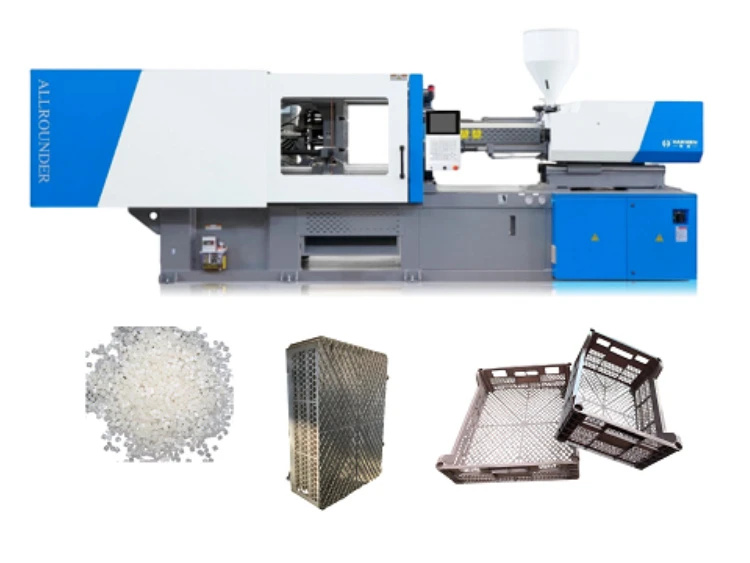
Whether you are a packaging product manufacturer, a logistics equipment purchaser, or a technician in the injection molding industry, we believe this article will provide you with valuable reference for the selection of turnover box production equipment and process optimization.
The three major directions we discussed:
- Types and Material Choices for Plastic Containers
- Technical Steps for Designing a Container Production Line
- How We Pick the Right Injection Molding Machine – Haichen’s Field Method
Types and Material Choices for Plastic Containers
- Home Storage: Lightweight, Large Capacity, Skin‑Friendly PP
- Transport Crates: Open Frames, Complex Ribs, and Special Materials
- Special Heavy-duty durable: From Fresh Produce to Beer Bottle Crates
Home Storage: Lightweight, Large Capacity, Skin‑Friendly PP
Plastic Home storage bins and organizer boxes live indoors. Users care about looks, touch, and environmental safety. These parts usually have thin walls (1.5–2.5 mm) and large footprints (up to 600 × 800 mm). They need to be light yet sturdy. Over the years, we have found that soft‑touch, food‑grade PP works best—it’s non‑toxic, recyclable, and we can add anti‑static or anti‑bacterial agents when needed. For this category, our HCK410 through HCK800 machines deliver the right clamping force and fast filling for thin‑wall, big‑size items.
Transport Crates: Open Frames, Complex Ribs, and Special Materials
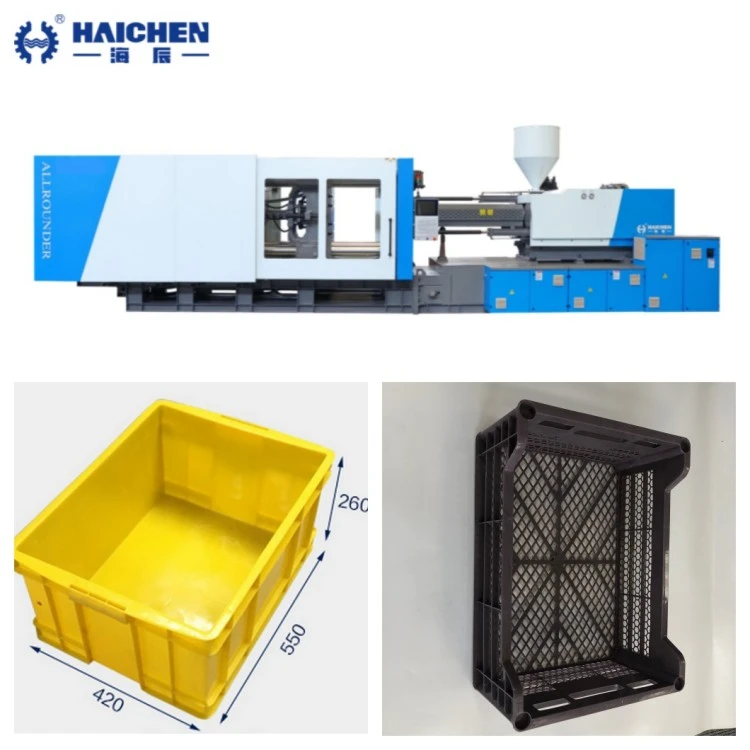
Transport crates cover a wide range: single‑use fruit/vegetable trays, water‑tight seafood boxes, and returnable beverage crates (beer, soda, milk). Their shapes follow their job—most have four open sides to save weight and allow airflow, plus complex inner structures like stiffening ribs, stacking lugs, and slip‑resistant features. Material choice varies: single‑use produce crates use homopolymer PP to keep costs low; sealed seafood boxes need toughened or copolymer PP to survive cold temperatures; returnable drink crates require highly rigid, UV‑resistant modified PP for a long service life.
Special Heavy-duty durable: From Fresh Produce to Beer Bottle Crates
Some containers also need job‑specific details. For beer bottle crates and milk crates the inner walls must have curved seats to hold each bottle, and the crate must handle repeated stacking pressure. Seafood boxes must stay water‑tight, so the mold needs grooves for rubber seals. All these special features directly affect the mold mechanics (sliders, lifters) and later the machine selection.
Technical Steps for Designing a Container Production Line
- Haichen Mold Design: Sliders, Guide Pins, and Runner Systems
- Plastic Crates 3D Mold Analysis: Size, Weight, and Auxiliary Devices
- Process Simulation: Cooling and Injection Speed Control
Haichen Mold Design: Sliders, Guide Pins, and Runner Systems
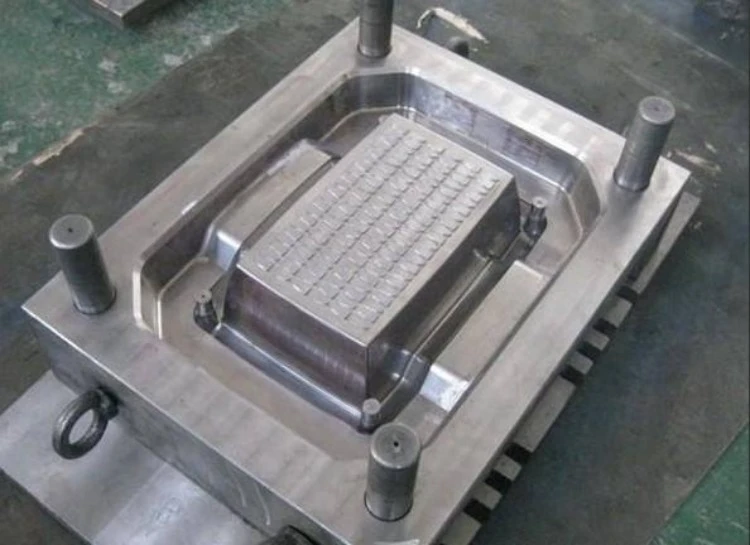
When a crate has open sides or undercuts, the mold must use internal sliders, angle lifters, and guide pins. For example, a beer crate with four open sidewalls requires slider cores to form the holes. A sealed seafood box needs angle lifters to release the locking features. Equally important is the runner layout—for large containers, we strongly recommend hot runners or well‑balanced cold runners. This ensures that melted plastic reaches every cavity at the same time, avoiding weld lines or short shots.
Plastic Crates 3D Mold Analysis: Size, Weight, and Auxiliary Devices
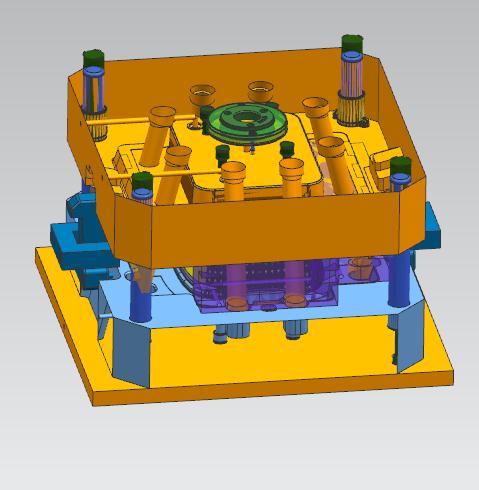
After finishing the basic mold design, we calculate precise numbers from the 3D model:
-
Mold dimensions (L×W×H) and weight – these tell us the machine’s tie‑bar clearance, opening stroke, and lifting capacity.
-
Required auxiliary gear – molds with sliders or hydraulic cores need the injection machine’s hydraulic valve groups (like core‑pull functions) and air connectors. For big core‑pull movements, we often add hydraulic sequence valves. Getting this data before buying the machine prevents retrofit work later.
Process Simulation: Cooling and Injection Speed Control
For large, thin‑wall containers, cooling system design makes or breaks quality. We use mold‑flow software to mimic melt movement and temperature patterns, then improve water channel layout. For instance, home storage boxes often warp at the bottom, so we design conformal cooling along the bottom face. Seafood box sealing edges need very even cooling to stop sink marks. Also, we set multi‑stage injection speed (fast‑slow‑fast) – fast to push material through the cavity, slower when passing sliders to avoid damage, then fast again for pack‑out to reduce voids.
How We Pick the Right Injection Molding Machine – Haichen’s Field Method
- Clamping Force Calculation: Projected Area, Cavity Pressure, and Safety Margin
- Matching Machine Sizes: HCK410 to HCK800 for Different Container Dimensions
- Auxiliary Equipment: Hydraulic Core Pull, Robots, and Quick Mold Change
Clamping Force Calculation: Projected Area, Cavity Pressure, and Safety Margin
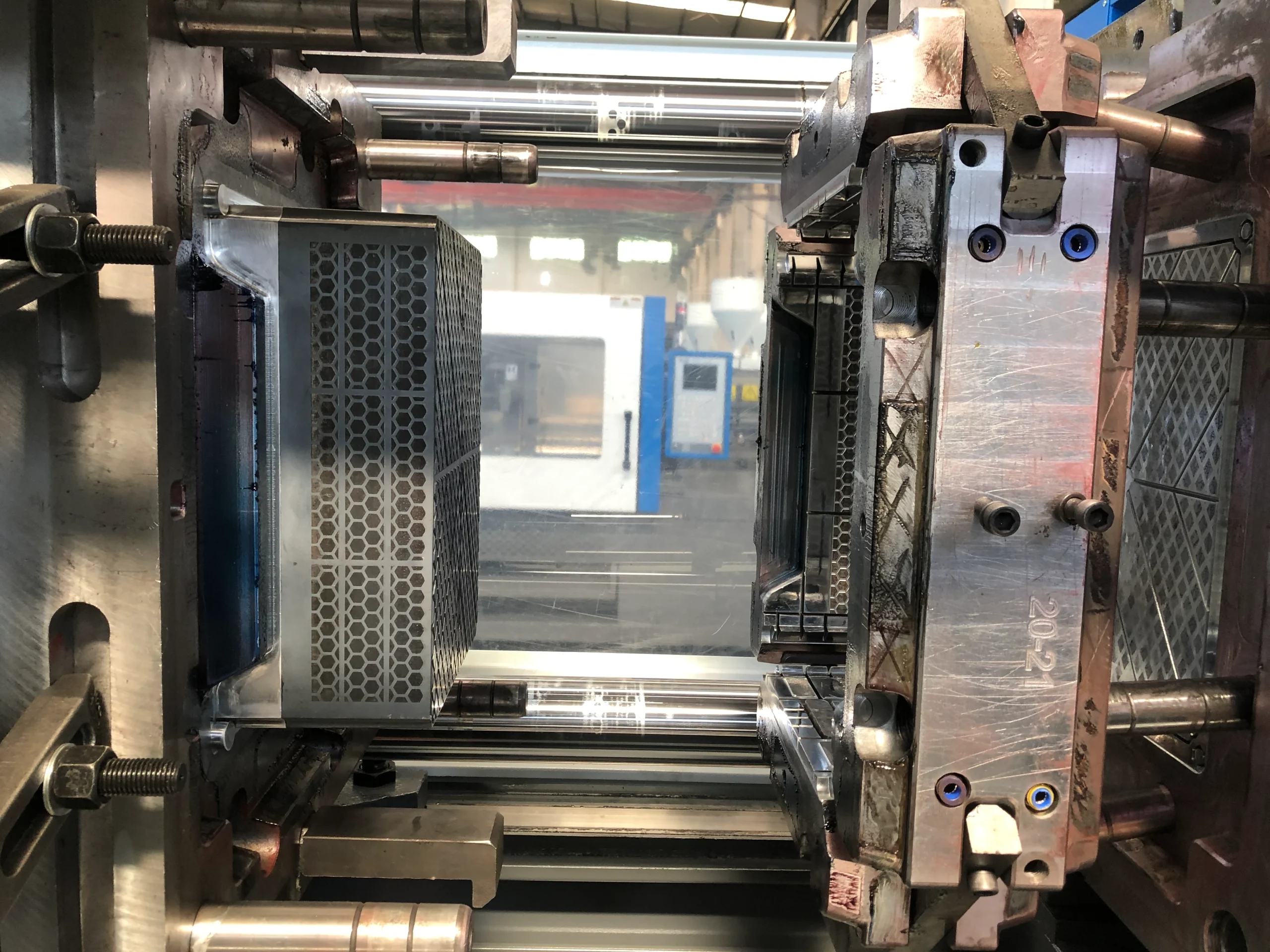
Our first step calculates the required clamping force (tonnage) using this formula:
Clamping force = (projected part area + runner area) × average cavity pressure × safety factor
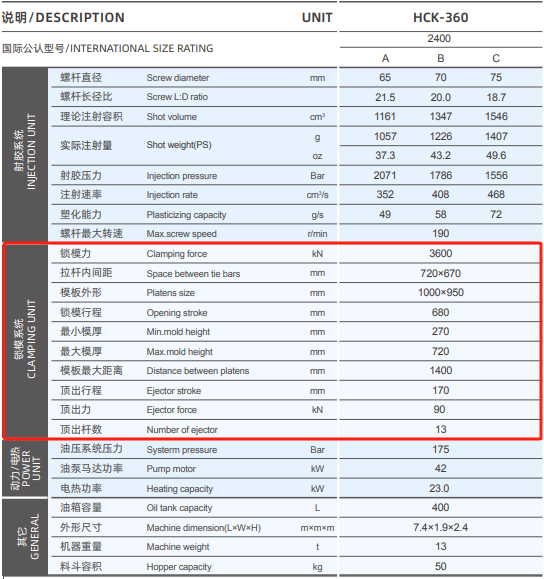
For PP material, we take 350–500 bar average pressure. Take a 600 × 400 mm home storage box – its projected area is about 2400 cm². The base calculation gives 2400 × 500/1000 = 1200 tons (adjusting for real‑world pressure losses). Because sliders also create side forces, we add a 15‑20% safety margin, so we recommend an HCK650 or HCK800. For smaller totes, our HCK410 works fine.
Matching Machine Sizes: HCK410 to HCK800 for Different Container Dimensions
Haichen’s HCK series is purpose‑built for large packaging products. Features include:
-
Wide platens and generous tie‑bar spacing – easily fit big container molds.
-
High‑efficiency plasticizing unit – fast melting and large shot sizes (our HCK650 can handle over 3500 g of PP).
-
Model Typical Application / Dimensions Key Features HCK410 Small totes (up to 600×400 mm), single‑use fruit crates For small, lightweight plastic crates HCK530 / HCK650 Household bins (600×800 mm), beverage crates Workhorses – balance output and stability HCK800 Industrial pallet‑sized containers (800×1200 mm), thick‑walled seafood boxes High tonnage for heavy‑duty or thick‑wall products We keep a database of over 50 container mold matches, so we can give a precise tonnage recommendation quickly.
Auxiliary Equipment: Hydraulic Core Pull, Robots, and Quick Mold Change
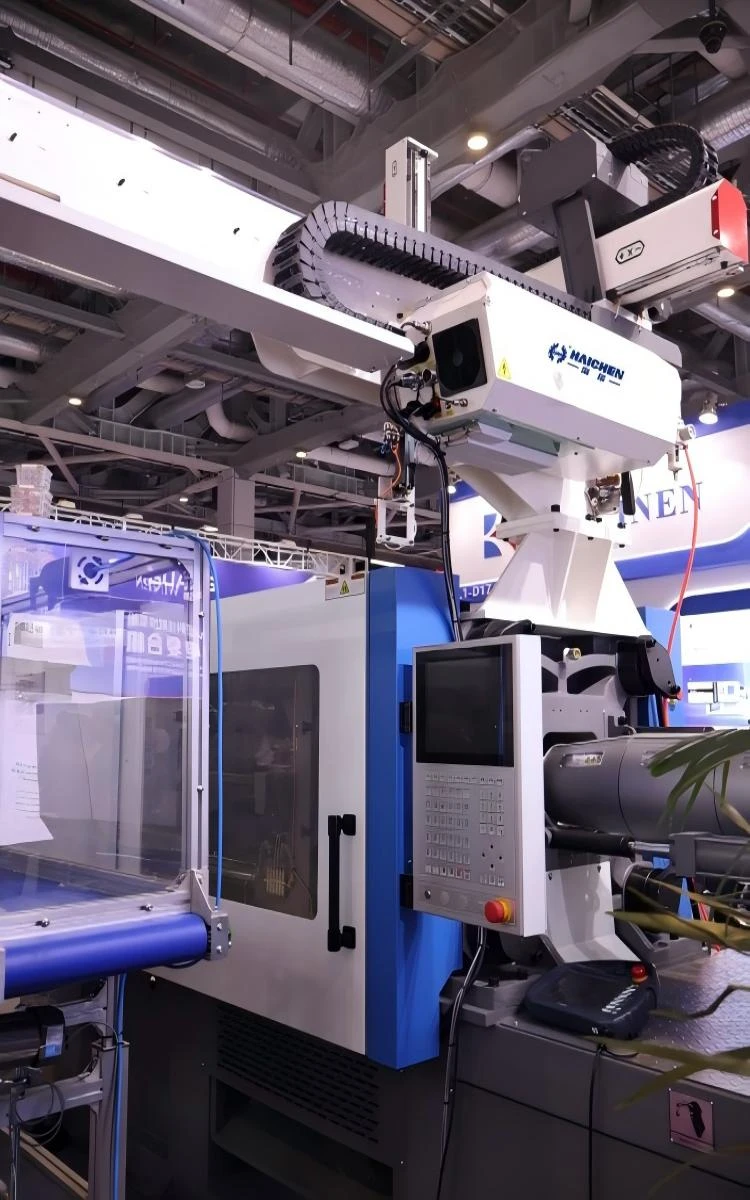
Besides the main press, container production often needs extra gear:
-
Hydraulic core‑pull system – for molds with sliders, the machine must have proportional‑valve‑controlled independent core‑pull circuits with sequence timing.
-
Robot interface – after ejection, large crates need a 3‑axis servo robot to take them out and stack them. We provide standard Euromap 12/67 interfaces.
-
Quick mold change – for customers who produce many different plastic crates types, we offer magnetic platens or hydraulic clamps, reducing mold change time from two hours to under five minutes.
-
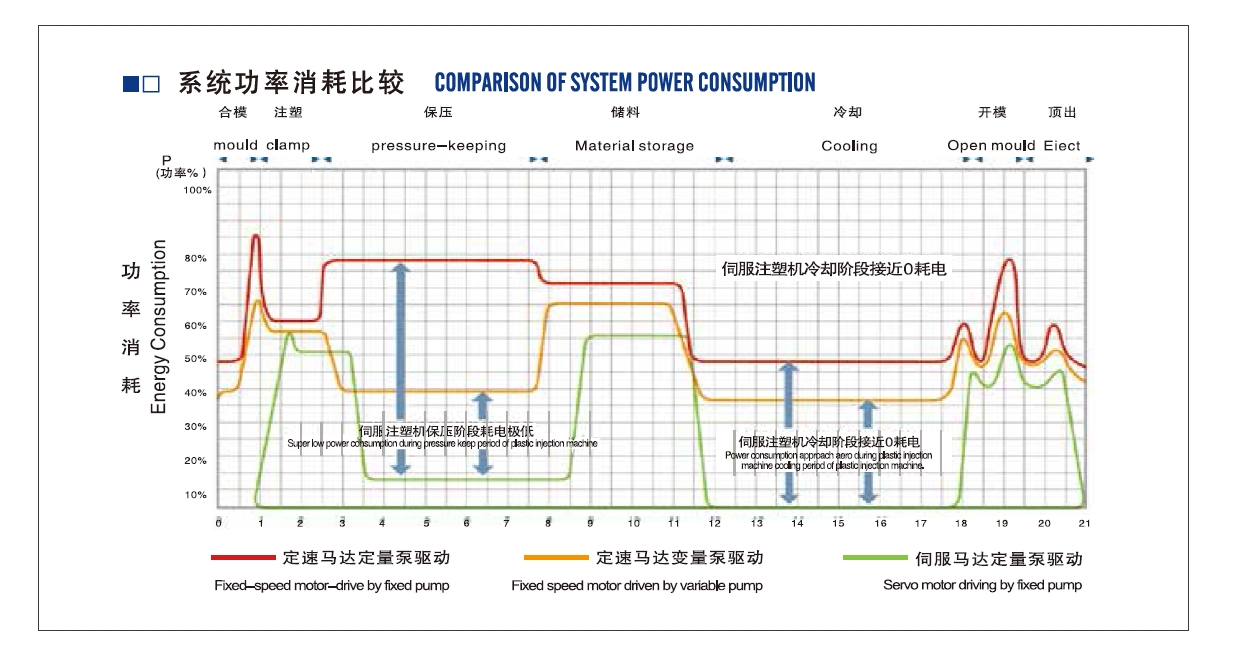
Energy saving – we always recommend servo‑driven hydraulic systems. They cut electricity use by 30–60% during cooling and holding phases, which saves real money every month.
Hot Topics and Your Questions
From talking to customers around the world, these container‑molding questions come up again and again. Please share your own experience or ask new ones in the comment section.
-
How do we stop large, thin‑wall storage bins from warping?
Focus on uniform wall thickness, clever water cooling, and a well‑tuned pack‑pressure curve. We once cut warp on a 600 L bin from 8 mm down to 2 mm by adding conformal cooling. -
What special machine features does a beer crate with slider molds need?
You need multiple independent hydraulic core‑pull circuits, plus precise timing between the clamp movement and the core‑pull sequence. Our HCK series can program up to eight independent core‑pull actions. -
Can we run recycled PP in a container machine without trouble?
Yes, but you should fit a bimetallic screw and barrel to fight wear, and raise the compression ratio above 3.0. Also add a good melt filter to stop contaminants from clogging hot runners. -
We see sink marks on the sealing edge of seafood boxes. How do we fix that?
Usually it’s because holding pressure falls too soon or the edge is too thick. Solution: lengthen cooling time in that area and use staged holding pressure (high then low). -
How can we link a high‑output container line with an automatic stacking system?
Haichen provides full‑line integration – from the plastic crates injection molding machine through a robot, conveyor, and stacker to finished pallets. We handle all the controls.
We’d love to hear from you!
Whether you’re an engineer struggling with container warpage or a production manager who has a clever fix, drop a comment below. Every piece of feedback helps us build better plastic crates injection molding machines. We reply within 24 hours. You can also reach out directly for a free machine recommendation.
Haichen Machinery – Your plastic crates injection molding partner, from Ningbo to the world.