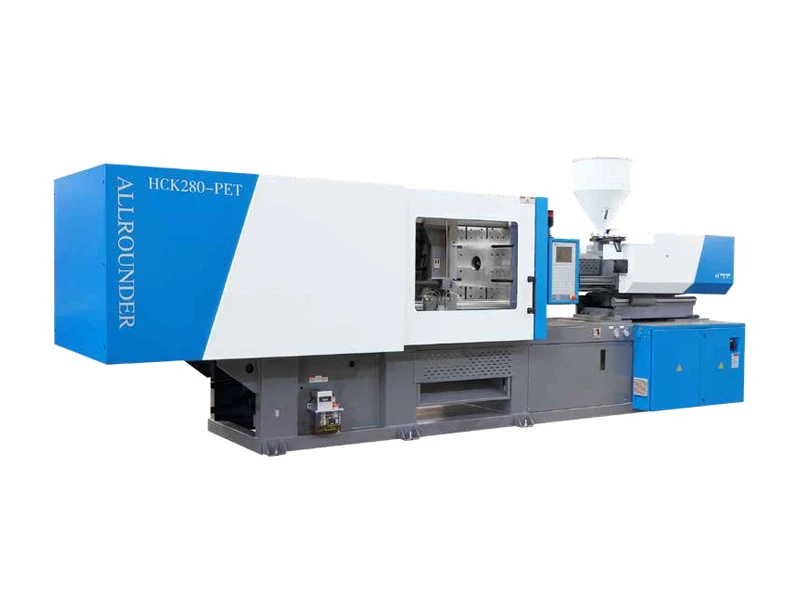
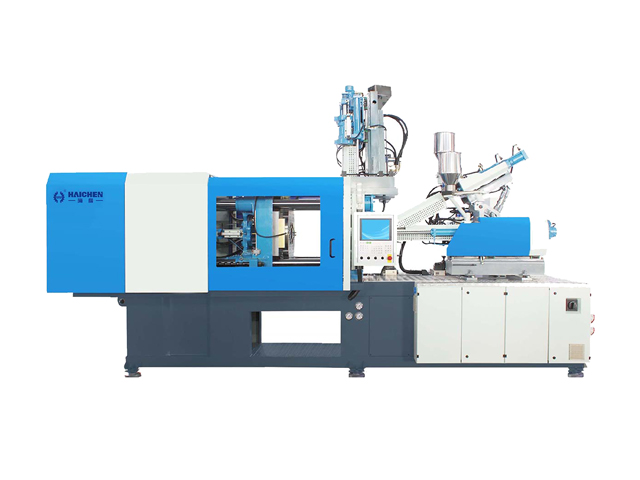
Starting a plastic crate factory requires more than an injection molding machine.
A complete plastic crate production line normally includes the injection molding machine, crate mold, material handling equipment, cooling system, part removal equipment, and plastic recycling equipment.
The exact configuration depends on the crate size, product weight, material, mold cavities, production target, and factory automation level.
This guide focuses on the equipment that a new plastic crate factory actually needs.
Core Equipment for Plastic Crate Production
Two pieces of equipment form the core of the production line:
- Injection molding machine
- Plastic crate mold
Everything else supports these two components.
Injection Molding Machine
The injection molding machine melts plastic and injects it into the crate mold.
Machine size should be selected from the actual mold and product requirements.
The main parameters to check are:
- Clamping force
- Injection weight
- Injection pressure
- Injection speed
- Tie-bar spacing
- Mold thickness range
- Mold opening stroke
- Ejector stroke
Do not choose a machine only by the crate’s product weight.
A large crate can have a relatively low weight but still require high clamping force because of its projected area.
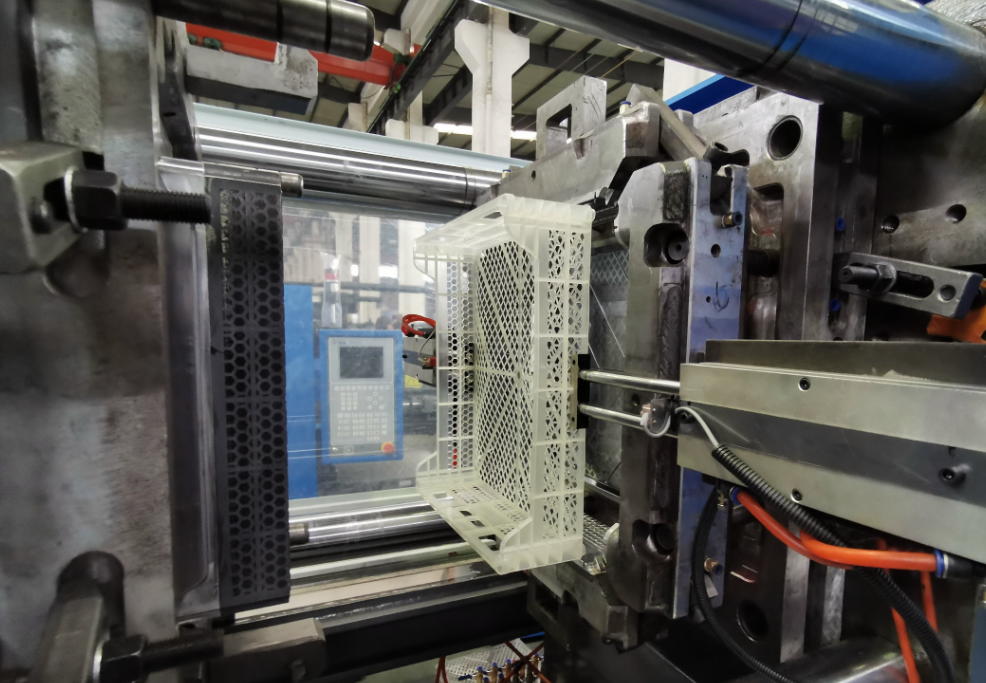
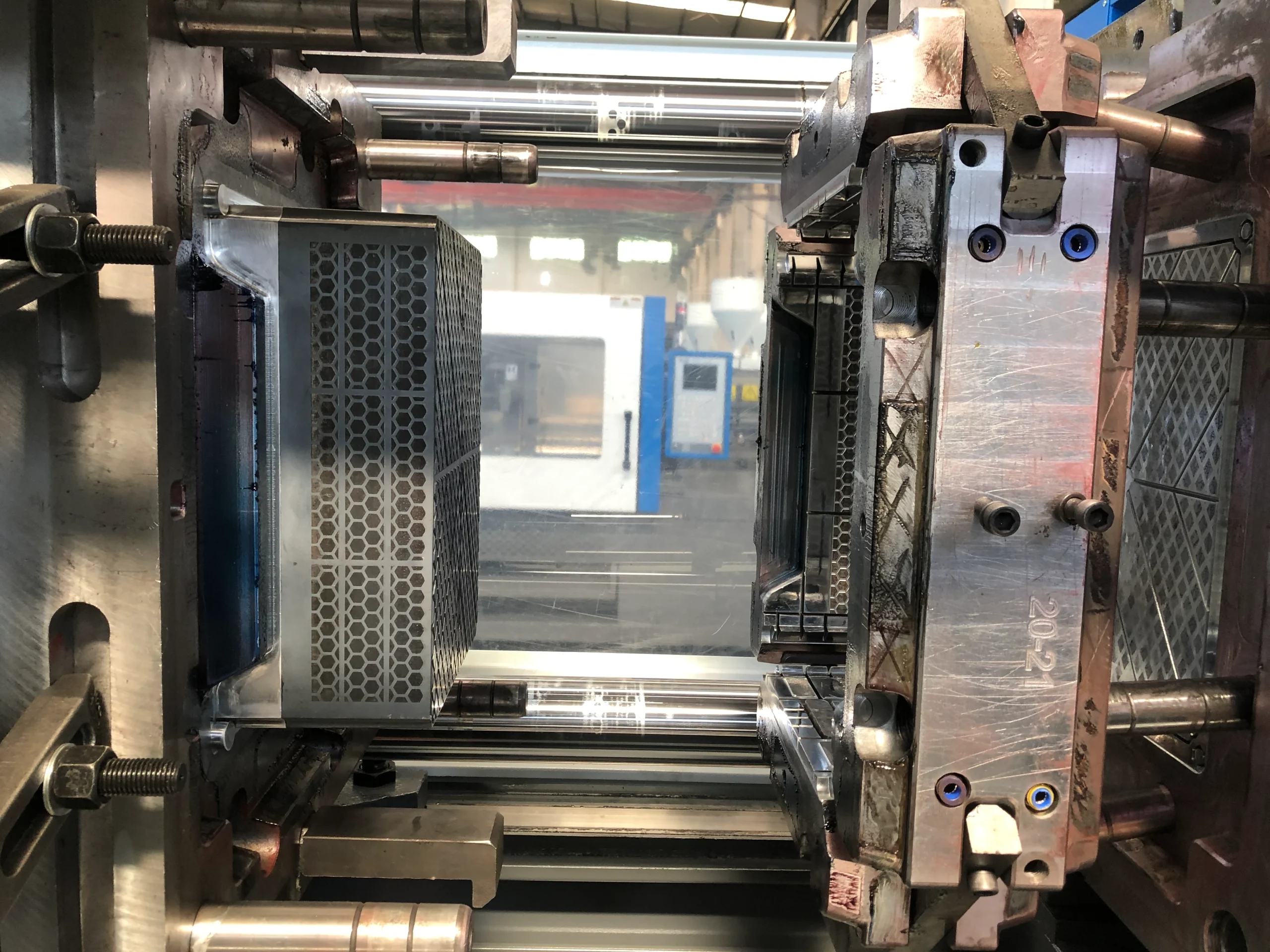
Plastic Crate Mold
The mold determines the crate’s:
- Length and width
- Height
- Wall thickness
- Rib structure
- Stackability
- Surface finish
- Number of cavities
For high-volume production, mold cooling and runner design are especially important because they directly affect cycle time and material consumption.
The mold must also match the selected injection molding machine in terms of dimensions, tie-bar spacing, mold thickness, and opening requirements.
Material Handling Equipment
Plastic pellets and recycled material must reach the injection molding machine consistently.
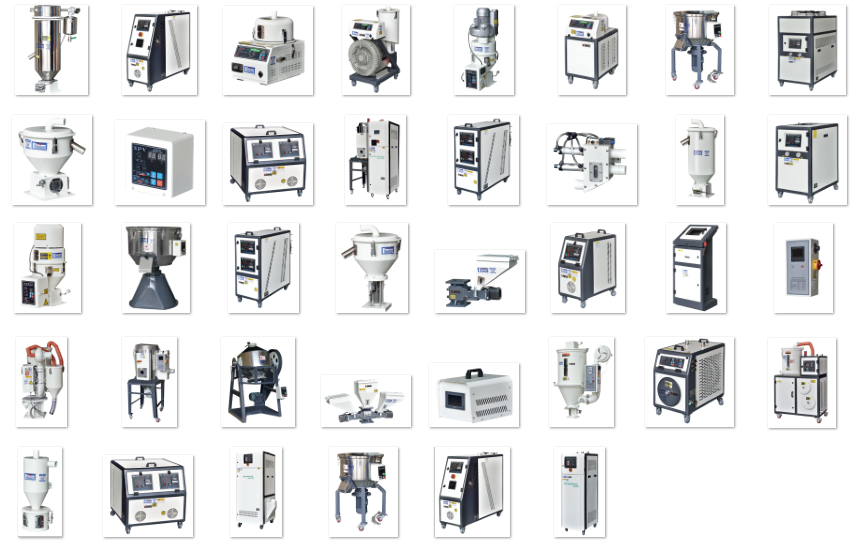
Auto Loader
An auto loader transfers plastic material from a storage container to the machine hopper.
It reduces manual material handling and is particularly useful when the factory operates continuously.
Mixer
A mixer can be used when virgin resin, recycled material, color masterbatch, or other approved materials need to be blended at a controlled ratio.
The correct material ratio depends on the product specification and material supplier’s recommendations.
Material Storage
A factory should have a clean and organized area for storing:
- Virgin PP or HDPE
- Approved recycled material
- Masterbatch
- Regrind material
Keeping materials dry and free from contamination helps maintain stable production.
Dryer
A material dryer is not automatically required for every plastic crate project.
Whether drying is necessary depends on the resin, recycled content, storage conditions, and material supplier’s processing recommendations.
The equipment should therefore be selected according to the actual material rather than added to every production line by default.
Cooling Equipment
Cooling can have a major effect on crate cycle time and dimensional stability.
A crate mold contains cooling channels that remove heat from the injected plastic before ejection.
Chiller
A chiller supplies controlled cooling water to the mold.
Stable cooling can help reduce:
- Warpage
- Uneven shrinkage
- Cycle-time variation
- Dimensional instability
The required chiller capacity depends on the mold, material, cycle time, machine size, and factory cooling conditions.
Cooling Tower or Central Water System
For larger factories, a central cooling-water system may be more practical than using a small standalone chiller for every machine.
The final choice depends on the number of machines and the local climate.
Mold Temperature Controller
A mold temperature controller can provide more precise temperature management when the crate design or material requires tighter process control.
Not every crate project needs a separate temperature-control unit, so it should be selected according to the mold design and production requirements.
Part Removal and Automation Equipment
After the mold opens, the finished crate needs to leave the molding area.
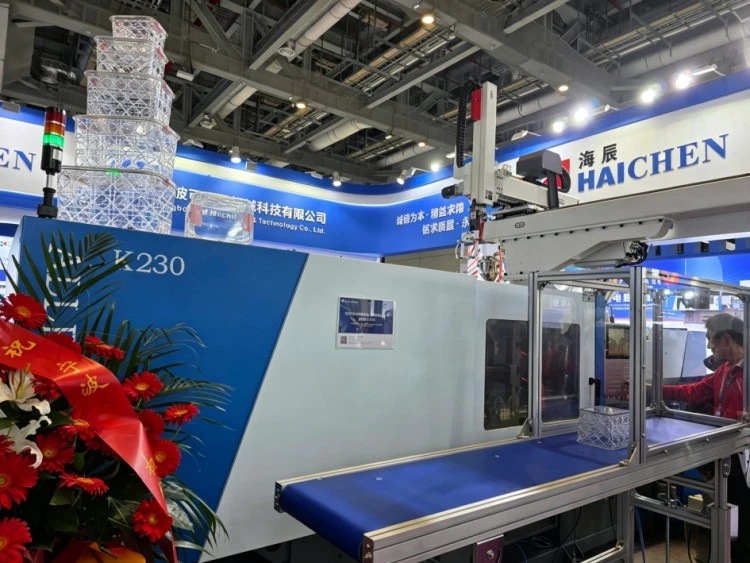
Robot
A robot can remove molded crates automatically.
It can also transfer parts to a conveyor or stacking system.
Automation becomes more valuable when:
- Production runs continuously
- The product is large or heavy
- The cycle time is short
- Labor costs are significant
- Consistent handling is required
Conveyor
A conveyor moves finished crates away from the injection molding machine.
Depending on the factory layout, the conveyor can transfer crates to:
- Inspection
- Stacking
- Packing
- Storage
Automatic Stacking
For high-volume factories, automatic stacking equipment can reduce manual handling.
The system can arrange crates into consistent stacks for easier transportation and storage.
However, automatic stacking is not essential for every new factory. A smaller operation can start with manual handling and add automation later.
Plastic Recycling Equipment
Plastic crate production generates runners, rejected products, and other plastic scrap.
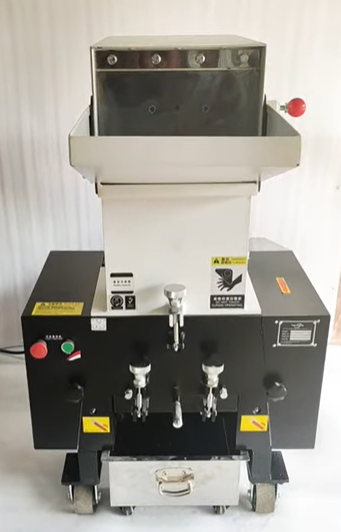
A crusher or granulator can process suitable scrap into reusable regrind.
Crusher
A crusher reduces runners and rejected crates into smaller plastic pieces.
The recycled material can then be stored and, where permitted by the product specification, blended with virgin material.
The allowable recycled-material ratio depends on the crate’s required strength, appearance, application, and customer’s specifications.
For food-contact or other regulated applications, recycled material must meet the applicable requirements.
A crusher therefore helps reduce material waste, but it does not mean every scrap stream can automatically return to the production process.
Factory Utilities
A production line also needs basic factory infrastructure.
Electrical Power
The factory must provide sufficient electrical capacity for:
- Injection molding machine
- Chiller
- Loader
- Crusher
- Robot
- Lighting
- Other auxiliary equipment
The required power depends on the machine model and the number of auxiliary units.
Cooling Water
The factory needs a reliable water circuit for mold cooling.
Before installation, confirm:
- Water source
- Flow rate
- Temperature
- Water quality
- Drainage
- Cooling capacity
Compressed Air
Some robots, valves, material systems, and auxiliary equipment may require compressed air.
The air compressor should therefore be selected after the complete equipment list is confirmed.
Factory Space
Allow enough space for:
- Injection molding machine
- Mold storage
- Raw material
- Auxiliary equipment
- Finished crates
- Maintenance access
- Operator movement
Large crate machines can require significant installation and maintenance space, so the factory layout should be planned before equipment is ordered.
Example of a Plastic Crate Production Line
A basic production line can be arranged as:
Raw Material → Auto Loader → Injection Molding Machine + Crate Mold → Robot/Manual Removal → Conveyor → Inspection → Stacking/Packing
Supporting equipment can include:
Chiller + Crusher + Mixer + Air Compressor
Not every factory needs all of these machines from the first day.
For example, a small factory may start with:
- Injection molding machine
- One crate mold
- Auto loader
- Chiller
- Basic material handling equipment
A larger factory with continuous production may add:
- Robot
- Conveyor
- Automatic stacking
- Crusher
- Central cooling system
- Material mixing system
The equipment should be added according to the required production capacity rather than purchased simply because it is part of a standard list.
How to Match the Equipment to the Crate
The most important step is matching the equipment to the actual crate.
Prepare these product details before requesting a quotation:
- Crate length
- Crate width
- Crate height
- Product weight
- Material
- Wall thickness
- Number of cavities
- Target production volume
- Mold dimensions
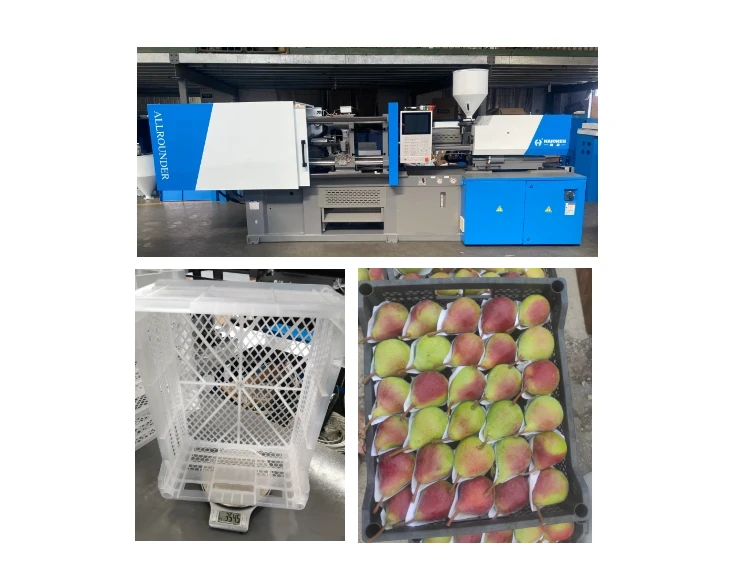
For example, Haichen’s existing crate production cases show why machine selection cannot be based on product weight alone.
One PP crate base measuring 40 × 30 × 16 cm and weighing 350 g was produced with an HCK310 machine. Another HDPE beer crate weighing 2.5 kg used an HCK530. A PE brood basket weighing 1.8 kg used an HCK700.
The different machine sizes result from differences in product dimensions, mold requirements, injection volume, and clamping requirements.
Therefore, the correct approach is:
Product → Mold → Machine → Auxiliary Equipment
rather than:
Product → Guess the machine tonnage
What Equipment Do You Need for a New Factory?
For a basic plastic crate factory, the minimum practical setup is usually:
| Equipment | Purpose | Basic or Optional |
|---|---|---|
| Injection molding machine | Mold the crate | Basic |
| Plastic crate mold | Forms the product | Basic |
| Loader | Automatic material feeding | Basic for continuous production |
| Chiller/cooling system | Mold cooling | Basic |
| Crusher | Recycle suitable scrap | Recommended |
| Mixer | Blend materials/masterbatch | Project dependent |
| Dryer | Material drying | Material dependent |
| Robot | Automatic part removal | Optional |
| Conveyor | Product transfer | Optional |
| Automatic stacker | Automatic stacking | Optional |
| Air compressor | Compressed air supply | Equipment dependent |
This table should be treated as a planning guide rather than a fixed equipment package.
How to Build the Production Line Step by Step
A new factory can follow this sequence:
Step 1: Define the Crate
Confirm the product dimensions, weight, material, application, and target output.
Step 2: Design the Mold
Determine the cavity number, runner system, cooling layout, ejection system, and mold dimensions.
Step 3: Select the Injection Molding Machine
Match the machine to the mold’s clamping force, injection capacity, dimensions, and required production speed.
Step 4: Select Auxiliary Equipment
Choose the loader, cooling system, crusher, robot, conveyor, and other equipment according to the production target.
Step 5: Plan the Factory Layout
Reserve space for the molding machine, mold, raw materials, auxiliaries, finished products, and maintenance.
Step 6: Test the Complete Line
After installation, test the mold and machine together and adjust injection, holding, cooling, and ejection parameters.
Haichen Plastic Crate Production Solutions
Haichen supplies injection molding machines for different plastic crate applications and has existing crate production cases.
For example, Haichen has used HCK310 for a 350 g PP crate base and HCK530 for a 2.5 kg HDPE beer crate.
Haichen can also support machine and mold matching based on the customer’s:
- Product drawing
- Product weight
- Material
- Mold dimensions
- Cavity number
- Production target
This approach avoids selecting a machine only from the words “plastic crate.”