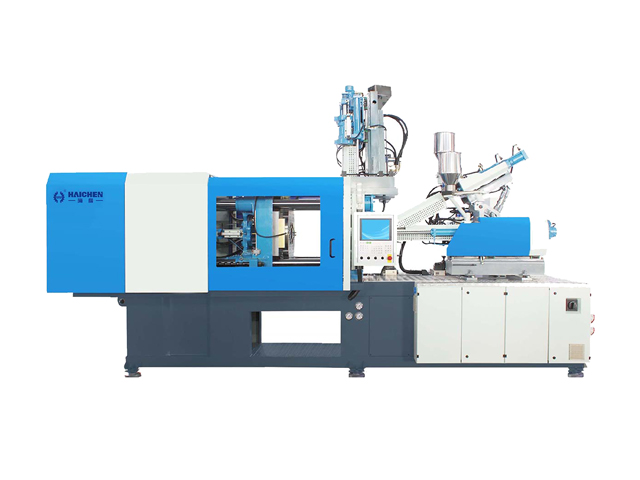
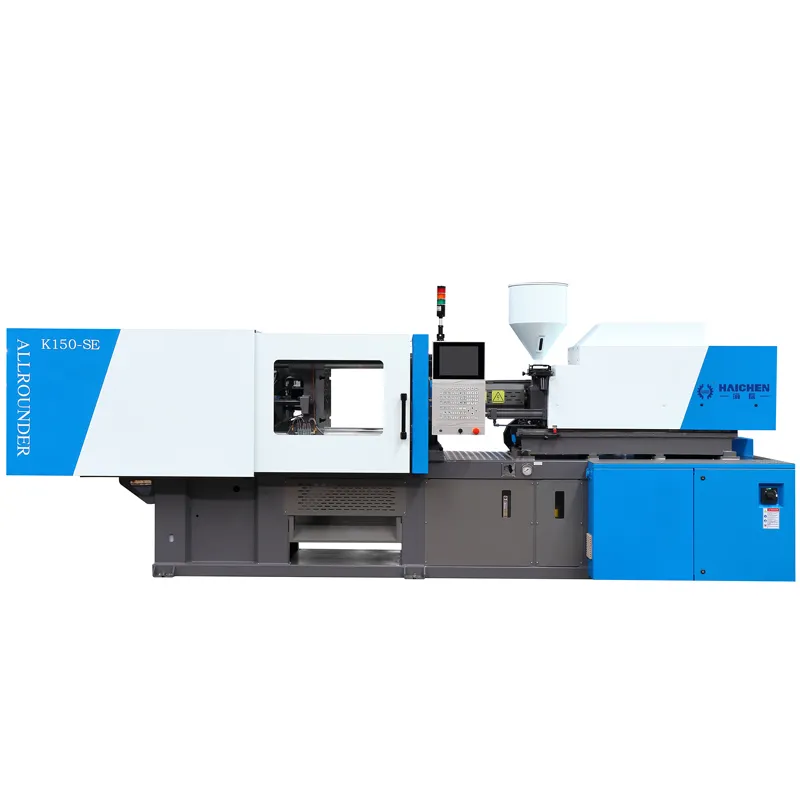
The wall switch socket manufacturing process includes select raw material, customize molds and select injection molding machine.
A light switch and socket manufacturing machine is a kind of industrial plastic equipment, it works as melts plastic and injects it into a mold to form the light switch.This switch socket making machine can be used to produce plastic electric light switch, wall switch, light switch covers, junction box, socket and plug and so on.
The detailed manufacturing process of the wall switch socket as:
- Choose the appropriate plastic raw material: based on the application requirements
- Design and produce precision molds: that shape the plastic wall switch socket
- Select the right injection molding machine: match the mold specifications and material properties
- Operate injection molding manufacturing process
Each step requires specific technical knowledge to ensure quality and safety.
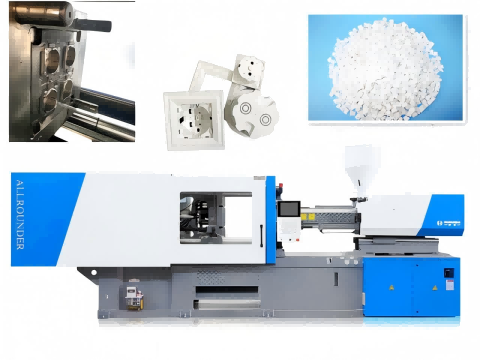
Seq.1 choose Suitable wall switch socket Plastic Materials
- Types of plastics used for switch sockets
- PC material properties and advantages
- ABS and PP applications
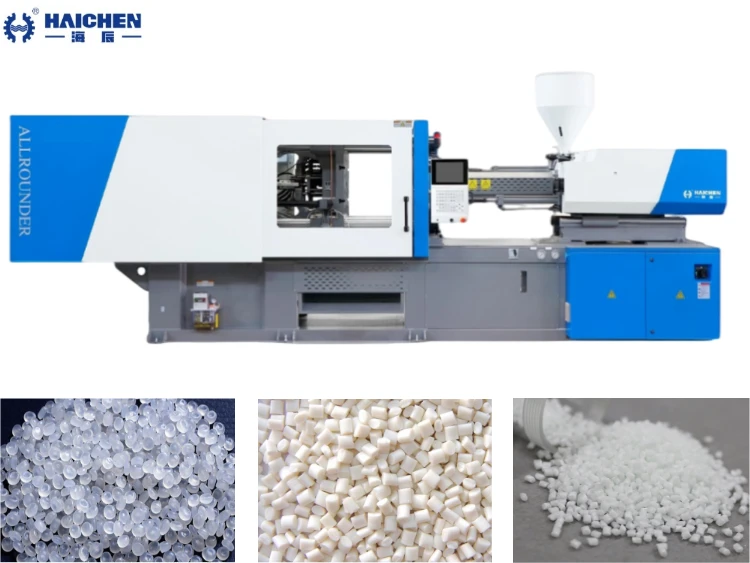
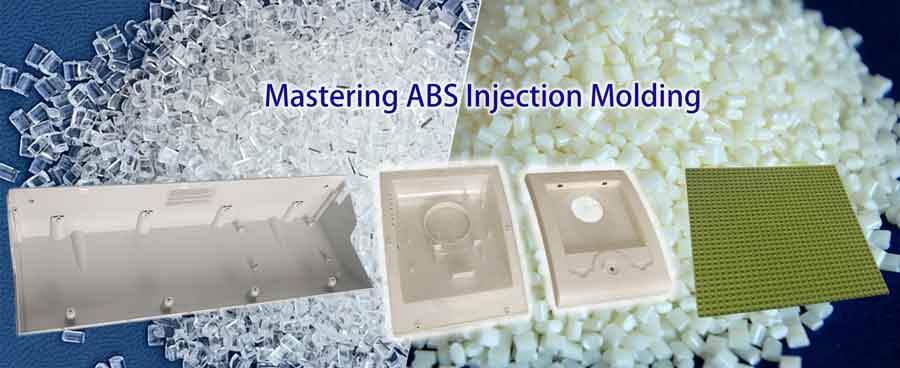
Switch sockets require plastic materials with good insulation properties. The light switch socket materials are main plastics used include polycarbonate (PC), ABS, and polypropylene (PP). Each material has specific strengths for different parts of the switch socket. For example, the front panel and back chassis typically use different materials based on their functions.
PC material properties and advantages
PC is also called bulletproof plastic. It has high impact resistance and excellent transparency, making it suitable for switch covers and buttons. PC also provides good high-temperature resistance and resists discoloration over time. For electrical applications, PC offers superior flame retardancy. Many switch brands use PC material for their front panels and back chassis because of these properties.
ABS and PP material applications
ABS is an economical plastic material with good toughness and durability. It meets the needs of general indoor environments. Manufacturers often use ABS for switch housings and bases to reduce costs. PP provides chemical corrosion resistance and high cost-effectiveness. For components requiring even lower cost, some manufacturers use PP or PVC instead of PC. However, these materials have poorer impact resistance and heat resistance compared to PC.
Seq2. Design wall switch socket Mold
- Factors determining mold design
- Mold Cavity count calculation
Factors determining mold design
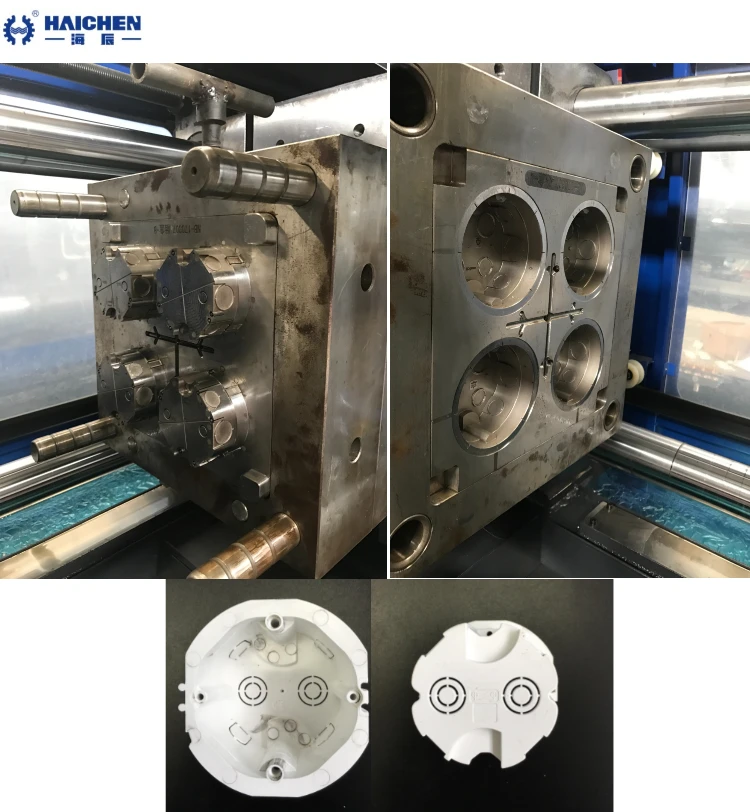
The mold design process starts with the switch socket drawing or sample. The mold must achieve tight tolerances because the plastic parts need to fit together precisely. The design also includes gate placement for plastic flow, cooling channels for temperature control, and ejection mechanisms for part removal.
Cavity count calculation
The number of cavities in the mold directly affects production output. To calculate the cavity count, manufacturers consider the customer’s required production capacity. A mold with more cavities produces more parts per cycle but costs more to build. For example, a 4-cavity switch panel mold can produce about 1000 parts per hour. The mold design must also ensure balanced plastic flow to all cavities.
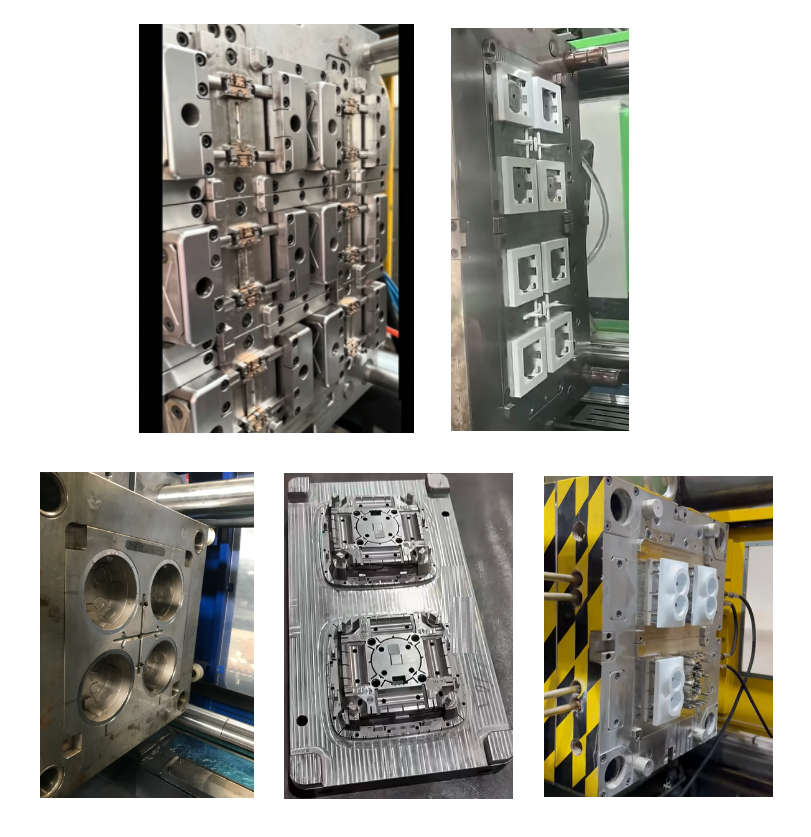
As a manufacturer with over ten years of experience, we produce electric switch socket box molds and light switch socket manufacturing injection molding machines. We provide mold design services based on your production details including part sizes, weights, and mold specifications. Our team recommends the most suitable mold design for your production needs.
Seq3. Select suitable Injection Molding Machine
- Clamping force requirements
- machine models for light switch socket
Clamping force requirements
The electrical switch and socket production injection molding machine must provide sufficient clamping force to keep the mold shut during injection. For switch socket production, typical clamping force ranges from 90 to 180 tons depending on the mold size and cavity count.
| HCK180 PLASTIC INJECTION MOLDING MACHINE | ||||
| INJECTION UNIT | ||||
| ITEM | UNIT | A | B | C |
| INJECTION UNIT | ||||
| Screw diameter | mm | 40 | 45 | 50 |
| Screw L/D ratio | L/D | 24.7 | 22.0 | 19.8 |
| Shot volume(theoretical) | cm3 | 283 | 358 | 442 |
| Injiection weight(ps) | g | 257 | 326 | 402 |
| oz | 9.1 | 11.5 | 14.2 | |
| Injection pressure | Bar | 2231 | 1763 | 1428 |
| Injection rate | cm3/s | 157 | 199 | 245 |
| Plasticizing capacity | g/s | 16 | 22 | 26 |
| Screw speed (Max.) | r/min | 220 | ||
| CLAMPING UNIT | ||||
| Clamping force | Kn | 1800 | ||
| Space between tie bars(W×H) | mm | 520×470 | ||
| Platens size | mm | 740×690 | ||
| Opening stroke | mm | 460 | ||
| Min.Mold height | mm | 200 | ||
| Max.Mold height | mm | 550 | ||
| Distance between platens(daylight) | mm | 1010 | ||
| Ejector stroke | mm | 130 | ||
| Ejector force | Kn | 50 | ||
| OTHERS | ||||
| Systerm pressure | Bar | 175 | ||
| Pump motor | Kw | 25 | ||
| Heating power | Kw | 14.0 | ||
| Oiltank cubage | L | 160 | ||
| Machine dimension(L×W×H) | m | 5.2×1.3×1.8 | ||
| Machine weight | t | 6.0 | ||
Machine models for switch sockets
On the market, there are various, many different plastic injection molding machine model series.
What kind of machines can produce plastic switch panles and sockets?
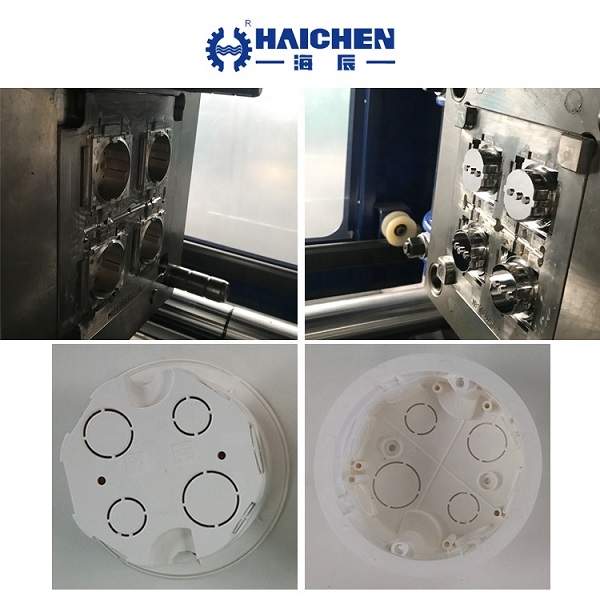
Haichen offers several electric switch and socket production injection molding machine models suitable for switch socket production.
Our servo energy saving machine system also provides precise control over injection speed and pressure. That will help reduce power consumption by 30-50% compared to standard hydraulic machines.
Haichen electric light switch cover/junction box solution
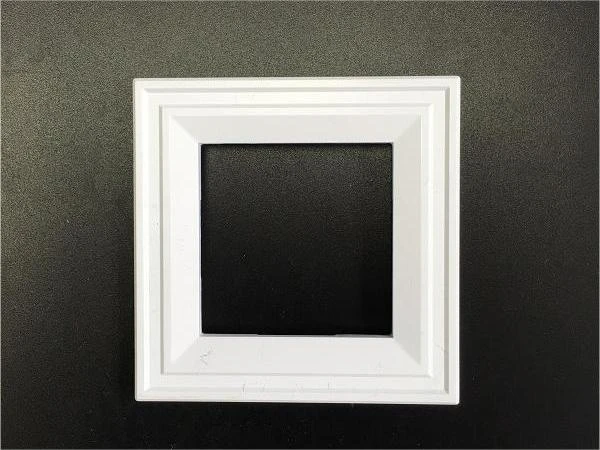 |
Case: light switch cover material: ABS size: 8.3*8.3*1cm cavities: 4 Machine model: HCK150 Output: about 1200pcs/hour |
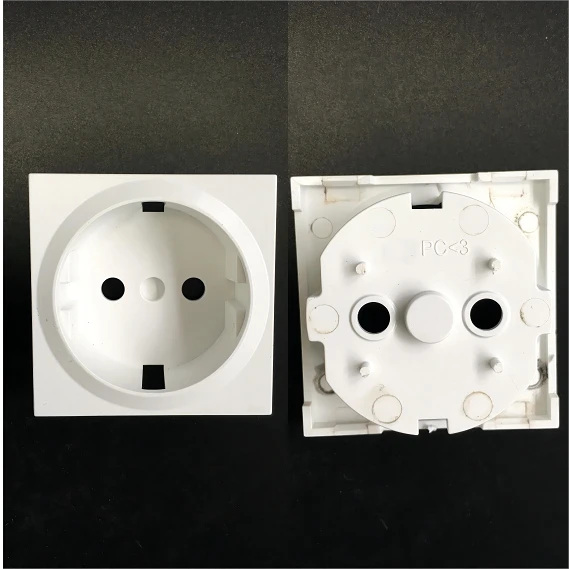 |
Case: 2 way light switch material: PC size: 5.0*5.0*1.5cm cavities:4 cycle time: 12s Machine model: HCK150 |
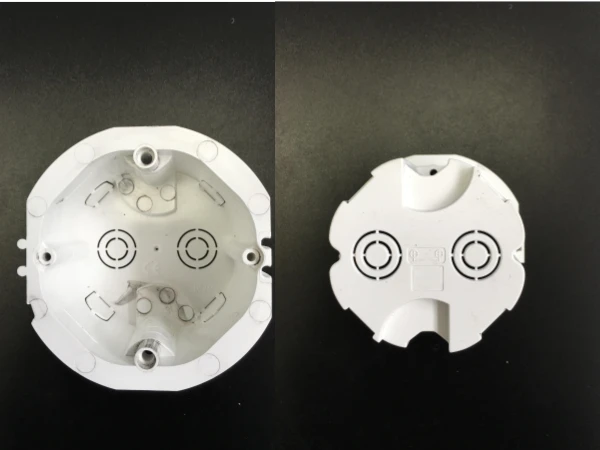 |
Case: lamp socket
material: PP |
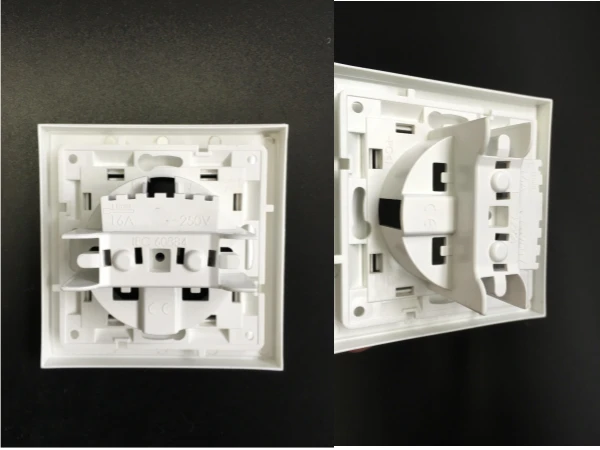 |
Case: light switch covers material: PC size: 7.0*7.0*4.0cm cavities:4 cycle time: 14s Machine model: HCK180 |
Operate wall switch socket Injection Molding
- Injection into the mold cavity
- Cooling and solidification
- Ejection and part removal
Material plasticizing and melting
The injection molding machine feeds plastic pellets from a hopper into a heated barrel. The barrel has multiple heating zones that gradually melt the material. For ABS materials, the melt temperature ranges from 200-280°C. The screw rotates inside the barrel, pushing the plastic forward while creating additional friction heat. The molten plastic collects at the front of the barrel, ready for injection into the mold.
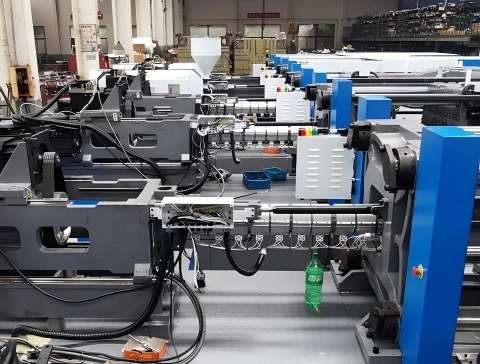
Injection into the mold cavity
The screw moves forward like a plunger, pushing molten plastic through the nozzle into the closed mold. The injection speed and pressure must be carefully controlled to prevent defects like air traps and incomplete filling. For a switch cover weighing 15g, the injection cycle takes about 15-20 seconds. The plastic flows through runners and gates to fill all cavities evenly.
Cooling and solidification
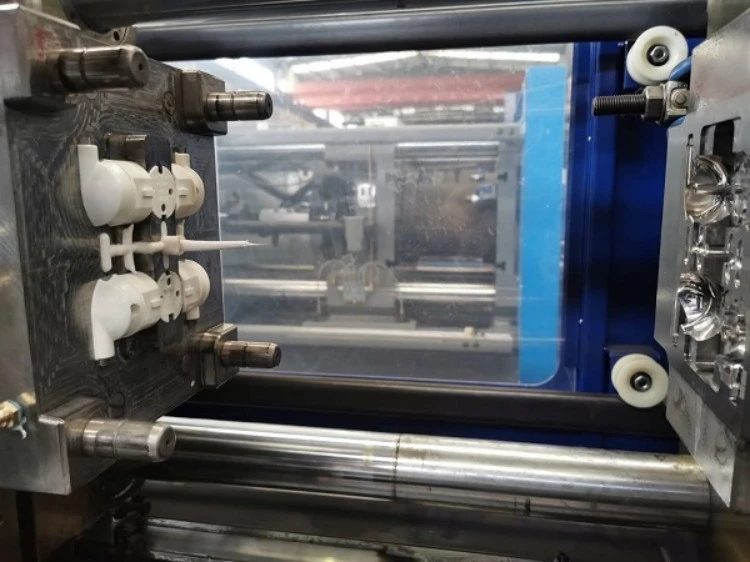
After the mold fills, the cooling stage begins. The mold’s cooling channels circulate water to remove heat from the plastic. Uniform cooling prevents warping and ensures dimensional stability. For ABS switch parts, typical cooling time is 10-15 seconds. The part must cool sufficiently before ejection to maintain its shape and prevent deformation. The cooling system design directly affects cycle time and product quality.
Ejection and part removal
Once the plastic hardens sufficiently, the clamping unit opens the mold. Ejector pins then push the finished parts off the mold core. For automated production, a robot removes the parts from the mold and places them on a conveyor. Efficient part handling systems are essential for high-volume production. A well-designed ejection system prevents damage to small features like terminal slots and button openings.
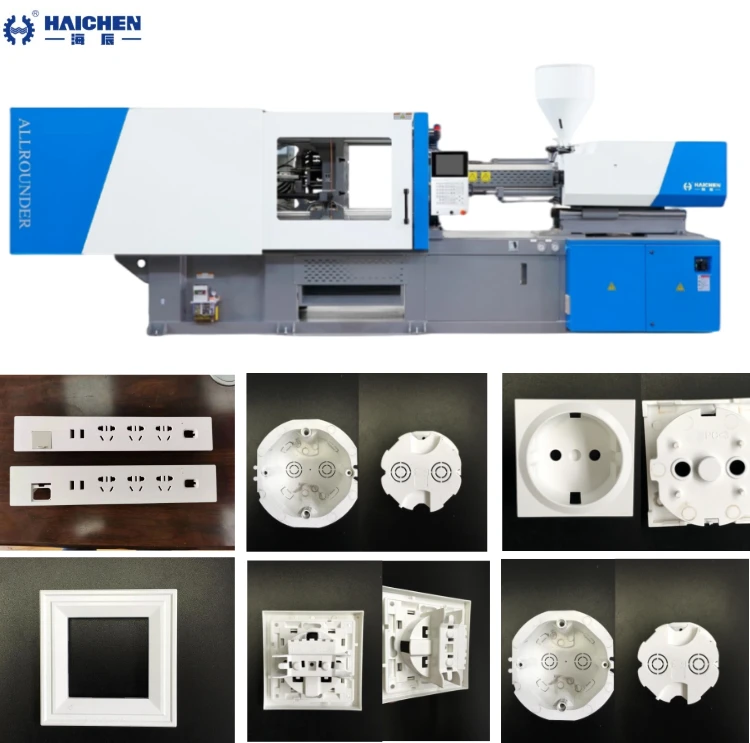
We provide complete solutions from material selection through production line to finished products. Furthermore, we will offer you electrical switch injection molding machine: price, selection & production guide.
Welcome contact us.