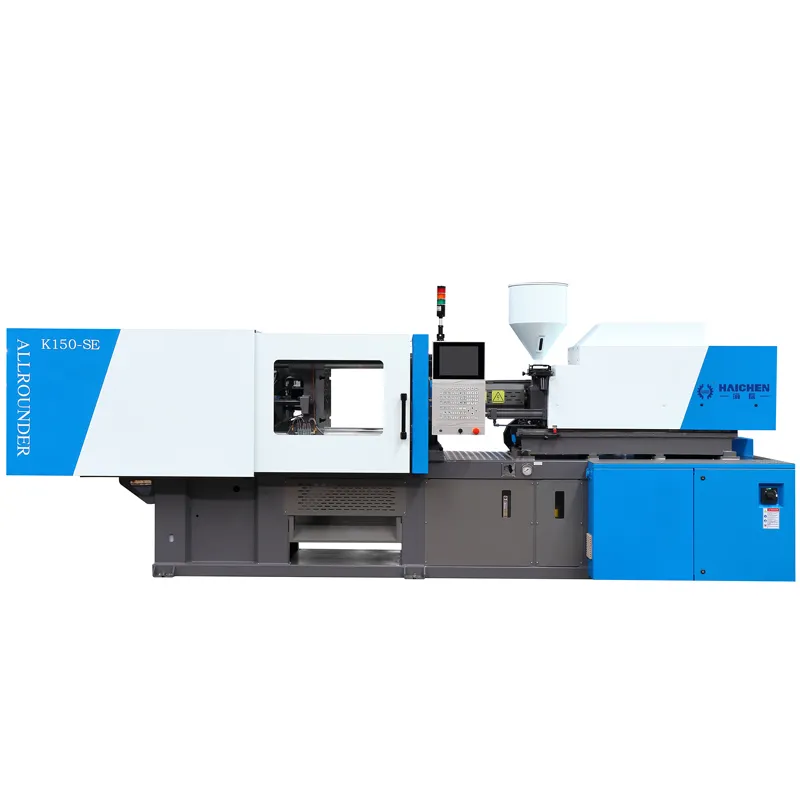
A wall switch socket injection molding machine produces plastic switch panels, socket frames, wall plates, and other electrical plastic parts. These products are common in homes, offices, hotels, and commercial buildings. Although the parts are not usually large, the mold often uses several cavities, and the finished surface needs to look clean and even.
For this reason, a good machine must do more than close the mold. It must provide stable clamping force, accurate injection control, suitable shot capacity, and steady temperature control. At the same time, the mold must have the right cavity layout and cooling system.
This guide explains how wall switch and socket molding works, how to select machine tonnage, how to match the mold with the machine, and how to build an efficient electrical socket production line.
What Is a Wall Switch Socket Injection Molding Machine?
A wall switch socket injection molding machine heats plastic pellets and injects the melted material into a mold. The mold gives the plastic its final shape. After cooling, the machine opens the mold and removes the part.
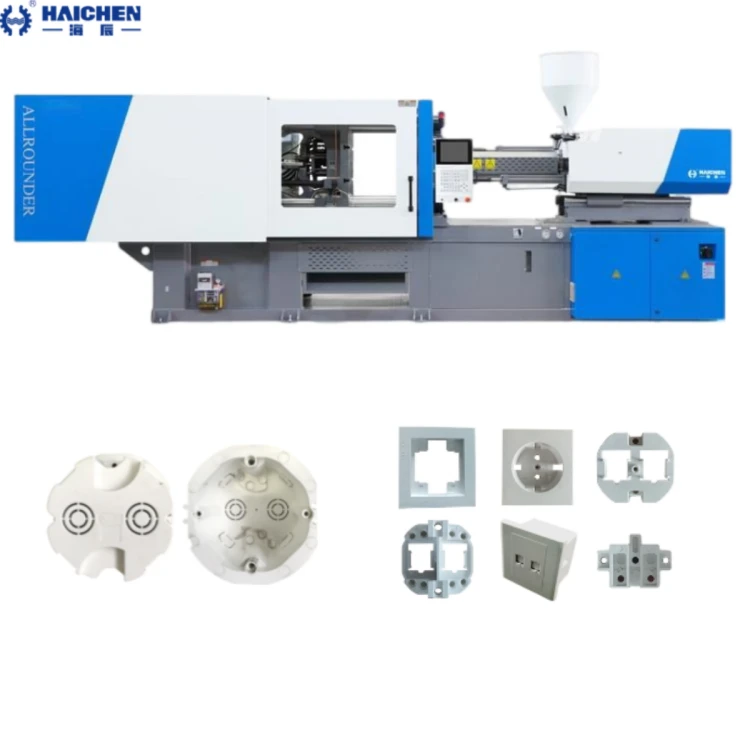
Common products include:
- Wall switch panels
- Socket plates
- Five-hole wall sockets
- Socket frames
- Switch covers
- Mounting boxes
- Electrical covers
- Small electrical plastic parts
The basic molding cycle is:
Material Feeding → Plasticizing → Mold Closing → Injection → Holding → Cooling → Ejection
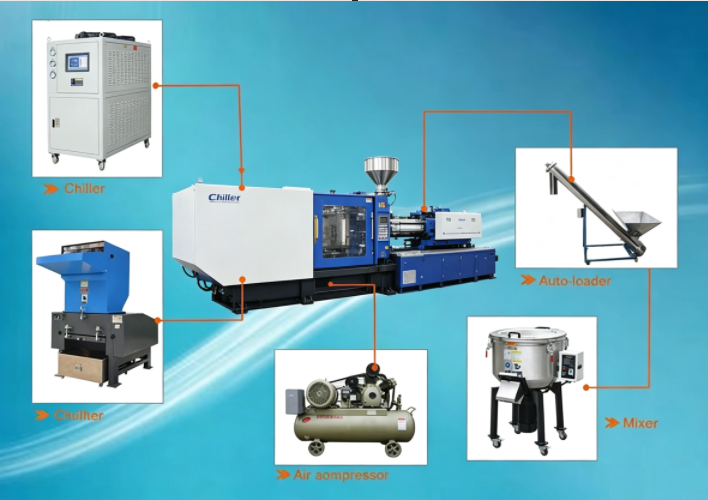
For high-volume work, the injection molding machine can also connect with a robot, conveyor, dryer, auto loader, chiller, and mold temperature controller.
Therefore, the machine should be selected as part of the full production system.
Plastic Wall Switch and Socket Parts
The product shape affects the machine setup.
A flat 86-type switch panel has different molding needs from a deeper socket frame. Likewise, a five-hole socket can need a different mold layout from a simple single-switch cover.
The mold designer normally checks:
- Part size
- Part weight
- Wall thickness
- Gate position
- Number of cavities
- Cooling layout
- Ejection method
The machine supplier then checks whether the machine can support the mold.
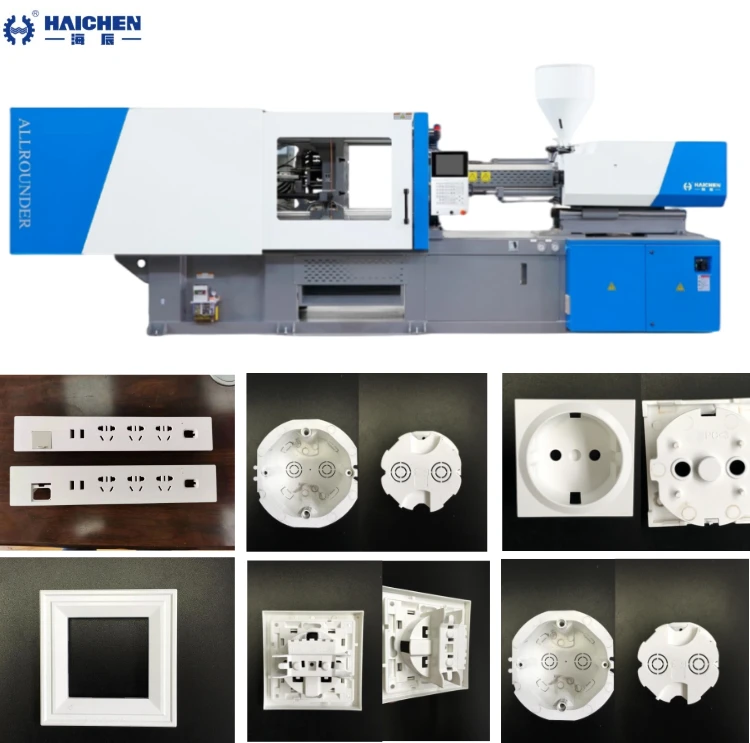
Five-Hole Socket Injection Molding
Five-hole sockets are a common type of wall socket product.
They can use PC, ABS, PP, or another suitable material depending on the product design and required properties.
The five-hole design creates several openings in the molded part. Therefore, the mold needs good filling and cooling control to keep the panel shape stable.
For mass production, a five-hole socket injection molding machine is normally selected together with a multi-cavity mold.
A real Haichen application page describes a standard five-hole socket panel produced with a 4-cavity mold and an HCK150 machine. The published case lists a 14-second cycle and about 22,000 pieces per day.
What Materials Are Used for Switch Socket Injection Molding?
The resin affects the molding temperature, flow, surface quality, and final part performance.
Common materials for electrical switch and socket parts include PC, ABS, and PP. Haichen’s current application information also lists these three materials for switch and socket production.
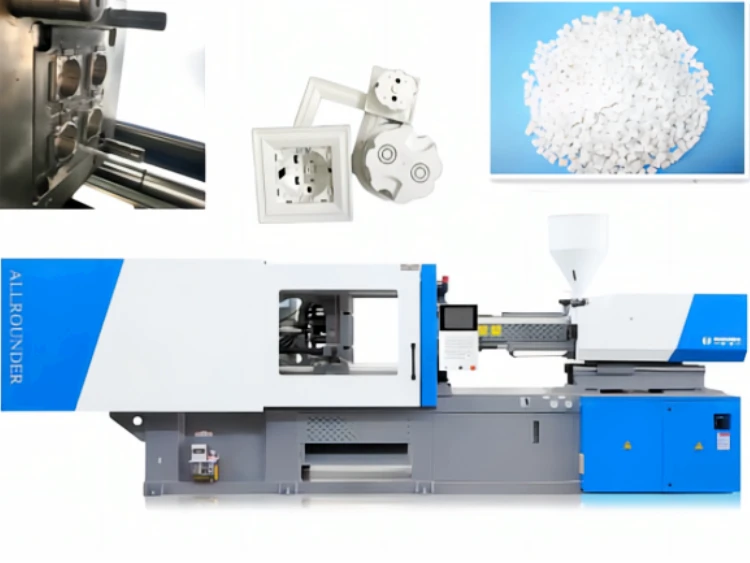
PC Injection Molding for Electrical Switches
Polycarbonate, or PC, has high impact resistance and good heat resistance.
It can suit visible switch panels and other electrical parts that need good strength.
However, PC normally needs closer temperature control than easier-flowing plastics. Material drying can also be important because moisture can affect the molded part.
When using PC, the electrical switch injection molding machine should provide stable barrel temperature and injection pressure.
A proper mold temperature also helps the surface finish.
ABS Injection Molding for Socket Frames
ABS is widely used for electrical housings and socket frames.
It offers a good balance of toughness, appearance, and processing ease.
ABS can be a practical choice when the product needs a smooth surface and stable dimensions without the higher processing demands of some engineering plastics.
Haichen’s published switch/socket applications include ABS socket frames and a 4-cavity five-hole socket panel example.
PP Injection Molding for Electrical Plastic Parts
PP offers low density, good chemical resistance, and easy processing.
It can suit selected mounting boxes, internal parts, and other components.
However, the final material choice should come from the actual product requirements.
For example, a visible switch panel may need different strength and appearance from an internal plastic component.
PC/ABS for Switch Socket Molding
PC/ABS blends can combine useful properties from both materials.
Haichen’s electrical switch application guide lists PC+ABS for products that need a mix of strength, heat resistance, and appearance.
The injection molding machine should therefore provide stable plasticizing and pressure control.
How Does Wall Switch Socket Injection Molding Work?
The wall switch injection molding process follows the same main steps used for many thermoplastic products. However, electrical parts often need a clean surface and stable dimensions.
Material Preparation
First, the operator loads the correct resin.
The material should remain clean and dry according to the resin supplier’s instructions.
PC, for example, can need drying before molding. ABS may also need drying under the conditions set by the material supplier.
The factory should also keep different resin grades clearly identified.
This reduces the risk of mixing the wrong material.
Plasticizing in the Injection Molding Machine
Next, plastic pellets enter the heated barrel.
The screw rotates and moves the material forward. At the same time, heat and screw movement turn the pellets into a melt.
The screw then measures the shot for the next cycle.
Stable plasticizing helps keep:
- Part weight
- Melt temperature
- Filling
- Cycle time
more consistent.
For that reason, the screw and barrel should match the material.
Mold Clamping
The machine closes the mold and applies the required clamping force.
The mold must remain closed when the melt enters the cavity under pressure.
If the machine does not have enough clamping force, the mold may open slightly and create flash.
However, more tonnage is not always better.
The machine should match the projected area, cavity number, mold size, and molding conditions.
Injection and Mold Filling
The screw moves forward and pushes the melt through the nozzle, runner, and gate.
The plastic then fills the cavity.
For large switch panels and multi-cavity molds, filling balance becomes important.
If one cavity fills faster than another, the parts may have different weight or surface quality.
Therefore, the machine and mold should work together.
Cooling and Ejection
Once the cavity is full, holding pressure helps maintain the shape while the plastic starts to cool.
The cooling system then removes heat from the mold.
Good cooling can reduce cycle time and help control deformation. Haichen’s current electrical switch guide also notes that mold cooling affects cycle time, shrinkage, and product consistency.
After cooling, the ejector system removes the product.
A robot can take the molded part from the mold and move it to the next station.
How to Choose a Wall Switch Socket Injection Molding Machine
Machine selection should begin with the product and mold data.
Before choosing a socket injection molding machine, check:
- Product size
- Product weight
- Plastic material
- Mold cavity number
- Mold dimensions
- Projected area
- Target cycle time
- Required output
Then check the machine’s clamping unit and injection unit.
Select the Right Clamping Force
Clamping force keeps the mold closed during injection.
A basic starting calculation is:
Required clamping force = projected area × estimated molding pressure
The final value should also consider the material, mold design, cavity number, injection pressure, and safety margin.
For example, a 4-cavity socket mold and an 8-cavity socket mold can need different machine sizes even when the individual product is the same.
This happens because the total projected area and shot requirement change.
Therefore, do not choose a wall socket injection molding machine from product size alone.
Check Mold Dimensions
The mold must physically fit the machine.
Important dimensions include:
- Tie-bar spacing
- Platen size
- Maximum mold height
- Minimum mold height
- Mold opening stroke
- Ejector stroke
Haichen’s current switch/socket application page gives reference machine ranges such as 120–160T for an 86 switch panel, 160–200T for a socket frame, and 200–300T for a larger electrical cover. It also notes that mold dimensions affect tie-bar spacing, mold opening stroke, and mold thickness limits.
These figures should be treated as application references rather than fixed rules.
Check Injection Capacity
The injection unit needs enough capacity for the total shot.
The calculation should include all cavities and the runner system where applicable.
For example:
Total shot = Part weight × Cavity number + Runner weight
A machine with enough clamping force can still fail to meet the production requirement if its injection unit is too small.
Therefore, check both sides:
Clamping unit + Injection unit
Check Injection Speed
Thin electrical parts can need fast filling.
A flat switch panel with a long flow path may lose heat during filling. As a result, the injection molding machine needs enough speed to fill the cavity before the material becomes too cold.
However, maximum speed is not always the correct setting.
The mold design, gate, venting, resin, and wall thickness also affect the filling result.
Therefore, the machine should give the operator enough control to adjust the injection profile.
Match the Machine to the Cavity Number
Mold cavity number has a direct effect on output.
| Mold | Parts per Cycle |
|---|---|
| 1 cavity | 1 |
| 2 cavities | 2 |
| 4 cavities | 4 |
| 8 cavities | 8 |
| 16 cavities | 16 |
For small production volumes, a 1- or 2-cavity mold can reduce the initial mold cost.
For larger demand, 4- or 8-cavity molds can increase output.
Haichen’s current electrical switch guide also uses 1–2 cavities for smaller production and 4 or 8 cavities for larger production.
Consider Cycle Time
Cycle time determines how many parts the machine makes each hour.
A simple formula is:
Hourly output = Number of cavities × 3600 ÷ Cycle time
For a 4-cavity mold with a 14-second cycle:
4 × 3600 ÷ 14 = about 1,029 parts/hour
Theoretical output is different from actual daily output because factories also need time for startup, inspection, maintenance, mold changes, and material changes.
The current Haichen five-hole socket case lists a 14-second cycle and about 22,000 pieces per day, which shows how actual production planning can differ from a simple theoretical calculation.
HCK110, HCK150, HCK180, or HCK230?
Haichen’s current switch and socket application page presents the HCK110, HCK150, HCK180, and HCK230 models as reference choices for different mold sizes and production needs.
| Model | Clamping Force | Listed Tie-Bar Spacing | Typical Application Direction |
|---|---|---|---|
| HCK110 | 110 tons | 410 × 360 mm | Small molds and low output |
| HCK150 | 150 tons | 460 × 410 mm | Standard socket molds |
| HCK180 | 180 tons | 520 × 470 mm | Larger switch and socket molds |
| HCK230 | 230 tons | 570 × 520 mm | Larger or higher-cavity molds |
These values help buyers understand the range, but they should not replace an engineering check.
For example, Haichen’s published reference says an 86-type switch panel may use 120–160T, while a large electrical cover may use 200–300T.
The final machine should come from the actual mold.
Five-Hole Wall Socket Injection Molding Case
A real production case is more useful than a general machine statement.
Haichen’s current application page describes a Southeast Asian customer producing standard five-hole socket panels. The part weighed 18 grams, the mold used four cavities, and the selected machine was HCK150.
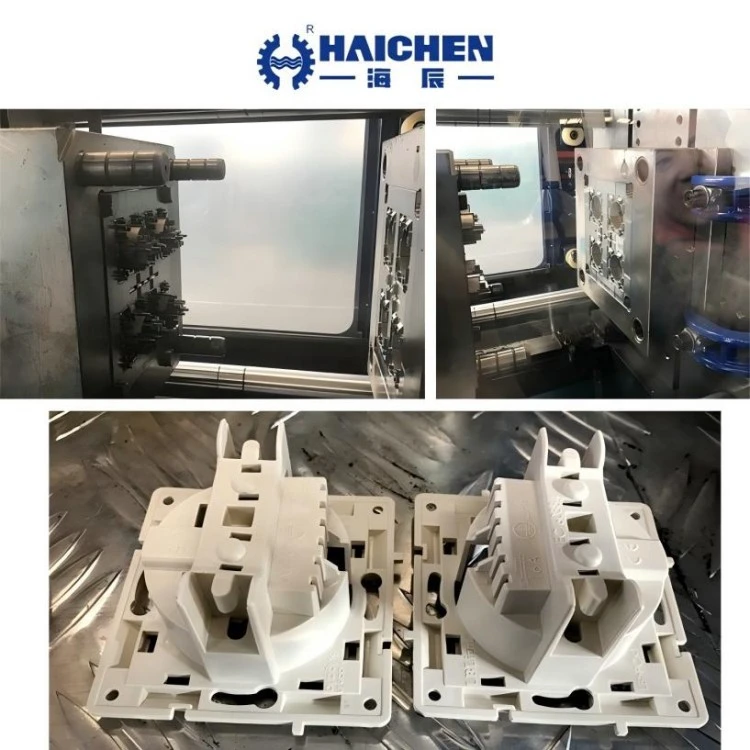
The published figures are:
| Item | Production Data |
|---|---|
| Product | Five-hole socket panel |
| Material | ABS |
| Part weight | 18 g |
| Cavities | 4 |
| Machine | HCK150 |
| Cycle time | 14 seconds |
| Daily output | About 22,000 pcs |
| Published yield | 97% |
The case reports stable production and consistent surface finish.
This example also shows why a machine should be selected from actual production data.
The customer did not simply choose a machine because the product was called a “five-hole socket.” The material, part weight, mold cavities, and production target all formed part of the selection.
Multi-Cavity Injection Molding for Switch Socket Production
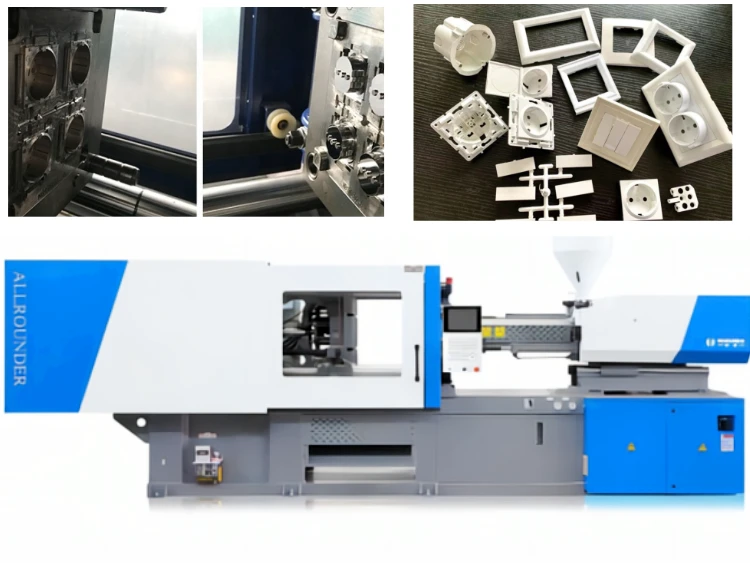
High-volume electrical products often use multi-cavity molds.
The main benefit is simple: one cycle creates several parts.
However, cavity count also affects:
- Injection capacity
- Clamping force
- Mold cost
- Cooling demand
- Runner balance
- Mold maintenance
2-Cavity Socket Mold
A 2-cavity mold can suit new products or smaller demand.
It gives the factory more flexibility and keeps the initial mold investment lower than a high-cavity design.
4-Cavity Socket Mold
A 4-cavity mold is a practical choice for many standard production jobs.
Haichen’s published five-hole socket case uses a 4-cavity mold with an HCK150.
8-Cavity Switch Mold
An 8-cavity mold can raise output when demand is higher.
At the same time, the mold needs better cavity balance and the machine needs more injection capacity.
Haichen’s application data gives an 8-cavity PC switch-cover example using an HCK230, with an 18-second cycle and about 38,000 pieces per day.
Servo Injection Molding Machine for Switch Socket Production
A servo injection molding machine can help reduce energy use during production because the motor output changes with machine demand.
Haichen’s current switch/socket application page states that its servo system can reduce electricity consumption compared with traditional hydraulic systems and provides stable pressure control.
The benefit becomes more useful when the machine runs for many hours each day.
For example, a factory can compare:
- Daily production hours
- Electricity price
- Cycle time
- Machine load
- Expected annual output
The goal is not to choose a servo machine simply because it is newer. Instead, compare energy use with the actual operating pattern.
Haichen also offers an oil-electric hybrid platform. Its current published series combines hydraulic clamping with electric injection and plasticizing and includes multi-stage injection control, PID temperature control, low-pressure mold protection, and a manipulator interface.
Automation for a Wall Switch Production Line
A high-volume wall switch production line can use automation after molding.
Common equipment includes:
- Robot arms
- Mold temperature controllers
- Dryers
- Auto loaders
- Conveyors
- Inspection systems
Haichen’s current electrical switch guide lists these types of equipment for high-volume production.
Robot Take-Out
A robot can remove parts from the mold after each cycle.
This can reduce manual handling and keep the transfer step consistent.
Auto Loader
An automatic loader moves resin from the material source to the machine hopper.
This supports continuous production and reduces manual feeding.
Chiller and Mold Temperature Controller
The cooling system controls the heat removed from the mold.
A stable mold temperature can support more stable part quality and cycle time.
Conveyor and Inspection
A conveyor can move the molded parts to inspection or packing.
At the same time, a camera inspection system can check selected dimensions or visible defects.
The exact automation level depends on the output target.
Common Switch Socket Injection Molding Problems
Electrical plastic parts often have visible surfaces, so molding defects can be easy to notice.
Flash
Problem: Extra plastic appears along the mold parting line.
Possible causes: High pressure, insufficient clamping force, mold wear, or poor mold fit.
Solution: Check the mold and clamping force first. Then review injection and holding pressure.
Short Shot
Problem: The cavity is not fully filled.
Possible causes: Low material temperature, low injection speed, restricted gate, poor venting, or low injection pressure.
Solution: Check the filling path, gate, venting, and injection profile.
Warpage
Problem: The switch panel bends after molding.
Possible causes: Uneven cooling, uneven wall thickness, or high internal stress.
Solution: Review mold cooling and holding conditions. Then check the part design.
Sink Marks
Problem: A small depression appears on the surface.
Possible causes: Thick sections, poor packing, or insufficient cooling.
Solution: Review the part thickness, holding pressure, and cooling time.
Flow Marks
Problem: Lines appear on the visible surface.
Possible causes: Filling speed changes, poor melt temperature control, or an unsuitable gate location.
Solution: Review the injection profile, melt temperature, mold temperature, and gate design.
Dimensional Variation
Problem: Parts from different cycles do not have the same dimensions.
Possible causes: Unstable plasticizing, temperature changes, mold wear, or inconsistent material.
Solution: Check machine repeatability, material supply, and mold condition.
How Much Does a Switch Socket Injection Molding Machine Cost?
Machine cost depends on the complete production setup.
Important factors include:
- Machine tonnage
- Injection unit
- Machine type
- Mold cavity number
- Mold cost
- Robot
- Dryer
- Chiller
- Mold temperature controller
- Inspection equipment
- Production volume
A low purchase price does not always mean a low cost per part.
For example, a cheaper machine may have a longer cycle or require more manual work. Over several years, those costs can affect the total production cost.
Therefore, buyers should compare the complete system rather than the machine price alone.
How to Build an Electrical Socket Production Line
A basic production flow can look like this:
Material Storage → Material Preparation → Injection Molding → Automatic Part Removal → Inspection → Assembly → Packing
For a simple line, some stages can remain manual.
For high-volume production, manufacturers can add:
Auto Loader + Injection Molding Machine + Robot + Conveyor + Vision Inspection + Packing
The correct layout depends on:
- Daily output
- Product range
- Number of molds
- Factory space
- Labor cost
- Automation budget
A well-balanced line prevents one process from running much faster than the next process.
Why Choose Haichen for Wall Switch Socket Injection Molding?
Haichen states that it has more than 20 years of injection molding machine experience and has supplied machines to more than 1,000 factories worldwide. Its current product range includes small machines, E Series, K Series, oil-electric hybrid machines, and multi-color machines.
For switch and socket production, Haichen’s current application material lists HCK110–HCK230 as reference models and includes machine selection, mold testing, material guidance, operator training, spare parts, and after-sales technical support.
The current application page also describes support for robot integration and production-line equipment such as loaders, dryers, conveyors, and mold temperature controllers.
For a new project, the machine should be selected from the actual mold data rather than from the product name.
What Information Should You Send Before Buying a Socket Injection Molding Machine?
A machine supplier can make a better recommendation when the inquiry includes the basic production data.
Send:
- Product drawing
- Material
- Part weight
- Product dimensions
- Mold cavity number
- Mold dimensions
- Target cycle time
- Target hourly output
- Daily or annual production target
- Automation requirements
With these details, the supplier can check the clamping force, injection unit, mold space, cycle target, and production line together.
Frequently Asked Questions
What Injection Molding Machine Is Used for Wall Switches?
A suitable machine depends on the switch size, material, mold cavity number, projected area, and output target. Haichen’s current switch/socket application page lists reference models from HCK110 to HCK230 for different product and mold requirements.
How Many Tons Do I Need for a Socket?
There is no fixed tonnage for every socket. Machine size depends on projected area, cavity number, mold design, material, and injection conditions.
What Plastic Is Used for Electrical Switch Panels?
PC, ABS, PP, and PC/ABS can be used for different electrical plastic parts. The correct choice depends on the product’s strength, heat, appearance, and other requirements.
What Machine Is Suitable for a Five-Hole Socket?
The machine should be selected from the five-hole socket’s product weight, material, cavity number, mold dimensions, and target output. Haichen has published a 4-cavity ABS five-hole socket example using an HCK150.
How Many Cavities Should a Socket Mold Have?
One or two cavities can suit lower production. Four or eight cavities can increase output for higher-volume production. The machine and mold must be matched to the final cavity number.
What Is the Cycle Time for Switch Socket Injection Molding?
Cycle time depends on product thickness, mold cooling, resin, cavity number, injection settings, and automation. Haichen’s published switch/socket cases show cycle times of 14 and 18 seconds for specific products and molds.
Can One Injection Molding Machine Make Different Socket Parts?
Yes. A compatible machine can run different molds. Before changing molds, check mold size, tie-bar spacing, mold height, shot capacity, ejector stroke, and clamping force.
How Can I Reduce Switch Socket Production Costs?
Start with cycle time, cavity number, material use, scrap rate, energy use, and labor.
A good mold can reduce unnecessary cooling time and runner waste. Automation can also reduce manual handling. At the same time, a suitable servo or hybrid machine can be evaluated when energy use is an important part of the project.
Start Your Wall Switch Socket Injection Molding Project
For a machine recommendation, send Haichen your product drawing, material, part weight, mold cavity number, mold size, target cycle time, and expected output.
Haichen can then match the wall switch socket injection molding machine to your mold and production target, with the injection unit, clamping unit, cooling, and automation checked as one system.
Author: Yang, Senior Engineer, Haichen Machinery