Bottle handle production methods vary widely in cost, quality, and efficiency. Choosing the right method is a critical decision for any plastic manufacturer. The wrong process choice can turn a profitable operation into a costly struggle. This guide compares the three main production methods for bottle handles to help you find the best fit.
This guide compares three bottle handle production methods — independent molding with post-assembly, integrated in-mold insert molding, and injection-blow integrated molding — across investment, efficiency, quality, and ideal volume.
The demand for plastic water bottles with handles continues to grow across the beverage, household, and industrial sectors. As an injection molding machine manufacturer, HAICHEN sees many buyers struggling to choose between independent molding, insert molding, and fully integrated solutions. Each method offers distinct advantages depending on your production volume, quality requirements, and budget.
Independent Molding Bottle Handle Production Method
This method produces the bottle handle as a separate component. After the bottle body is formed, workers or automated equipment attach the handle in a secondary operation. For manufacturers with limited capital, this bottle handle production method offers a practical entry point.
Advantages of Independent Molding
The main advantage is flexibility. You can use the same handle design across different bottle types and sizes without retooling the bottle mold. The initial investment is relatively low because the molds are simpler and do not require complex side-action mechanisms. Changing handle colors or designs is also straightforward.
Limitations of Independent Molding
The biggest drawback is the additional assembly step. This adds labor costs and increases overall cycle time. The bond strength between handle and bottle may not be as secure as integrated solutions. For high-volume production, the per-unit labor cost can become a significant competitive disadvantage.
Best Applications for Independent Molding
This bottle handle production method works best for small to medium production volumes, typically under 500,000 units per year. It is also suitable for manufacturers who already have assembly capabilities or produce multiple bottle variants with the same handle design. Strength requirements are moderate for most applications using this approach.
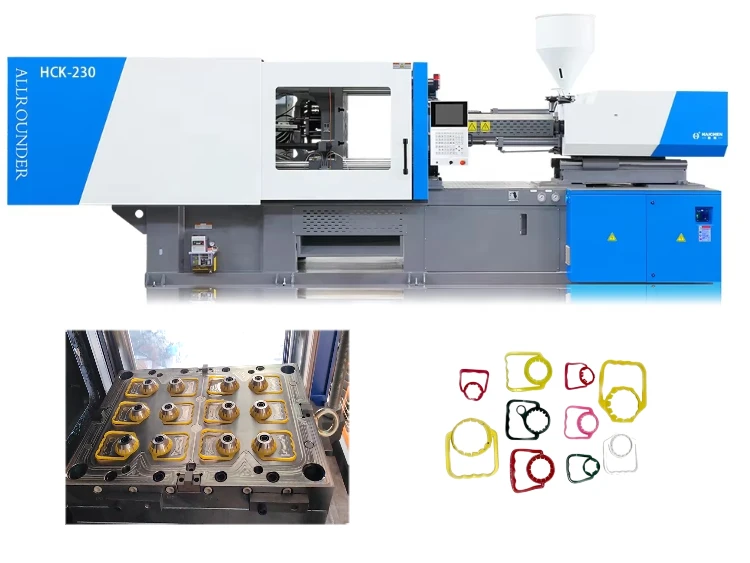
HAICHEN has supplied machines to manufacturers producing handles for cooking oil bottles, disposable water bottles, and detergent bottles using the independent molding method. These customers typically use molds with 6 to 48 cavities and process materials such as HDPE, PP, or PS. The flexibility of this approach allows them to serve multiple product lines with a single handle design.
Insert Molding Bottle Handle Production Method
Insert molding places a pre-formed handle component into the mold cavity before plastic injection. During the molding process, the handle becomes permanently fused into the bottle structure. This is one of the most reliable bottle handle production methods for achieving superior bond strength.
Advantages of Insert Molding
This method eliminates secondary assembly entirely. The handle and bottle form in one integrated process, delivering superior bond strength that independent molding cannot match. Automated robotic placement ensures consistent quality across every cycle. Production efficiency is higher because you remove the separate assembly step from your workflow.
Limitations of Insert Molding
The molds are more complex and must accommodate insert placement mechanisms. Initial investment is substantially higher, and mold development takes longer. Design flexibility is reduced because changing handle designs or bottle sizes requires new molds. This bottle handle production method is best suited for stable, high-volume product lines.
Best Applications for Insert Molding
Insert molding is ideal for large-volume production runs between 500,000 and 5 million units per year. It works exceptionally well for applications requiring strong, durable handle-to-bottle bonding, such as large water containers and industrial packaging. Manufacturers with existing automation capabilities will find this method most cost-effective.
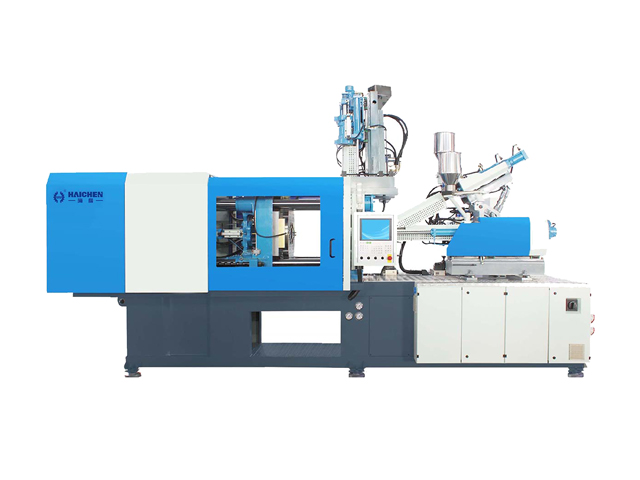
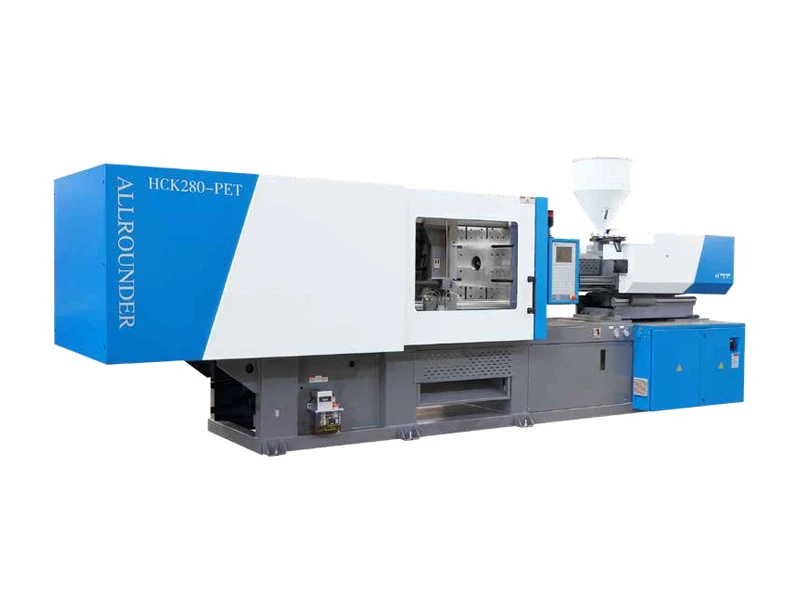
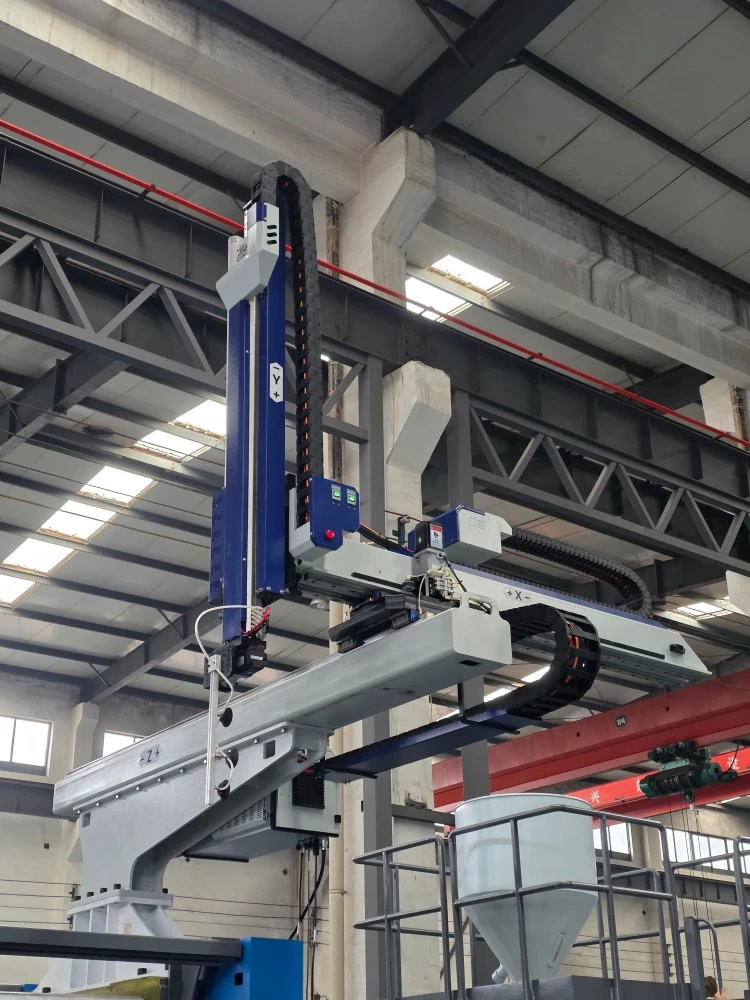
HAICHEN has successfully implemented insert molding solutions for customers using IMH technology, where the handle is directly injection-molded into the PET preform. This eliminates the need for subsequent handle installation, significantly improving production efficiency.
Integrated Injection-Blow Bottle Handle Production Method
This is the most advanced approach among bottle handle production methods. The handle and bottle form in a continuous, fully automated process using specialized injection-blow equipment. The preform is injection molded with handle attachment features, then transferred to blow molding where the bottle forms while the handle integrates simultaneously.
Advantages of Integrated Molding
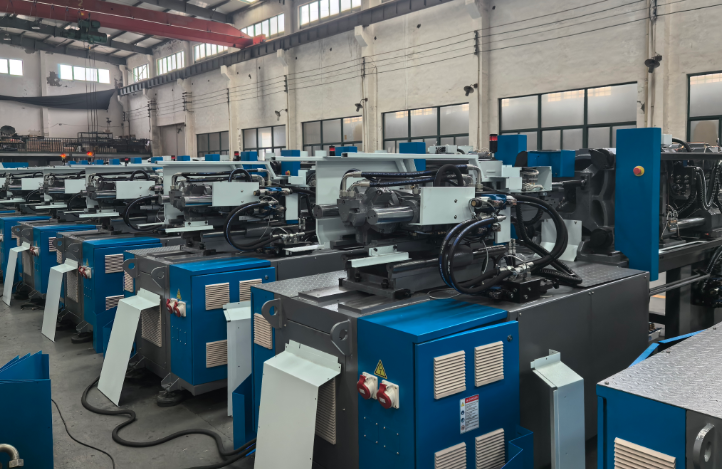
Production efficiency reaches its peak with this bottle handle production method. The continuous one-flow process requires minimal labor and delivers the lowest per-unit cost at very high volumes. Product consistency is excellent because the process eliminates variability between separate production steps. Floor space requirements are also reduced since one machine replaces multiple production stations.
Limitations of Integrated Molding
The capital investment is the highest among all three methods. Operation and maintenance are complex, requiring skilled technicians. Changeover time is lengthy when switching between different bottle designs. Design flexibility is the most limited, making this bottle handle production method suitable only for standardized, high-volume products.
Best Applications for Integrated Molding
This method is designed for ultra-high volume production exceeding 5 million units per year. It works best for standardized bottle designs with minimal variation. Large-scale manufacturers with technical expertise and intense price competition in their markets will benefit most from this approach.
How to Choose Among Bottle Handle Production Methods
| Factor | Independent + Assembly | Insert Molding | Injection-Blow Integrated |
|---|---|---|---|
| Process Type | Separate molding + assembly | Integrated in-mold | Continuous one-flow |
| Investment Level | Low | Medium | High |
| Production Efficiency | Low | Medium | High |
| Labor Requirement | High | Low | Very Low |
| Product Quality | Moderate | High | Very High |
| Design Flexibility | High | Medium | Low |
| Ideal Volume | Small–Medium | Medium–Large | Large–Very Large |
When selecting among these bottle handle production methods, consider your annual production volume first. Under 500,000 units points toward independent molding. Between 500,000 and 5 million units, insert molding becomes attractive. Above 5 million units, integrated molding delivers the best economics. Also evaluate your quality requirements, budget constraints, and how many different bottle designs you produce.
How HAICHEN Helps You Choose
With over 20 years of experience and service to more than 1,000 factories worldwide, HAICHEN provides expert guidance on method selection. The team evaluates your product specifications, production targets, and budget to recommend the most suitable approach, ensuring your investment delivers maximum returns.

Frequently Asked Questions
Q: What are the three bottle handle production methods
A: The three main bottle handle production methods are independent molding with post-assembly, integrated in-mold insert molding, and injection-blow integrated molding. Each offers different trade-offs in investment, efficiency, and quality.
Q: Which bottle handle production method is cheapest to start
A: Independent molding with post-assembly requires the lowest initial investment because molds are simpler and no complex automation is needed. This bottle handle production method is ideal for small to medium volumes under 500,000 units per year.
Q: Which method delivers the strongest handle-to-bottle bond
A: Insert molding provides the strongest bond because the handle becomes permanently fused into the bottle structure during the molding process. Learn more about injection molding on Wikipedia.
Q: What production volume justifies integrated injection-blow molding
A: Integrated injection-blow molding becomes cost-effective at volumes exceeding 5 million units per year. At this scale, the lowest per-unit cost and minimal labor requirements justify the high capital investment.
Q: Can I switch between bottle handle production methods later
A: Switching methods typically requires new molds and equipment, making it expensive. Choose your bottle handle production method carefully based on long-term volume projections rather than short-term needs.
Q: Does HAICHEN supply equipment for all three methods
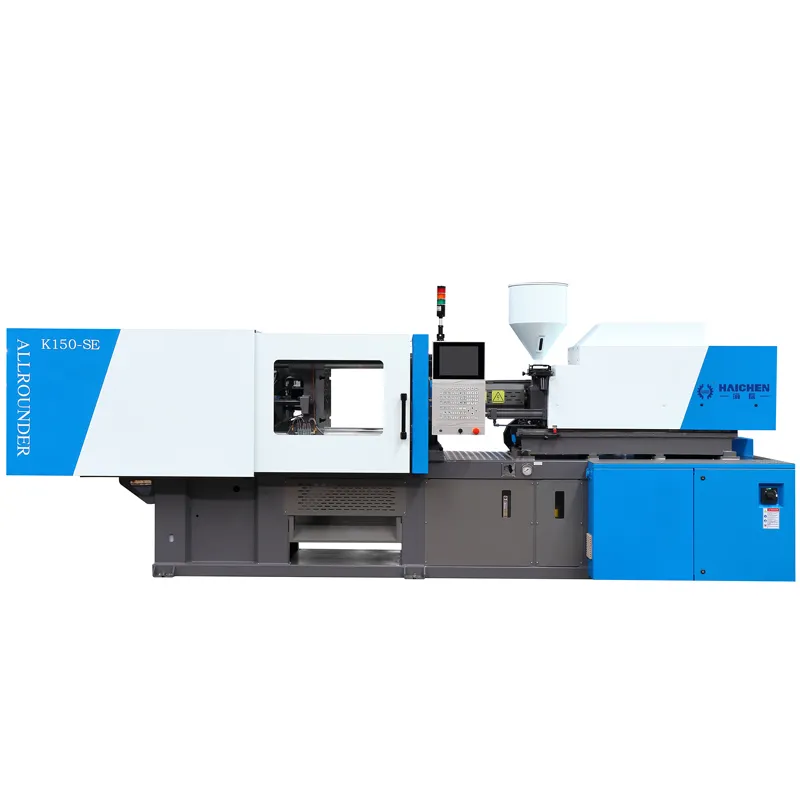
A: Yes. HAICHEN provides injection molding machines for all three bottle handle production methods, with configurations tailored to each approach and production volume range.