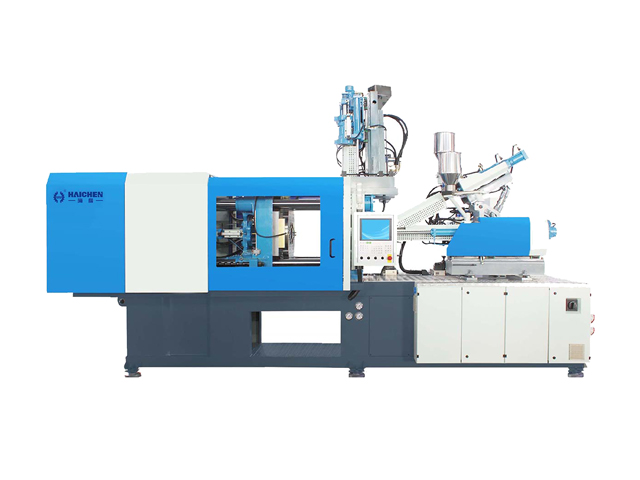
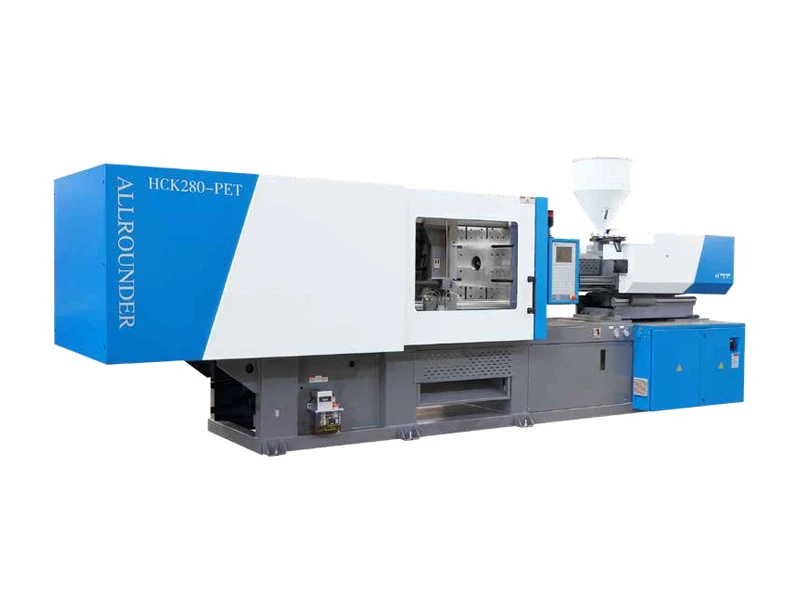
Choosing the right plastic pen injection molding machine manufacturer can make or break your pen production business. Indeed, a machine that works well for general plastic parts may not perform well for pens. After all, pens are slender, thin‑walled parts with tight dimensional requirements. As a result, they need a machine that delivers consistent shot weight, precise temperature control, and high injection speed.
However, not all injection molding machine manufacturers understand the specific needs of pen production. For instance, some manufacturers build general‑purpose machines and call them “pen machines.” Meanwhile, others have never set foot in a pen factory. Therefore, when you work with a plastic pen injection molding machine manufacturer that has real pen‑making experience, you get a machine that is configured for your specific needs — not a one‑size‑fits‑all solution.
In addition, Haichen has been building plastic pen injection molding machines for over 20 years. Specifically, we have worked with pen manufacturers across Asia, the Middle East, and Africa. As a result, we understand what makes a good pen — and we build machines that produce them. Furthermore, this guide explains what makes Haichen different, the HCK series configurations for pen production, and the complete production line support we offer.
What Makes Haichen Different in Pen Manufacturing
Over 20 Years of Injection Molding Experience
Haichen has been designing and building injection molding machines for more than 20 years. Specifically, our machines range from 30 tons to 3,000 tons, covering a wide variety of applications. In fact, we have supplied plastic pen injection molding machines to customers in many countries.
Experience matters in pen production. For example, pens have thin walls (0.8–1.2mm) and long flow paths (up to 150mm) . Therefore, a machine that cannot maintain consistent injection pressure will produce barrels that are bent or dimensionally inconsistent. Consequently, our 20+ years of experience mean we know exactly what parameters to set for different pen materials and designs.
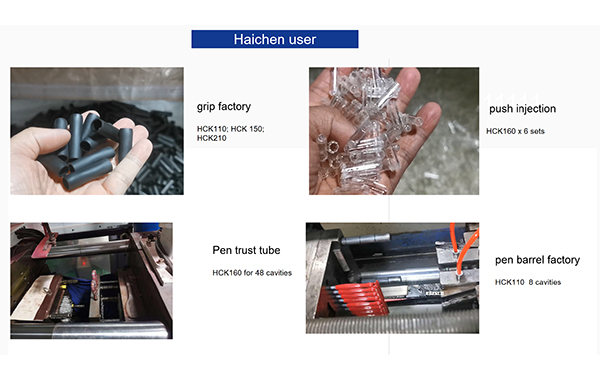
Moreover, Haichen’s engineering team includes specialists who have worked directly with pen manufacturers. Thus, we do not just build machines — we build solutions for pen production. Furthermore, our experience covers everything from basic ballpoint pens to premium gel pens and multi‑color promotional pens.
Dedicated Machine Configurations for Pens
A general‑purpose plastic pen injection molding machine is not the same as a machine dedicated to pen production. Specifically, pens have specific requirements that general‑purpose machines often cannot meet.
High injection speed: Pen barrels need fast injection to fill thin walls before the melt cools. Therefore, a dedicated pen machine achieves injection speeds of 120 mm/s or higher.
Precise shot control: Pen parts are small, but consistency is critical. In fact, a variation of just 0.02mm in wall thickness can affect the pen’s feel and function. As a result, dedicated pen machines offer ±0.1% shot weight consistency.
Multi‑cavity capability: Pen production uses 24 to 48 cavities per mold. Consequently, a dedicated machine supports high‑cavity molds with balanced filling and consistent cooling across all cavities.
Material flexibility: Pens use ABS for barrels and caps, PP for caps and internal parts, and PC for premium transparent pens. Therefore, a dedicated pen machine handles all these materials with optimized screw designs and temperature profiles.
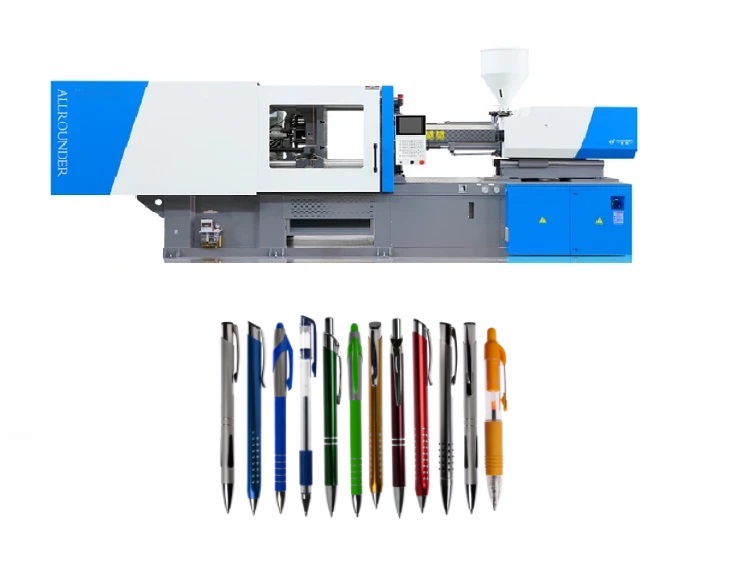
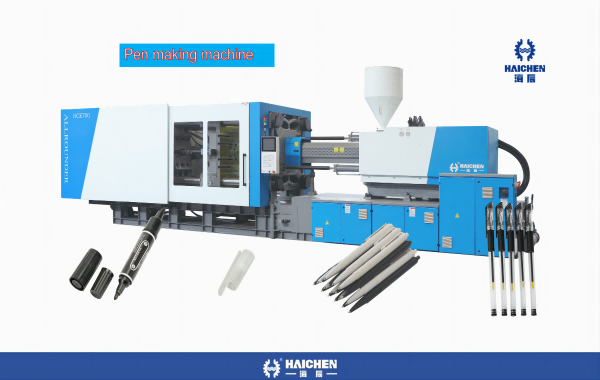
Haichen’s HCK series plastic pen injection molding machines are configured specifically for pen production. In particular, we offer the right screw design, temperature control, and injection speed for each pen material and component type.
Haichen HCK Series for Pen Production
110–310 Ton Configurations for Different Pen Types
The HCK series covers the tonnage range you need for pen production — 110 to 310 tons. However, different pen components need different tonnage, as shown in the table below:
| Pen Component | Typical Cavities | Recommended Tonnage | HCK Model |
|---|---|---|---|
| Pen clips, small parts | 32–48 cavities | 110–150 tons | HCK 110 – HCK 150 |
| Pen caps, ink tube holders | 32–48 cavities | 150–180 tons | HCK 150 – HCK 180 |
| Pen barrels | 24–32 cavities | 160–230 tons | HCK 180 – HCK 230 |
| High‑volume pen barrels | 32–48 cavities | 230–310 tons | HCK 230 – HCK 310 |
Specifically, Haichen helps you match the right machine to your specific pen type and output target. For instance, a 24‑cavity pen barrel mold works well on a 160–180 ton machine. Meanwhile, a 48‑cavity mold needs 230–310 tons for stable clamping and consistent part quality.
Single-Color and Two-Color Options Available
Not all pens are single‑color. In fact, many promotional pens and premium pens use two colors or two materials in a single part. Therefore, a two‑color pen injection molding machine has two independent injection units. Specifically, it injects one color first, then the second color in the same cycle.
Two‑color molding offers several advantages for pen production:
-
Eliminates secondary painting – colors are molded in, not painted on
-
Better color registration – colors meet precisely at the boundary
-
Faster production – one cycle produces the finished two‑color part
-
Higher perceived value – two‑color pens look more premium
Haichen offers both single‑color and two‑color configurations in the HCK series. Therefore, whether you need basic single‑color barrels or premium two‑color promotional pens, we have a machine that fits your needs.
Servo Energy Saving for Precision Molding
Energy costs are a major expense in pen production. Specifically, a plastic pen injection molding machine running 24/7 consumes significant electricity. For this reason, the HCK series uses servo energy saving as standard.
Servo motors adjust power based on real‑time demand. In fact, during holding and cooling phases, the motor nearly stops. As a result, this saves 30–50% on electricity compared to traditional hydraulic machines.
Moreover, servo energy saving also improves precision. Specifically, the servo system delivers consistent injection pressure and speed cycle after cycle. Consequently, this consistency is essential for pen production, where even small variations affect part quality.
Multi-Cavity Support – 24 to 48 Cavities
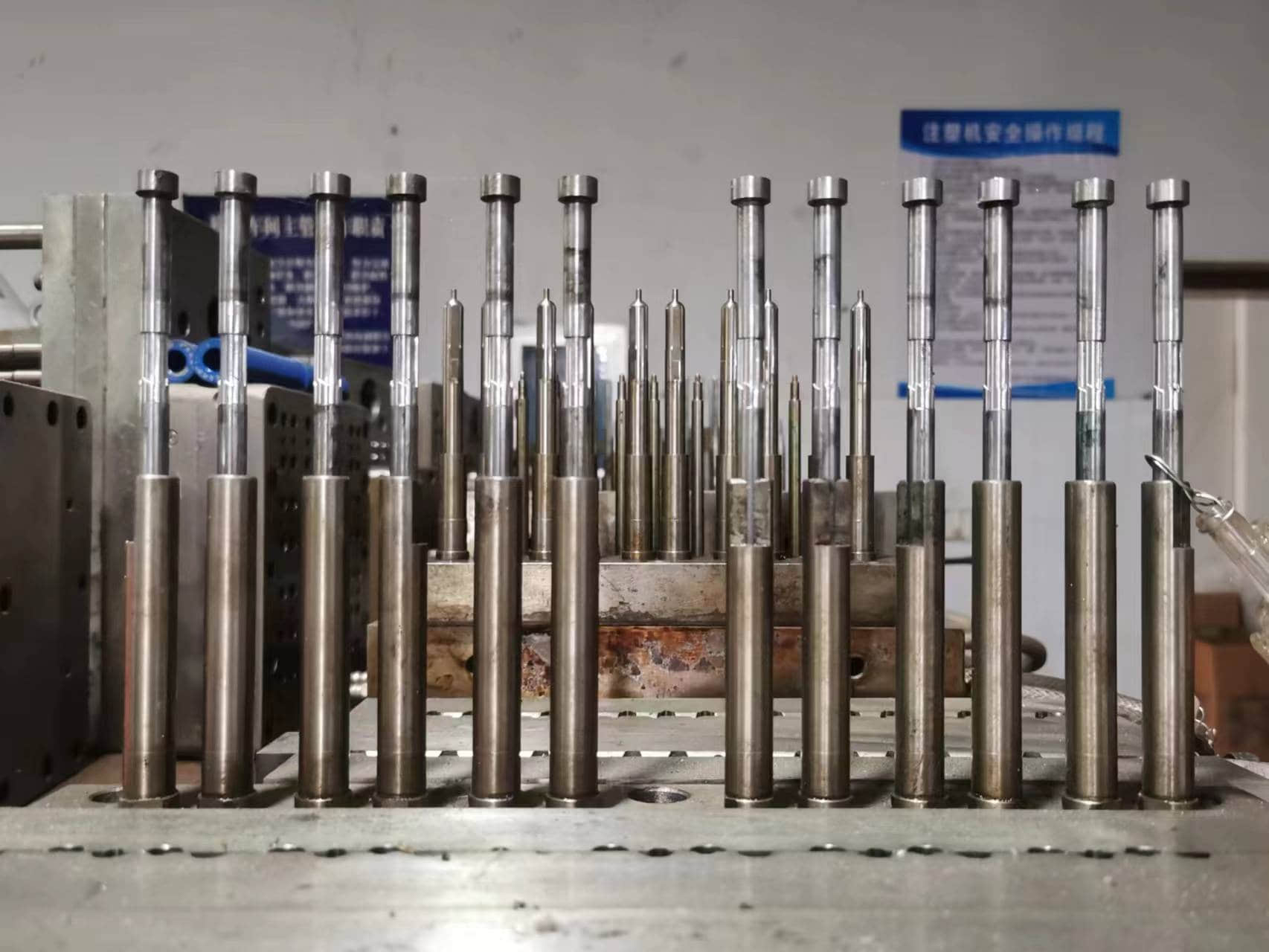
Pen production is high‑volume production. Indeed, you need to produce thousands of pens per day to be competitive. Therefore, multi‑cavity molds are the answer.
A 24‑cavity pen barrel mold produces 24 barrels per cycle. Meanwhile, a 48‑cavity mold produces 48 barrels per cycle. As a result, more cavities mean lower per‑part cost and higher daily output.
The HCK series supports 24 to 48 cavities for pen production. However, high‑cavity molds require precise temperature control, balanced filling, and consistent cooling. For this reason, Haichen’s HCK series machines deliver all three.
Output example: A 32‑cavity pen barrel mold running at a 20‑second cycle produces about 5,700 barrels per hour. Meanwhile, a 48‑cavity mold increases that to over 8,600 barrels per hour. Consequently, the right machine makes the difference.
Complete Production Line Support
Mold Design Recommendations
A good mold is the foundation of good pen production. Therefore, Haichen provides mold design recommendations based on your pen design and production targets.
Gate location: For slender pen barrels, gate placement affects filling and warpage. Specifically, we recommend gate locations that ensure balanced filling and minimal bending.
Cooling channel layout: Pen barrels are long and thin. Consequently, cooling channels must run the full length of the cavity to prevent warpage. Therefore, we recommend cooling layouts that maintain uniform temperature across the entire part.
Venting: Proper venting prevents short shots and burns. As a result, we recommend vent depths and locations for consistent filling.
Cavity count: We help you decide the right cavity count for your output target. In particular, more cavities lower per‑part cost but require a larger machine.
Our mold design recommendations come from years of experience working with pen manufacturers. Indeed, we have seen what works and what does not.
Material Selection Guidance
Different pen components need different materials. Therefore, Haichen provides material selection guidance based on your pen type and performance requirements.
-
Pen barrels: Use ABS for standard pens, PC for transparent or premium pens, and PP for cost‑sensitive applications.
-
Pen caps: Use PP for flexibility and ABS for rigidity.
-
Pen clips: Use ABS for standard clips and POM for high‑durability clips.
-
Internal parts: Use POM for moving parts that need wear resistance.
Moreover, we also provide guidance on material drying, processing temperatures, and screw selection for each material. Consequently, the right material and machine combination produces better pens with fewer defects.
Operator Training and After-Sales Support
Buying a plastic pen injection molding machine is just the first step. Specifically, your operators need to know how to run it. Therefore, Haichen provides comprehensive operator training at your factory or at our facility.
Training covers:
-
Machine operation and control settings
-
Material handling and drying
-
Mold setup and changeover
-
Process parameter optimization
-
Troubleshooting common defects
-
Preventive maintenance
After‑sales support includes:
-
Spare parts supply: We stock common spare parts for quick delivery
-
Technical support: Our engineers are available for remote or on‑site assistance
-
Process optimization: We help you fine‑tune your process for better quality and higher output
We have served pen manufacturers across many countries. As a result, our after‑sales team responds quickly to keep your production running.
Normally Asked Questions
What is a plastic pen injection molding machine?
A plastic pen injection molding machine melts plastic pellets and injects them into a mold to form pen components — barrels, caps, clips, and internal parts. Specifically, the machine heats the plastic, injects it under high pressure, cools it, and ejects the finished parts. Consequently, these machines are designed for high‑speed, high‑cavity production of precision parts.
What materials are used for pen injection molding?
Pen barrels typically use ABS (for strength and surface finish) or PC (for transparency and impact resistance). Meanwhile, pen caps and internal parts often use PP (for flexibility and chemical resistance) or POM (for wear resistance). Therefore, Haichen HCK series machines handle all these materials with optimized screw designs.
What tonnage do I need for pen production?
Most pen production uses machines in the 110–310 ton range. For example, pen barrels with 24–32 cavities need 160–230 tons. Meanwhile, pen caps and clips with 32–48 cavities need 110–180 tons. Therefore, Haichen can recommend the right tonnage based on your pen components and cavity count.
How many cavities should my pen mold have?
It depends on your output target. Specifically, 24–32 cavities is common for pen barrels. Meanwhile, 32–48 cavities is common for pen caps and clips. As a result, more cavities lower per‑part cost but require higher clamping force and more precise temperature control. For this reason, Haichen can help you select the right cavity count for your production needs.
Can one machine produce different pen components?
Yes, by changing molds. However, for high‑volume production, many pen manufacturers use separate machines for barrels, caps, and clips. Consequently, this allows continuous production without mold changes. Moreover, Haichen HCK series machines support quick mold changes for flexibility.
Why choose a manufacturer with pen experience?
A plastic pen injection molding machine manufacturer with pen experience understands the specific requirements of pen production — thin walls, long flow paths, high‑cavity molds, and tight dimensional tolerances. Therefore, they can recommend the right machine configuration, screw design, and process parameters for your specific pen type.
Haichen Machinery – your plastic pen injection molding machine manufacturer with real pen experience. From HCK 110 to HCK 310, we help you produce better pens.
Author: Yang, Senior Engineer, Haichen Machinery