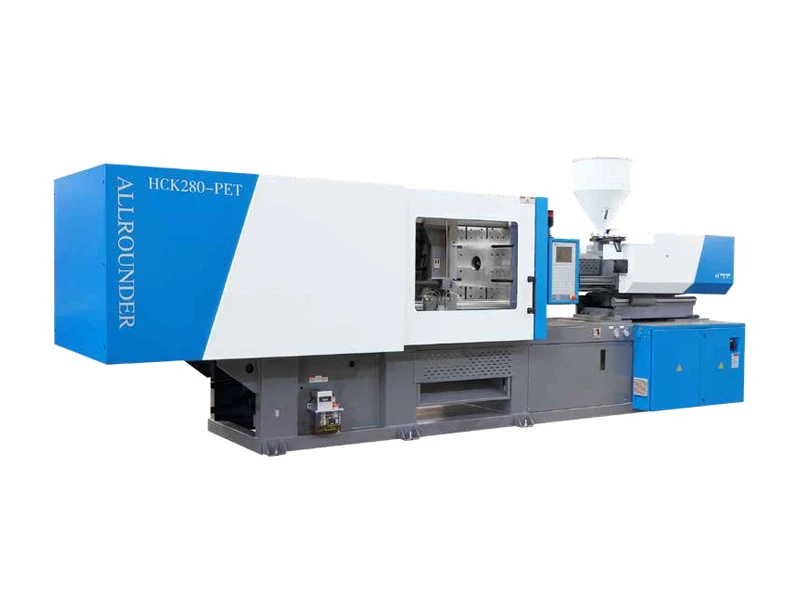
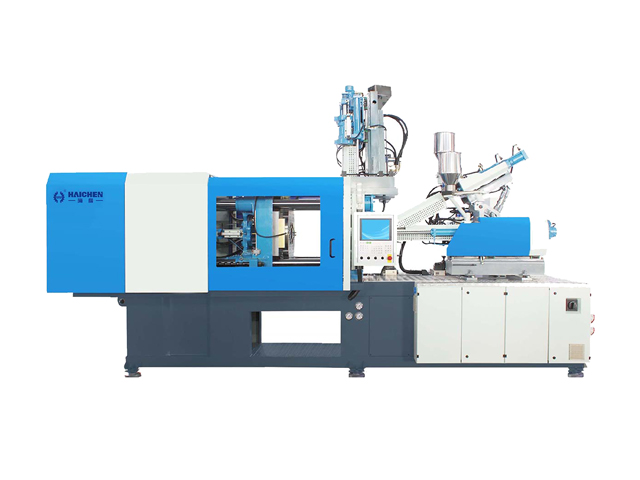
Servo-driven injection molding machines reduce electricity consumption by 30–70% compared to conventional hydraulic machines. For plastic pen production, the savings come from three areas: no idling power during cooling, precise flow matching during injection, and reduced cooling load from lower oil temperatures.
Electricity costs are rising for manufacturers . Plastic prices also increase with energy costs . These trends affect the profitability of plastic ballpoint pen manufacturing. Injection molding machines consume significant power during production. Reducing energy use directly lowers operating costs.
Many plastic pen making machine factories use older hydraulic machines. These machines run the pump motor at full speed continuously. This wastes power during cooling and idle phases. Servo-hydraulic technology offers a solution.
This guide explains how servo technology saves energy in plastic pen production. It shows how a plastic ballpoint pen injection machine with servo control cuts electricity costs by 30%-80%. It also shows how a plastic ball point pen injection molding machine provides faster payback through energy savings.
How Much Can You Save on Electricity for Plastic Pen Molding?
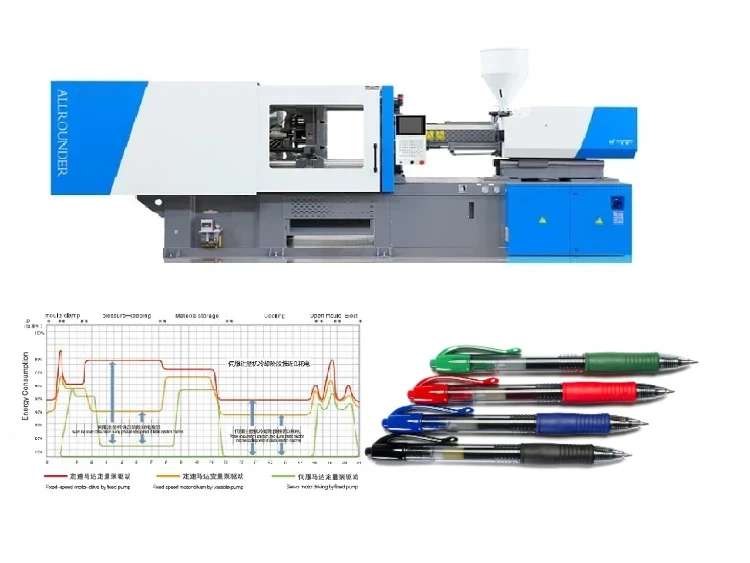
For a 150-ton servo injection molding machine running 20 hours per day, 300 days per year, at $0.12/kWh, switching from hydraulic to servo saves approximately $4,300–$8,600 annually. A pen factory running 5 machines saves $21,500–$43,000 per year.
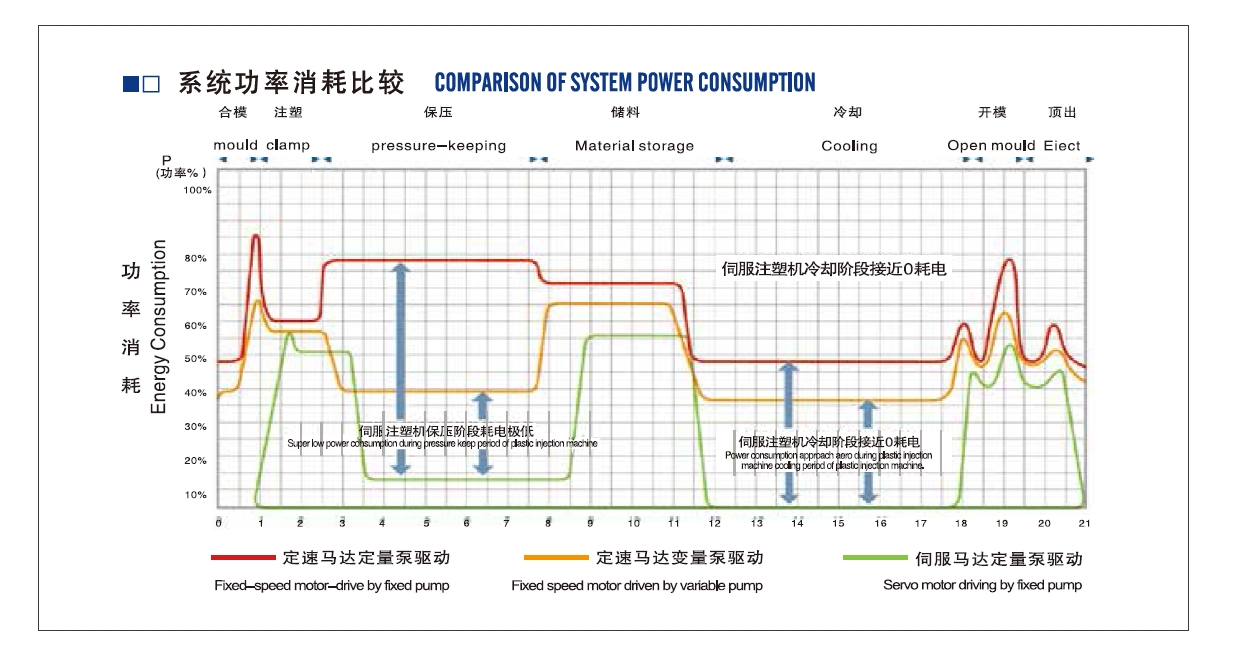
A servo injection molding machine uses a servo motor to drive the hydraulic pump only when movement is required. During holding and cooling phases, the motor speed drops to near zero and consumes almost no power. Conventional hydraulic machines keep the pump running at constant speed regardless of load, wasting energy as heat.
The Problem with Standard Hydraulic Systems
Standard hydraulic injection machines use a fixed displacement pump. An induction motor drives this pump at constant speed. The motor runs at full speed whether the machine needs full flow or not .
The machine only needs full oil flow during injection and clamping. The rest of the cycle needs less flow. Cooling requires no flow at all. Holding pressure needs very low flow.
With standard systems, excess oil returns to the tank through relief valves. This bypass process wastes energy. It also heats the hydraulic oil. Hot oil requires cooling, which uses more energy.
How Servo Motor Control Works
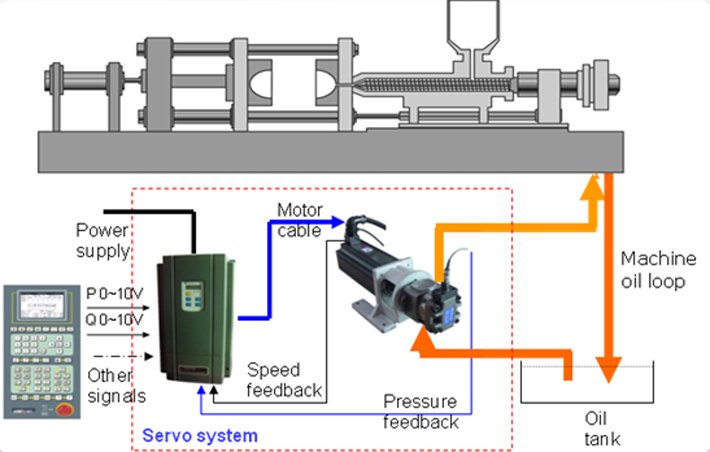
A servo-hydraulic system replaces the standard induction motor with a servo motor. The servo motor adjusts speed based on actual demand .
The system includes a rotary encoder and pressure sensor. These components feedback flow and pressure data continuously. The controller changes motor speed and torque based on this feedback .
During injection and clamping, the motor runs at required speed. During holding pressure, the motor reduces speed. Energy consumption drops very low. During cooling, the motor stops completely. Power consumption is zero .
This demand-oriented operation saves energy. The response time is fast. High-performance servo systems reach full speed in 0.05 seconds .
Measured Energy Savings in Production
Research confirms significant energy savings from servo-hydraulic systems. A study compared a conventional hydraulic machine with a hybrid machine using servo motors. The hybrid machine saved about 40% energy while maintaining the same production cycle time .
Industry data shows servo systems save 20%-80% energy compared to standard hydraulic machines . The actual saving depends on the production cycle. Longer cooling phases create higher savings. Shorter cycles with more injection time create lower savings but still show improvement.
Haitian’s K series reduces energy consumption by 30-40% compared to standard hydraulic machines. This combines servo technology with energy-saving heater bands and optimized hydraulic circuits .
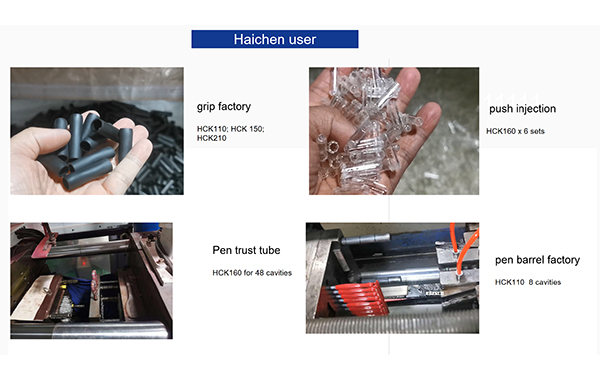
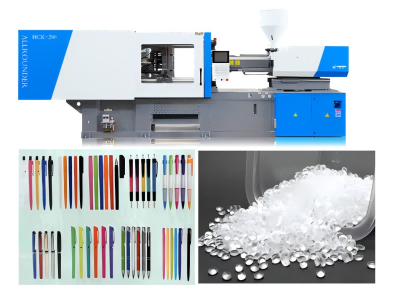
HAICHEN servo-hydraulic plastic pen making injection machines deliver 30%-60% energy savings. Our high-response servo system reaches maximum output in 0.05 seconds. The closed-loop control system maintains consistent part quality. Our HCK110 and HCK180 models provide the clamping force range needed for plastic pen production.
| HCK180 PLASTIC INJECTION MOLDING MACHINE | ||||
| INJECTION UNIT | ||||
| ITEM | UNIT | A | B | C |
| INJECTION UNIT | ||||
| Screw diameter | mm | 40 | 45 | 50 |
| Screw L/D ratio | L/D | 24.7 | 22.0 | 19.8 |
| Shot volume(theoretical) | cm3 | 283 | 358 | 442 |
| Injiection weight(ps) | g | 257 | 326 | 402 |
| oz | 9.1 | 11.5 | 14.2 | |
| Injection pressure | Bar | 2231 | 1763 | 1428 |
| Injection rate | cm3/s | 157 | 199 | 245 |
| Plasticizing capacity | g/s | 16 | 22 | 26 |
| Screw speed (Max.) | r/min | 220 | ||
| CLAMPING UNIT | ||||
| Clamping force | Kn | 1800 | ||
| Space between tie bars(W×H) | mm | 520×470 | ||
| Platens size | mm | 740×690 | ||
| Opening stroke | mm | 460 | ||
| Min.Mold height | mm | 200 | ||
| Max.Mold height | mm | 550 | ||
| Distance between platens(daylight) | mm | 1010 | ||
| Ejector stroke | mm | 130 | ||
| Ejector force | Kn | 50 | ||
| OTHERS | ||||
| Systerm pressure | Bar | 175 | ||
| Pump motor | Kw | 25 | ||
| Heating power | Kw | 14.0 | ||
| Oiltank cubage | L | 160 | ||
| Machine dimension(L×W×H) | m | 5.2×1.3×1.8 | ||
| Machine weight | t | 6.0 | ||
Cost Comparison for Plastic Pen Injection Molding Manufacturing
What is a plastic ballpoint pen injection molding machine manufacturer?
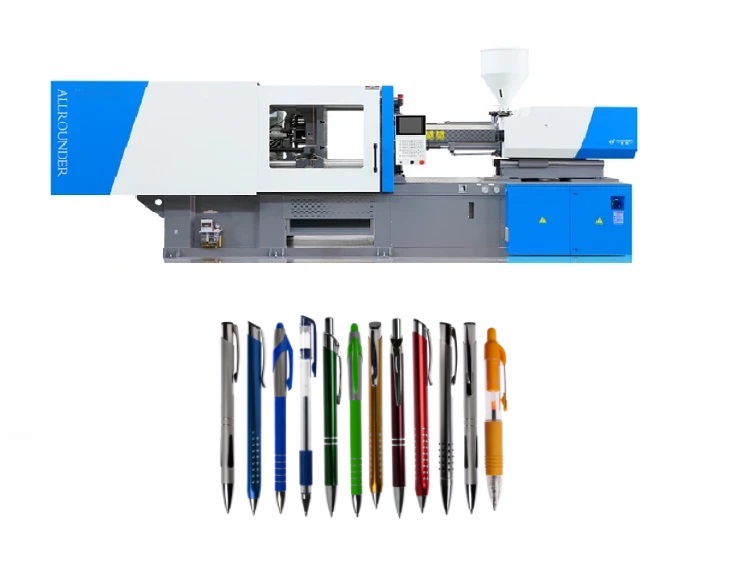
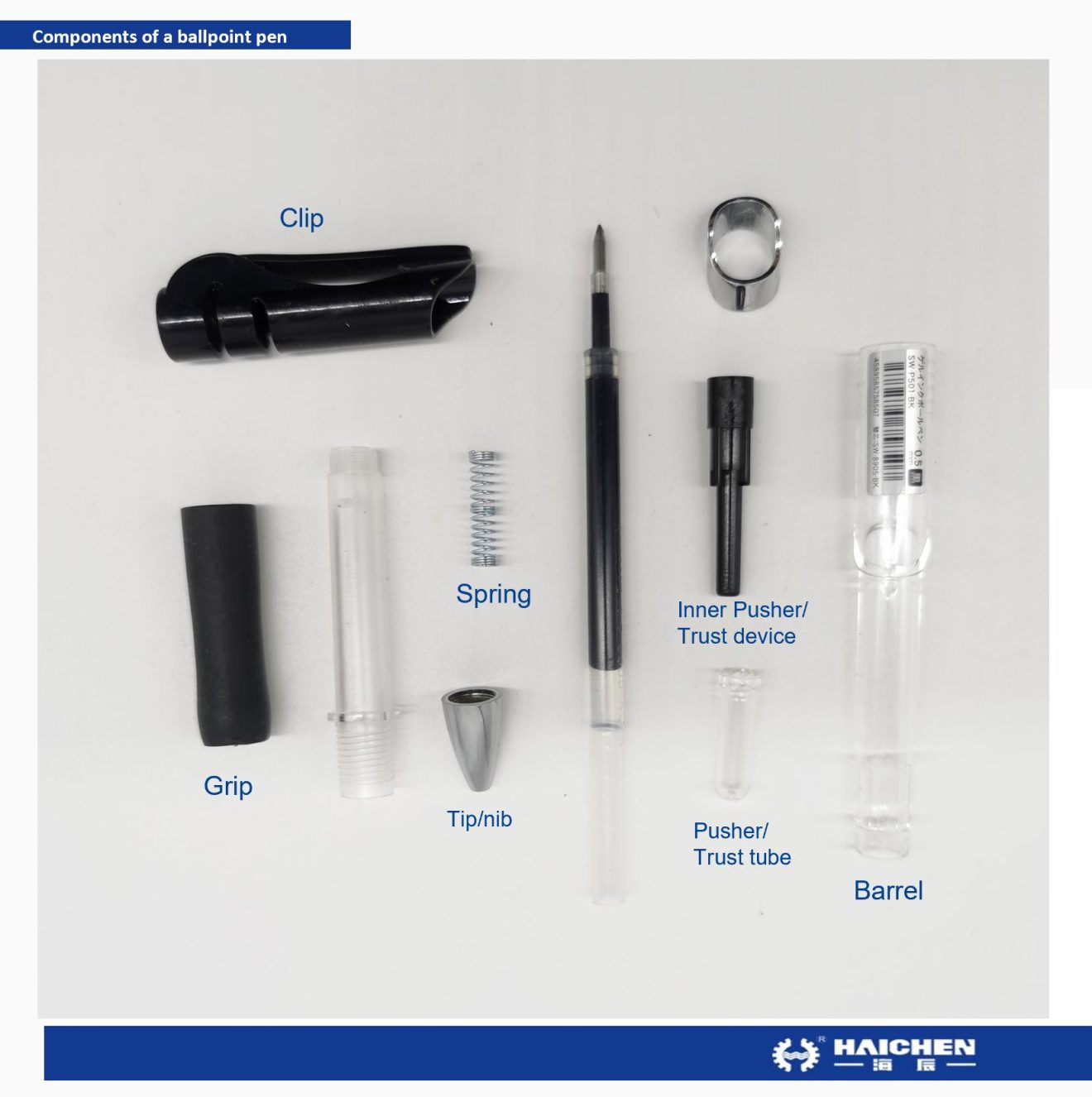
A plastic ballpoint pen injection molding machine manufacturer produces equipment that makes plastic pen parts like barrels, caps, and clips. These manufacturers design machines specifically for small part production. They provide screw configurations for materials like PP, PE, ABS, and PC. They also supply auxiliary equipment including dryers, crushers, and auto loaders .
Energy Consumption Analysis
Plastic ball point Pen production runs continuously. Machines operate 24 hours per day in many factories. Annual production can reach 42 million pieces .
Standard hydraulic energy consumption varies by machine size. A 110-ton machine running continuously consumes about 60,000-70,000 kWh annually. At $0.13 per kWh, this costs $7,800-$9,100 per year.
Servo-hydraulic machines with 50% energy saving consume 30,000-35,000 kWh annually. The annual cost drops to $3,900-$4,550. This saves $3,900-$4,550 per machine each year.
Higher energy savings of 70%-80% create even larger reductions. A machine saving 70% consumes 18,000-21,000 kWh annually. Annual cost falls to $2,340-$2,730. Savings reach $5,460-$6,370 per year.
How does a plastic pen injection molding machine save energy?
A plastic pen injection molding machine with servo control saves energy by adjusting motor speed to match demand. The servo motor runs at full speed only during injection and clamping. During cooling, the motor stops. During holding pressure, the motor runs slowly. This demand-based operation eliminates the energy waste from standard pumps that run continuously. Servo machines save 30%-80% energy compared to standard hydraulic machines.
Total Cost of Ownership
Energy cost is one factor. Servo machines also reduce other operating expenses:
-
Cooling water consumption drops because the oil stays cooler .
-
Hydraulic oil lasts longer because it does not overheat.
-
Noise levels are lower. Servo machines run quietly, especially at low speed .
-
Maintenance costs decrease because the system has fewer wearing parts.
Break-Even Analysis
A servo-hydraulic machine costs more upfront than a standard hydraulic unit. However, energy savings create a fast return.
For a pen production line running 24 hours per day:
-
Annual energy saving: $4,000-$6,000 per machine
-
Additional cost for servo system: $8,000-$12,000
-
Payback period: 18-24 months
After payback, savings continue for the machine’s service life. Some suppliers report even faster payback . Higher electricity rates and longer operating hours shorten the payback period.
HAICHEN pen injection making machines offer servo-hydraulic technology at competitive pricing. Our machines help pen manufacturers reduce operating costs from day one. The energy savings accumulate year after year.
Plastic Pen Production Benefits Beyond Energy Savings
Consistent Part Quality
Servo systems maintain consistent performance regardless of oil temperature. The closed-loop control monitors injection speed and pressure in real time. It adjusts motor speed to maintain set parameters.
This consistency improves part quality. Pen barrels and caps maintain tight dimensions. Clips and internal parts meet specifications. Scrap rates decrease.
The injection repeatability of servo-hydraulic machines reaches high precision levels. Manufacturers using servo technology report stable part weight and consistent dimensions across long production runs.
Faster Response and Shorter Cycles
Servo motors respond quickly. The response time is only 0.05 seconds for high-performance systems . This quick response enables faster injection and clamping.
Faster response reduces cycle time. Shorter cycles increase production output. A machine producing pen parts can make more pieces per hour.
Manufacturers report similar production cycle times between servo and standard hydraulic machines . The servo machine achieves this with much lower energy consumption.
Stable Production Environment
Servo systems generate less heat. The hydraulic oil stays cooler. This reduces the need for cooling water.
Lower heat also improves the factory environment. The machine area stays cooler. Operators work more comfortably.
The lower noise level is another benefit. Servo machines run quieter than standard hydraulic units . This creates a better working environment for factory staff.
HAICHEN servo-hydraulic plastic ballpoint pen injection molding machine models provide stable part quality. Our machines produce consistent parts for long production runs, ballpoint pen molding & assembly.This reduces manual inspection needs. The stable production environment improves overall efficiency.
Implementation Guide for Plastic Pen Manufacturers
How to Choose an Energy-Efficient Injection Molding Machine for Pen Production?
Choose a machine with servo-driven hydraulic system, specific energy consumption below 0.5 kWh/kg, shot weight 20–30% above your total mold shot weight, and injection rate matched to your thinnest wall section. Request a power meter test before purchase.
Evaluating Your Current Energy Use
Start by measuring your current machine’s energy consumption. Check the power meter during a typical production shift. Record consumption during injection, holding pressure, cooling, and idle phases.
Compare this data with servo-hydraulic machine specifications. Calculate the potential savings for your specific production volume.
Most pen factories use 110-180 ton machines for their production . These machines typically run 24 hours per day. The energy savings potential is significant.
Calculating Your Savings
Use this formula to estimate annual savings:
-
Record machine power consumption in kWh per hour
-
Multiply by operating hours per year
-
Multiply by electricity rate
-
Calculate 40%-60% of this amount as potential saving
For a 110-ton machine running 6,000 hours per year at $0.13/kWh:
-
Standard consumption: 65,000 kWh/year = $8,450/year
-
Servo consumption (50% saving): 32,500 kWh/year = $4,225/year
-
Annual saving: $4,225 per machine
Getting Started with Servo Technology
Contact your machine supplier for a detailed proposal. Ask for specific energy consumption data for your target machine size. Request a payback analysis based on your production conditions.
Consider starting with one servo machine. Run it alongside your standard machines. Compare energy consumption and part quality. The results will show the benefits clearly.
FAQ
How much electricity does a plastic pen injection molding machine use per hour?
A 120–150 ton servo injection molding machine producing pen barrels or caps typically consumes 8–15 kWh per hour during production. A comparable hydraulic machine consumes 18–28 kWh per hour. The exact figure depends on cycle time, mold cavity count, material, and barrel temperature settings.
Is a servo injection molding machine worth the extra cost for pen production?
For a factory running more than 4,000 hours per year, yes. The typical price premium for a servo machine over a hydraulic machine is 15–25%. At $0.12/kWh and 6,000 annual operating hours, the electricity savings alone recover the premium in 12–18 months. After that, the savings contribute directly to profit.
Can I retrofit servo technology to an existing hydraulic injection molding machine?
In most cases, no. Servo retrofit requires replacing the entire hydraulic power unit, adding a servo controller, and modifying the machine’s control system. The cost is typically 40–60% of a new servo machine, and the result is usually less efficient than a factory-designed servo machine. For machines under 10 years old, retrofit may be viable; for older machines, replacement is more cost-effective.
What is the difference between servo-hydraulic and all-electric injection molding machines?
Servo-hydraulic machines use a servo motor to drive a hydraulic pump. All-electric machines use servo motors to drive each axis directly (injection, clamping, ejection) without hydraulic oil. All-electric machines are more precise and use less energy in some applications, but they cost more and have lower clamping force per ton. For pen molding (small parts, high cavity count), servo-hydraulic is the more common and cost-effective choice.
How do I measure the actual energy consumption of my injection molding machine?
Use a three-phase power meter (kWh meter) installed on the machine’s main power supply. Record kWh consumed over a full production shift, and divide by the number of parts produced. This gives you kWh per 1,000 parts, which is the most reliable comparison metric across machines and molds. Haichen provides on-site power measurement during machine trials.
HAICHEN provides specific energy consumption data for each plastic ballpoint pen injection machine model. Our team helps you calculate the payback period for your specific production conditions. We offer full documentation on energy efficiency and certification compliance. Our HCK180 model provides 1800 kN clamping force with multiple screw diameter options.
HAICHEN manufactures pen injection machines with servo-hydraulic technology. Our machines serve plastic ballpoint pen injection machine manufacturer applications worldwide. We provide integration support for complete production lines. Our equipment is CE certified.