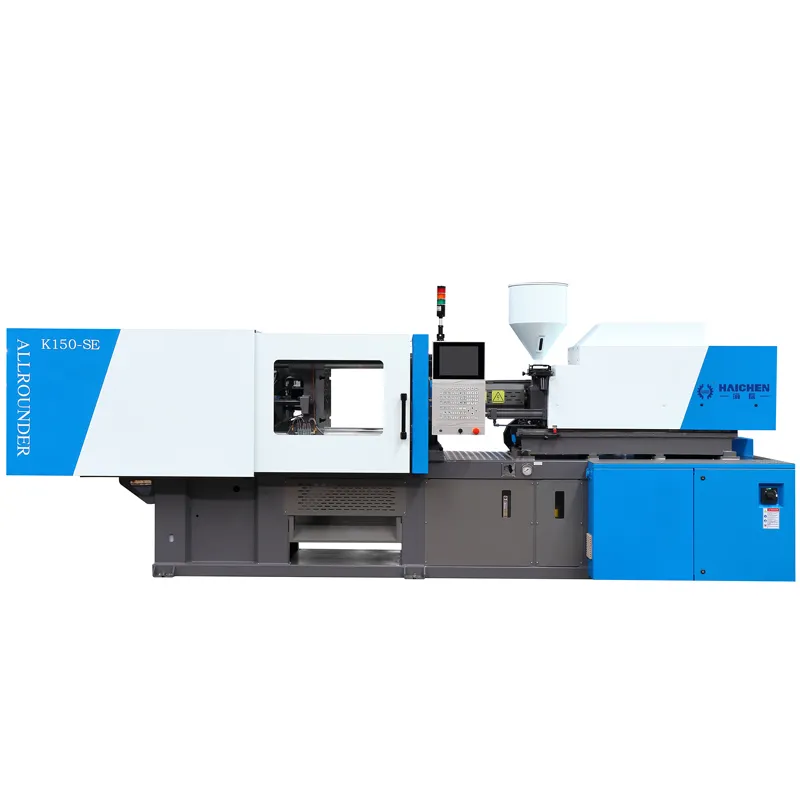
Running a ballpoint pen factory relies on two critical processes: precise injection molding and standardized component assembly.
Many new manufacturers confuse these steps, which causes low yields, slow output and avoidable defects.
As a professional injection molding machine manufacturer, we simplify the complete pen production workflow in this guide. We clearly separate molding and assembly processes, covering material setup, defect control, quality standards and practical factory optimization tips you can use immediately.
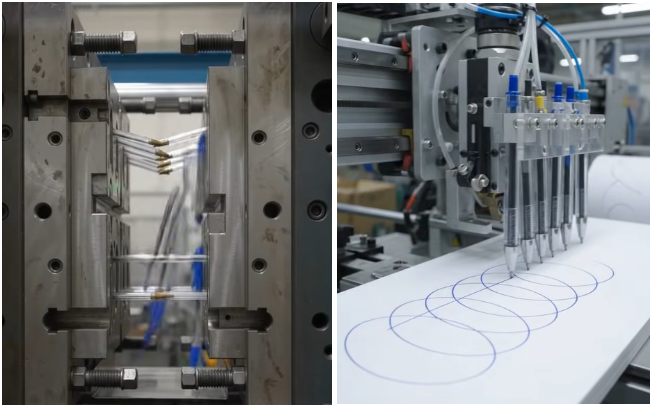
Ballpoint Pen Injection Molding Process & Key Production Steps
First, injection molding creates all core plastic pen parts, including pen bodies, caps and tail plugs. This stage determines final product quality, so precise parameter control is essential.
Below we cover the most vital molding steps for stable mass production.
Raw Material Selection & Machine Parameter Setup
To start, choose suitable raw materials and set matched machine parameters. Most ballpoint pens use standard PP or ABS plastic. PP requires lower melting temperature and fast injection speeds to prevent surface marks, while ABS needs steady pressure to avoid shrinkage.
Always dry plastic pellets before production to eliminate bubble defects, a common issue many small factories overlook. After confirming materials, adjust machine tonnage, shot size and cooling time to fit thin, compact pen parts.
Multi-Cavity Mold Molding & Defect Control
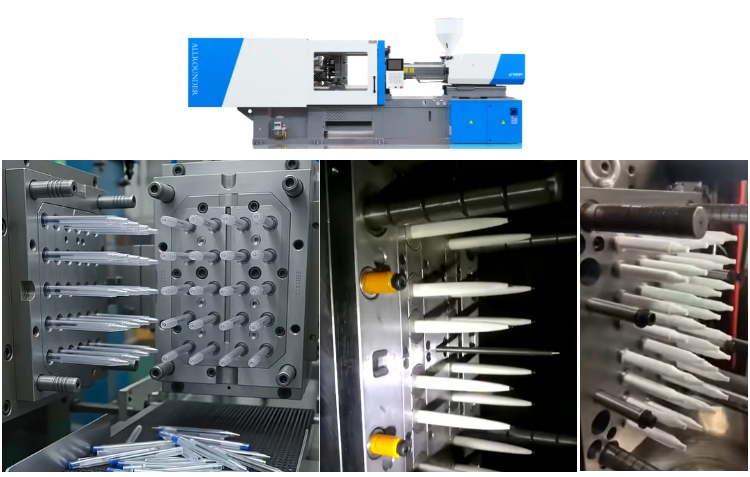
In addition, most mass-production factories adopt multi-cavity molds for higher output. While these molds boost efficiency, they demand higher machine precision to keep every cavity’s filling volume balanced. Consistent size and weight across parts directly reduce defective rates. Regularly watch for burrs, warpage and short shots, and adjust injection pressure and clamping force when issues appear. Routine mold cleaning and cooling system checks also stabilize long-term batch production.
Ballpoint Pen Component Assembly Workflow & Quality Standards
After finishing molded parts, factories move to independent component assembly. Keep in mind that perfect molded parts still fail quality checks with unstandardized assembly work. For this reason, consistent assembly workflows and quality control rules play a key role in reliable pen production.
Step-by-Step Assembly Process for Complete Pens
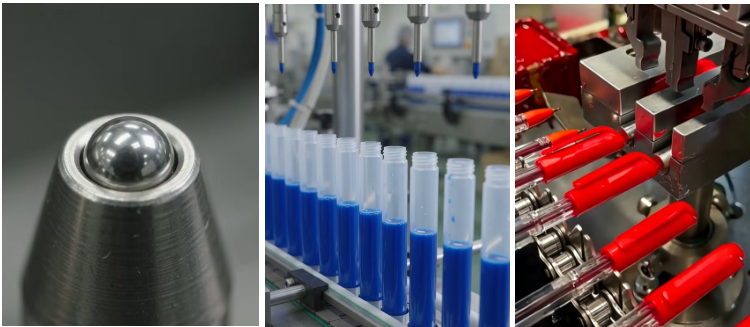
First, prepare all components: molded pen shell, ink tube, spring, nib and tail plug. Follow a fixed assembly order: install the ink tube, fix the spring and nib, attach the pen body, and fasten the tail plug. Finish with a quick telescopic function test. Small-batch production suits manual assembly, while large orders benefit greatly from automated assembly lines for steady speed and uniform quality.
Common Assembly Defects & Practical Solutions
Furthermore, most customer complaints come from assembly defects, including loose tail plugs, stuck retraction mechanisms, misaligned nibs and ink leakage.
Many fitting issues stem from minor molded part tolerance errors, so optimize mold precision in advance. Unsmooth retraction usually results from incorrect spring installation, which simple operational standardization can fix. Regular jig calibration also lowers repetitive assembly errors during mass production.
Finished Product Inspection & Packaging Standards
Once assembly completes, perform strict final inspections. Check for surface scratches and deformation, test writing fluency and telescopic flexibility, and verify zero ink leakage.
Grade qualified products and apply sealed packaging to avoid transportation damage and secondary pollution. This simple but crucial step greatly improves factory pass rates and customer trust.
Professional Machine Selection for Pen Molding & Assembly Production
With a clear production workflow, proper equipment selection becomes the next key to boost profits. As an injection molding machine supplier, we share targeted selection tips for pen manufacturing, since general machines rarely fit stationery precision requirements.
Best Injection Molding Machine Specs for Pen Parts
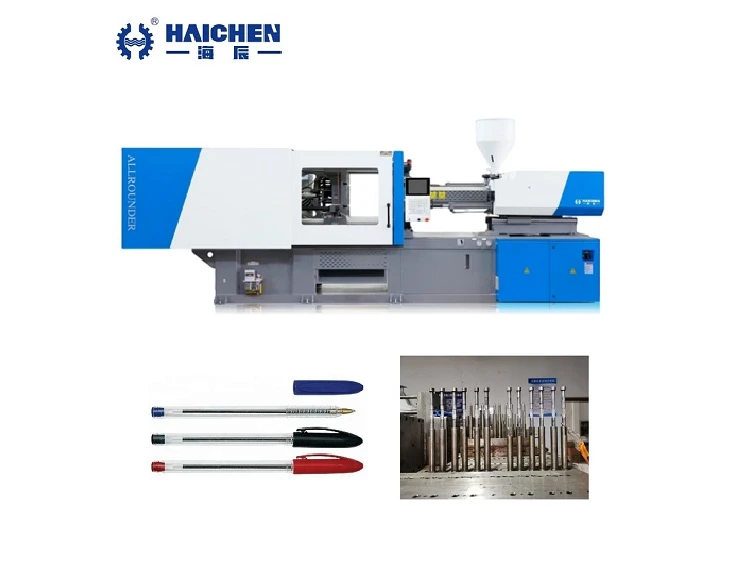
Choose medium-tonnage servo injection machines for ballpoint pen production. Thin, small pen parts do not require extreme clamping force, but they need stable pressure control and fast response. High-speed servo models match multi-cavity pen molds perfectly, shorten cycle times, save energy and maintain consistent filling for low long-term defect rates.
Supporting Equipment for Automated Assembly Lines
Moreover, supporting auxiliary equipment stabilizes full-line production. Material dryers, auto-feeders and mold temperature controllers standardize molding conditions and reduce batch defects.
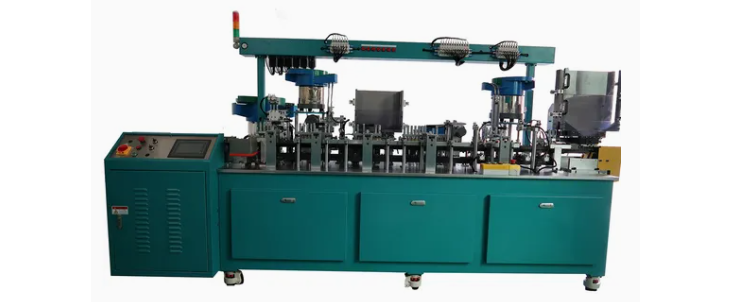
Meanwhile, automated sorting and assembly equipment cut labor errors and connect front-end molding and back-end assembly for continuous, stable operation.
Practical Tips to Integrate Molding and Assembly Workflow
Even with high-quality standalone processes, poor workflow coordination causes inventory backlogs and production delays. For this reason, you need simple integration tips to maximize overall factory efficiency.
Balance Molding Output and Assembly Speed
First, balance molding output and assembly speed. Excess pre-produced parts gather dust and deform during storage, while insufficient molded parts stall assembly lines. Adjust machine cycle times and daily output to keep both processes synchronized for steady operation.
Daily Maintenance Rules for Stable Long-Term Production
Second, stick to standardized daily maintenance. Regularly clean molds, check hydraulic stability and calibrate assembly tools. These basic checks prevent sudden downtime, mass defects and expensive emergency repairs. In fact, stable equipment performance delivers more long-term profits than blind overtime production.
Overall, reliable ballpoint pen production depends on coordinated molding and assembly processes. Proper material selection, precise machine settings, strict defect control and standardized inspections effectively boost yield rates, shorten delivery cycles and reduce production costs.
If you need custom machine selection, auxiliary line matching or professional production optimization for your pen factory, our team provides tailored one-stop manufacturing support.