
Choosing a plastic toy injection molding machine starts with the toy part, not simply the toy name. A toy may contain a body, base, handle, lid, head, or other small parts.
Each part can have a different mold design and cavity number.
For this reason, manufacturers need to match the injection molding machine with the actual part, mold, material, production target, and cycle time.
Haichen has supplied injection molding machines for different plastic toy components.
The following real production cases show how HCK230 and HCK280 machines can be used for multi-part toy production.
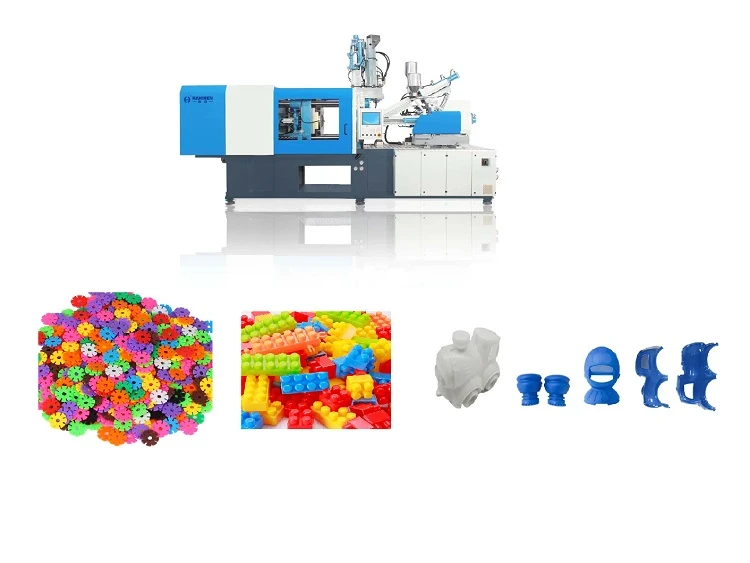
What Types of Plastic Toys Can Be Made by Injection Molding?
Injection molding works well for many plastic toy parts with repeatable shapes and medium- to high-volume production needs.
Common applications include:
- Toy teapots
- Toy trains
- Candy box toys
- Toy cars
- Toy containers
- Toy lids and covers
- Toy handles
- Small decorative toy parts
- Bases, bodies, heads, and other assembled components
However, one complete toy does not always need one mold.
For example, a toy teapot can contain a base, body, and handle. Manufacturers may produce these parts separately and assemble them later.
Therefore, the machine selection should consider each plastic component and its mold.
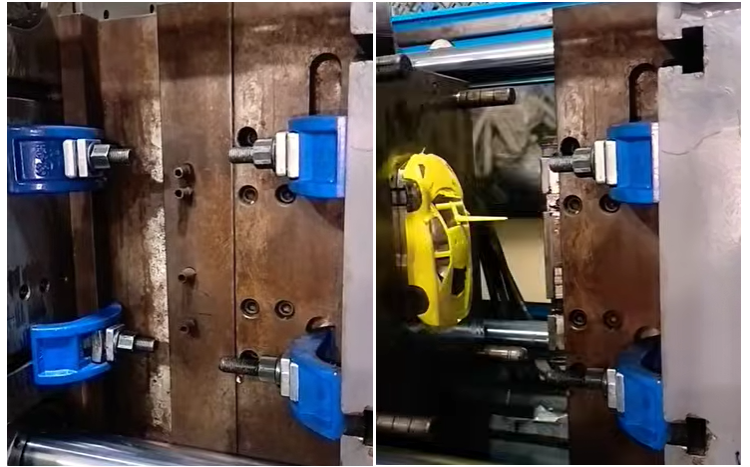
Why Does Toy Design Affect Machine Selection?
The same toy can contain parts with very different molding requirements.
A large toy body may need a lower cavity number because the part takes more space in the mold. In contrast, a small component may use more cavities to increase production.
For example, Haichen has a real toy teapot project with three different components:
- Base: 2 cavities, HCK230, 15-second cycle
- Body: 2 cavities, HCK230, 15-second cycle
- Handle: 4 cavities, HCK230, 15-second cycle
All three parts use PP.
This example shows why manufacturers should not choose a machine only from the overall toy size. The product structure and mold layout also matter.
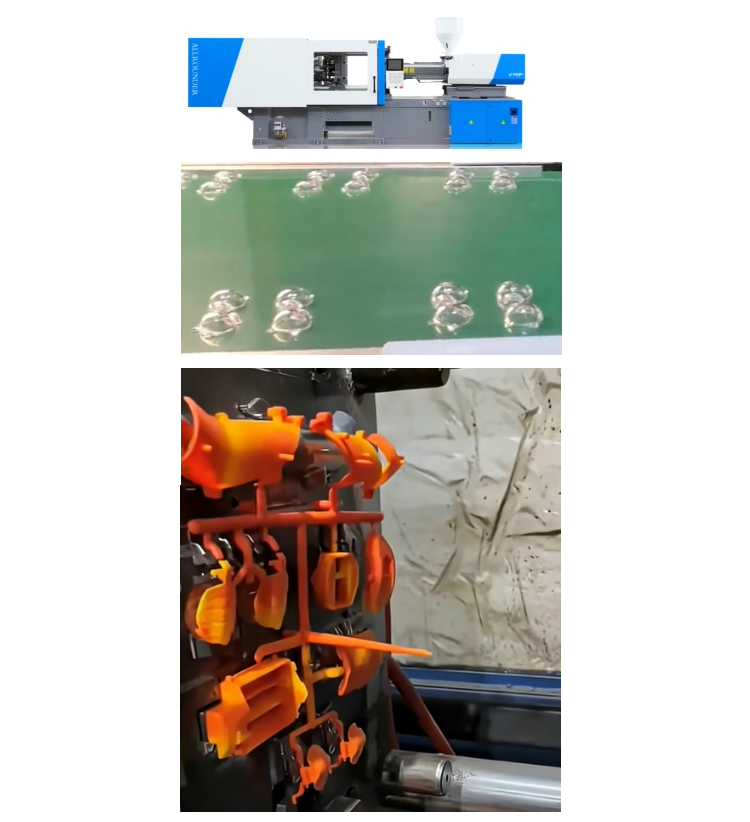
How Does Cavity Number Affect Toy Production?
Cavity number has a direct effect on the number of parts produced in each molding cycle.
For example, a mold with 2 cavities produces two parts during one cycle.
A 4-cavity mold produces four parts during the same cycle, assuming the machine can support the mold and production requirements.
The theoretical hourly output can be estimated as:
Theoretical output = 3600 ÷ cycle time × cavity number
With a 15-second cycle:
- 2 cavities = 480 pieces/hour
- 4 cavities = 960 pieces/hour
These figures represent theoretical output. Actual production can be lower because of machine stops, material changes, mold maintenance, quality checks, part handling, and other production factors.
More cavities do not always mean a better mold. The mold must still fit the machine and meet the required filling, cooling, ejection, and production conditions.
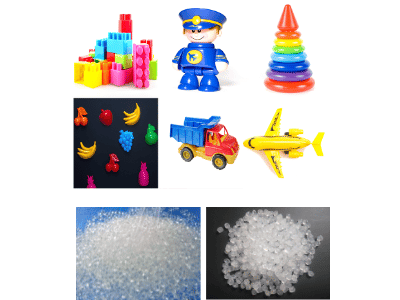
What Materials Are Commonly Used for Plastic Toys?
PP is one of the materials used in Haichen’s toy production cases.
The material affects the molding process because different plastics have different flow, shrinkage, cooling, and temperature requirements.
For toy production, the manufacturer should confirm:
- Plastic type and grade
- Virgin or recycled material
- Product weight
- Wall thickness
- Appearance requirements
- Color requirements
- Required production volume
For products intended for children, manufacturers should also check the material and finished-product requirements that apply in their target market.
A material name such as PP alone does not automatically mean that a product meets every applicable toy or safety requirement.

How Does the Toy Mold Affect Machine Selection?
The mold connects the toy design with the injection molding machine.
Before selecting a machine, manufacturers should check:
- Mold length and width
- Mold height
- Tie-bar spacing
- Maximum mold weight
- Required mold opening
- Ejection requirements
- Number of cavities
- Runner system
- Product layout
The runner system can also affect the mold configuration.
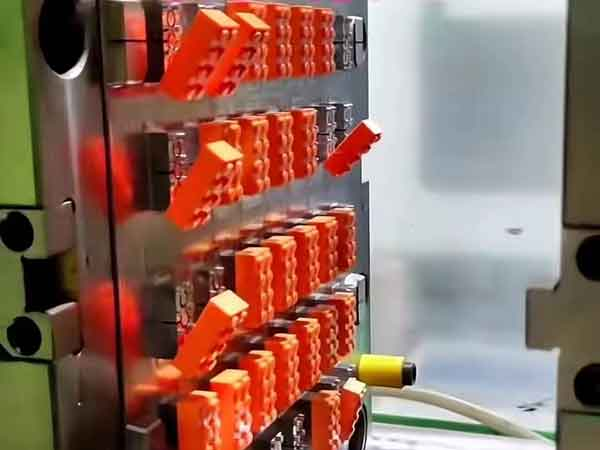
Haichen can work with both hot runner and cold runner molds for toy applications, depending on the product and mold design.
A hot runner system can reduce runner waste, while a cold runner mold can offer a simpler mold structure for some applications.
The right choice depends on the product, material, cavity layout, cycle requirements, and production plan.
Real Plastic Toy Injection Molding Cases
Real production data gives a clearer picture than a general machine-tonnage table.
Toy Teapot Production
Haichen has experience with several toy teapot components.
| Toy Part | Size | Material | Cavities | Machine | Cycle Time |
|---|---|---|---|---|---|
| Toy teapot base | 150 × 18.6 mm | PP | 2 | HCK230 | 15s |
| Toy teapot body | Ø154 × 81.9 mm | PP | 2 | HCK230 | 15s |
| Toy teapot handle | 140 × 36 × 101 mm | PP | 4 | HCK230 | 15s |
The three parts use the same HCK230 machine model, but the handle uses four cavities while the base and body use two.
This is a useful example of production planning. The machine can serve different molds, while the mold configuration changes according to the individual component.
Candy Box-Train Production
Haichen also has production cases for a candy box-train toy.
| Toy Part | Size | Material | Cavities | Machine | Cycle Time |
|---|---|---|---|---|---|
| Train body | 200 × 140 mm | PP | 2 | HCK280 | 15s |
| Train base | — | PP | 2 | HCK280 | 15s |
| Train head | 90 × 110 mm | PP | 2 | HCK280 | 15s |
| Train chimney | 40 × 40 mm | PP | 4 | HCK280 | 15s |
The train body, base, head, and chimney all use HCK280 machines with a 15-second cycle in these cases.
The chimney is a particularly useful example. Although its size is only 40 × 40 mm, the mold uses four cavities.
This shows that cavity planning depends on production demand and mold layout, not only on the physical size of the part.
Why Can Different Toy Parts Use the Same Machine?
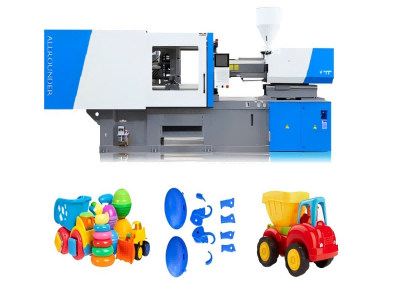
A factory may use one machine model for several different toy components.
The reason is that machine selection does not depend on product dimensions alone.
Instead, manufacturers need to consider the complete combination of:
Part + material + mold + cavity number + injection requirements + production target
For example, the toy teapot base and body use HCK230 with two cavities. The handle uses the same machine but four cavities.
Likewise, several Candy Box-Train components use HCK280, while the cavity number changes between two and four.
This approach can also help factories plan production around existing equipment.
How Should You Choose Between HCK230 and HCK280?
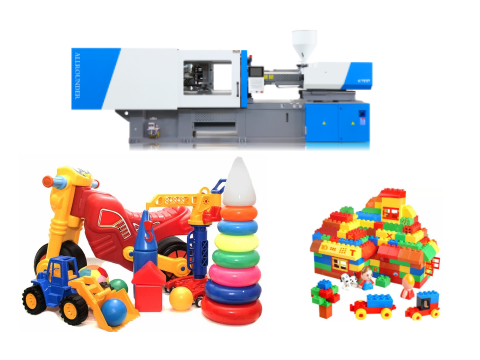
There is no single machine size that fits every plastic toy.
Instead, the machine should match the actual molding project.
HCK230 appears in Haichen’s real cases for:
- Toy teapot base
- Toy teapot body
- Toy teapot handle
- Candy box toy lid
HCK280 appears in the real Candy Box-Train cases for:
- Train body
- Train base
- Train head
- Train chimney
These cases should not become a fixed rule that every similar toy must use the same machine. The final selection still depends on the actual drawing, mold, material, cavity number, and production requirements.
What Injection Molding Machine Features Matter for Toys?
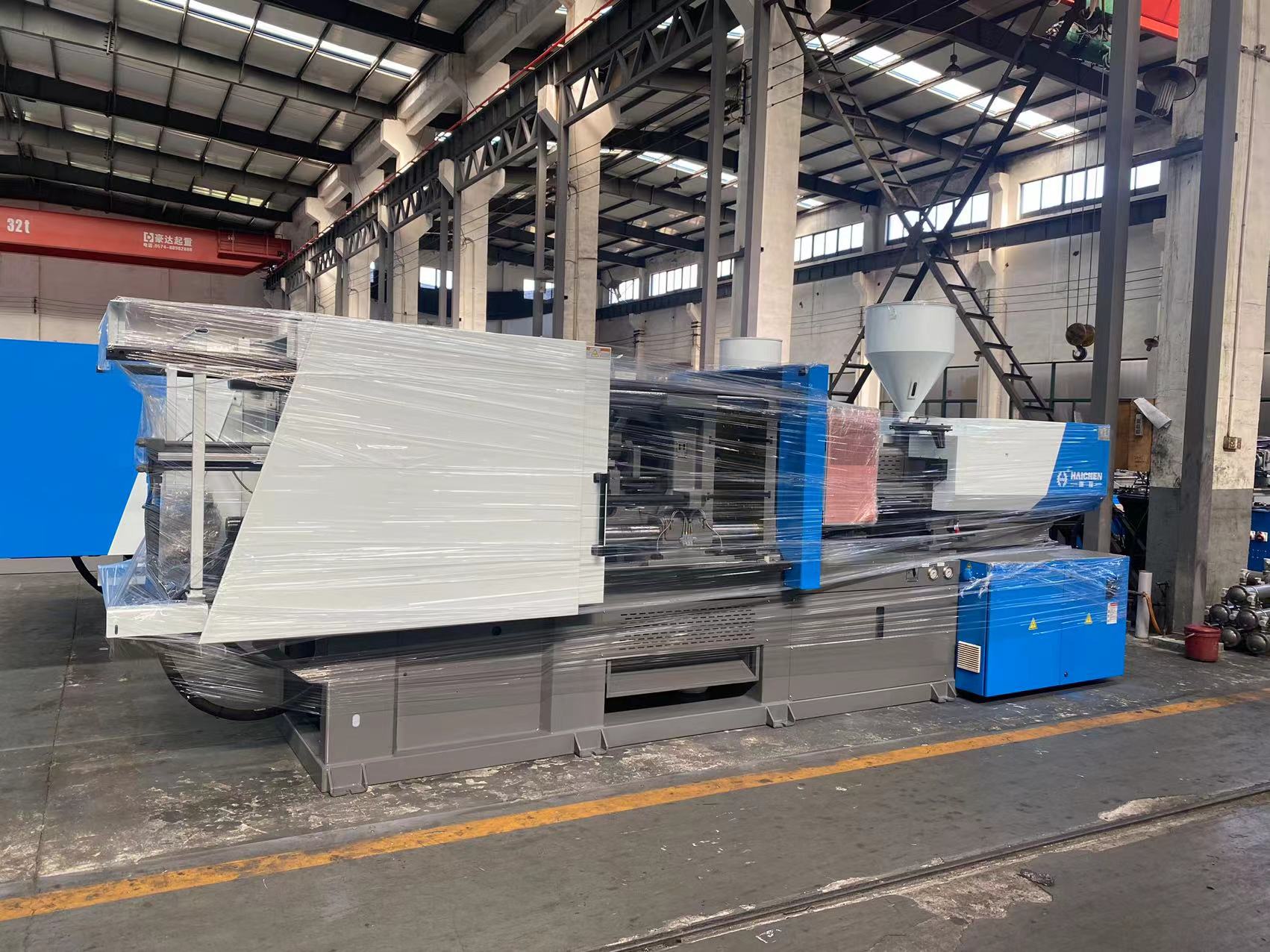
For toy production, the machine should provide stable and repeatable molding conditions.
Important points include:
Stable Injection
Small toy parts may have detailed shapes, narrow sections, or different wall thicknesses. Stable injection control helps the material fill the mold consistently.
Suitable Plasticizing Capacity
The machine should plasticize enough material for the required shot size and cycle time.
Mold Compatibility
The mold must fit the machine’s platen, tie-bar spacing, mold height, opening stroke, and ejection system.
Repeatable Process Control
Stable temperature, injection, pressure, and holding control can help maintain consistent parts during long production runs.
Suitable Automation
Depending on production volume, manufacturers can add automatic part removal, conveyors, counting, inspection, or packing systems.
Not every toy factory needs a fully automatic line. The automation level should follow the production target and labor arrangement.
What Production Equipment May Be Needed?
A toy injection molding cell can include more than the injection molding machine.
Depending on the project, equipment may include:
- Injection molding machine
- Toy mold
- Material loader
- Dryer
- Chiller
- Mold temperature controller
- Robot or automatic take-out system
- Conveyor
- Grinder or granulator
- Counting and packing equipment
However, the complete setup should follow the actual production process.
For a simple toy component, a basic machine-and-mold setup may be enough. For high-volume production, automatic part removal and packing can reduce manual handling.
How Can Manufacturers Plan Toy Production?
Toy production planning should start with the finished toy and then break it into individual parts.
For example, a toy teapot may require:
- Base production
- Body production
- Handle production
- Assembly
- Inspection
- Packing
The production capacity of each component should be compared with the assembly requirement.
For example, a 2-cavity mold running at a 15-second cycle has a theoretical output of 480 pieces per hour. A 4-cavity mold running at the same cycle has a theoretical output of 960 pieces per hour.
If one finished toy needs one piece of each component, the factory should make sure that the different molding processes remain reasonably balanced.
This is more useful than simply choosing the mold with the highest possible cavity number.
What Information Should You Send for a Toy Machine Quote?
To recommend a suitable injection molding machine, it is better to provide actual product and mold information.
Useful information includes:
- Toy part drawing or sample
- Product size
- Product weight
- Plastic material
- Number of cavities
- Expected production volume
- Existing mold dimensions
- Hot runner or cold runner requirement
- Required cycle time, if known
- Factory power supply
- Desired automation level
If you have several toy components, send the information for each part separately.
This allows the machine, mold, and production requirements to be checked together instead of selecting a machine only from the name of the toy.
How Does Haichen Support Plastic Toy Production?
Haichen can provide injection molding machines for different plastic toy components and production requirements.
Our real cases include HCK230 and HCK280 machines used for toy teapot and Candy Box-Train components.
The production solution can be planned around the customer’s actual:
- Toy design
- Material
- Mold
- Cavity number
- Production target
- Automation requirements
If the customer needs both the injection molding machine and mold, the two can also be considered together during the project planning stage.
FAQ
What machine is used to make plastic toys?
Plastic toys can be produced with injection molding machines. The required machine model depends on the toy part, mold, material, cavity number, and production requirements.
Can one injection molding machine make different toy parts?
Yes. Haichen’s toy cases show that HCK230 can be used for different toy teapot components and a candy box toy lid. HCK280 is also used for several Candy Box-Train components.
How many cavities are common for toy molds?
There is no single cavity number for all toys. Haichen’s actual cases include both 2-cavity and 4-cavity molds.
What plastic is used in these Haichen toy cases?
The toy cases provided in this article use PP.
How much can a 2-cavity toy mold produce?
At a 15-second cycle, a 2-cavity mold has a theoretical output of 480 pieces per hour. Actual output depends on the factory’s operating conditions.
How much can a 4-cavity toy mold produce?
At a 15-second cycle, a 4-cavity mold has a theoretical output of 960 pieces per hour. Actual production will normally be lower than the theoretical figure.


