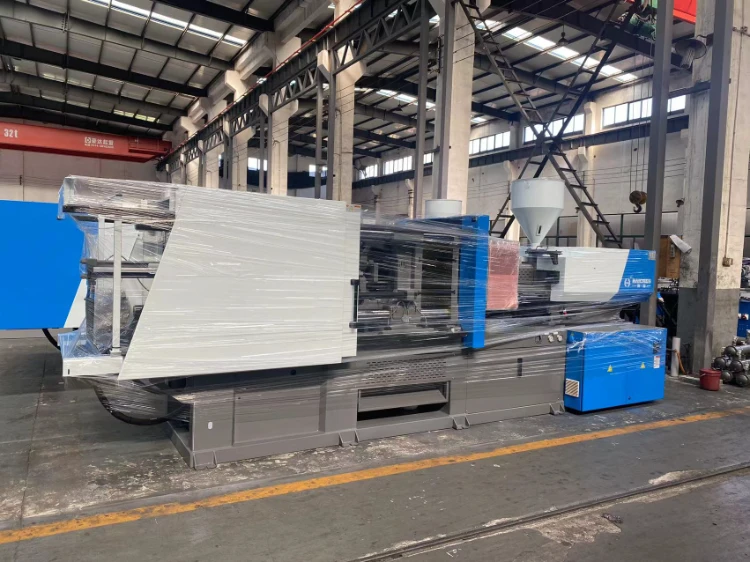
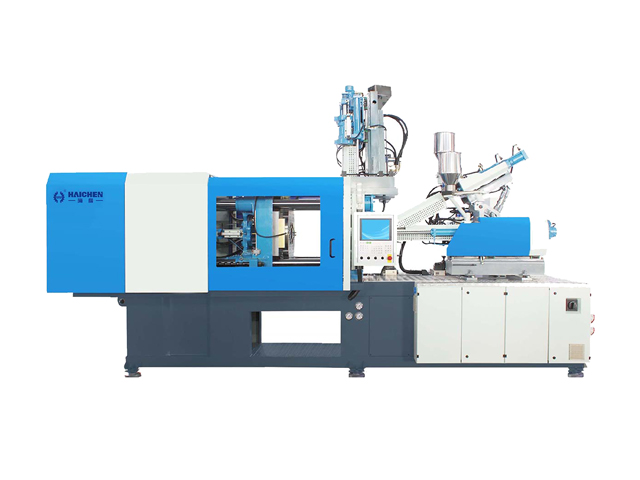
PVC is tough to mold. Learn why general-purpose machines fail and why a dedicated PVC injection molding machine is essential for quality.
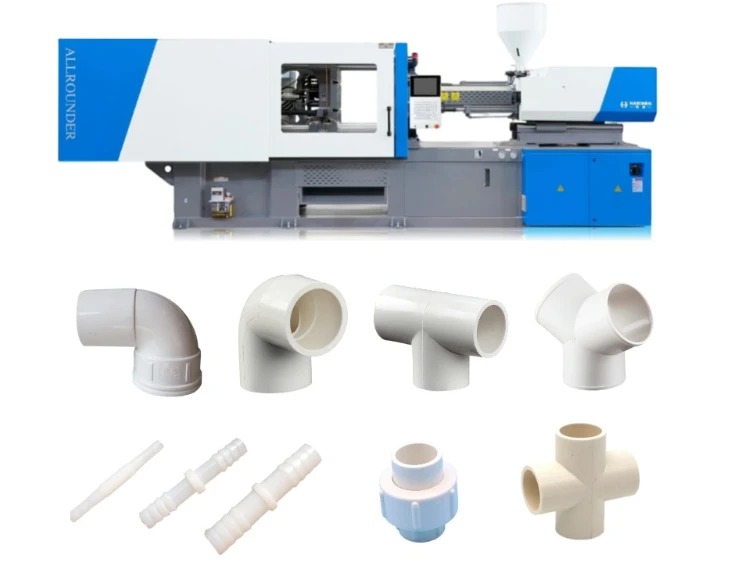
A PVC elbow or tee looks simple. But manufacturing it is anything but. PVC is one of the most challenging materials to injection mold, and using a general-purpose injection molding machine for PVC pipe fitting production is a recipe for defects, waste, and lost profits.
At Haichen Machinery, we have years of practical experience in PVC pipe fitting injection molding. Through countless production runs, we’ve learned exactly what it takes to produce high-quality PVC plastic pipe fittings consistently. The reality is simple: PVC requires specialized equipment designed specifically for its unique material characteristics.
What Makes PVC Different?
PVC, or polyvinyl chloride, is a thermoplastic available in both rigid and flexible formulations. In construction and plumbing applications, rigid PVC is used to manufacture pipes, elbows, tees, connectors, and various types of PVC pipe fittings.
The paradox of PVC is that while it offers excellent properties – corrosion resistance, cost-effectiveness, durability, and chemical resistance – it is notoriously difficult to process. Understanding why starts with understanding the material’s behavior under heat and pressure.
The Three Major Processing Challenges of PVC
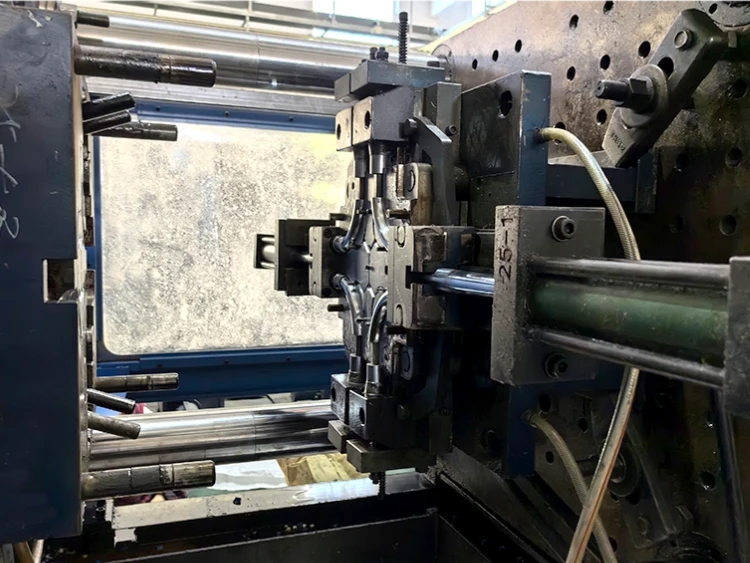
Poor Thermal Stability and Decomposition
PVC has very poor thermal stability. Unlike many other plastics that can tolerate a wide temperature range, PVC decomposes rapidly when overheated. This decomposition releases corrosive hydrochloric acid (HCl) gas, which damages equipment and creates defects in finished products.
The processing window is extremely narrow. For PVC pipe fitting production, the melting temperature must be maintained at precisely 185-190℃, with the mold temperature held at 50-70℃. Any deviation can trigger decomposition, ruining entire batches of PVC plastic pipe fittings.
Gas Formation Leading to Bubbles and Black Spots
PVC tends to generate gas during heating. This gas must be effectively vented from the mold cavity. Without proper venting, gas becomes trapped, creating bubbles and black spots on the surface of finished fittings.
These surface defects are more than cosmetic – they compromise the structural integrity and sealing performance of pipe fittings. For applications involving water or gas transmission, defective PVC pipe fittings can lead to leaks and system failures.
Extended Cooling Time for Thick-Wall Parts
PVC requires long cooling cycles, especially for thick-wall pipe fittings. The material’s low thermal conductivity means heat dissipates slowly, extending the time needed for parts to solidify in the mold.
In production environments, extended cooling times directly reduce throughput and increase per-unit costs. Manufacturers face a constant challenge: how to maintain quality while achieving competitive production rates.
Why General-Purpose Machines Fall Short
Standard injection molding machines are designed for materials like PP, PE, or ABS. They are not optimized for PVC’s unique requirements, and this creates serious problems in PVC pipe fitting production.
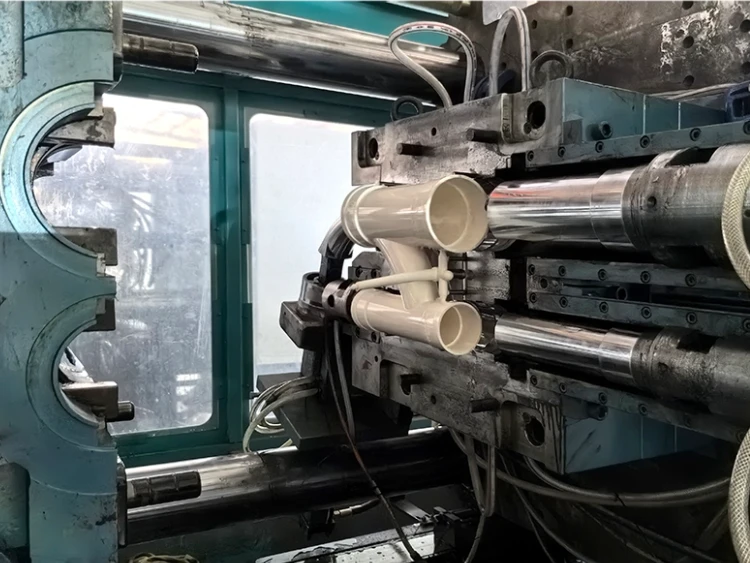
Insufficient Corrosion Resistance
General-purpose machines use standard steel for screws and barrels. When processing PVC, the HCl gas released during heating corrodes these components. Over time, corrosion degrades screw performance, contaminates the melt, and leads to equipment failure.
This is not a theoretical concern – it’s a practical reality we’ve seen repeatedly. Manufacturers using standard machines for PVC often face frequent screw and barrel replacements, costly downtime, and inconsistent product quality.
Inadequate Temperature Control Precision
PVC demands precise temperature control across multiple zones. General-purpose machines typically lack the multi-zone independent temperature control with ±1℃ accuracy that PVC requires.
Without this precision, hot spots develop in the barrel, causing localized overheating and decomposition. The result is burnt material, black specks in finished PVC pipe fittings, and high scrap rates.
Poor Venting and Cooling Capabilities
Standard machines often have basic venting that is insufficient for PVC’s gas generation. Gas becomes trapped in the mold, creating bubbles and surface defects. Similarly, general-purpose cooling systems are not designed for PVC’s long cooling requirements, leading to extended cycle times and reduced productivity.
Key Features of a PVC-Dedicated Injection Molding Machine
A properly designed PVC pipe fitting injection molding machine addresses each of these challenges through specific engineering features.
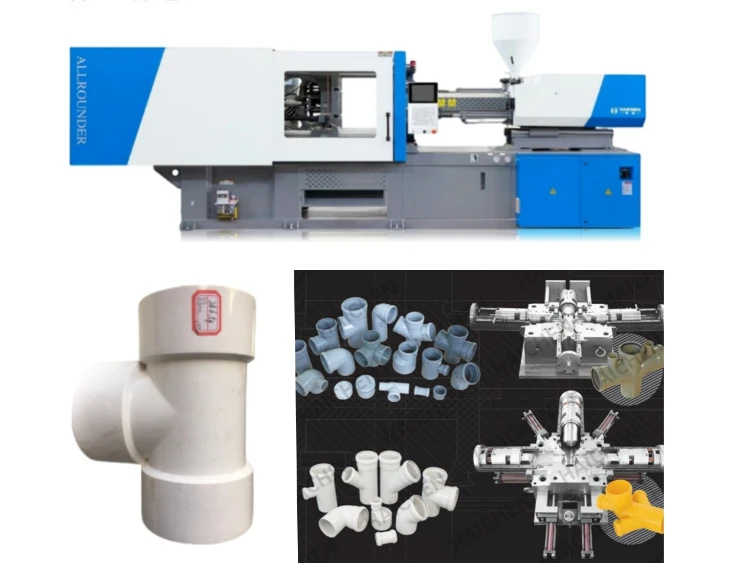
Corrosion-Resistant Screw and Barrel
The most critical feature is corrosion resistance. PVC-dedicated machines use hard chrome-plated or special alloy steel for screws and barrels. These materials resist HCl attack, ensuring long equipment life and preventing contamination of the PVC plastic.
At Haichen Machinery, our PVC injection molding machines feature screws and barrels engineered specifically for corrosive PVC processing. This practical experience has taught us that investing in corrosion-resistant components pays for itself many times over through reduced maintenance and consistent quality.
Low-Shear Screw Design
PVC is sensitive to shear heat. General-purpose screws with high compression ratios generate excessive friction, overheating the material. PVC-dedicated machines use low-shear screw designs with appropriate compression ratios that minimize frictional heating while ensuring thorough melting.
The screw design must also have the right length-to-diameter ratio (L/D) to provide adequate plasticizing without degrading the material. This is one of the key factors that distinguishes a true PVC pipe fitting injection molding machine from a general-purpose machine.
Multi-Zone Independent Temperature Control
Precision temperature control is non-negotiable for PVC. Dedicated machines feature multi-zone independent temperature control systems that maintain the critical 185-190℃ melting temperature. Each zone can be adjusted independently to prevent hot spots and ensure uniform melt temperature.
Haichen Machinery‘s PVC injection molding solutions incorporate advanced temperature control technology that maintains ±1℃ accuracy across all heating zones, preventing thermal degradation and ensuring consistent PVC pipe fitting quality.
Forced Venting and Back-Pressure Regulation
To eliminate gas-related defects, dedicated PVC machines incorporate forced venting modules with back-pressure control. These systems actively remove gases generated during melting, preventing bubbles and black spots in finished products.
The result is PVC pipe fittings with smooth, defect-free surfaces – essential for sealing applications and customer satisfaction.
High-Efficiency Cooling for Thick Walls
Efficient cooling systems are essential for PVC’s long cooling requirements. Dedicated machines feature high-efficiency cooling circuits with large-diameter channels that accelerate heat removal from thick-wall fittings.
This reduces cycle times, increases throughput, and lowers per-unit production costs – all while maintaining the quality that customers expect from PVC plastic pipe fittings.
The Business Value – Better Quality, Lower Cost
Investing in a dedicated PVC pipe fitting injection molding machine delivers tangible business benefits:
- Higher yield: Fewer defects mean more sellable products per batch. In our experience, manufacturers who switch from general-purpose to dedicated PVC machines typically see defect rates drop significantly.
- Lower downtime: Corrosion-resistant components last longer, reducing maintenance frequency and unplanned停机.
- Faster cycles: Efficient cooling shortens cycle times, increasing daily output.
- Better quality: Consistent, defect-free pipe fittings build your reputation and reduce customer complaints.
- Lower material waste: Less scrap means lower material costs and better profitability.
These benefits compound over time, making a dedicated PVC pipe fitting injection molding machine a sound investment for any manufacturer serious about PVC production.