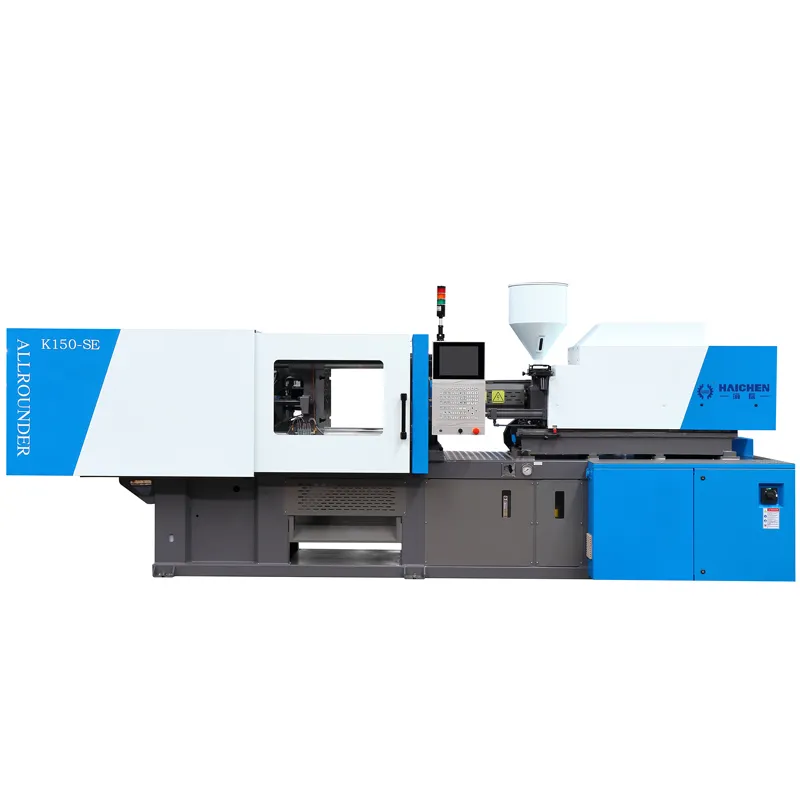
PVC pipe fittings connect pipes and help control the direction or size of a piping system. Common products include elbows, tees, sockets, couplings, and reducers.
Each fitting has different dimensions and mold requirements.
Successful PVC pipe fitting injection molding depends on product design, mold structure, material processing, machine matching, and quality inspection.
This guide explains each production stage and includes a real Haichen case: a 125 mm outside-diameter PVC elbow produced with a two-cavity cold-runner mold on an HCK600 injection molding machine.
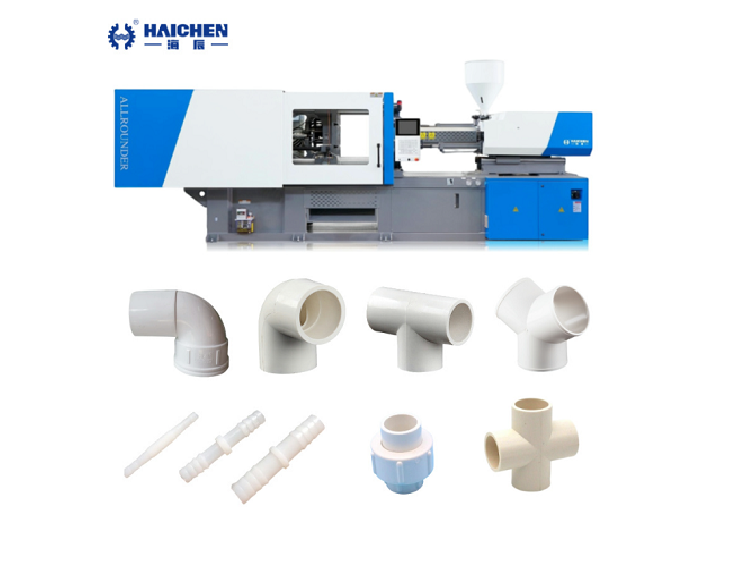
PVC Pipe Fitting Design Requirements
Before designing a mold, manufacturers must confirm the product dimensions, material grade, connection structure, and application requirements.
Product dimensions
Important dimensions may include:
- Outside and inside diameters
- Wall thickness
- Overall height and width
- Socket dimensions and connection details
- Required dimensional tolerances
These dimensions determine the cavity and core geometry and influence filling, cooling, and ejection.
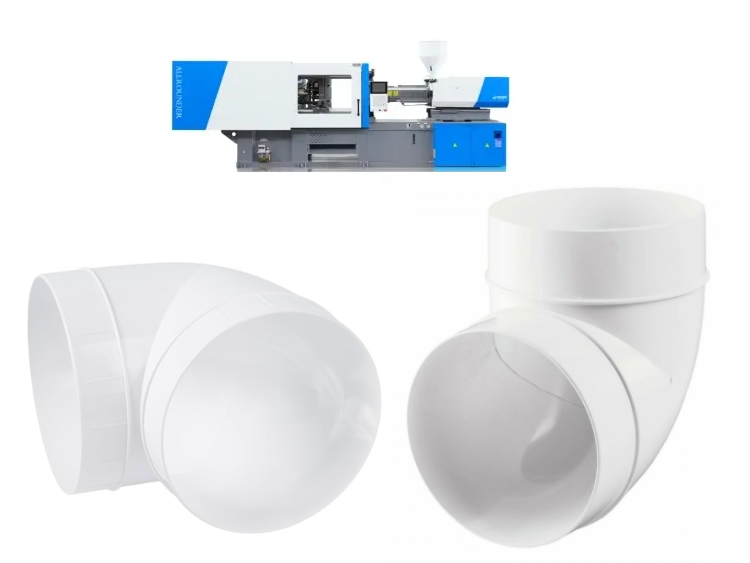
For example, a 90-degree elbow has a curved shape that requires a suitable mold layout. The mold must form the internal passage and connection areas accurately while allowing the part to release without damage.
Material and wall thickness
Confirm the exact PVC compound before setting processing conditions. Rigid PVC, often called uPVC, is common in pipe fitting production, but different compounds may have different processing requirements.
Wall thickness also affects filling and cooling. Uneven sections may cool at different rates and contribute to dimensional variation.
For pressure-related applications, follow the applicable product standards and testing requirements. Visual inspection alone cannot confirm pressure performance.
PVC Pipe Fitting Mold Design
A suitable mold must form the product geometry, fill each cavity consistently, and allow the molded parts to cool and eject properly.
Cavity, core, and runner
The cavity forms the external surface, while the core forms internal features. Elbows and socket fittings may require specific core and ejection arrangements to form their internal passages.
The gate and runner system control how molten plastic enters the cavities. In a multi-cavity mold, balanced filling helps reduce differences between parts.
A cold-runner mold also requires enough space for the runner system. Manufacturers should consider runner dimensions, material consumption, and the complete shot requirement when evaluating the mold.
Venting and cooling
Vents allow trapped air to escape during filling. Poor venting may contribute to burn marks or incomplete filling.
The cooling system should remove heat consistently from the molded part. Uneven cooling can contribute to shrinkage differences and warping.
The mold design must suit the selected PVC compound and the geometry of the fitting. Actual mold-trial results should guide any necessary adjustments.
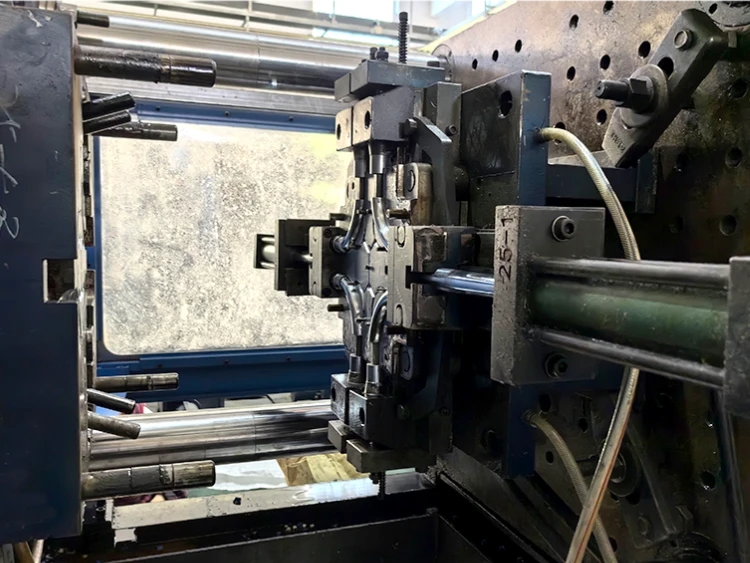
Real Haichen Case: 125 mm PVC Elbow With HCK600
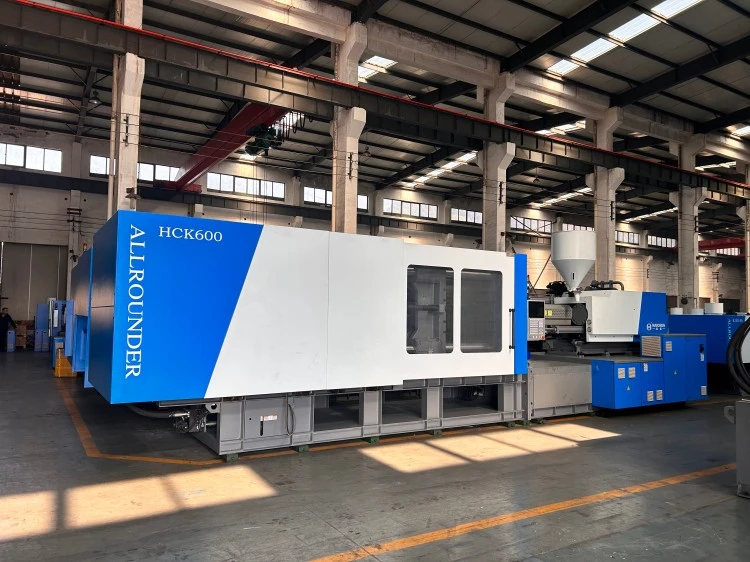
Haichen has used an HCK600 injection molding machine to produce a PVC elbow with the following configuration.
| Item | Confirmed specification |
|---|---|
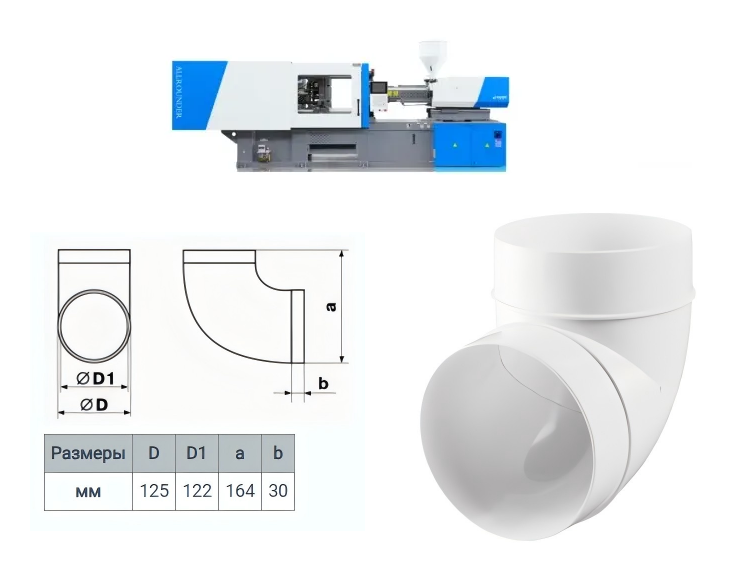
| Product | PVC 90-degree elbow |
| Outside diameter (D) | 125 mm |
| D1 | 122 mm |
| Dimension a | 164 mm |
| Dimension b | 30 mm |
| Wall thickness | 3 mm |
| Mold cavities | 2 |
| Runner type | Cold runner |
| Mold material | 4Cr13 |
| Injection molding machine | Haichen HCK600 |
The dimensions D, D1, a, and b follow the supplied product drawing. D represents the fitting’s outside diameter.
This case shows how product geometry, wall thickness, cavity number, and runner layout form part of a real machine-and-mold configuration. The two-cavity mold must fill both parts and the cold-runner system during each injection cycle.
The HCK600 is the machine actually used for this configuration. However, this does not mean that every 125 mm PVC elbow requires a 600-ton machine. Other products may have different weights, projected areas, mold layouts, and processing requirements.
The product weight, cycle time, actual output, and documented trial results have not been provided. Therefore, this case does not support a specific production-rate or defect-reduction claim.
How to Match the Injection Molding Machine With the Mold
Machine selection must follow the complete product and mold requirements, not the fitting’s outside diameter alone.
Clamping force
The machine must provide enough clamping force to resist the force generated during injection. Engineers should consider the mold’s projected area, cavity number, material, and expected cavity pressure.
Shot capacity
The machine must supply enough material for the complete shot. For a cold-runner mold, this includes the molded parts and the runner.
For the Haichen elbow case, the two-cavity layout is confirmed, but the part weight and runner weight are not available. These values are needed to calculate the complete shot requirement.
Mold fit and machine performance
Check the mold dimensions against the machine’s platen size, tie-bar spacing, mold thickness range, opening stroke, and other relevant specifications. The machine must also support the mold’s ejection requirements.
In addition, confirm that the machine can process the selected PVC compound within its recommended processing window. Plasticizing performance, injection control, and temperature control all matter.
PVC compounds can be sensitive to excessive heat and long residence times. Follow the material supplier’s recommendations rather than applying the same settings to every compound.
PVC Pipe Fitting Quality Inspection
Quality inspection should cover dimensions, appearance, and functional requirements.
Dimensional inspection
Measure critical dimensions against the approved product drawing. Depending on the fitting, these may include outside diameter, inside diameter, wall thickness, socket dimensions, and overall geometry.
For the Haichen elbow case, the drawing records D = 125 mm, D1 = 122 mm, a = 164 mm, and b = 30 mm. The required tolerances must come from the approved drawing or product specification.
Appearance and functional inspection
Check the molded surface for visible defects and inspect the fitting’s connection dimensions. Where required, carry out functional or pressure-related tests under the applicable product standards.
A good surface appearance does not by itself confirm that a fitting meets all dimensional and performance requirements.
Common PVC Pipe Fitting Defects and Troubleshooting
Use the following table as a starting point when investigating defects. The same symptom can have different causes, so confirm the cause before changing the process.
| Defect | Possible causes | First checks |
|---|---|---|
| Short shot | Insufficient filling, restricted flow, or unsuitable process conditions | Check material supply, gate and runner, venting, and injection settings |
| Flash | Mold closing problems, parting-line damage, or excessive cavity pressure | Inspect mold closure, parting surfaces, and process conditions |
| Burn marks | Trapped air, poor venting, or excessive local heating | Check vent locations and the filling pattern |
| Discoloration | Material degradation, contamination, or unsuitable processing conditions | Review material handling, temperature settings, and residence time |
| Warping | Uneven cooling or shrinkage, or unsuitable holding and ejection conditions | Check cooling balance, dimensions, and ejection |
| Inconsistent dimensions | Process variation, cooling differences, or mold-related issues | Compare parts from each cavity and review process consistency |
Record where the defect appears and whether it affects one cavity or multiple cavities. Change one relevant process variable at a time so that you can compare the results.
If the defect remains in the same location, inspect the mold and material conditions before making further machine adjustments. For PVC, also confirm that the process remains within the material supplier’s recommended limits.
Information Needed Before Production
Before requesting a machine or mold solution, prepare the following information:
- Product drawing with dimensions and tolerances
- PVC material grade and intended application
- Product weight, if available
- Required cavity number and target output
- Mold dimensions and runner type
- Existing machine model and specifications, if applicable
- Required product standards and tests
For an existing mold, provide its dimensions or drawing together with the machine specifications. This helps the supplier check compatibility before installation.