2026 artificial plant manufacturing trends for factory owners. AI molding, electric machines, sustainable materials, automation covered.
The global artificial plants market is projected to expand from USD 773.86 million in 2025 to USD 1.02 billion by 2031, registering a CAGR of 4.78%. Factory owners are under pressure to produce more complex parts with less energy, less virgin material, and fewer operators. 2026 marks a turning point — injection molding processes are becoming autonomous, adaptive, and self-stabilizing.
Haichen has been manufacturing injection molding machine solutions for the artificial plant sector for over 20 years. Our machines span from 30 tons to 3000 tons, with clamping force from 300KN to 30000KN, and they are used worldwide to produce plastic flower, plastic tree, and artificial christmas tree products. What follows are the five trends we see shaping the industry, based on direct experience working with artificial plants manufacturers across the globe.

Trend 1 — AI-Powered and Autonomous Injection Molding
The Rise of Self-Regulating Production Cells
AI-based process optimization is already being implemented in industrial practice. The first autonomous injection molding cells use over 1,000 real‑time parameters to self‑regulate. Systems can adapt, stabilize, and protect profitability automatically as materials, labor, and demand change. The future is no longer about simply producing parts — it’s about creating self‑regulating systems that optimize quality, reduce waste, and adapt in real time.
What This Means for Artificial Plant Manufacturers
For those producing artificial plants, AI‑driven injection molding machine systems deliver three immediate benefits: higher consistency in leaf texture and color, reduced scrap rates and material waste, and less reliance on highly skilled operators. Haichen’s control platforms support 21 languages, making advanced Plastic Plant injection molding machine technology accessible to factory teams everywhere, regardless of location or language.

Trend 2 — All-Electric and Hybrid Machines Gaining Dominance
Why Electric Machines Are Becoming the Standard
Electric and hybrid injection molding machine systems are increasingly preferred for applications requiring precision, lower energy consumption, reduced hydraulic fluid use, and improved cleanroom compatibility. Manufacturers are prioritizing servo‑driven hydraulics, all‑electric drives, improved screw and barrel designs, closed‑loop controls, and integrated robotics. Injection molding machine systems contribute the highest share of the plastic processing machinery market due to their versatility and ability to produce complex, high‑precision parts at scale.
Benefits for Plastic Plant Production
For Plastic Plant production, the benefits are clear. All‑electric machines consume significantly less power than hydraulic alternatives, offering superior repeatability for intricate leaf patterns and color transitions. Reduced hydraulic fluid use means cleaner factory environments. Haichen offers both standard and hybrid configurations, allowing artificial plants manufacturers to choose the solution that best fits their production volume and quality requirements — from small‑scale specialty runs to high‑volume mass production.

Trend 3 — Sustainable Materials and Circular Economy
The Shift Toward Eco-Friendly Materials
2026 will push the use of recycled and bio‑based materials where technically possible. Sustainability pressures are accelerating the use of recycled content, bio‑based polymers, and design‑for‑recyclability principles. Material innovation is a defining shift, with growing use of engineered polymers, high‑performance resins, bio‑based plastics, and post‑consumer recycled content.
Implications for Artificial Plant Manufacturers
Consumers and commercial buyers increasingly seek durable, low‑maintenance, allergy‑friendly, and visually convincing plastic plants decor. Manufacturers who adopt sustainable materials gain a competitive edge in export markets. Bio‑based plastic tree products can achieve the same visual quality as traditional materials. Haichen engineers its injection molding machine systems to handle a wide range of materials, including recycled and bio‑based polymers, giving artificial plant producers the flexibility to adapt to changing market demands without compromising on quality.
Trend 4 — Automation and Robotics Integration
The Rise of Smart Factories
Robots collecting parts from injection molding machine systems, camera‑based quality control, and fully automated production cells are rapidly becoming standard in modern plastics processing plants. The injection molding machine landscape is undergoing a structural shift from conventional production equipment toward intelligent, energy‑optimized, and application‑specific manufacturing platforms. Integrated robotics reduce energy intensity and improve dimensional consistency.
How Automation Transforms Plastic Plant Production
Automated part removal reduces cycle times. Camera‑based QC ensures every leaf meets quality standards. Labor costs and human error decrease significantly. In Haichen’s experience working with artificial plants factories, automation reduces cycle times by 15‑20% on average. Our machines are designed with automation‑ready interfaces, making it straightforward to integrate robotic systems and smart sensors into existing production lines, minimizing downtime and maximizing output.
Haichen has worked with a Southeast Asian artificial plant factory that transformed its production through automation. The factory produces two‑color plastic flower leaves for export. The configuration and results are shown below:
| Configuration Item | Details |
|---|---|
| Primary Machines | Haichen 280T two‑color injection molding machines × 6 units |
| Auxiliary Equipment | Automated robotic arms (part removal) × 6 sets, conveyor belts, camera‑based inspection systems |
| Mold Configuration | Two‑color leaf molds (1 cavity × 2 impressions) × 12 sets |
| Daily Capacity | Approx. 41,400 leaf parts (6 machines × 6,900 parts/day) |
| Staffing | 1 operator per machine (quality inspection only after automated removal) |
| Energy Consumption | Full servo‑drive, approx. 30‑40% energy savings vs. traditional hydraulic machines |
Actual Outcomes:
- Capacity increase: Two‑color machines eliminate the secondary painting process — one‑shot molding saves an entire production step
- Scrap rate reduction: Reduced from 5‑8% (traditional process) to below 1.5%
- Labor cost reduction: 60% decrease (no post‑painting or manual trimming required)
This real‑world case demonstrates how the right injection molding machine configuration, combined with automation, can deliver measurable improvements in efficiency, quality, and profitability for artificial plants manufacturers.

Trend 5 — Multi-Component and Precision Molding
Meeting the Demand for Hyper-Realistic Plants
Two‑color injection molding machine systems are essential for producing leaves with natural color gradients. High‑precision molds enable finer leaf textures and more natural appearances. Advanced tooling strategies — including conformal cooling and simulation‑led mold design — enable shorter development cycles and better part consistency.
Why This Matters for Your Factory
Differentiation through superior product quality allows artificial plants manufacturers to serve premium market segments. Higher margins on realistic, high‑end artificial flower and plastic tree products are achievable with the right equipment. Haichen’s two‑color injection molding machine systems — featuring dual injection screws and barrels — deliver precise color control for each leaf, making fake plastic trees look more natural than ever. This technology has been refined through years of hands‑on collaboration with plant producers around the world.
A typical two‑color plastic leaf — such as a Monstera leaf — demonstrates the capability of modern injection molding machine technology:
| Parameter | Specification |
|---|---|
| Product | Two‑color plastic Monstera leaf |
| Product Size | Approx. 25cm (length) × 18cm (width) × 1.2mm (thickness) |
| Part Weight | Approx. 45g |
| Material | PP + color masterbatch (two‑color) |
| Mold Cavities | 1 cavity × 2 impressions |
| Recommended Machine | Haichen 280T two‑color injection molding machine |
| Clamping Force | 2800KN |
| Shot Volume | Approx. 150g (75g per screw) |
| Cycle Time | Approx. 25 seconds per shot |
| Daily Output (24h) | Approx. 6,900 parts (2 impressions × 144 shots/hour × 24h) |
Why two‑color? A single leaf requires two colors on the same part — for example, a green leaf surface with lighter green veins — to achieve a natural look. This can only be produced on a two‑color injection molding machine with two independent injection screws and barrels. Haichen’s two‑color machines are specifically engineered for mixed‑color Plastic Plant and plastic flower production.

How to Stay Ahead of Artificial Plant Manufacturing Trends
Commitment to Innovation and Reliability
Haichen has over 20 years of continuous improvement in injection molding machine manufacturing. Our product line covers clamping forces from 300KN to 30000KN (30 to 3000 tons), ensuring a match for every application — from tiny leaf details to large tree branches. Control systems that support 21 different languages make our technology accessible to factory teams worldwide. Two‑color configurations are specifically engineered for mixed‑color Plastic Plant and plastic flower production, while standard models excel at single‑color plastic tree and artificial christmas tree components.
Supporting Your Transition to 2026-Ready Production
Haichen provides customized machine configurations for artificial plants applications. Our team offers mold design consultation and support based on decades of hands‑on experience in the field. Comprehensive training and after‑sales service ensure your team can maximize the potential of your investment, keeping your production line competitive and future‑ready.

Recommended Machines for Artificial Plant Production
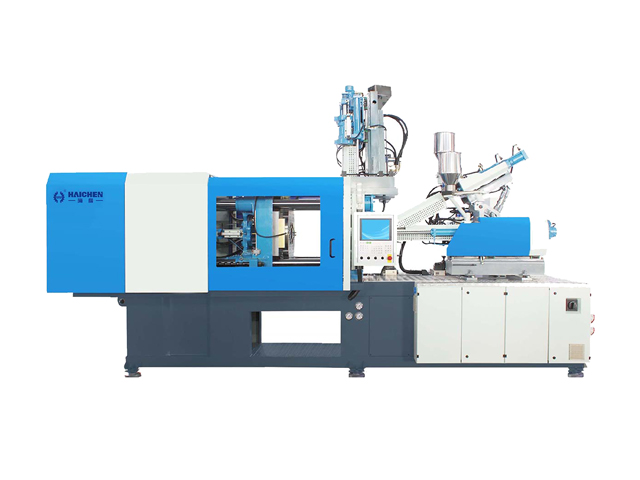
Two-Color Injection Molding Machines
Ideal for leaves requiring two colors in one piece. Equipped with two injection screws and barrels for precise color control. Perfect for producing high‑end artificial flower and Plastic Plant products that demand realistic color transitions. These machines are a direct result of extensive collaboration with artificial plants manufacturers who needed better color fidelity — a core strength of Haichen’s engineering.
Standard Injection Molding Machines
Suitable for single‑color plant components. Wide clamping force range accommodates different mold sizes — from small decorative leaves to large branches. Reliable for high‑volume production of plastic tree, plastic christmas tree, and fake plastic trees components. Both series benefit from Haichen’s long‑standing experience in the artificial plant industry.