
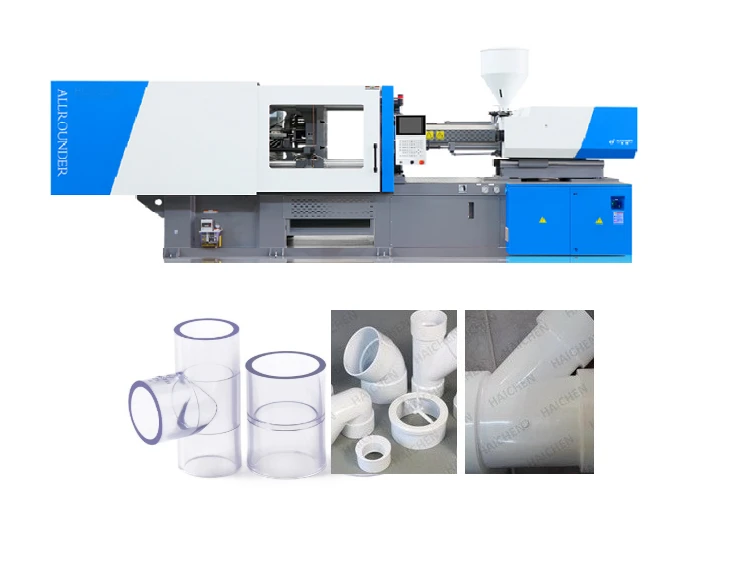
PVC pipe fittings include elbows, tees, couplings, adapters, and reducers. Although these products may look simple, their injection molding requirements can vary greatly.
For this reason, you should not choose a machine only by pipe diameter or product weight.
The PVC compound, fitting structure, mold design, cavity number, projected area, and required output all affect the machine selection.
This guide explains the main points to check before buying an injection molding machine for PVC pipe fittings.
Start With the PVC Compound
PVC needs careful processing because excessive heat or long residence time can cause material degradation.
Before choosing the machine, confirm the actual PVC compound and its recommended processing range.
Check:
- PVC type and grade
- Additives and fillers
- Recommended processing temperature
- Product application
- Virgin or recycled material
The machine should provide stable barrel temperature control within the material supplier’s recommended range.
The screw and barrel also need to match the material. Do not choose them only according to screw diameter.
Check the Fitting Structure
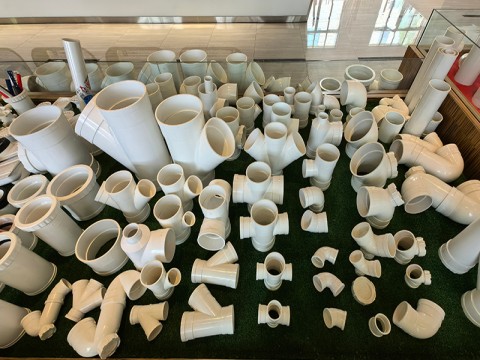
The fitting design has a direct effect on mold design and machine requirements.
Common PVC fittings include:
- Elbows
- Tees
- Couplings
- Adapters
- Reducers
A simple coupling may have a different mold structure from an elbow. A threaded fitting can require an additional core-release solution.
Before choosing the machine, check:
- Product dimensions
- Product weight
- Wall thickness
- Projected area
- Cavity number
- Thread design
- Core structure
This information gives a much better basis for machine selection than pipe diameter alone.
Pay Special Attention to the Mold Core
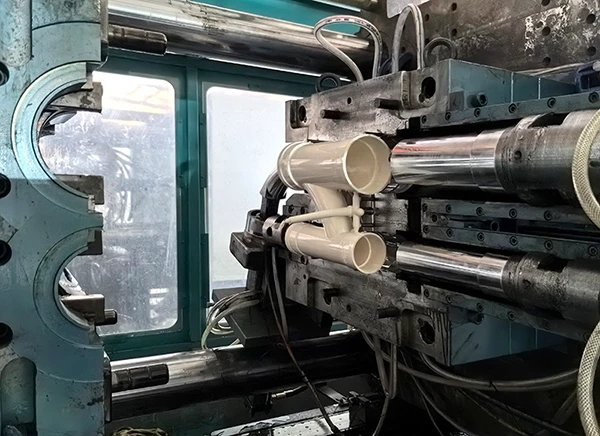
The mold is one of the most important parts of PVC fitting production.
For a simple fitting, the core may use a relatively straightforward ejection design.
However, threaded fittings need more attention.
Depending on the product, the mold may use:
- Unscrewing cores
- Collapsible cores
- Other mechanical core-release systems
The choice depends on the thread, fitting geometry, production volume, and required automation.
The mold designer should also consider cooling and material flow because uneven cooling can affect dimensions and cycle time.
Match the Machine to the Mold
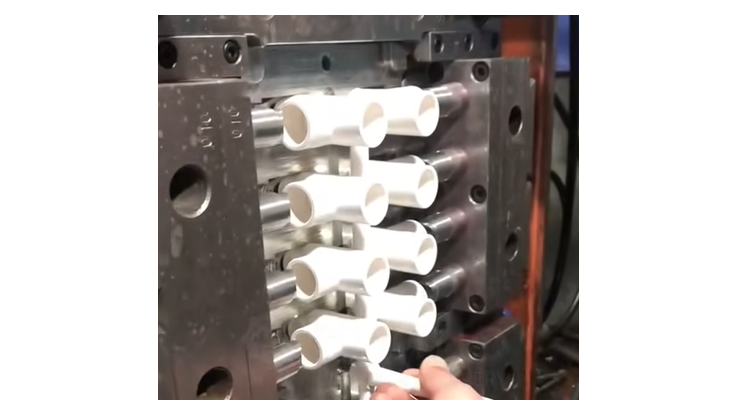
After the mold design is clear, check whether the machine can accommodate it.
Important parameters include:
- Mold dimensions
- Mold weight
- Tie-bar spacing
- Platen size
- Minimum mold height
- Maximum mold height
- Mold opening stroke
- Ejector stroke
The machine also needs enough clamping force for the mold.
A simplified preliminary relationship is:
Clamping force ≈ Projected area × Cavity pressure × Safety factor
The actual calculation depends on the fitting design, cavity layout, material, mold, and process conditions.
Therefore, avoid using a fixed table such as “32 mm fitting = 100-ton machine.”
That type of table can be misleading because two fittings with the same nominal pipe size can have very different mold requirements.
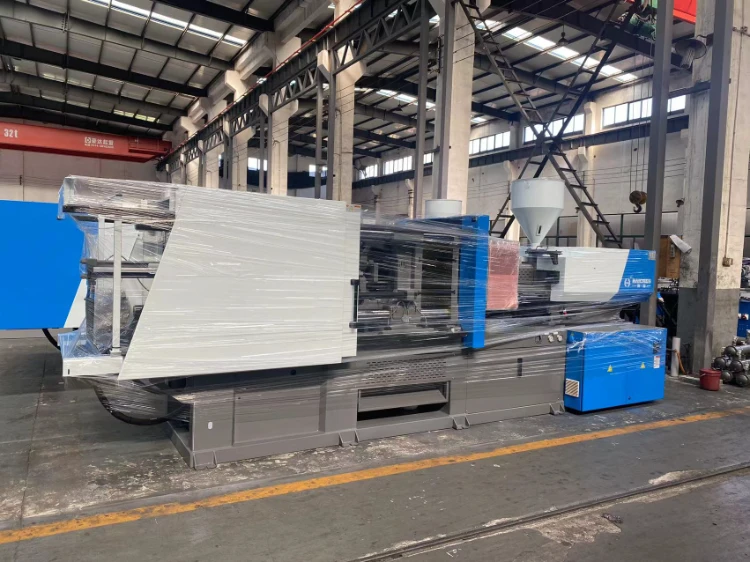
Check the Injection Unit for PVC
The injection unit must provide enough capacity for the complete shot.
The shot normally includes:
Product weight × Cavity number + Runner weight
For example, a four-cavity mold needs enough material capacity for four fittings and the runner system in one cycle.
Also check:
- Injection pressure
- Injection speed
- Screw diameter
- Screw design
- Plasticizing capacity
- Barrel capacity
For PVC, screw and barrel configuration deserves special attention. The correct design depends on the PVC compound and the production conditions.
Consider Cooling and Cycle Time
Cooling often takes an important part of the injection molding cycle.
For PVC fittings, the mold cooling system should provide stable and even cooling.
Poor cooling can lead to:
- Longer cycles
- Dimensional variation
- Warpage
- Uneven shrinkage
The required cooling setup depends on the fitting size, wall thickness, mold design, and production target.
Do not assume that a larger chiller will automatically solve every cooling problem. The mold cooling channels also need a suitable design.
Calculate the Required Production Output
Production volume determines whether a single-cavity or multi-cavity mold makes sense.
The basic theoretical formula is:
Output = Cavity number × 3,600 ÷ Cycle time
For example, a four-cavity mold running a 20-second cycle has a theoretical output of:
4 × 3,600 ÷ 20 = 720 pieces/hour
However, this is not the guaranteed factory output.
Actual production also includes mold adjustment, quality inspection, material feeding, machine stops, and other downtime.
Therefore, use theoretical output for preliminary planning and use actual trial data for final production estimates.
Do Not Select the Machine by Pipe Diameter Alone
This is one of the easiest mistakes to make when buying a PVC fitting machine.
A buyer may ask:“Which machine should I use for 50 mm PVC fittings?”
Pipe diameter alone does not provide enough information.
A better machine selection request includes:
- Fitting drawing
- Product weight
- Fitting type
- PVC compound
- Cavity number
- Mold dimensions
- Mold weight
- Target output
- Existing machine or mold information
With these details, the supplier can check the injection and clamping requirements more accurately.
What About Existing PVC Fitting Molds?
If you already have a PVC fitting mold, you do not necessarily need to buy a new mold with the machine.
First, check whether the existing mold matches the machine.
The supplier should review:
- Mold size
- Mold weight
- Tie-bar spacing
- Platen dimensions
- Mold opening
- Ejection system
- Injection capacity
- Clamping force
This check can prevent a situation where the machine arrives but cannot properly install or run the existing mold.
How Haichen Approaches PVC Fitting Machine Selection
Haichen has more than 20 years of injection molding experience and supplies injection molding machines for different plastic applications.
For PVC pipe fittings, the selection starts with the actual product and mold information.
Instead of using only the nominal pipe size, we can review:
- PVC material
- Fitting structure
- Product weight
- Cavity number
- Mold dimensions
- Injection requirements
- Clamping requirements
- Production target
If you already have a product drawing or mold drawing, this information can be used as the starting point for machine selection.
FAQ
What injection molding machine is used for PVC pipe fittings?
The suitable machine depends on the PVC compound, fitting design, mold, cavity number, projected area, shot size, and production target.
Can a standard injection molding machine process PVC?
Some injection molding machines can process PVC, but the screw, barrel, temperature control, and other configurations should match the PVC compound and production requirements.
Does pipe diameter determine machine tonnage?
No. Pipe diameter alone cannot determine the required clamping force. Product projected area, cavity number, mold design, and process conditions also matter.
What information should I send before buying a PVC fitting machine?
A product drawing, product weight, PVC material, cavity number, mold information, and target production volume are good starting points.


