
Cooling capacity plays an important role in injection molding production. A suitable cooling system helps the plastic cool evenly, keeps the mold temperature stable, and supports a consistent production cycle.
However, an undersized chiller may struggle to remove enough heat, while an oversized unit can increase equipment costs.
As an injection molding machine manufacturer, Haichen recommends calculating the actual cooling load before choosing an industrial chiller.
Let’s look at the main factors and a practical calculation method.
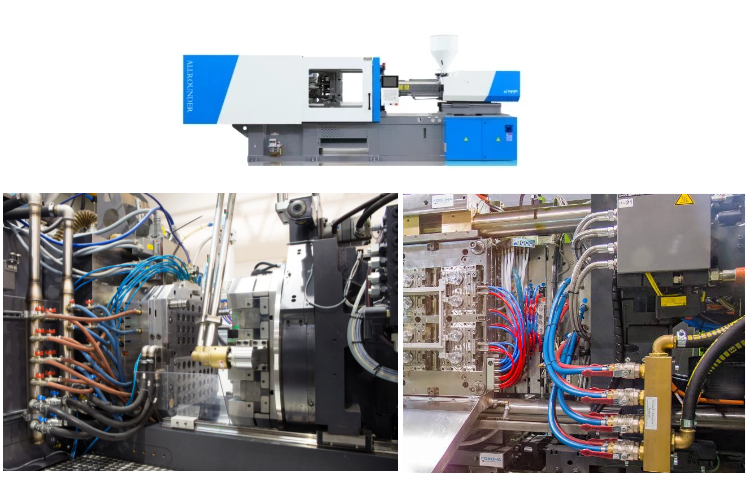
What Is Cooling Capacity?
Cooling capacity refers to the amount of heat a cooling system can remove over a specific period. Manufacturers usually express it in kilowatts (kW) or refrigeration tons (RT).
One refrigeration ton equals approximately 3.517 kW of cooling capacity.
For an injection molding machine, the cooling system removes heat from the plastic, mold, hydraulic oil, and other machine components.
The required capacity depends on the production process and the cooling system design.
Remember, cooling capacity is not the same as electrical power consumption. A chiller with a 10 kW cooling capacity does not necessarily consume 10 kW of electricity.
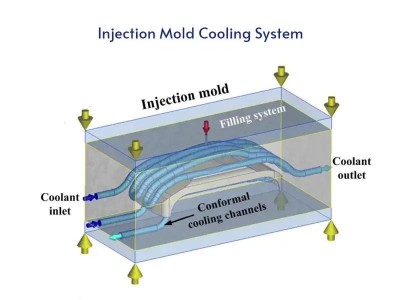
Why Does an Injection Molding Machine Need Cooling?
During injection molding, molten plastic enters the mold and releases heat as it cools. The machine also generates heat during operation, especially in hydraulic systems.
A suitable cooling system helps to:
- Keep the mold temperature within the required range.
- Support stable part dimensions and surface quality.
- Remove heat from the hydraulic system when required.
- Reduce unnecessary waiting time during production.
- Maintain consistent production conditions.
Good cooling helps, but it does not guarantee a shorter cycle on its own. The mold design, material, wall thickness, and machine settings also affect cycle time.
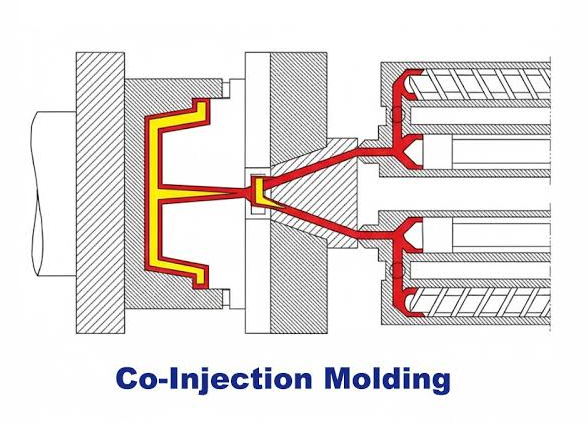
What Affects Cooling Capacity?
Plastic Material and Part Weight
Different plastics require different processing and cooling conditions.
Materials such as PP, ABS, and PET have different thermal properties and processing requirements.
Part weight also matters. A machine producing heavy parts usually needs to remove more heat from the plastic than one producing lightweight parts at the same output rate.
Production Output
Higher output means the cooling system must remove heat more quickly. Consider both the material processed per hour and the number of operating hours.
Mold and Cooling Channel Design
Mold size alone does not determine cooling demand. Cooling channel layout, water flow, channel diameter, and contact with hot areas all affect heat transfer.
Poor channel design can create uneven temperatures even when the chiller has enough capacity.
Water Inlet and Outlet Temperatures
The required water temperature depends on the mold, material, and process.
A larger temperature difference between inlet and outlet water can indicate a higher heat transfer rate, provided that the water flow remains adequate.
Always check the temperature requirements of the mold and machine.
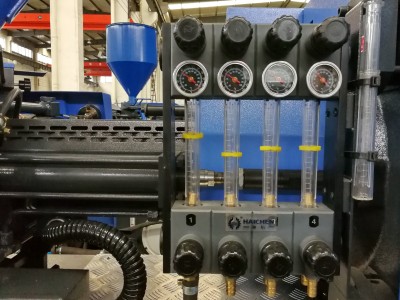
How to Calculate the Required Cooling Capacity
Estimate the Heat from the Plastic
A basic estimate uses the mass of plastic processed per hour and the heat released as the material cools.
Use this formula:
Q = m × Cp × ΔT ÷ 3600
Where:
- Q = heat load in kW
- m = plastic output in kg/h
- Cp = average specific heat capacity in kJ/(kg·°C)
- ΔT = effective temperature change in °C
This simplified formula estimates sensible heat. It does not include latent heat, where relevant, or all heat transferred from the machine and mold. Use suitable material data and process temperatures for a reliable estimate.
Calculate the Heat Load per Hour
For example, assume a machine processes 50 kg of plastic per hour. For a simplified estimate, use an average specific heat capacity of 2 kJ/(kg·°C) and an effective temperature change of 150°C.
Q = 50 × 2 × 150 ÷ 3600
Q ≈ 4.17 kW
This result represents the estimated sensible heat from the plastic under these assumptions. It is not the final chiller capacity.
Add Other Heat Loads
The cooling system may also need to remove heat from the mold, hydraulic oil, and other components. Estimate these loads separately where possible, then add the loads that the chiller actually serves.
Avoid counting the same heat load twice.
Allow for a Suitable Safety Margin
After estimating the total cooling load, apply a suitable margin based on the operating conditions and system design.
For early planning, an engineer might consider a margin of around 10–20%, but this is not a universal rule.
For example, a calculated load of 8 kW with a 15% margin gives:
8 × 1.15 = 9.2 kW
The final selection must also account for the chiller’s rated conditions and actual operating environment.
How to Choose an Industrial Chiller
Match the Chiller to the Required Cooling Load
Choose a chiller that can meet the estimated load under your actual working conditions. Do not select a model based only on injection molding machine tonnage.
Check Water Flow and Temperature
Confirm the required water flow, inlet temperature, outlet temperature, and pressure. Check that the chiller and mold cooling circuits can work within these limits.
Check the Chiller’s Rated Conditions
A chiller’s rated capacity depends on conditions such as water temperature and ambient temperature. Ask the supplier to confirm its available cooling capacity at your required operating conditions.
Consider the Factory Environment
High ambient temperatures can reduce the performance of some air-cooled chillers. Also consider ventilation, installation space, water quality, maintenance access, and the number of machines connected to the system.
Signs of Insufficient Cooling Capacity
Long Cooling Time
The mold may take longer to reach the required temperature, which can limit production output.
Unstable Mold Temperature
Large temperature changes may affect part dimensions, appearance, and process consistency.
Poor Part Quality
Uneven cooling can contribute to warpage, shrinkage differences, and other defects. However, these problems can also come from mold design, material, or process settings.
Chiller Runs Continuously
If the chiller runs for long periods but cannot maintain the target water temperature, check its capacity, heat load, water flow, and heat exchanger condition.
How to Check Cooling System Performance
Measure Water Inlet and Outlet Temperatures
Record both temperatures during stable production and compare them with the process requirements.
Check Water Flow
Inspect flow indicators, filters, pumps, and pipes. Low flow can reduce heat transfer even when the chiller has sufficient rated capacity.
Check the Mold Cooling Circuit
Look for blocked channels, scale, leaks, or uneven flow between circuits. Clean and maintain the system according to the equipment manufacturer’s instructions.
Frequently Asked Questions
Is Chiller Capacity the Same as Cooling Load?
No. Cooling load describes the heat the system needs to remove. Chiller capacity describes how much heat the chiller can remove under specified conditions. Select a chiller with sufficient capacity for the actual load.
Can One Chiller Cool Several Injection Molding Machines?
Yes, if the chiller can handle the combined cooling load and the distribution system provides suitable flow to each machine. Consider which machines may operate at the same time and allow for changes in production demand.
Does Higher Cooling Capacity Always Reduce Cycle Time?
No. A larger chiller cannot overcome every cooling limitation. Mold channel design, water flow, material properties, and the part’s cooling requirements also affect cycle time.


