When it comes to injection molding machine selection for plastic eyeglass frames, one question comes up more than any other: what eyeglass frame injection tonnage do I actually need?

It‘s a fair question. Plastic eyeglass frames are thin-walled, aesthetically demanding, and dimensionally sensitive. Whether you produce round plastic eyeglass frames, black plastic eyeglass frames, or standard plastic frames for glasses, the tonnage choice directly affects your part quality.
Unlike molding a bucket or a pallet, where you can afford some wiggle room, plastic spectacle frames need precision. Get the tonnage wrong, and you’re looking at flash, short shots, warpage, or worse—a mold that doesn‘t fit the machine at all.
This guide breaks down three common configurations for a plastic eyeglass frames injection molding machine:
- 110T with 1 cavity
- 180T with 1-out-of-2 cavities
- 230T with 1+1 cavity
So you can match the right machine to your production goals for plastic glasses frames and beyond.
Why Tonnage and Cavity Count Matter for Plastic Eyeglass Frames
Let’s start with the basics.
Tonnage refers to the clamping force that holds the mold closed during injection.
- If the force is too low → the injection pressure pushes the mold open, causing flash (excess plastic along the parting line) on your plastic eye frames
- If the force is too high → you‘re wasting energy and putting unnecessary stress on both the mold and the injection molding machine
Cavity count is how many parts the mold produces per cycle.
- 1 cavity = one plastic glasses frame per shot
- 2 cavities = two plastic glasses frames per shot
More cavities mean higher output, but they also require more tonnage—because the total projected area increases.
For plastic eyeglass frames, cavity counts tend to be conservative.
Why? Because plastic frames for glasses have thin walls, long flow paths, and asymmetrical geometries. Pushing too many cavities in one mold often sacrifices quality for quantity—and in eyewear, quality is non-negotiable.

110T – Single-Cavity Production for Precision Plastic Frames
The 110T configuration with a single cavity is the choice for producers who prioritize precision over volume.
This setup is ideal for:
- High-end custom plastic spectacles frames (designer brands, luxury collections, limited editions)
- Complex geometries (intricate details, unusual shapes, tight tolerances) – perfect for round plastic spectacle frames or other unique designs
- Small-batch production (where every single plastic frame for glasses must be flawless)
Why single cavity?
With only one cavity to fill:
- The injection pressure is concentrated
- The flow path is short
- The process window is wide
You get maximum shot pressure, minimal flow hesitation, and the highest possible yield rate for your plastic eyeglass frames.
For a startup or a boutique frame maker, a 110T plastic eyeglass frames injection molding machine with single-cavity is often the smartest entry point. It gives you room to perfect your process before scaling up to higher-volume plastic glasses frames.

Machine Specifications for 110T Single-Cavity Production
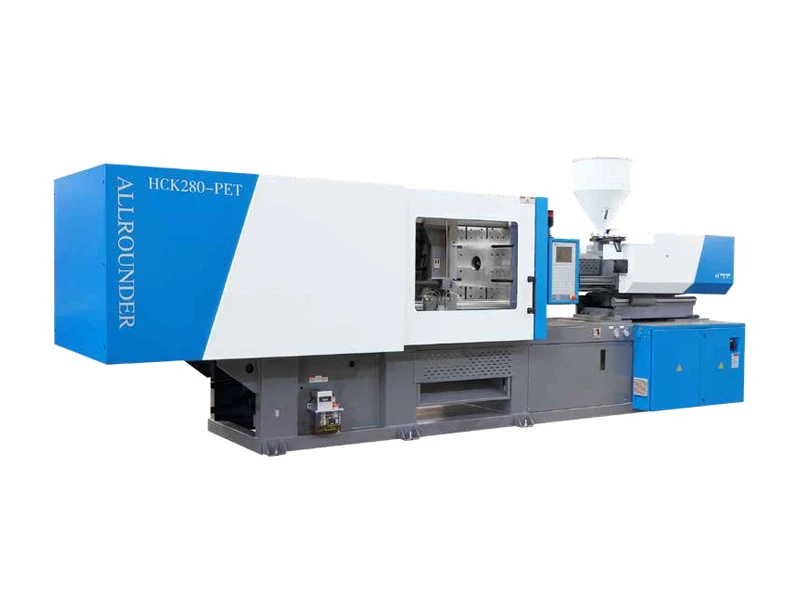
When running a single-cavity mold on a 110T injection molding machine, the injection unit delivers sufficient plasticizing capacity to handle materials like TR90, PC, and acetate—commonly used for plastic spectacle frames.
The clamping system provides stable, repeatable force application—critical for thin-wall frame geometries where even minor platen deflection can cause dimensional deviations in your plastic eyeglass frames.
The servo-driven pump package on modern 110T units ensures that energy consumption stays proportional to actual demand, avoiding the fixed losses common in older hydraulic machines, so your production of plastic frames for glasses remains cost-effective.

180T – Two-Cavity Production for Balanced Efficiency
Once you‘ve validated your design and demand is growing, the 180T with a 1-out-of-2 cavity mold is the natural next step for your plastic eyeglass frames injection molding machine.
This is the workhorse configuration for most producers of plastic glasses frames. It doubles your output per cycle while maintaining excellent part quality.
What it handles well:
- Full-rim plastic eyeglass frames – the most common style
- Half-rim plastic frames for glasses – popular in both fashion and prescription segments
- Materials like TR90, acetate, and PC – all run smoothly with proper parameter settings on this injection molding machine
- Both round plastic frames and classic shapes
The sweet spot: Two cavities strike a balance between throughput and quality.
The injection pressure is still ample. The flow paths are manageable. You get twice the parts without twice the defects—ideal for black plastic eyeglass frames and other high-volume items.
Many frame manufacturers find that 180T 1-out-of-2 is the configuration that pays for itself the fastest—enough output to meet orders, enough precision to keep rejection rates low for all types of plastic spectacle frames.

Machine Specifications for 180T Two-Cavity Production
The 180T class offers a larger platen and wider tie-bar spacing than the 110T, accommodating the physically larger 1-out-of-2 mold for plastic glasses frames.
The injection unit‘s screw diameter and L/D ratio are selected to deliver consistent melt quality across both cavities simultaneously—critical for producing uniform plastic eyeglass frames.
Advanced process control features—including multi-stage injection profiling and closed-loop pressure control—ensure that fill balance between the two cavities remains within acceptable tolerance, even when processing materials with narrow processing windows like acetate, so your plastic frames for glasses come out flawless every cycle.

230T – 1+1 Cavity for Two-Component Plastic Frames
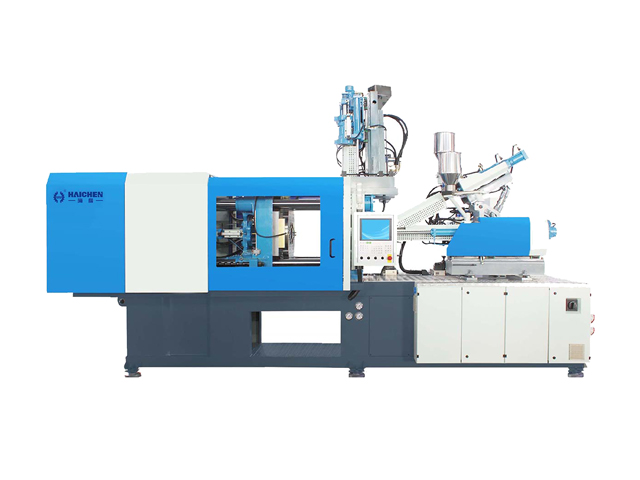
Now we step into two-component molding—and that’s where the 230T with a 1+1 cavity comes in for your plastic eyeglass frames injection molding machine.
A 1+1 cavity mold produces two different components in the same cycle.
For plastic eyeglass frames, this typically means:
- Hard frame + soft nose pads – one cavity molds the rigid plastic spectacle frame, the other molds the soft silicone or rubber pads, all in one shot
- Two-color/two-material plastic glasses frames – a base color in one cavity, a contrasting or accent color in the other – ideal for stylish round plastic glasses frames or black plastic eyeglass frames with colored accents
Why does two-component molding need 230T?
Two-component molds are more complex:
- They require rotating or sliding mechanisms to transfer the part between injection units
- They need two separate injection units, which adds weight and size to the mold
- The clamping force must be higher to keep everything sealed during both injections
The payoff: One injection molding machine, one cycle, two components for your plastic eyeglass frames.
No secondary assembly. No gluing or snap-fitting pads later. You get a finished plastic frame for glasses straight out of the mold—and that saves labor, time, and quality risk.
Machine Specifications for 230T 1+1 Cavity Production
The 230T configuration is purpose-built for two-component applications on plastic spectacle frames.
It features a larger clamping unit capable of accommodating the increased mold height and weight associated with rotating-platen or core-back systems.
The two injection units—typically arranged in parallel or L-configuration—offer independent shot size, speed, and pressure control, allowing each material to be processed at its optimum conditions for producing high-quality plastic eyeglass frames.
The machine control system manages the sequence of injection, mold opening, component transfer, and second-stage injection with the precision required for defect-free multi-material plastic frames for glasses.

How to Match Tonnage to Your Plastic Frame Production
So which one is right for your plastic eyeglass frames injection molding machine?
| Configuration | Tonnage | Cavities | Best For |
|---|---|---|---|
| Precision Single | 110T | 1 cavity | High-end custom, complex designs (round plastic spectacle frames), small batches |
| Balanced Production | 180T | 1-out-of-2 | Standard full-rim/half-rim plastic glasses frames, medium to large volumes |
| Two-Component | 230T | 1+1 cavity | Plastic frames with integrated soft pads, two-color designs (e.g., black plastic eyeglass frames with colored temples) |
A quick rule of thumb: Start with your product.
What type of plastic eyeglass frames are you making? Round plastic frames? Black plastic eyeglass frames? What‘s the projected area? How many cavities do you realistically need to hit your production targets? Work backward from there—and always leave a little headroom for process stability.
And don’t skip the trial run.
No matter how good the math looks on paper, nothing beats running actual plastic spectacle frames on the actual injection molding machine. A proper trial validates your tonnage choice, confirms your cavity configuration, and gives you confidence before you commit to full production of your plastic glasses frames.

How Haichen Supports Tonnage Selection for Plastic Eyeglass Frames
Haichen offers all three configurations discussed in this guide—110T, 180T, and 230T—with servo energy-saving technology as standard across the range for plastic eyeglass frames injection molding machines. Each machine is CE-certified and built for continuous, reliable operation in producing plastic spectacle frames, whether they are round plastic glasses frames, black plastic eyeglass frames, or any other style.
The technical team provides tonnage recommendations based on customer-provided mold specifications, including projected area, mold weight, and material type—ensuring your plastic frames for glasses are produced with optimal efficiency. Trial run support is available to validate the selected configuration before the machine is shipped, reducing the risk of post-installation surprises and ensuring that the tonnage-cavity match works in practice, not just on paper, for your specific plastic eyeglass frames production.