Plastic Bowl Injection Molding for high-output production requires machines that run fast, waste little, and deliver consistent quality.
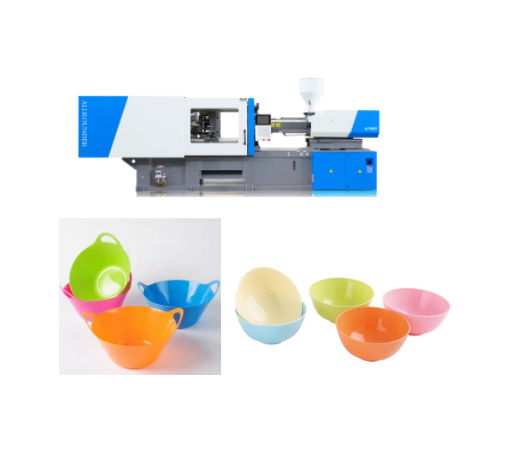
Plastic bowl manufacturing is a high-volume business. From small bowls for household use to large bowls for food service, the demand is constant and the margins are thin. To stay profitable, producers need machines that run fast, waste little, and deliver consistent quality across millions of cycles.
The logic of high-output production is simple: more parts per hour at lower cost per part. But achieving this requires understanding where time goes in each cycle, what features actually drive speed, and how to match machine configuration to production targets.
This guide explains the fundamentals of high-output Plastic Bowl Injection Molding, the key machine features that enable speed, and configuration recommendations for different output levels.
High Output Logic in Plastic Bowl Injection Molding
High-output plastic bowl production follows a clear logic. Three principles define it:
- Thin margins demand high volume
- Cycle time has four phases: injection, holding, cooling, ejection
- Cooling takes 60% to 80% of total cycle time
Thin Margin Needs Big Volume
Plastic bowls are low-cost, high-volume products. The profit per piece is small, so volume is everything. A typical plastic bowl sells for a few cents, and the material cost alone takes a large portion. To make money, you need to produce tens of thousands of bowls per day.
This means every second counts. A machine that runs 10% faster produces 10% more parts per shift. Over a year, that difference can be hundreds of thousands of extra bowls. For this reason, bowl producers prioritize speed, uptime, and consistency above all else.
The math is simple: more cavities per mold plus faster cycles equals lower cost per bowl. High-output production is not optional for bowl manufacturers. It is survival.
Cycle: Injection, Holding, Cooling, Ejection
Every injection molding cycle has four distinct phases:
| Phase | What Happens | Time Impact |
|---|---|---|
| Injection | Molten plastic fills the cavity | Fast (1-3 seconds) |
| Holding | Pressure maintained to compensate shrinkage | Moderate (2-5 seconds) |
| Cooling | Part solidifies in the mold | Long (60-80% of cycle) |
| Ejection | Finished bowl is pushed out | Fast (1-2 seconds) |
Injection and ejection are quick. Holding takes a few seconds. But cooling dominates the cycle. For a typical plastic bowl, the injection phase might take 2 seconds, holding 3 seconds, and ejection 1 second. Cooling, however, can take 10 to 20 seconds or more.
To achieve high output, you must reduce every phase. But the biggest gains come from cutting cooling time.
Cooling Takes Sixty to Eighty Percent
Cooling is the longest phase in plastic bowl production. It typically accounts for 60% to 80% of the total cycle time. For a 15-second cycle, cooling alone may take 9 to 12 seconds.
Why so long? The plastic must cool below its deflection temperature before ejection. If ejected too early, the bowl warps or deforms. If cooled too long, cycle time suffers.
Ways to reduce cooling time:
- Optimize cooling channel design in the mold
- Use a chiller to maintain consistent mold temperature
- Choose materials with faster cooling characteristics
- Run the mold at the lowest practical temperature
For bowl producers, every second saved in cooling translates directly to higher output. A 2-second reduction in cooling time can increase daily production by 10-15%.
Key Features for Speed in Plastic Bowl Injection Molding
To achieve high output, an injection molding machine needs specific features:
- Fast injection and fast clamping for 10-30 second cycles
- Multi-cavity capability with stable clamping force
- Servo drive for 60% energy savings
Fast Injection, Fast Clamp – Cycle 10 to 30 Seconds
High-output plastic bowl production requires machines capable of 10 to 30 second cycles. This demands both fast injection and fast clamping.
Fast injection:
- High injection speed fills cavities quickly
- Reduces risk of premature freeze-off
- Critical for thin-wall bowls where flow must be rapid
Fast clamping:
- Quick mold open and close reduces non-productive time
- Multi-stage speed control prevents mold damage
- High-speed approach with slow final contact protects the mold
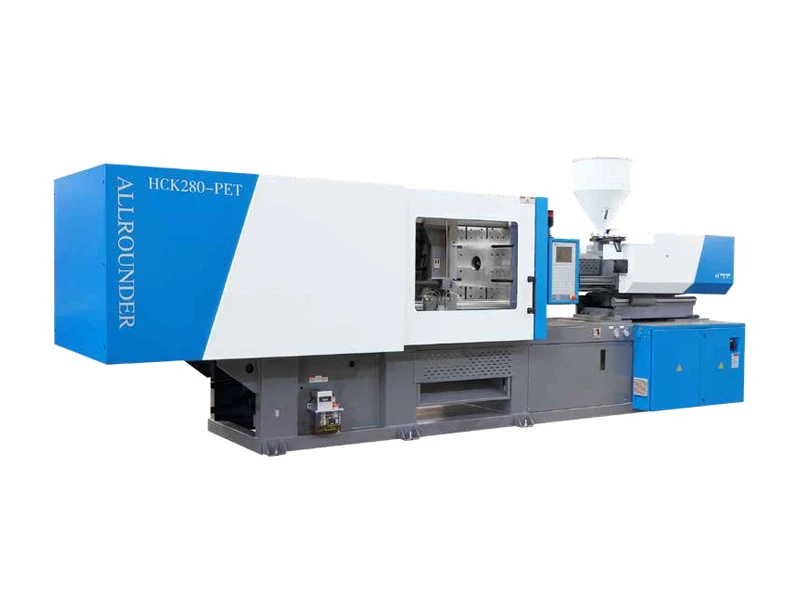
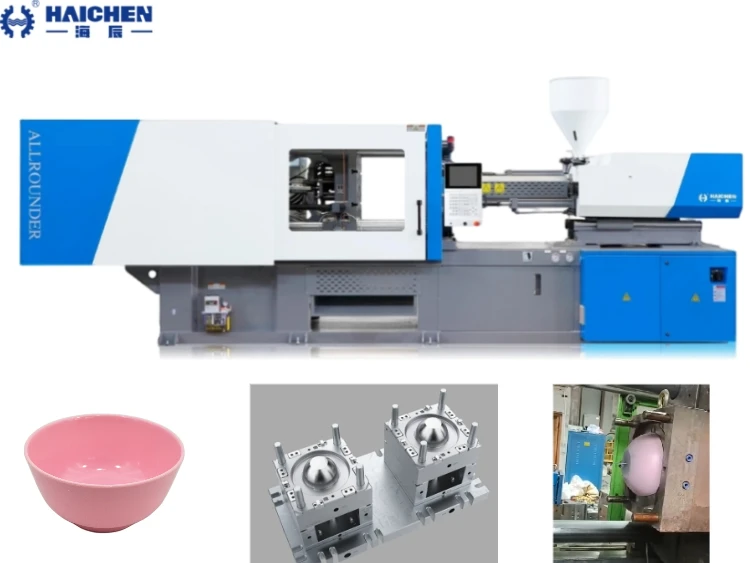
For a typical plastic bowl weighing 30-50g, a well-configured machine can achieve cycles of 12 to 18 seconds. The HCK series from Haichen is designed for these speeds, with high injection rates and responsive clamping systems that minimize idle time.
Multi-Cavity Needs Stable Clamp
Multi-cavity molds are the standard for high-output bowl production. A 4-cavity mold produces four bowls per cycle. An 8-cavity mold produces eight. More cavities mean more parts per hour, but they also place greater demands on the machine.
Why stable clamping matters for multi-cavity:
- Each cavity must receive the same clamping force
- Uneven force causes flash on some cavities, short shots on others
- Platen deflection is a bigger risk with larger molds
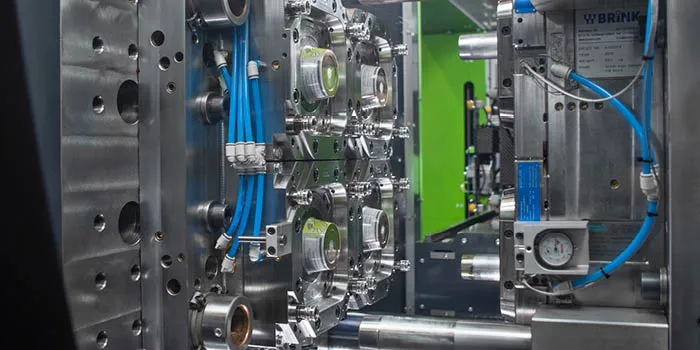
The number of cavities must match the machine’s clamping force capacity. If clamping force is insufficient, the mold may open slightly during injection, causing flash or incomplete parts. Haichen’s clamping units use an internally-rolled 5-point double toggle structure that greatly increases rigidity and ensures even force distribution across all cavities.
For bowl producers, this means consistent quality across every cavity. No cavity produces a reject while others run fine.
Servo Saves Sixty Percent Energy
Energy cost is a major expense in injection molding. Servo-driven machines reduce this cost significantly.
How servo saves energy:
- Conventional hydraulic machines run the pump continuously
- Servo machines only consume power when moving
- During cooling and idle, the servo motor stops
Haichen’s servo energy-saving machines achieve 40-70% energy savings compared to conventional hydraulic machines. The HTD series has an actual energy consumption of 0.4 kWh/kg for ABS products, reaching IE5 energy efficiency. For a bowl production line running 24/7, this can mean thousands of dollars in annual energy savings.
The servo motor adjusts flow and speed according to demand. Unlike ordinary motors that run at full speed regardless of need, servo motors only deliver what is required. This reduces waste and extends component life.
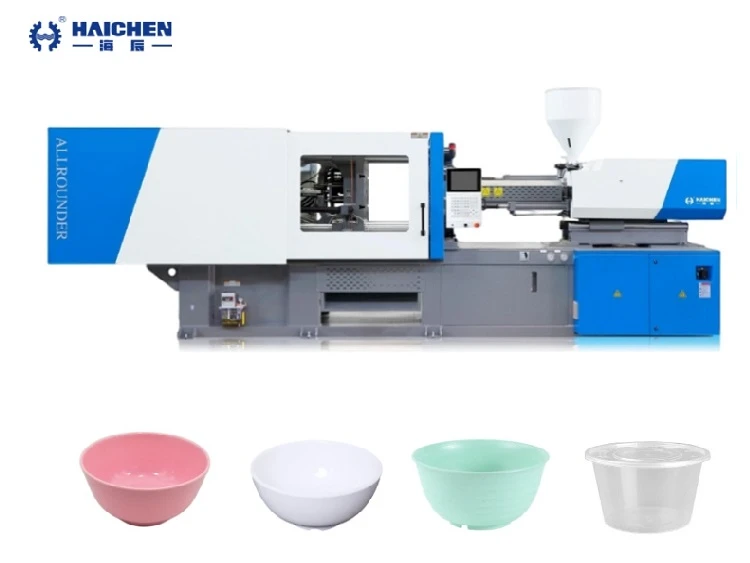
Machine Selection For Plastic Bowl Injection Molding Output
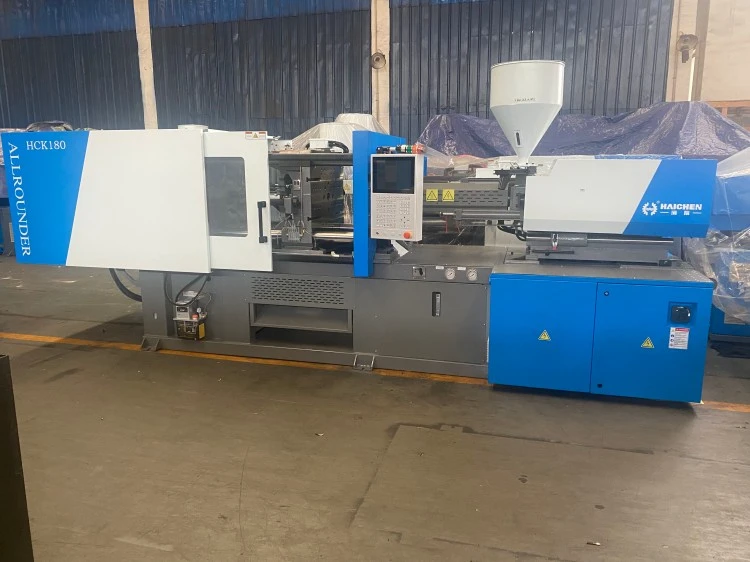
Entry – Small to Medium Output
Recommended machine: HCK 180
| Parameter | Specification |
|---|---|
| Clamping force | 1,800 kN (180 tons) |
| Tie bar spacing | 520 × 470 mm |
| Opening stroke | 460 mm |
| Ejector stroke | 130 mm |
| Machine weight | 6 tons |
Suitable for:
- 1 to 4 cavity molds
- Bowl sizes up to 150 mm diameter
- Production volumes of 5,000-20,000 bowls per day
Mid – Steady Large Volume
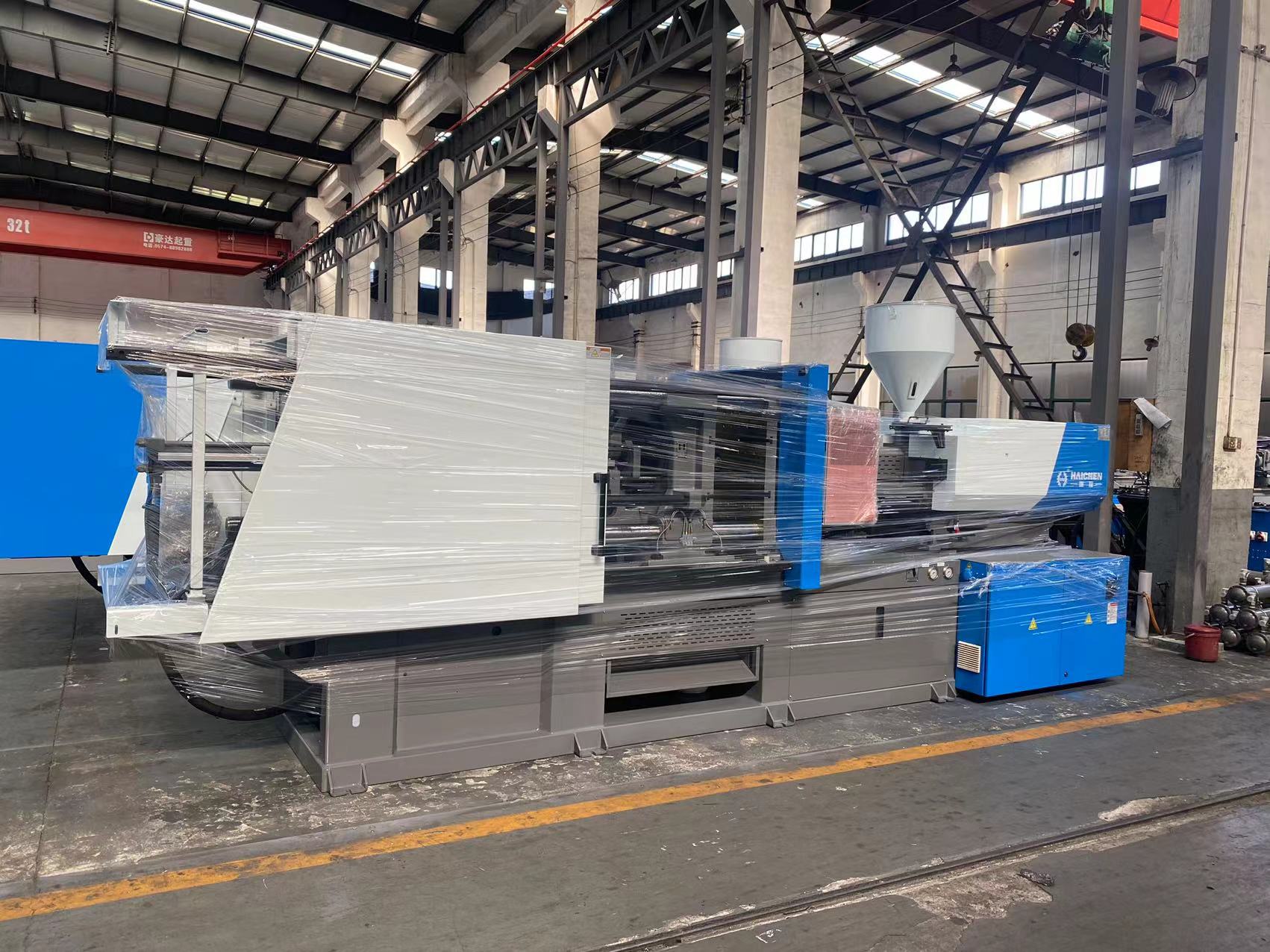
Recommended machine: HCK 280
| Parameter | Specification |
|---|---|
| Clamping force | 2,800 kN (280 tons) |
| Tie bar spacing | 620 × 570 mm |
Suitable for:
- 4 to 8 cavity molds
- Bowl sizes up to 200 mm diameter
- Production volumes of 20,000-50,000 bowls per day
High – Multi-Cavity Maximum Output
Recommended machine: HCK 360 or larger
| Parameter | Specification |
|---|---|
| Clamping force | 3,600 kN (360 tons) |
| Tie bar spacing | 720 × 670 mm |
| Platen size | 1000 × 950 mm |
| Opening stroke | 680 mm |
| Ejector force | 90 kN |
Suitable for:
- 8 to 16 cavity molds
- Bowl sizes up to 250 mm diameter
- Production volumes of 50,000+ bowls per day
Selection Reference for Plastic Bowl Injection Molding Machines
| Configuration | Machine | Cavities | Daily Output | Best For |
|---|---|---|---|---|
| Entry | HCK 180 | 1-4 | 5,000-20,000 | Starting out, regional markets |
| Mid | HCK 280 | 4-8 | 20,000-50,000 | Established producers, steady demand |
| High | HCK 360+ | 8-16 | 50,000+ | High-volume, maximum efficiency |
Key factors to consider:
- Match clamping force to projected area and cavity count
- Choose servo drive for energy savings of 40-70%
- Plan for future growth – buy capacity you will need in 2-3 years
- Consider total cost of ownership, not just purchase price
Frequently Asked Questions
Q: What is plastic bowl injection molding?
A: Plastic bowl injection molding is a high-volume manufacturing process where molten plastic is injected into a mold cavity to produce plastic bowls, typically using multi-cavity molds for maximum efficiency.
Q: What are the key features of a high-output plastic bowl injection molding machine?
A: Key features include fast cycle times (10-30 seconds), multi-cavity capability (4-16 cavities), servo energy savings (40-70%), and stable clamping for consistent quality across all cavities.
Q: Why is cooling the longest phase in plastic bowl production?
A: Cooling typically accounts for 60-80% of total cycle time because the plastic must cool below its deflection temperature before ejection to prevent warping or deformation.
Q: How does multi-cavity mold affect machine selection?
A: More cavities require higher clamping force and larger platen size. A 4-cavity mold needs approximately 180 tons, while an 8-cavity mold requires 280 tons or more for stable operation.
Q: What HCK model is best for my bowl production volume?
A: HCK 180 suits 5,000-20,000 bowls/day (1-4 cavities), HCK 280 suits 20,000-50,000 bowls/day (4-8 cavities), and HCK 360+ suits 50,000+ bowls/day (8-16 cavities).