
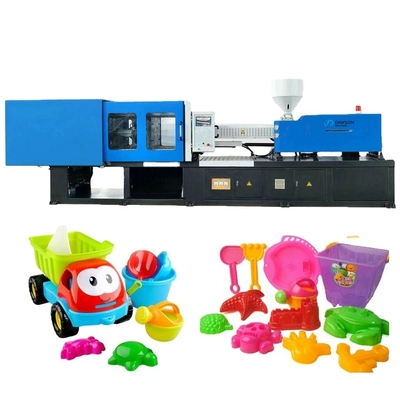
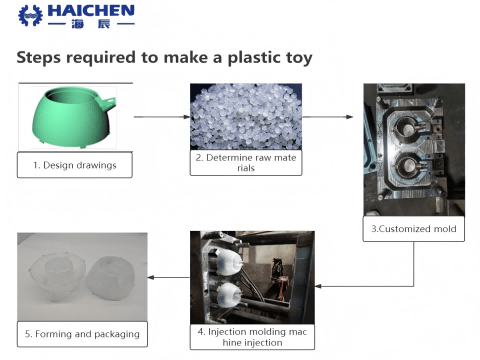
A plastic toy injection molding machine turns plastic pellets into the toys children play with every day. Building blocks, action figures, toy cars, and outdoor slides all come from these machines. But here’s the challenge: different toys need different machines. A small building block and a large outdoor slide are at opposite ends of the spectrum. You cannot use the same plastic toy injection molding machine for both.
PP, PE, and PS are relatively easy to mold, but they are used to produce items like toys, housewares, and simple containers, which have slim profit margins. For toy manufacturers, any variation in part weight or energy consumption directly cuts into profits. The best way to select the right plastic toy injection molding machine is to consider what products you wish to produce and how many you need to produce.
This guide breaks down toy categories by their machine requirements, explains the key parameters you need to calculate, and shows you how to match the right plastic toy making machine to your production needs. For the production of toys, the clamping force of the injection molding machine is sufficient between 50T-310T, and different sizes also require different clamping forces.
Understanding Toy Categories and Their Requirements for a Plastic Toy Injection Molding Machine
Small Precision Toys Need 50 to 230 Tons
Small precision toys include building blocks, action figures, gears, and miniatures. These parts require high precision and tight dimensional tolerances. A building block that is 0.1mm off won’t snap together properly.

Machine requirements:
-
Clamping force: 50–230 tons
-
Key feature: High-precision injection control
-
Common materials: ABS (high impact resistance, good surface finish), PP
-
Typical cavity count: 16–32 cavities (high-volume production)
ABS is a durable, impact-resistant plastic known for its toughness and rigidity. It is commonly used for toys like building bricks. Small precision toys are exactly the kind of small parts where clamping force up to 500 kN (50 tons) toy injection molding machines are primarily used.
For high-volume production of small toys, multi-cavity molds are standard. A 32-cavity mold with hot runner technology can produce consistent parts cycle after cycle. The total weight of the part and runner plastic should be between 35% and 85% of the injection weight.
Haichen recommendation: HCK 110–HCK 230 series for high-precision, multi-cavity toy injection machine production.
Medium-Sized Toys Need 150 to 310 Tons
Medium-sized toys include toy cars, robots, dolls, and action figure sets. These parts have larger projected areas and higher shot weights than small precision toys.
Machine requirements:
-
Clamping force: 150–310 tons
-
Key feature: Larger shot capacity and stable injection pressure
-
Common materials: PP, ABS, PE
-
Typical cavity count: 4–8 cavities
These toys often have complex geometries with varying wall thicknesses. The plastic toy injection molding machine must deliver consistent fill across all cavities without causing sink marks or warpage. A stable clamping system is essential to prevent flash on visible surfaces where appearance matters.
For medium-sized toys, the clamping force typically falls in the 150–310 ton range. Injection molding machines with clamping forces between 150 and 500 tons are considered medium-sized machines, suitable for items like toys and consumer goods.
Haichen recommendation: HCK 180–HCK 310 series for medium-sized toy production machine applications.

Large Outdoor Toys Need 300 to 800+ Tons
Large outdoor toys include slides, playhouses, climbing structures, and ride-on toys. These are large parts with substantial projected areas and thicker walls to withstand outdoor use and heavy loads.
Machine requirements:
-
Clamping force: 300–800+ tons
-
Key feature: High clamping force and large platen size
-
Common materials: HDPE, PP
-
Typical cavity count: 1–2 cavities (single-cavity or family molds)
These parts often require longer flow paths, uniform wall thickness, and balanced cooling systems to prevent warpage. Large outdoor toys are typically produced on larger machines. High-tonnage machines (1,000–5,000+ tons) are used for large parts like pallets and large appliances. For outdoor toys, machines in the 300–800+ ton range are common.
Haichen recommendation: HCK 280–HCK 800 series for large outdoor toy injection molding production.
Key Machine Parameters for Toy Injection Molding
Clamping Force Calculation for Toy Injection Molding Machines
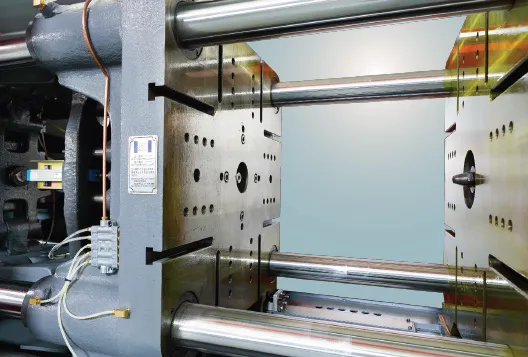
Clamping force keeps the mold closed during injection. If it’s too low, you get flash. If it’s too high, you waste energy and stress the mold.
The formula:
Clamping Force (tons) = Projected Area (cm²) × Cavity Pressure (kg/cm²) × Safety Factor ÷ 1000
A practical rule of thumb is that each cm² of projected mold area requires 3–5 tons of clamping force, with an additional 10–20% safety margin.
Example for a medium toy car:
-
Projected area: 300 cm² (part + runner)
-
Cavity pressure: 400 kg/cm² (for ABS)
-
Safety factor: 1.15
-
Clamping force: 300 × 400 × 1.15 ÷ 1000 = 138 tons
Example for a large outdoor slide part:
-
Projected area: 1,500 cm²
-
Cavity pressure: 350 kg/cm² (for HDPE)
-
Safety factor: 1.2
-
Clamping force: 1,500 × 350 × 1.2 ÷ 1000 = 630 tons
Shot Weight and Plasticizing Capacity for Toy Making Machines
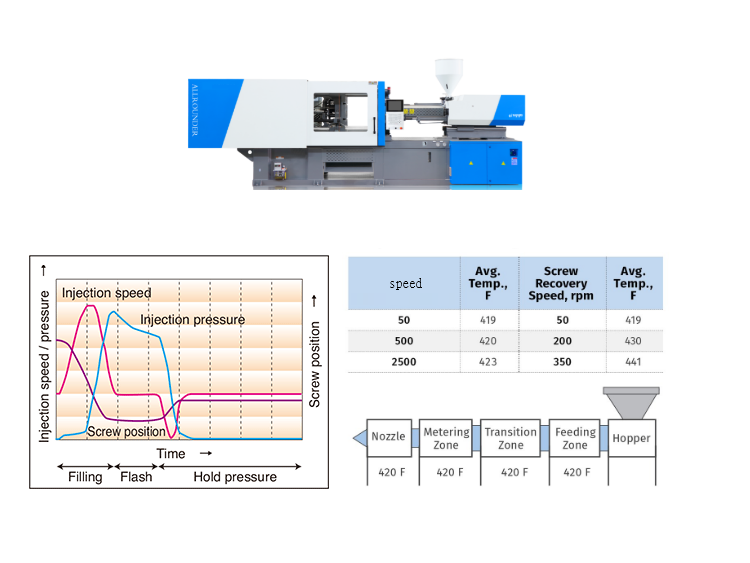
Shot weight is the total weight of material injected per cycle, including all cavities and the runner system. The plastic toy injection molding machine‘s shot capacity must cover your total requirement.
For a 4-cavity toy car mold:
-
Part weight: 80g each
-
Runner weight: 40g
-
Total shot weight: (80 × 4) + 40 = 360g
Your target shot weight should be 30–80% of the machine’s maximum shot capacity. Too low wastes machine capability. Too high risks incomplete plasticizing. In less demanding injection molding, such as a toy figure, the total weight should be 85% of the injected weight.
Plasticizing capacity (g/s) determines how fast the machine can melt material. For multi-cavity toy production, you need enough plasticizing capacity to support your target cycle time.
Injection Speed and Precision for Toy Production
Toy appearance matters. Flow marks, sink marks, and visible weld lines mean rejected parts. For toys with complex geometries or thin sections, you need multi-stage injection speed control to fill the cavity smoothly without causing defects.
| Parameter | Small Precision Toys | Medium Toys | Large Outdoor Toys |
|---|---|---|---|
| Injection speed | High (thin walls) | Medium | Medium-low |
| Holding pressure | High (dimensional stability) | Medium | High (thick sections) |
| Temperature control | Precise (±1°C) | Standard | Standard |
Haichen HCK series toy injection molding machines feature multi-stage injection speed control and multi-stage holding pressure as standard. This allows you to fine-tune the injection profile for different toy geometries.
Single-Color vs. Two-Color Injection Molding Machines for Toys
Single-Color Machines – Lowest Cost for Basic Toy Production
A single-color plastic toy injection molding machine has one injection unit and produces parts in one uniform color.
Best for:
-
Single-color toys
-
Products where color consistency is the main requirement
-
Cost-sensitive, high-volume production
Advantages: Lowest equipment investment, simplest operation, fastest cycle times.
Limitations: Cannot produce multi-color parts in one cycle. Secondary painting or assembly is required for multi-color effects.
A single-color machine suits most standard toy production. PP, PE, and PS are relatively easy to mold but are used in slim-profit applications like toys.
Two-Color Machines – Multi-Color in One Cycle for Premium Toys
A two-color toy injection molding machine has two injection units and can inject two different colors or materials in a single cycle.
Best for:
-
Two-color or multi-color toys
-
Products with soft-touch and hard-plastic combinations
-
Premium toys where appearance matters
Advantages:
-
Eliminates secondary painting and assembly steps
-
Reduces production time by over 60% compared to single-color plus assembly
-
Better color consistency and registration
-
Reduces quality problems caused by temperature shrinkage
-
Can combine hard and soft materials for improved safety and durability
Two-color machines are widely used for toys, stationery, and daily-use bi-color products. A two-color plastic toy injection molding machine can reduce processing greatly and save production time above 60%.
Note: Two-color machines typically require 15–20% higher clamping force than single-color machines for the same mold.
Haichen offers both single-color and two-color configurations across the HCK series, allowing you to match the toy molding machine to your product requirements.
Haichen HCK Series for Toy Injection Molding Production
HCK Models and Their Applications for Toy Manufacturing
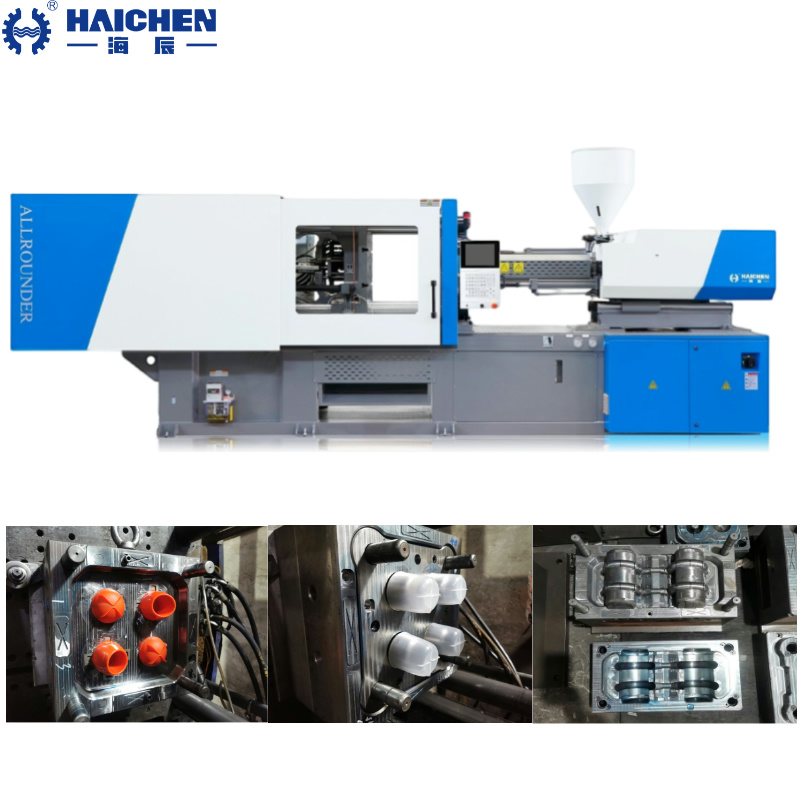
| HCK Model | Clamping Force | Best for | Typical Toy Types | Key Features |
|---|---|---|---|---|
| HCK 110 | 110 tons | Small precision toys | Building blocks, mini figures | High precision, multi-cavity support |
| HCK 150 | 150 tons | Small to medium toys | Action figures, gears | Balanced performance |
| HCK 180 | 180 tons | Medium toys | Toy cars, robots | Good injection speed |
| HCK 230 | 230 tons | Medium to large toys | Dolls, playsets | Larger shot capacity |
| HCK 280 | 280 tons | Large toys | Ride-on toys, large figures | Heavy-duty clamping |
| HCK 360+ | 360+ tons | Outdoor toys | Slides, playhouses | Large platen, high clamping force |
Haichen HCK series plastic toy injection molding machines are suitable for a wide range of products including toys, housewares, chairs, and more. Haichen has rich experience in the toy production process.
All HCK series machines come with:
-
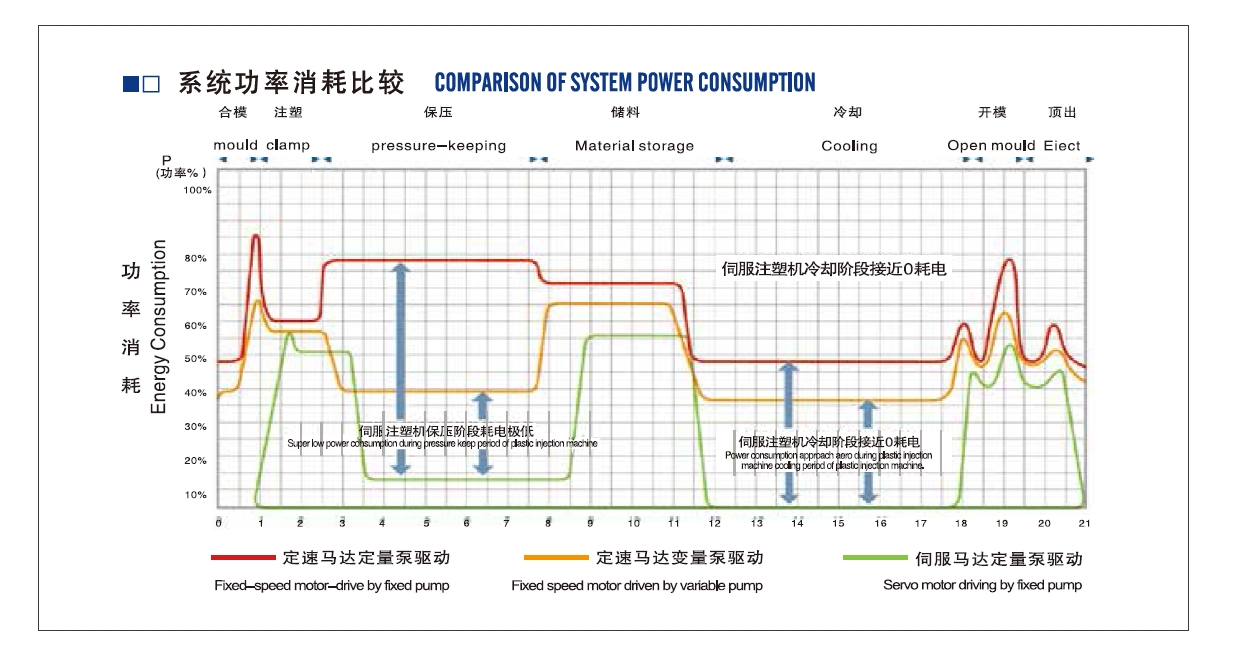
Servo energy saving – reduces electricity costs by 30–50%
-
CE12 robot interface – supports automation integration
-
Multi-stage injection and holding pressure control – for consistent part quality
-
Multi-language control system – supports 21 languages
The injection molding machine for toys clamping force is sufficient between 50T-300T for toy production, and different sizes require different clamping forces. Haichen covers this full range with the HCK series.
Haichen Machinery – your plastic toy injection molding machine partner. From small precision toys to large outdoor playsets, we help you get the right machine for your toy production.
Author: Yang, Senior Engineer, Haichen Machinery


