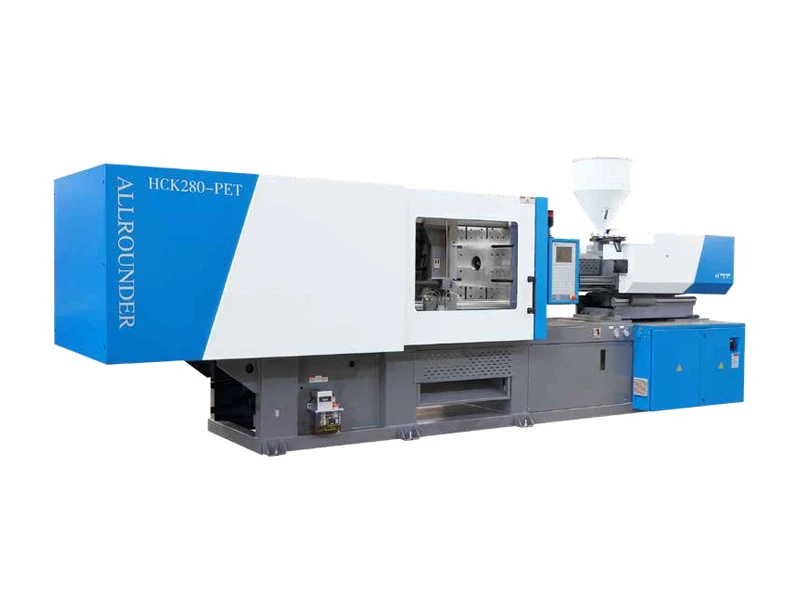
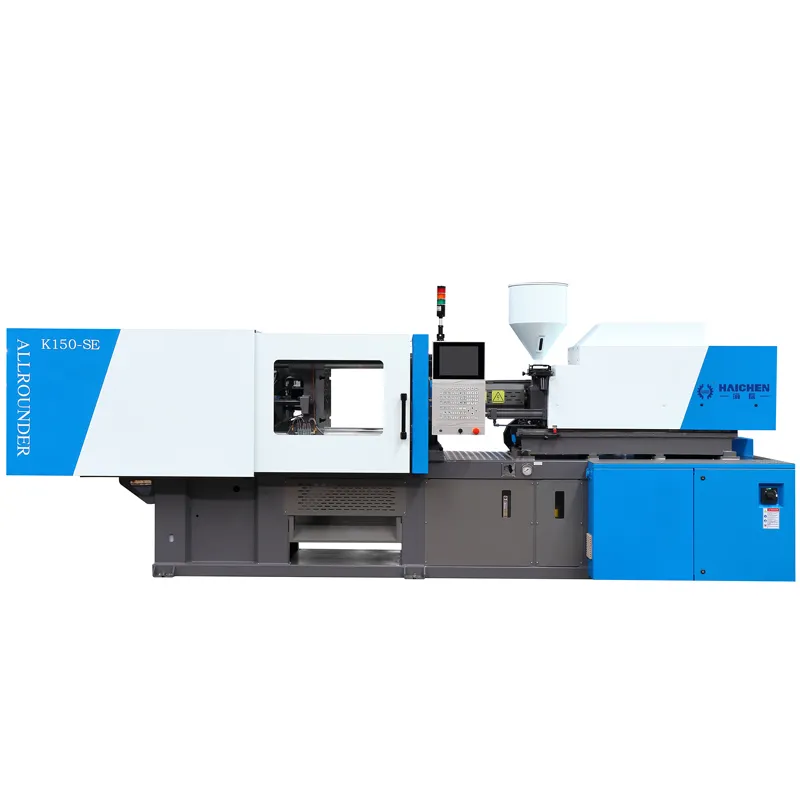
Choosing the right screw matters as much as choosing the right injection molding machine. The screw controls how the machine feeds, melts, mixes, and pushes plastic into the mold.
Therefore, the screw design should match the plastic material, product weight, cycle time, and production target.
PP, PE, and ABS do not behave in exactly the same way during injection molding. PP and PE generally flow easily, while ABS needs more careful heat control and mixing.
So, using one standard screw for every material may work for simple jobs, but it does not always give the best result.
As an injection molding machine manufacturer, we normally check the material, product, shot size, screw diameter, L/D ratio, injection speed, and production target before we recommend a screw.
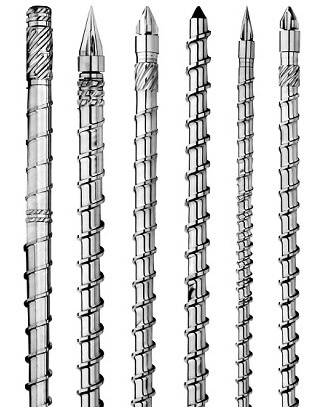
Why Is the Screw Important?
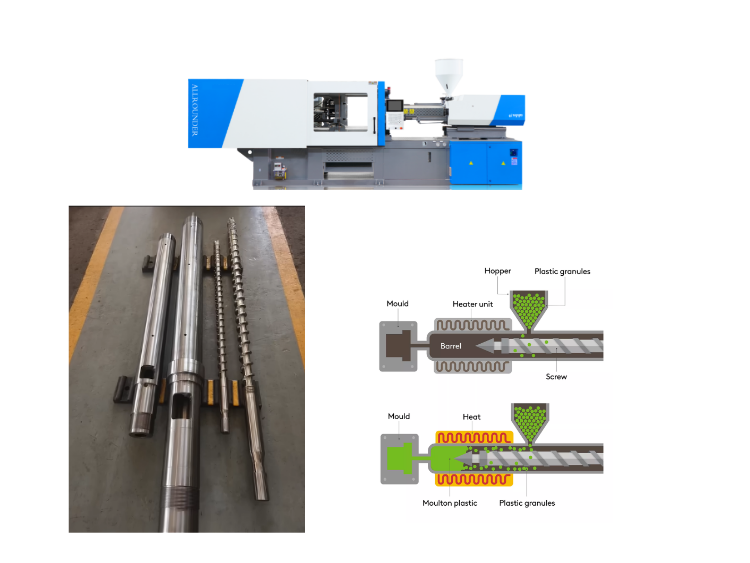
The screw sits inside the barrel and performs several important jobs during every molding cycle.
Melting Plastic
The screw moves plastic pellets from the hopper toward the front of the barrel. At the same time, barrel heat and screw shear help melt the material.
A good screw should create a stable melt without putting unnecessary heat into the plastic.
Mixing Material
The screw also mixes the molten plastic.
This becomes especially important when the material contains:
- Color masterbatch
- Recycled material
- Fillers
- Additives
Good mixing helps maintain more consistent color and material properties from shot to shot.
Feeding Material
The screw must move solid pellets smoothly from the feed throat into the barrel.
If the screw design does not match the material, feeding can become unstable. That can lead to inconsistent plasticizing and shot-to-shot variation.
Controlling Melt Quality
The screw affects melt temperature, mixing, plasticizing time, and melt consistency.
In simple terms, the screw does much more than push plastic forward. It helps prepare the material before injection.
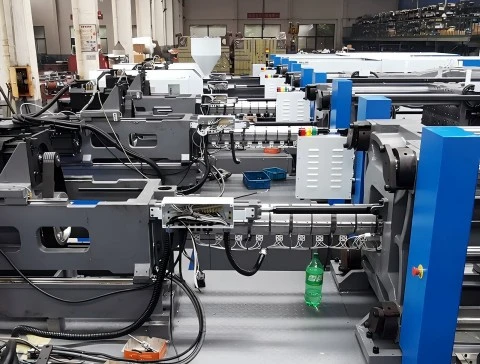
What Is an Injection Molding Machine Screw?
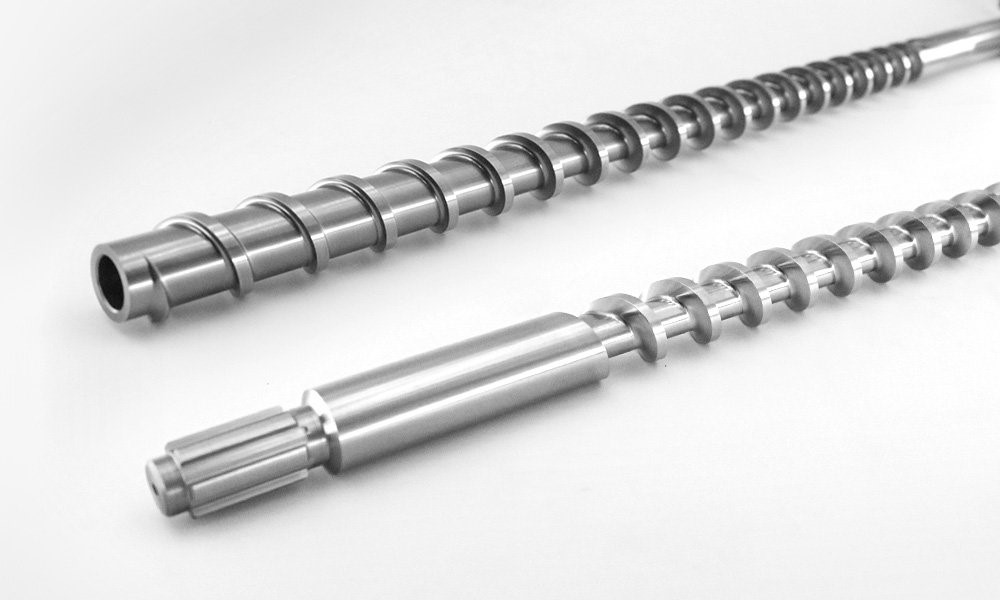
An injection molding screw normally has three main working zones:
- Feed zone
- Compression zone
- Metering zone
Each zone has a different role.
Feed Zone
The feed zone receives solid plastic pellets and moves them forward.
A suitable feed section should provide stable material feeding without unnecessary heat buildup.
Compression Zone
The screw gradually reduces the available space for the plastic as the material moves forward.
This compression helps melt and compact the plastic.
The required compression depends on the material and screw design. Materials with different melting and flow characteristics do not always need the same compression level.
Metering Zone
The metering zone prepares a more uniform melt before injection.
It helps control melt quality and plasticizing consistency.
For this reason, screw geometry matters when you process different materials at different production rates.
How Do PP, PE and ABS Behave Differently?
Material choice has a direct effect on screw selection.
PP
PP has good flow characteristics and works well in many general injection molding applications.
Manufacturers commonly use PP for:
- Containers
- Household products
- Automotive parts
- Caps
- Chairs
- Buckets
PP generally works well with a general-purpose screw. However, the ideal design still depends on the product, grade, filler content, and required cycle time.
PE
Actually PE covers several grades, including HDPE and LDPE.
PE often offers good flow and easy processing. However, different PE grades can have different melt flow behavior.
For example, a thin-wall product and a large thick-wall container may need different processing conditions even when both use PE.
ABS
ABS needs more careful temperature control than many general-purpose materials.
It offers good strength, impact resistance, and surface quality, which makes it common for:
- Housings
- Automotive components
- Consumer products
- Electrical parts
- Appliance components
ABS can also suffer from thermal degradation if the material stays at high temperature for too long.
Why Material Type Affects Screw Choice
PP, PE, and ABS have different melting behavior, flow characteristics, and processing requirements.
Therefore, the screw should match the actual resin rather than simply match the machine tonnage.
That is the key point: choose the screw around the material and application first, then confirm the machine size.
How to Choose a Screw for PP
PP works with many general-purpose injection molding screws. However, product requirements still matter.
Screw Design
For standard PP products, a general-purpose screw can often provide good plasticizing and mixing.
For filled PP or applications with higher output requirements, you may need a different screw design.
Compression Needs
PP usually does not require an extreme compression design for standard molding.
The screw should provide enough compression to melt and mix the material while avoiding excessive shear.
Injection Speed
Thin-wall PP products often need faster injection to fill the mold before the melt cools too much.
For example, thin containers and some packaging products may require higher injection speed than thick-wall household products.
Therefore, screw selection should work together with the machine’s injection system.
Product Type
Consider the product before selecting the screw.
A screw for a 20 g PP cap does not necessarily need the same setup as a screw for a large PP bucket.
Product weight, wall thickness, cycle time, and cavity number all affect the required plasticizing performance.
How to Choose a Screw for PE
PE covers several resin grades, so do not treat all PE materials as exactly the same.
Material Flow
Check the PE grade and its melt flow characteristics.
A material with easier flow may need a different processing setup from a grade designed for thick-wall or high-strength products.
Heat Control
PE generally processes within a different temperature range from ABS, so the screw and barrel settings should match the selected grade.
Stable temperature control helps maintain consistent melt quality.
Screw Design
A general-purpose screw can work well for many PE applications.
However, high-output applications, special PE grades, and filled materials may require a more suitable screw geometry.
Product Type
Large containers, pipes, caps, films, and other PE products have different production requirements.
For this reason, look at the complete molding process instead of selecting a screw from material name alone.
How to Choose a Screw for ABS
ABS requires more attention to heat and residence time.
Heat Sensitivity
ABS can degrade when excessive heat or long residence time affects the material.
Therefore, avoid unnecessary heat and choose a screw that can plasticize the required shot efficiently.
Mixing
Good mixing helps maintain consistent melt quality, especially when you use color masterbatch or other additives.
However, excessive shear can also create unnecessary heat.
The goal is not maximum mixing. The goal is stable and controlled mixing.
Residence Time
Residence time means how long the plastic stays inside the heated barrel before injection.
If the machine has a much larger injection unit than the actual shot requirement, the material may stay in the barrel longer than necessary.
For ABS, this point deserves extra attention.
Screw Design
A suitable screw should provide stable plasticizing and mixing without excessive shear.
For demanding ABS applications, we recommend checking the resin supplier’s processing guide together with the machine and screw specifications.
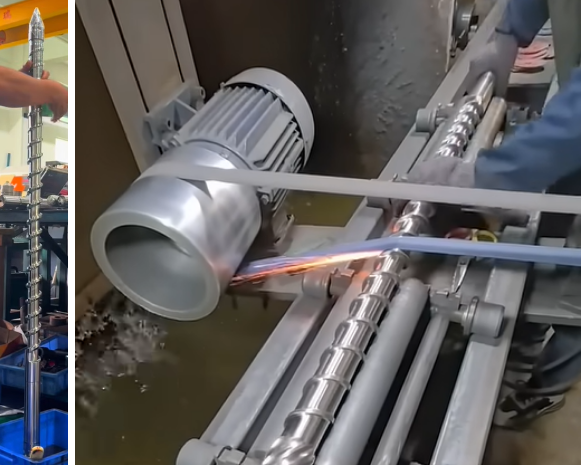
How to Choose the Right Screw Diameter
Screw diameter affects injection volume, plasticizing capacity, injection performance, and machine selection.
Product Weight
Start with the required shot weight.
For example, a mold that produces four 50 g parts already needs 200 g of product material before you add the runner.
So, do not select the screw from one part’s weight alone.
Shot Size
Calculate the complete shot requirement:
Total Shot Weight = Part Weight × Cavity Number + Runner Weight
Then compare the required shot with the machine’s rated shot capacity.
The machine specification may state shot capacity in grams, cubic centimeters, or another unit.
Check the reference material because many manufacturers use PS as the reference for gram-based shot capacity.
Injection Speed
Screw diameter also affects the injection system’s available flow area and injection performance.
For thin-wall products or high-speed molding, check the required injection speed and injection rate together with the screw diameter.
Machine Size
The screw diameter must match the machine barrel and injection unit.
You cannot simply install any diameter screw on any injection molding machine.
The machine manufacturer normally designs the screw, barrel, injection unit, and drive system as one system.
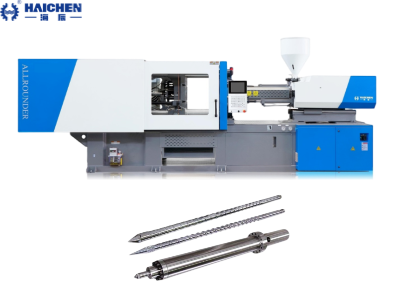
How to Choose Screw Length and L/D Ratio
Screw length affects how long the material travels through the barrel.
Manufacturers often describe screw geometry with the L/D ratio, which means screw length divided by screw diameter.
Screw Length
A longer screw gives the material more distance for feeding, melting, mixing, and metering.
However, longer does not automatically mean better.
The correct length depends on the material, screw design, output requirement, and application.
L/D Ratio
For example, if a screw has:
- Diameter: 50 mm
- Length: 1,000 mm
Then:
L/D = 1,000 ÷ 50 = 20
The L/D ratio helps describe the screw’s overall geometry.
Plasticizing Needs
Different applications need different plasticizing performance.
High-output production may require more plasticizing capacity than low-volume molding.
Likewise, filled or special materials may require a screw design that differs from standard commodity plastics.
Material Residence Time
Screw length also affects material travel time.
For materials such as ABS that need careful heat control, the machine should plasticize the required shot efficiently without creating unnecessary residence time.
So, always look at L/D together with cycle time and shot size.
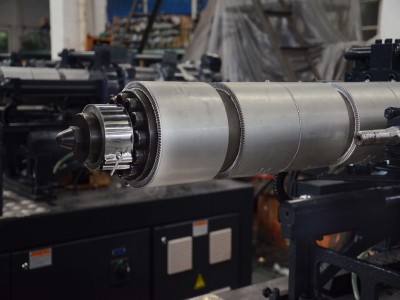
How Screw Design Affects Product Quality
A suitable screw does not only improve plasticizing. It can also help stabilize the molding process.
Melt Quality
Stable melting and mixing help create a more uniform melt.
This can improve shot-to-shot consistency and reduce process variation.
Color Mixing
A screw with suitable mixing performance helps distribute masterbatch and additives more evenly.
Poor mixing can create color variation or visible streaks.
Surface Quality
Melt temperature and material mixing can affect the final surface.
If the material does not plasticize consistently, the product may show flow marks, color differences, or other appearance problems.
Short Shot and Other Problems
Screw selection alone does not cause every molding defect.
For example, short shots can result from:
- Insufficient injection volume
- Low injection speed
- Low melt temperature
- Poor venting
- Incorrect mold design
- Insufficient injection pressure
Therefore, do not replace the screw before checking the complete molding process.
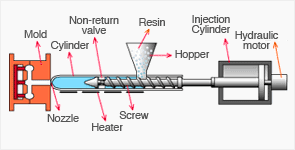
Common Screw Selection Mistakes
Using One Screw for Every Material
A general-purpose screw can handle many common applications, but one design does not suit every material and product.
PP, PE, and ABS have different processing needs.
Choosing Only by Screw Diameter
A larger screw does not automatically give better results.
You also need to check screw design, L/D ratio, shot size, injection speed, and material.
Ignoring Shot Size
If the required shot uses only a small part of the injection unit’s capacity, the material may stay in the barrel too long.
On the other hand, a shot that approaches the machine’s maximum capacity leaves less process margin.
Ignoring Material Type
Always identify the actual resin grade before selecting the screw.
For example, HDPE, LDPE, PP, ABS, glass-filled materials, and flame-retardant grades can have very different processing requirements.
How We Match the Screw to a Customer’s Product
As an injection molding machine manufacturer, we do not select a screw from product name alone.
We normally ask for several key details.
Product
First, we check what the customer wants to produce.
A cap, chair, automotive part, container, or precision component can have very different molding requirements.
Material
Next, we check the exact material and grade.
If possible, we also review the resin supplier’s processing data.
Weight
We check the finished part weight, cavity number, and runner weight to calculate the shot requirement.
Cycle Time
Cycle time tells us how quickly the machine needs to plasticize and inject each shot.
A short cycle may require higher plasticizing performance.
Required Output
We also check the customer’s target production volume.
A machine for a small production line does not need the same setup as a high-output factory running continuously.
Machine Model
Finally, we check the complete injection unit.
We match:
Screw + Barrel + Injection Unit + Servo System + Machine Control
This approach helps us choose a practical screw instead of simply choosing the biggest one.
Screw Selection Checklist
Before you choose an injection molding machine screw, check:
| Item | What to Check |
|---|---|
| Material | PP, PE, ABS or other resin |
| Material grade | Exact resin grade and additives |
| Product weight | Weight of one finished part |
| Shot size | Complete material requirement per cycle |
| Screw diameter | Match the required shot and injection performance |
| L/D ratio | Match material and plasticizing needs |
| Injection speed | Match product wall thickness and cycle |
| Production target | Required output per hour or day |
| Machine model | Match screw, barrel, and injection unit |
| Residence time | Avoid unnecessary material hold-up |
Choosing an injection molding machine screw for PP, PE, or ABS requires more than checking screw diameter.
First, identify the material and product. Then calculate the shot size and check the required injection speed and plasticizing performance. After that, match the screw diameter, L/D ratio, barrel, and injection unit with the machine.
PP and PE often work well with general-purpose screw designs, while ABS needs closer attention to heat control and residence time. Still, the exact choice depends on the resin grade and production conditions.
As an injection molding machine manufacturer, we recommend looking at the whole machine system, not the screw alone.
The right screw should give you stable plasticizing, consistent melt quality, suitable injection performance, and reliable production.