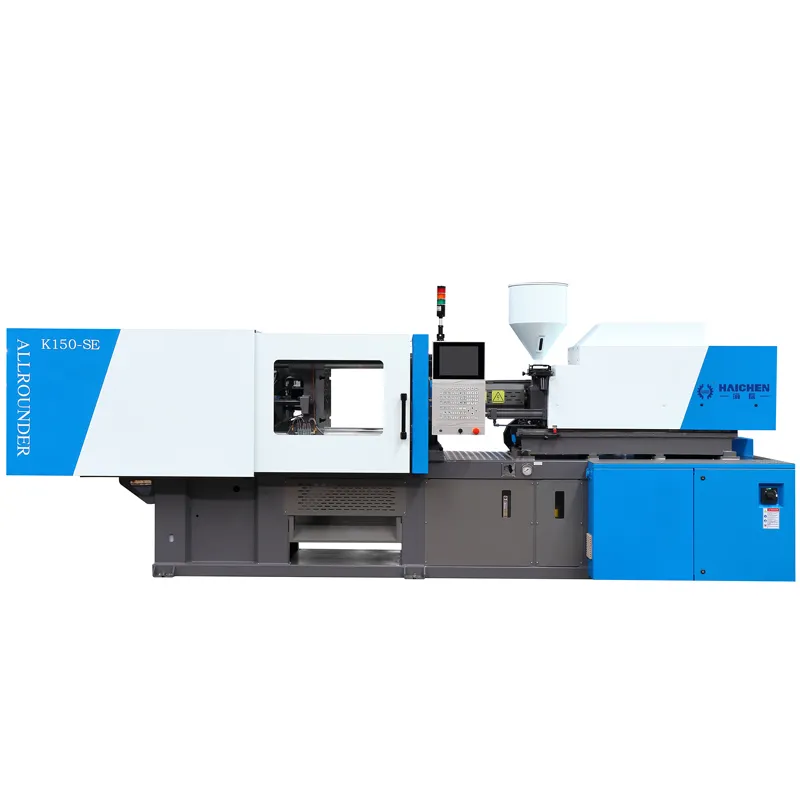
When you choose an injection molding machine, clamping force is not the only specification you need to check. Injection molding machine tie-bar spacing also matters because the mold must physically enter the space between the tie bars.
A machine may have enough clamping force for your mold, but that does not mean the mold will fit. If the mold is too wide or too high for the tie-bar spacing, installation becomes difficult or impossible.
For this reason, we recommend checking tie-bar spacing together with mold size, mold height, opening stroke, ejector system, and clamping force before you choose a machine.
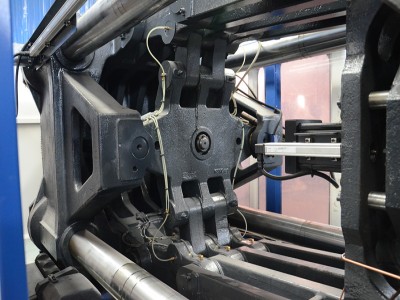
What Is Tie-Bar Spacing?
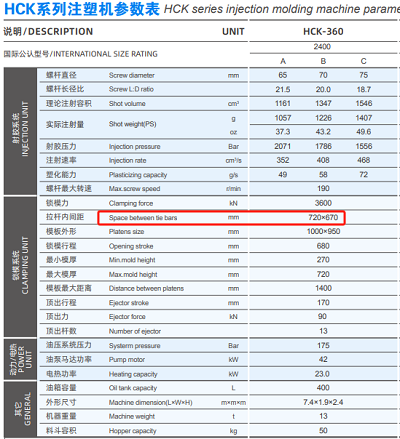
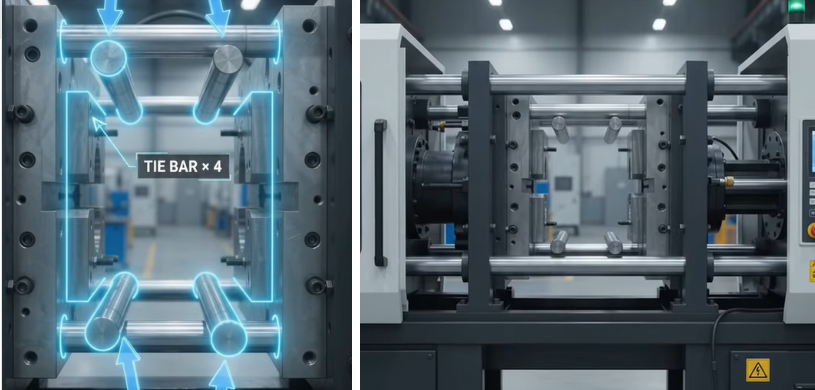
Tie-bar spacing means the clear distance between the machine’s tie bars. It defines the working space where the mold enters and mounts on the platens.
For example, if a machine has a tie-bar spacing of 560 × 560 mm, the mold must fit within this available space.
How to Measure Tie-Bar Spacing
You can measure tie-bar spacing from the inside edge of one tie bar to the inside edge of the opposite tie bar.
Most injection molding machines list the specification in two directions:
- Horizontal tie-bar spacing
- Vertical tie-bar spacing
For example:
Tie-bar spacing: 560 × 560 mm
This means the mold needs to fit within the 560 mm horizontal and 560 mm vertical space.
Always check the machine manufacturer’s actual specification.
Different manufacturers may use slightly different ways to list dimensions, so don’t rely on a rough estimate.
Tie-Bar Spacing vs. Mold Size
Tie-bar spacing and mold size are related, but they are not the same thing.
Mold size describes the physical dimensions of the mold base.
Tie-bar spacing describes the clear installation space between the machine’s tie bars.
A mold can have a width smaller than the platen size but still fail to enter the machine if the tie-bar spacing is too small.
So, when checking a mold, look at the clear space between the tie bars, not only the platen dimensions.
Why Does Tie-Bar Spacing Matter?
Tie-bar spacing directly affects whether you can install a mold on the machine.
Mold Installation
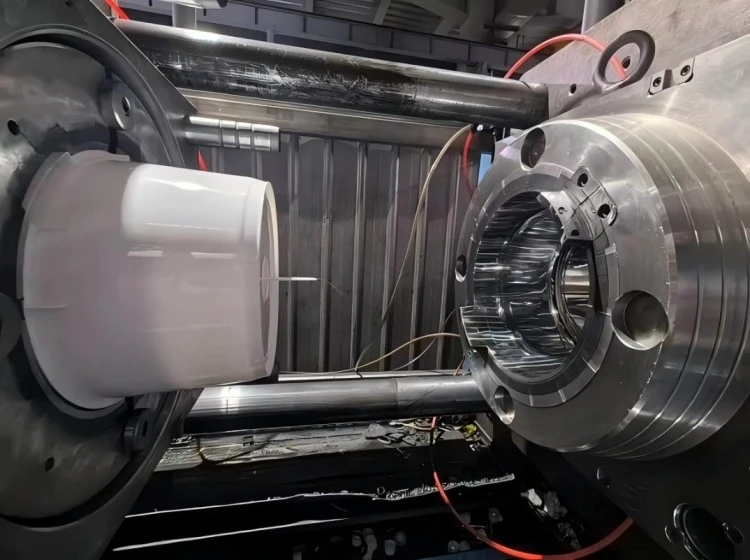
The mold must pass through the tie bars before you can mount it on the platens.
If the mold exceeds the available tie-bar space, you cannot install it normally. In other words, the machine may have enough tonnage, but the mold simply will not fit.
Mold Width and Height
The mold width and height must match the available tie-bar spacing.
For example, if your mold measures 600 mm wide but the machine has only 560 mm of horizontal tie-bar spacing, the mold cannot enter the clamping unit.
Therefore, check both mold dimensions instead of checking only one side.
Mold Opening Space
Tie-bar spacing only checks the mold’s entry space. You also need enough opening space for the mold to open and remove the finished parts.
This means tie-bar spacing cannot replace the check for:
- Mold height
- Maximum mold opening
- Opening stroke
- Ejector stroke
Each specification solves a different part of the mold-machine match.
Product and Mold Layout
A larger mold often gives the mold designer more freedom to arrange cavities, runners, cooling channels, and other components.
However, you should not choose a machine only because it has a larger tie-bar spacing.
The better approach is simple: start with the actual mold size and then choose a machine that gives enough working space.
How to Check Tie-Bar Spacing for a Mold
Before you select an injection molding machine, check the following mold information.
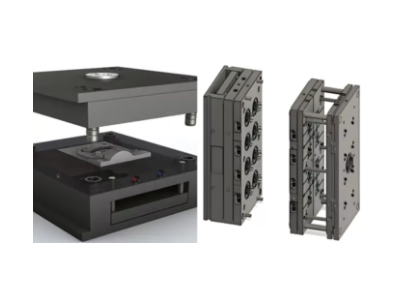
Mold Width
Measure the maximum width of the mold base.
Compare this dimension with the horizontal tie-bar spacing.
For example:
- Mold width: 500 mm
- Machine tie-bar spacing: 560 mm
The mold fits within the horizontal space.
However, don’t stop here. You still need to check the other dimensions.
Mold Height
Measure the maximum height of the mold base.
Then compare it with the vertical tie-bar spacing.
For example:
- Mold height: 520 mm
- Machine tie-bar spacing: 560 mm
The mold has enough entry space in this direction.
Mold Base
Check the complete mold base, not just the main cavity plate.
Some molds have larger plates, support structures, or other parts that increase the overall size.
We recommend using the maximum outside dimensions of the complete mold when you check machine compatibility.
Mold Locating Ring
The locating ring connects the mold position with the injection nozzle area.
Check its diameter and position against the machine’s platen and nozzle center.
A mold may fit between the tie bars but still need an adjustment if the locating ring does not match the machine setup.
Ejector Connection
The mold also needs a suitable connection with the machine ejector system.
Check:
- Ejector hole position
- Ejector stroke
- Ejector force
- Ejector rod or connection dimensions
This check matters especially for molds with special ejection designs.
Tie-Bar Spacing vs. Clamping Force
Tie-bar spacing and clamping force describe two different machine specifications.
What Each Specification Means
Tie-bar spacing tells you whether the mold can enter the machine’s clamping area.
Clamping force tells you how strongly the machine can close and hold the mold during injection.
For example, a machine may have:
- Clamping force: 250 tons
- Tie-bar spacing: 520 × 520 mm
The 250-ton specification does not tell you whether a 550 mm wide mold can fit.
Likewise, a large tie-bar spacing does not tell you whether the machine has enough clamping force for the mold.
Why Both Must Match
A proper machine selection needs both specifications.
The mold must:
- Fit between the tie bars.
- Match the required clamping force.
- Fit within the mold height range.
- Work with the machine opening stroke.
- Match the ejector system.
- Match the injection unit.
This is why we never recommend choosing an injection molding machine by tonnage alone.
Common Selection Mistakes
One common mistake is to look only at 250T, 350T, or 500T and assume the mold will fit.
Another mistake is to check platen size but ignore the actual tie-bar spacing.
A third mistake is to check tie-bar spacing but forget mold height, opening stroke, or ejection requirements.
The machine and mold need to work as one system.
How to Choose the Right Tie-Bar Spacing
Start With the Mold Size
First, collect the complete mold dimensions:
- Mold width
- Mold height
- Mold thickness
- Mold weight
- Locating ring size
- Ejector dimensions
Then compare these dimensions with the machine specifications.
Check Machine Specifications
For each possible machine, check:
- Tie-bar spacing
- Platen size
- Minimum mold height
- Maximum mold height
- Maximum mold opening
- Opening stroke
- Ejector stroke
- Ejector force
- Clamping force
This gives you a much clearer picture than looking at tonnage alone.
Leave Enough Space for Installation
The mold should not sit right at the limit of the tie-bar spacing.
Give yourself practical installation space so operators can load and remove the mold without a headache.
For example, if the mold width is very close to the machine’s available tie-bar space, consider a machine with more space.
A little extra room can make mold changes much easier.
Check the Complete Mold-Machine Match
Tie-bar spacing is only one part of the selection process.
As a machine manufacturer, we normally check the complete match:
Mold → Clamping Unit → Injection Unit → Ejection System → Production Requirements
This approach reduces the risk of choosing a machine that looks correct on paper but causes problems during actual production.
What Happens When Tie-Bar Spacing Is Too Small?
Mold Cannot Enter
This is the most direct problem.
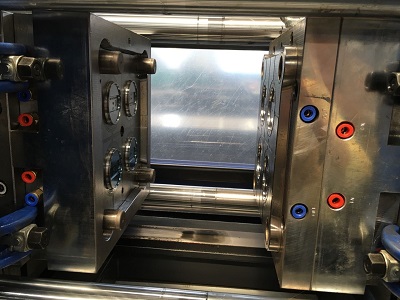
If the mold is wider or higher than the available tie-bar spacing, the mold cannot pass through the tie bars.
At that point, the machine tonnage does not matter. You need another machine or a different mold design.
Difficult Mold Installation
A mold that barely fits can also create installation problems.
Operators may have less working space when they load, position, and remove the mold.
That can make mold changes slower and increase the risk of damage.
Limited Mold Options
A machine with small tie-bar spacing limits the range of molds you can use.
This becomes important for factories that run different products on the same machine.
A little more working space can give you more flexibility later.
Production Problems
Poor mold-machine matching can affect more than installation.
For example, the wrong machine may limit mold opening, ejection, or part removal.
As a result, the machine may not support the production process you planned.
Tie-Bar Spacing Example From a Real Mold
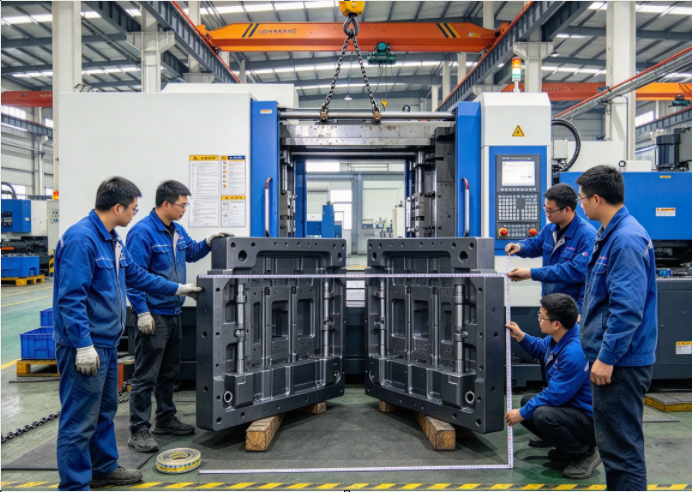
Let’s look at a simple example from machine selection.
Mold Dimensions
Suppose a customer has a mold with:
- Mold width: 500 mm
- Mold height: 480 mm
- Mold thickness: 300 mm
- Mold weight: 1,200 kg
The customer wants to use a 250-ton injection molding machine.
Required Machine Space
The machine needs enough tie-bar spacing for the 500 × 480 mm mold.
Suppose Machine A has:
Tie-bar spacing: 460 × 460 mm
The mold cannot enter this machine.
Now suppose Machine B has:
Tie-bar spacing: 560 × 560 mm
The mold fits within the available tie-bar space.
Machine Selection
Machine B looks suitable from the tie-bar spacing point of view.
However, we still need to check:
- 250-ton clamping force
- Mold thickness range
- Opening stroke
- Maximum opening
- Ejector stroke
- Ejector force
- Injection unit
- Shot capacity
- Nozzle position
Final Mold-Machine Match
If all these specifications meet the mold and production requirements, Machine B becomes a suitable choice.
This example shows an important point: tie-bar spacing helps you confirm physical fit, but it does not complete the machine selection.
Tie-Bar Spacing Checklist for Machine Buyers
Before ordering an injection molding machine, check these points:
| Item | What to Check |
|---|---|
| Mold size | Width × height |
| Tie-bar spacing | Horizontal × vertical |
| Clamping force | Required machine tonnage |
| Mold height | Minimum and maximum mold height |
| Opening stroke | Enough space for mold opening |
| Ejector system | Stroke, force, and connection |
| Locating ring | Size and position |
| Mold weight | Within machine limits |
| Injection unit | Shot capacity and injection requirements |
| Nozzle | Position and mold compatibility |