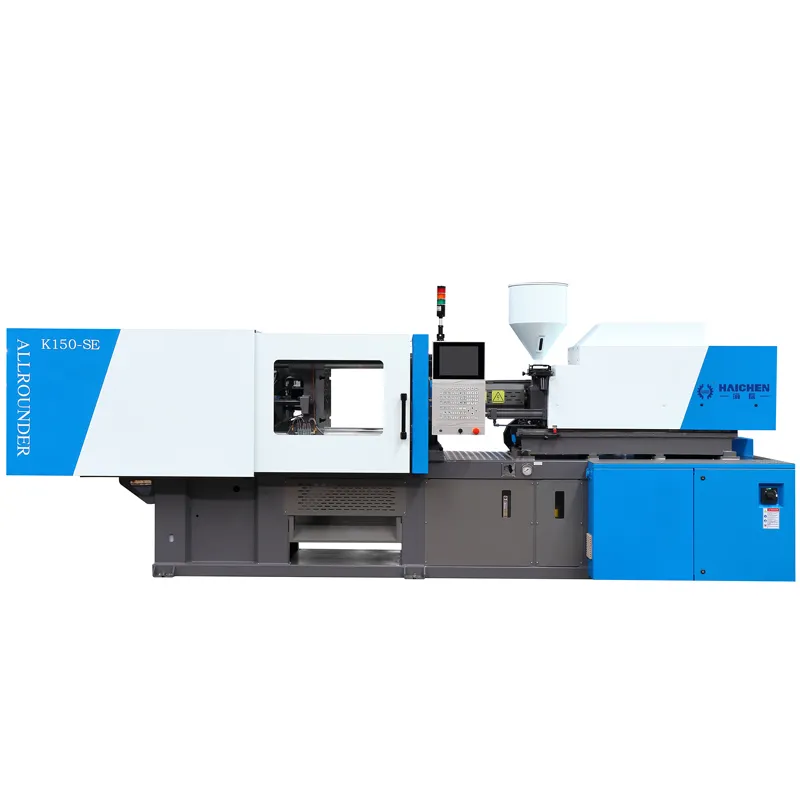
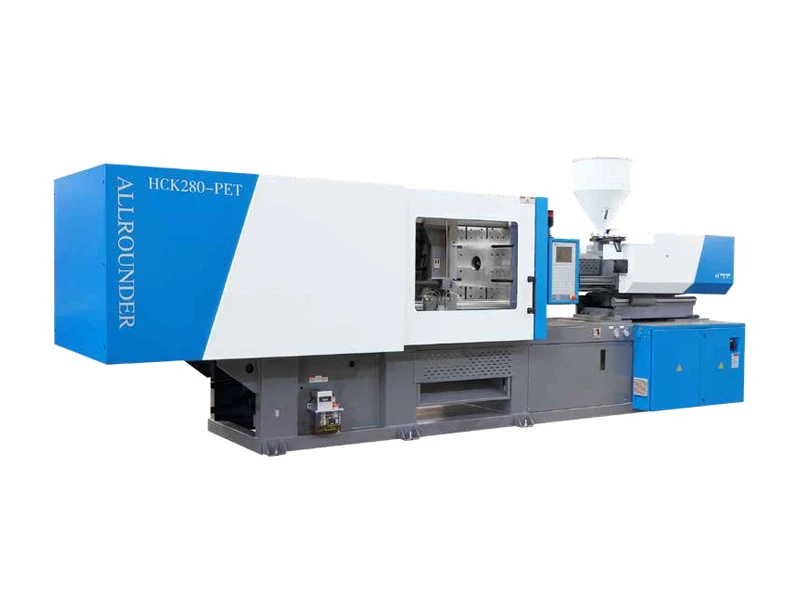
A medical container injection molding machine produces plastic containers for pharmaceutical, laboratory, diagnostic, and healthcare applications. These products may look simple, but the molding process needs stable control. Small changes in part weight, wall thickness, mold temperature, or filling can affect the final container.
For that reason, medical container production needs more than a machine with enough clamping force. The mold, material, cooling system, automation, and production environment also affect product quality. In addition, the machine needs to repeat the same movement and process settings from cycle to cycle.
This guide looks at the main points that buyers should check before choosing a medical injection molding machine. It covers container types, PP and HDPE materials, mold cavities, clamping force, injection speed, cleanroom production, automation, common defects, and total machine cost.
What Is a Medical Container Injection Molding Machine?
A medical container injection molding machine melts thermoplastic resin and injects it into a mold to form a finished part. After filling, the machine holds pressure, cools the part, opens the mold, and ejects the product.
The basic process is the same as other plastic injection molding work. However, medical packaging can need tighter control of process changes and product handling.
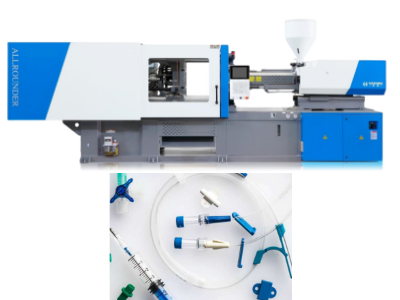
A typical system can include:
- Injection molding machine
- Plastic mold
- Material dryer or loader when required
- Chiller
- Mold temperature controller
- Robot or automatic take-out system
- Inspection equipment
- Conveyor
- Packaging equipment
The machine should match the mold from the start. Therefore, buyers should check the product drawing and mold data before they choose the machine size.
What Medical Containers Can Be Produced?
Medical container injection molding covers many small and medium plastic products.
Common examples include:
- Pharmaceutical bottles
- Medicine containers
- Medical specimen containers
- Laboratory sample containers
- Diagnostic containers
- Medical cups
- Plastic vials
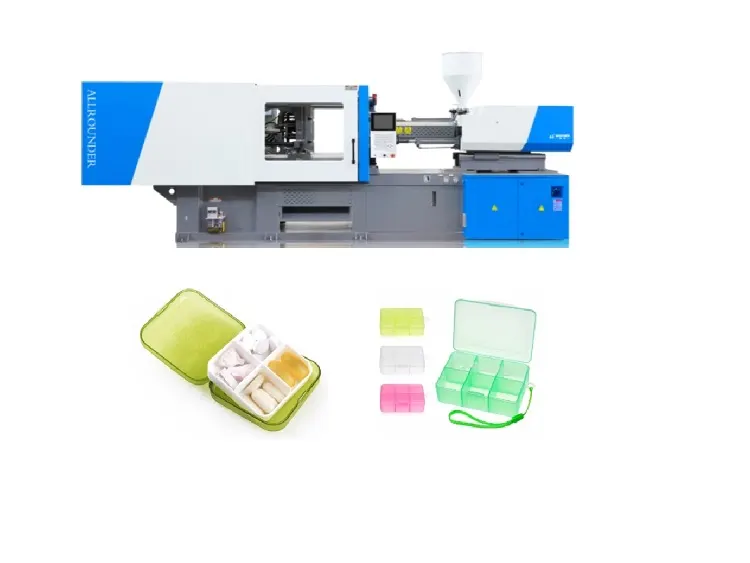
- Healthcare packaging parts
The shape of the container changes the molding demand. For example, a short and thick container may fill easily, while a thin-wall container with a long flow path needs faster and more controlled filling.
Also, the neck area can need high dimensional accuracy when the container uses a cap, screw closure, snap fit, or other sealing part.
For this reason, the mold design and the injection unit need to work together.
Why Medical Plastic Container Manufacturing Needs Better Process Control
Medical plastic container manufacturing often uses large production volumes. As a result, a small problem can become a large amount of scrap when the machine runs for many hours.
A stable process helps control:
Part weight: The machine should deliver a repeatable shot.
Dimensions: The mold should produce parts within the required size range.
Surface quality: The container should not show burn marks, black specks, excess flash, or other visible defects.
Wall thickness: Filling and cooling should support even material distribution.
Clean handling: The production setup should limit unwanted contact and contamination when the product requires it.
Therefore, machine repeatability matters. At the same time, the machine cannot solve every quality problem. Mold balance, venting, cooling, resin quality, and production control also play a major role.
How Does Medical Container Injection Molding Work?
The process starts with resin preparation and ends with inspection and packaging.
Material Preparation for Medical Container Injection Molding
PP and HDPE are widely used thermoplastics for many container applications. The final material should match the container’s strength, flexibility, chemical resistance, appearance, and regulatory needs.
PP is often used when the design needs a light and rigid container or cap. HDPE is useful when a container needs good impact resistance and chemical resistance.
Material handling still matters even when the resin does not need the same drying process as moisture-sensitive materials.
In practice, manufacturers should control:
- Resin identification
- Material storage
- Lot information
- Clean handling
- Mixing rules
- Regrind use
- Color and additive control
For materials that do require drying, the dryer should match the resin supplier’s data. Do not use one drying setting for every plastic.
Plasticizing in a Medical Injection Molding Machine
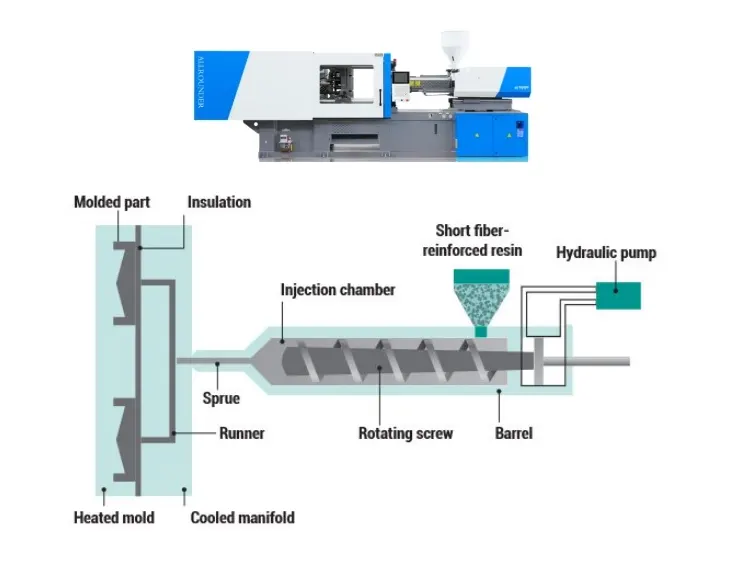
The injection unit moves plastic pellets from the hopper into the heated barrel. The screw then melts and meters the material for the next shot.
The screw and barrel affect how the plastic melts and moves. Therefore, buyers should check more than the injection volume.
Important points include:
- Screw diameter
- Screw design
- Injection volume
- Plasticizing capacity
- Injection pressure
- Screw speed
- Material compatibility
A stable melt helps the machine fill the mold in a repeatable way. On the other hand, an unsuitable screw can create poor mixing, unstable plasticizing, or long residence time.
For projects that use different resins, the supplier should check the screw and barrel against the actual material list.
Injection and Mold Filling for Medical Containers
During injection, the screw moves forward and pushes the melt into the cavity.
For thin-wall containers, the filling step can be difficult. The melt may lose heat while it travels through a long or narrow cavity. Therefore, the injection system needs enough speed and pressure control for the mold design.
The process may use several injection stages. For example, the machine can fill the first part of the cavity at one speed and then change speed near the end of filling.
This helps the operator control:
- Flow speed
- Pressure
- Shear
- Air movement
- Filling balance
- End-of-fill behavior
However, high injection speed alone does not guarantee a good part. Gate size, runner layout, venting, material flow, and mold temperature also matter.
Cooling, Ejection, and Cycle Time
After filling and holding pressure, the container needs to cool before ejection.
Cooling often takes a large share of the cycle. Therefore, the mold cooling design can have a direct effect on production output.
A good cooling system helps remove heat in a more even way. As a result, the product can reach ejection temperature with less shape change.
The machine also needs stable mold opening and ejection movement. This is especially useful when the product is thin or when automatic part removal is part of the line.
Cycle time includes:
- Mold closing
- Injection
- Holding
- Cooling
- Mold opening
- Ejection
- Part removal
Reducing one stage can improve output. Still, the shortest cycle is not always the right cycle. The product must remain stable.
Inspection and Packaging in a Medical Production Line
After molding, the parts may pass through several checks.
Depending on the product, manufacturers may inspect:
- Product weight
- Critical dimensions
- Surface defects
- Flash
- Wall thickness
- Leakage
- Closure fit
- Visual quality
Automated camera inspection can help high-volume production. Likewise, automatic part handling can reduce manual contact.
Packaging also needs attention. If the product requires controlled cleanliness, the area after molding should support the required handling and packing process.
How to Choose a Medical Container Injection Molding Machine
The machine selection should start with the container and the mold.
Before asking for a quotation, prepare:
- Product drawing
- Product weight
- Plastic material
- Mold cavity number
- Mold dimensions
- Target cycle time
- Annual production volume
- Automation needs
Then the machine supplier can match the injection unit and clamping unit to the actual job.
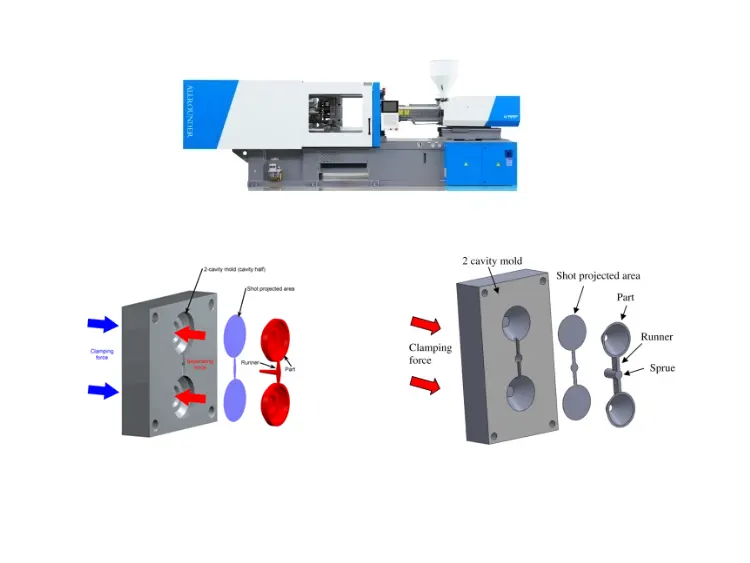
Clamping Force for Medical Container Molds
Clamping force keeps the mold closed during injection.
A common starting calculation is:
Required clamping force = projected area × estimated molding pressure
The final machine size also depends on material, cavity count, mold design, and the safety margin used by the machine supplier.
For example, a small container can still need a large machine when the mold has many cavities. The total projected area grows as the number of cavities grows.
Therefore, buyers should not choose a machine only from the product name.
The correct machine may change when the same container moves from:
2 cavities → 4 cavities → 8 cavities → 16 cavities
The machine must also have enough mold space. Check the tie-bar distance, mold height, platen size, opening stroke, and ejector stroke before purchase.
Injection Speed for Thin-Wall Medical Containers
Thin-wall medical packaging can need a fast and controlled fill.
If the melt cools too much before the cavity fills, the machine may produce a short shot or a visible weld line. On the other hand, an overly aggressive setting may increase shear or flash.
Therefore, the machine should offer enough injection speed together with good speed and pressure control.
A high-speed molding system is useful when:
- The container wall is thin
- The flow path is long
- The mold has many cavities
- The target cycle is short
- Production volume is high
Still, the final injection profile should come from mold trials.
Screw and Injection Unit Selection
The injection unit must match the shot size and resin.
A good starting check includes:
Shot size: The available shot should cover the total part and runner weight.
Screw diameter: The screw should suit the required shot range and plasticizing demand.
Plasticizing capacity: The unit should melt enough material within the cycle.
Screw design: The screw should work well with the selected material.
Injection pressure: The unit should provide enough pressure for the mold.
A machine that is much larger than needed may add cost without improving the process. Likewise, a unit that is too small can limit production output.
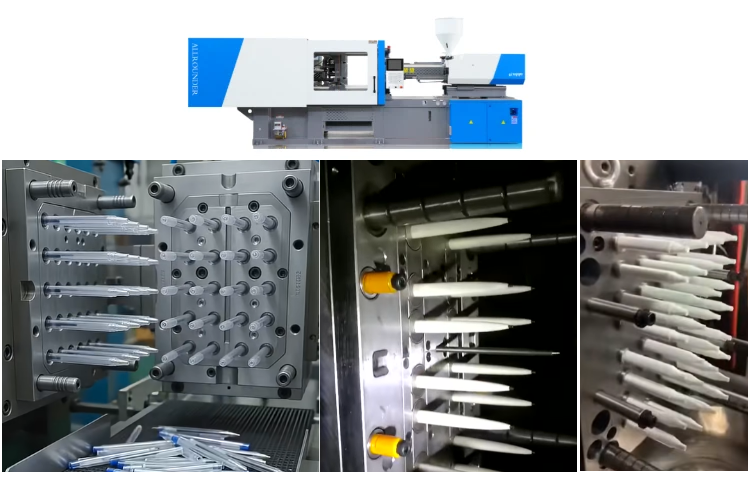
Choosing a Multi-Cavity Injection Molding Machine
Multi-cavity molds can raise output because the machine makes several parts during each cycle.
For example:
| Cavities | Parts per Cycle |
|---|---|
| 1 | 1 |
| 2 | 2 |
| 4 | 4 |
| 8 | 8 |
| 16 | 16 |
| 32 | 32 |
However, more cavities also increase mold cost and machine demand.
A high-cavity mold needs good cavity balance, stable temperature control, reliable filling, and enough injection capacity.
Therefore, the right number of cavities depends on annual production volume, target cycle time, machine size, and mold budget.
Cleanroom Injection Molding Requirements
Cleanroom injection molding may be used when a product or customer requirement calls for controlled air and contamination conditions.
However, not every medical container needs the same cleanroom level.
The required environment depends on the product, process, contamination risk, customer specification, and applicable rules.
When controlled production is needed, the machine should fit the whole room and process flow.
Manufacturers should consider:
- Machine cleanliness
- Lubricant control
- Material transfer
- Automated part removal
- Operator movement
- Product transfer
- Packaging
- Cleaning procedures
Automation can help reduce unnecessary manual contact. At the same time, the production team needs a clear process for material handling and product packing.
PP vs HDPE for Medical Container Injection Molding
PP and HDPE can both work well for container production. Still, they have different material properties.
| Factor | PP | HDPE |
|---|---|---|
| Chemical resistance | High | High |
| Rigidity | Good to high | Good |
| Impact resistance | Good | High |
| Transparency | Limited | Limited |
| Common uses | Containers, caps, healthcare packaging | Bottles, pharmaceutical containers, sample packaging |
| Processing | Injection molding | Injection molding |
PP can suit containers that need low weight, good rigidity, or some flexibility.
HDPE can be useful for bottles and containers that need good toughness and chemical resistance.
The final resin choice should consider:
- Chemical compatibility
- Product strength
- Impact needs
- Closure design
- Wall thickness
- Appearance
- Regulatory requirements
- Customer requirements
Therefore, the machine supplier should know the exact resin before selecting the screw and injection unit.
How to Improve Medical Container Injection Molding Efficiency
A well-matched machine is the starting point. After that, manufacturers can improve the full production line.
Multi-Cavity Mold Design
A multi-cavity mold can raise output without adding another machine.
For example, if a mold changes from 4 cavities to 8 cavities and the cycle stays the same, theoretical parts per cycle double.
However, the mold also becomes more complex. Therefore, cavity balance and cooling design become more important.
Cycle Time and Cooling Control
Cycle time affects the number of parts made each day.
Manufacturers can review:
- Injection time
- Holding time
- Cooling time
- Mold opening
- Part removal
Cooling often offers a useful area for improvement.
If the mold cools unevenly, the operator may need extra cooling time to control warpage. A better cooling layout can therefore help both quality and output.
Automation for Medical Container Production Lines
Automation can include:
- Robot take-out
- Conveyor transfer
- Automatic inspection
- Automatic counting
- Packing equipment
A robot can remove parts from the mold and place them into a controlled transfer path.
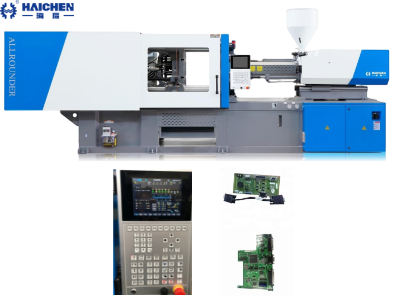
Haichen’s oil-electric hybrid machine includes a manipulator control interface, so it can connect with an automated part-removal system when the project needs it.
Process Monitoring and Scrap Reduction
Stable molding depends on stable process data.
Useful values to watch include:
- Injection pressure
- Injection position
- Cycle time
- Barrel temperature
- Mold temperature
- Part weight
If the machine starts to show a change, the operator can check the cause before a large batch becomes scrap.
Therefore, process monitoring can support both quality control and cost control.
Common Medical Container Injection Molding Problems
A useful troubleshooting method starts with the defect and then checks the machine, material, mold, and process.
Flash
Problem: Thin plastic appears outside the parting line.
Possible causes: Excess pressure, low mold strength, mold wear, or poor mold fit.
Solution: Check the mold, clamping force, injection pressure, and holding pressure. Then confirm the machine and mold work together correctly.
Short Shot
Problem: The cavity does not fill completely.
Possible causes: Low melt temperature, low injection speed, low injection pressure, poor venting, or a restricted gate.
Solution: Check the filling path first. Then review the injection profile, material temperature, and venting.
Warpage
Problem: The container bends or changes shape after molding.
Possible causes: Uneven cooling, uneven wall thickness, poor packing, or high internal stress.
Solution: Check cooling balance, mold temperature, packing conditions, and product design.
Uneven Wall Thickness
Problem: The container wall is thicker in one area and thinner in another.
Possible causes: Poor flow balance, gate position, mold design, or product geometry.
Solution: Review the gate, runner, cavity balance, and filling pattern.
Black Specks or Contamination
Problem: Dark spots or foreign material appear in the part.
Possible causes: Dirty material, poor cleaning, degraded resin, or unsuitable processing conditions.
Solution: Check material handling and the barrel. Also review residence time and purge procedures.
For medical packaging, contamination control should cover the whole process, not only the injection unit.
Dimensional Variation
Problem: Part size or weight changes from cycle to cycle.
Possible causes: Unstable plasticizing, temperature changes, mold wear, material variation, or machine position changes.
Solution: Check machine settings, resin supply, mold condition, and process data.
Medical Injection Molding Machine vs Standard Injection Molding Machine
A medical molding project does not always require a completely different machine design.
Instead, the main difference often comes from the required process control, handling, cleanliness, automation, and quality system.
| Factor | Standard Application | Medical Container Application |
|---|---|---|
| Precision | Depends on product | Often demanding |
| Repeatability | Important | Often critical |
| Cleanliness | Normal controls | More demanding when required |
| Automation | Optional | Often useful |
| Process monitoring | Depends on product | Often important |
| Multi-cavity molding | Common | Common in high-volume work |
| Material control | Important | Often more controlled |
| Part handling | Manual or automatic | Automatic handling can be useful |
This means the buyer should define the product and production conditions before choosing the final machine configuration.
Haichen Injection Molding Machine Options for Medical Production
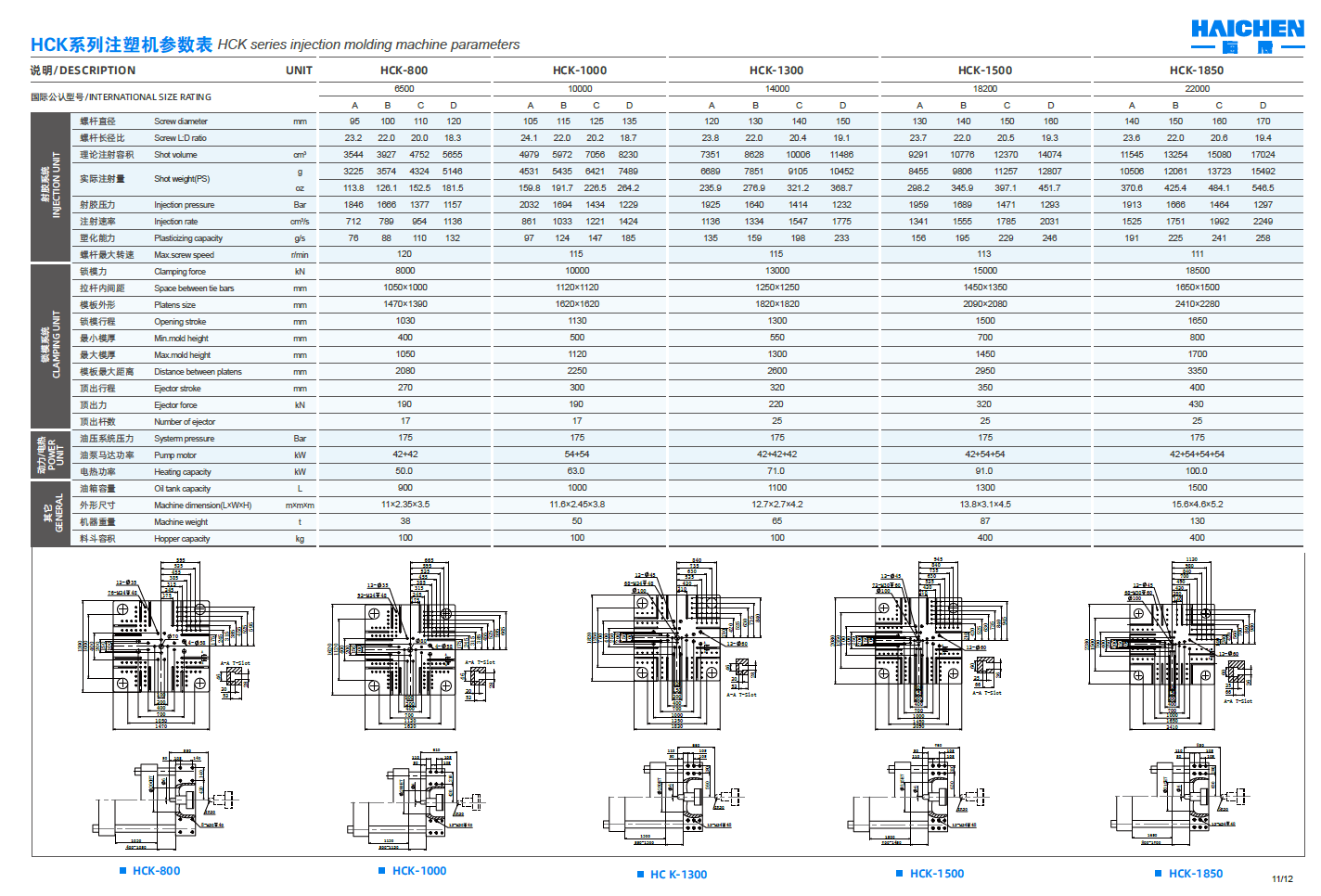
Haichen has more than 20 years of injection molding experience and lists medical device housings among its application areas. The company currently offers small machines, E Series machines, K Series machines, oil-electric hybrid machines, and multi-color injection molding machines.
For medical container projects, the final model should be selected from the product weight, mold size, cavity number, target cycle, and resin.
Haichen’s oil-electric hybrid platform uses hydraulic pressure for mold clamping and electric drive for injection and plasticizing. The published configuration includes three-stage injection control, two-stage pressure and melt control, linear electronic position control, PID temperature control, low-pressure mold protection, and a manipulator interface.
The series currently lists HCK110 through HCK310, covering 110 to 310 US tons. The published table also provides tie-bar spacing, shot weight, and mold-height data for each model.
These features can be useful for projects that need repeatable injection, automatic part removal, or coordinated machine movement. However, the final machine should still be selected from the mold and product data.
How Much Does a Medical Container Injection Molding Machine Cost?
The price of a medical container injection molding machine depends on the full production setup.
Main cost factors include:
- Clamping force
- Injection unit
- Machine configuration
- Mold cavity number
- Mold design
- Robot
- Dryer
- Chiller
- Mold temperature controller
- Inspection equipment
- Production environment
For that reason, a low machine price does not always mean a low cost per good part.
A better comparison looks at the complete system and the expected production output.
For an accurate machine quotation, prepare:
Product weight + material + cavity number + mold dimensions + target cycle time + annual output + automation needs
That information gives the supplier a clear base for machine selection.
What Information Should You Send to a Machine Supplier?
A supplier can give a better recommendation when the first inquiry includes the basic project data.
Send:
- Product drawing
- Material name
- Part weight
- Product dimensions
- Number of cavities
- Mold size
- Target output
- Target cycle time
- Automation plan
Then the supplier can check the clamping unit, injection unit, machine space, and production line layout together.
Need a Medical Container Injection Molding Machine?
Send Haichen your product weight, plastic material, cavity number, mold dimensions, and target production output.
Haichen can then review the machine size and configuration around the actual container project rather than using a fixed machine size for every application.
Author: Yang, Senior Engineer, Haichen Machinery