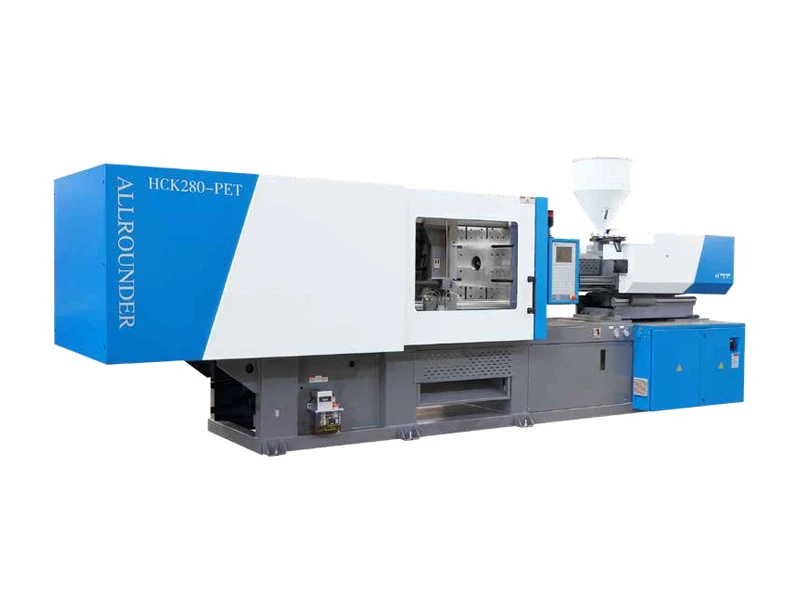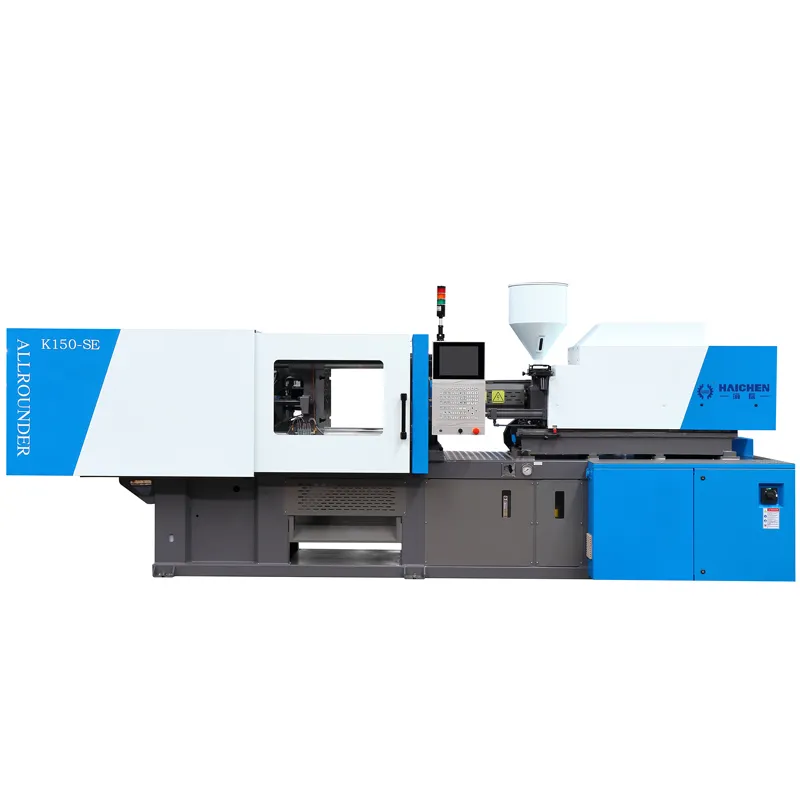
A motorcycle helmet contains parts with very different molding needs. The plastic helmet shell requires high clamping force.
The visor needs optical clarity. The liner and buckles run on smaller tonnage. One machine cannot cover every part efficiently. This article breaks down machine selection by component. Data comes from industry cases and Haichen machine configurations.
What Clamping Force Does a Motorcycle Helmet Shell Need?
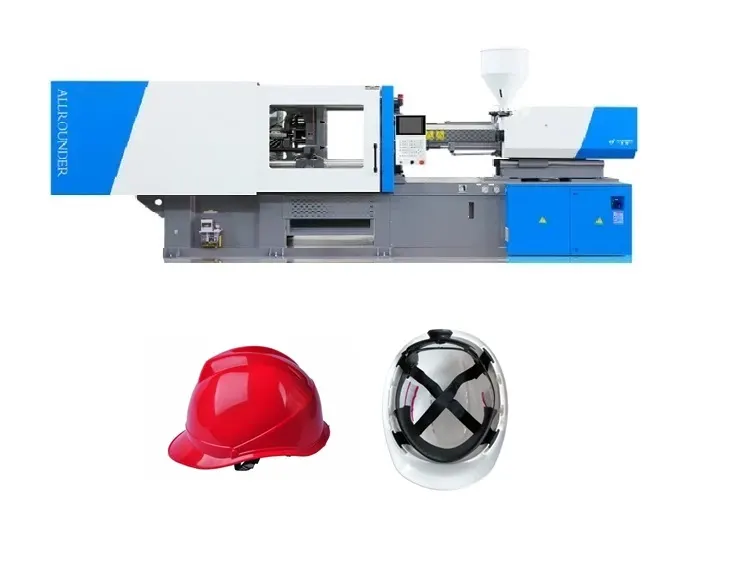
A single-cavity motorcycle helmet shell typically uses a 280T machine. A two-cavity mold requires about 400T. Large full-face shells may need 470T to 550T. FCS runs a 450-gram ABS shell on a 470T machine with one cavity. Haichen recommends 310T to 530T for helmet shell production.
What tonnage range covers most helmet shells?
Most motorcycle helmet shells run between 280 tons and 550 tons. A single-cavity shell mold suits a 280T machine. A two-cavity mold pushes the requirement to about 400T. Large full-face shells may need 470T to 550T. FCS uses 470T with a single cavity for a 450-gram ABS shell.
Why does shell weight drive tonnage selection?
A heavier shell needs more injection volume and clamping force. A 450-gram ABS shell requires a machine with enough shot capacity to fill the mold before cooling. The 470T case above shows a stable match for this weight class. A smaller 184-gram PC cycling helmet shell runs on 468T in a single cavity. Weight alone does not set tonnage. Shell geometry and wall thickness also matter.
How does Haichen configure machines for helmet shells?
Haichen offers the HCK460 with 4600 kN clamping force. Screw options include 75 mm, 80 mm, and 85 mm diameters. Injection weight reaches 1,668 grams to 2,143 grams depending on screw choice. This range covers single-cavity motorcycle helmet shells and bicycle helmet shells. Haichen recommends 310T to 530T machines for helmet shell production with one cavity.
| HCK460 PLASTIC INJECTION MOLDING MACHINE | ||||
| INJECTION UNIT | ||||
| ITEM | UNIT | A | B | C |
| INJECTION UNIT | ||||
| Screw diameter | mm | 75 | 80 | 85 |
| Screw L/D ratio | L/D | 23.5 | 22.0 | 20.7 |
| Shot volume(theoretical) | cm3 | 1833 | 2086 | 2355 |
| Injiection weight(ps) | g | 1668 | 1898 | 2143 |
| oz | 58.8 | 66.9 | 75.6 | |
| Injection pressure | Bar | 1940 | 1700 | 1512 |
| Injection rate | cm3/s | 457 | 520 | 587 |
| Plasticizing capacity | g/s | 54 | 60 | 71 |
| Screw speed (Max.) | r/min | 140 | ||
| CLAMPING UNIT | ||||
| Clamping force | Kn | 4600 | ||
| Space between tie bars(W×H) | mm | 820×770 | ||
| Platens size | mm | 1180×1130 | ||
| Opening stroke | mm | 810 | ||
| Min.Mold height | mm | 300 | ||
| Max.Mold height | mm | 830 | ||
| Distance between platens(daylight) | mm | 1640 | ||
| Ejector stroke | mm | 220 | ||
| Ejector force | Kn | 120 | ||
| OTHERS | ||||
| Systerm pressure | Bar | 175 | ||
| Pump motor | Kw | 70 | ||
| Heating power | Kw | 41.0 | ||
| Oiltank cubage | L | 700 | ||
| Machine dimension(L×W×H) | m | 8.7×2.0×2.4 | ||
| Machine weight | t | 19.6 | ||
What Tonnage Does a Helmet Visor Require?
A PC visor usually runs on a 220T machine with a single cavity. A PET visor in a two-cavity mold runs on a 398T machine with a 20-second cycle. Visor tonnage is lower than shell tonnage because the part is thin and flat. Haichen HCK260 provides 260T clamping force for PC and PET visor molding.
Why does visor molding need a different machine from the shell?
A visor is thin, transparent, and surface-critical. The shell is thick and structural. Visor molding prioritizes injection speed and screw surface quality over clamping force. A high-gloss visor needs a clean melt and fast fill. A shell needs holding pressure and dimensional stability.
What clamping force and cycle time apply to visor production?
A PC visor typically runs on a 220T machine with a single cavity and a cycle time near 20 seconds. A PET visor in a two-cavity mold runs on a 398T machine with a 20-second cycle and 110-gram part weight. Visor tonnage is lower than shell tonnage because the part is thin and flat.
How does Haichen support visor molding?
Haichen machines can fit PC and PET screw and barrel sets. The HCK260 provides 260T clamping force and processes PC, PET, and ABS. Haichen offers screw surface treatments for transparent materials. A dedicated PC screw set reduces melt temperature rise and protects optical clarity.
What Machine Runs the Helmet Liner and Buckles?
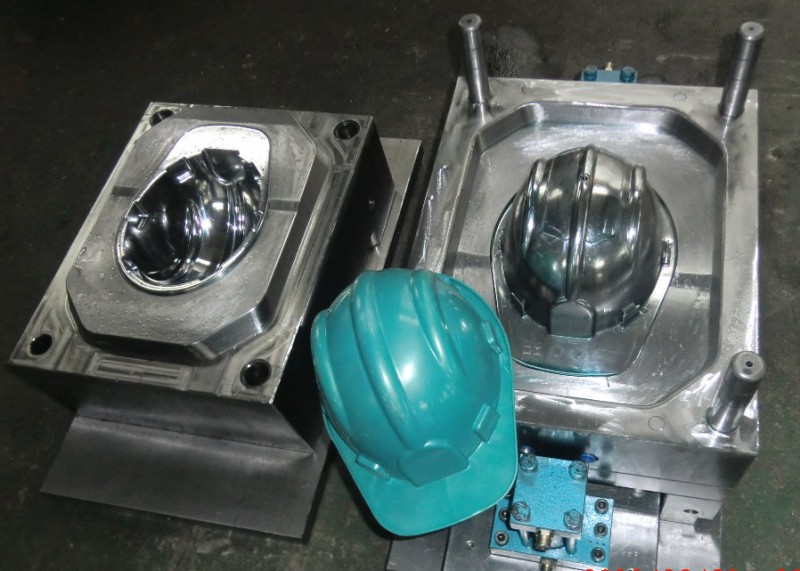
A single-cavity PE or EPS liner mold runs on about 200T. Buckles and small fittings use 150T to 180T machines with multi-cavity molds. These parts have smaller projection areas and shorter cycles than shells. Haichen HCK180 covers buckle and small fitting production.
What tonnage do liners and buckles need?
Helmet liners use PE or EPS. A single-cavity liner mold runs on about 200T. Buckles and small fittings use multi-cavity molds on 150T to 180T machines. These parts have smaller projection areas and shorter cycles than shells.
Why do liners and buckles not share the shell machine?
A 460T shell machine cannot run a small buckle mold efficiently. The shot size is too large for the part. Melt residence time increases. Material degrades. A smaller machine with a matched screw gives better repeatability and lower energy use.
How does Haichen cover the full component range?
Haichen produces machines from 90T to 3,000T. The HCK180 covers buckles and small fittings. The HCK260 covers liners and visors. The HCK460 covers shells. Haichen uses bi-metal screws with mixing heads for engineering plastics. This screw design helps process PC, ABS, and PE consistently across different machine sizes.
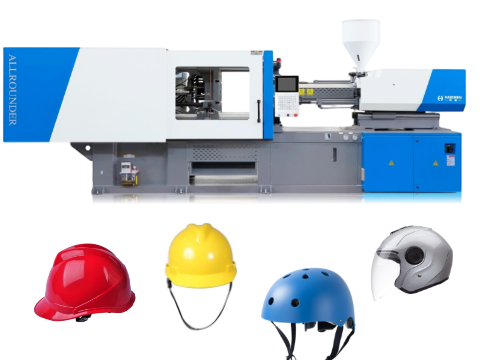
How Should a Buyer Match Machine Tonnage to the Full Helmet Parts Set?
One machine cannot cover all helmet parts efficiently. A practical lineup uses three tonnage levels: 150T–180T for buckles, 220T–280T for visors and liners, and 400T–530T for shells. Haichen HCK180, HCK260, HCK410, and HCK460 cover the full parts set.
What is the most common tonnage mistake?
The most common mistake is buying one large machine for every part. A single 460T machine cannot mold buckles efficiently. The shot size is too large. A second common mistake is buying a machine too small for the shell. A 280T machine may handle a small shell but fails on a full-face 450-gram shell.
What is a practical machine lineup for a motorcycle helmet factory?
A practical lineup includes three tonnage levels. For buckles and small fittings, use 150T to 180T. The visors and liners, use 220T to 280T.Use 400T to 530T for shells. This split matches the component matrix. It reduces energy waste and improves part consistency.
How does Haichen help buyers build this lineup?
Haichen offers machines across all three levels. The HCK180, HCK260, HCK410, and HCK460 cover the full helmet parts set. Haichen reviews customer mold drawings and part weights before recommending tonnage. The company also provides auxiliary equipment including dryers, chillers, and robots. This one-stop approach lets a buyer configure a complete line instead of sourcing each machine separately.
Haichen builds machines from 90T to 3,000T. The HCK180, HCK260, HCK410, and HCK460 cover the full helmet parts set. Haichen reviews mold drawings and part weights before recommending a configuration. The company also supplies auxiliary equipment for a complete production line.
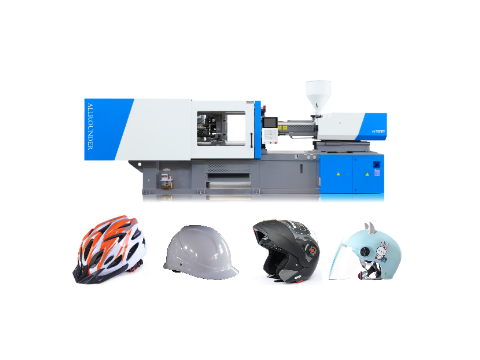
Contact Haichen for a component-based helmet injection machine configuration. Send your shell weight, visor size, and buckle cavity count. We will match tonnage and screw configuration to each part.